Tokyo Bike Lanes And Road Rules: Where You May Ride
Tokyo treats the bicycle as a light vehicle: the roadway is the default place to ride, sidewalks are the exception, and since April 2026 a blue ticket system adds fixed fines for riders aged 16 and over.
Short answer
In Tokyo you ride on the roadway, on the left, unless a sign permits sidewalk use, you are under 13 or over 70, or conditions make the road unsafe. Since 1 April 2026 riders aged 16 and over can face fixed fines from 3,000 to 12,000 yen for violations. Helmets are an effort obligation with no fine.
Tokyo classifies the bicycle as a light vehicle, which settles the first question most visitors ask: the roadway, ridden on the left side, is the default and legal place to cycle. Sidewalks are an exception, allowed only under specific conditions, and since 1 April 2026 a traffic violation notice system known colloquially as the blue ticket applies fixed fines to riders aged 16 and over, tourists included. None of this makes the city hostile to cyclists. Tokyo's backstreets are calm, its riverside paths are long, and a guide who knows the lane network turns rule-following into a relaxed morning out, which is exactly what the Small-Group Long City Ride from Bicycle Tours Tokyo does, rated 5.0 across 1,308 reviews and from $106.89 per person. For a fuller picture of the habits behind these rules, from mamachari bikes to mandatory insurance, our guide to what Japanese bike culture is known for is the natural next read.
This page walks through where you may ride, what the new fine system covers, which streets guided tours actually use, and how weather and equipment shape a day on Tokyo roads. The short version for anyone in a hurry: ride left, ride the roadway unless a sign says otherwise, skip the phone and the umbrella, and consider a guide for your first day. If that last tip sounds appealing, the Asakusa bike tour guide covering temples, back streets and the river shows exactly what a guided first day can look like.
Where Are You Actually Allowed To Ride In Tokyo?
The roadway is the legal default for bicycles in Tokyo, and riders keep to the left side, because the bicycle counts as a light vehicle under the Road Traffic Act. Sidewalk cycling is permitted only where a sign allows it, for riders under 13 or over 70, for riders with a disability, or when road conditions such as construction make the roadway genuinely unsafe. There is no special bicycle license.
- City Bike Tours$32.39
- Private Tours$45.35
- Night Rides$55.06
- E-Bike Tours$61
- Day Trips By Bike$76
That single principle organizes almost everything else. The Tokyo Metropolitan Police Department states it plainly on its bicycle rules page: bicycles are light vehicles, the roadway is the principle, the left side is the position. Visitors sometimes assume the opposite, because in many countries sidewalk riding is tolerated or normal. In Tokyo it is a defined exception, and riding a sidewalk without qualifying for it falls under the wrong-division rule, which carries a 6,000 yen fixed fine under the 2026 notice system.
The exceptions deserve a second look, because two of them apply to ordinary visitors more often than people expect. First, signed sidewalks: blue round signs reading "ordinary bicycle sidewalk passage permitted" appear on busy arterials where the roadway would be dangerous, and on those blocks the sidewalk becomes legal. Second, unavoidable conditions: roadworks, parked trucks, or a stretch of fast traffic can make riding the roadway unsafe, and in those moments a short, careful sidewalk stretch is defensible. Even then the duties continue: ride slowly on the side of the sidewalk nearest the roadway, at roughly walking pace, and stop for pedestrians, who always have priority.
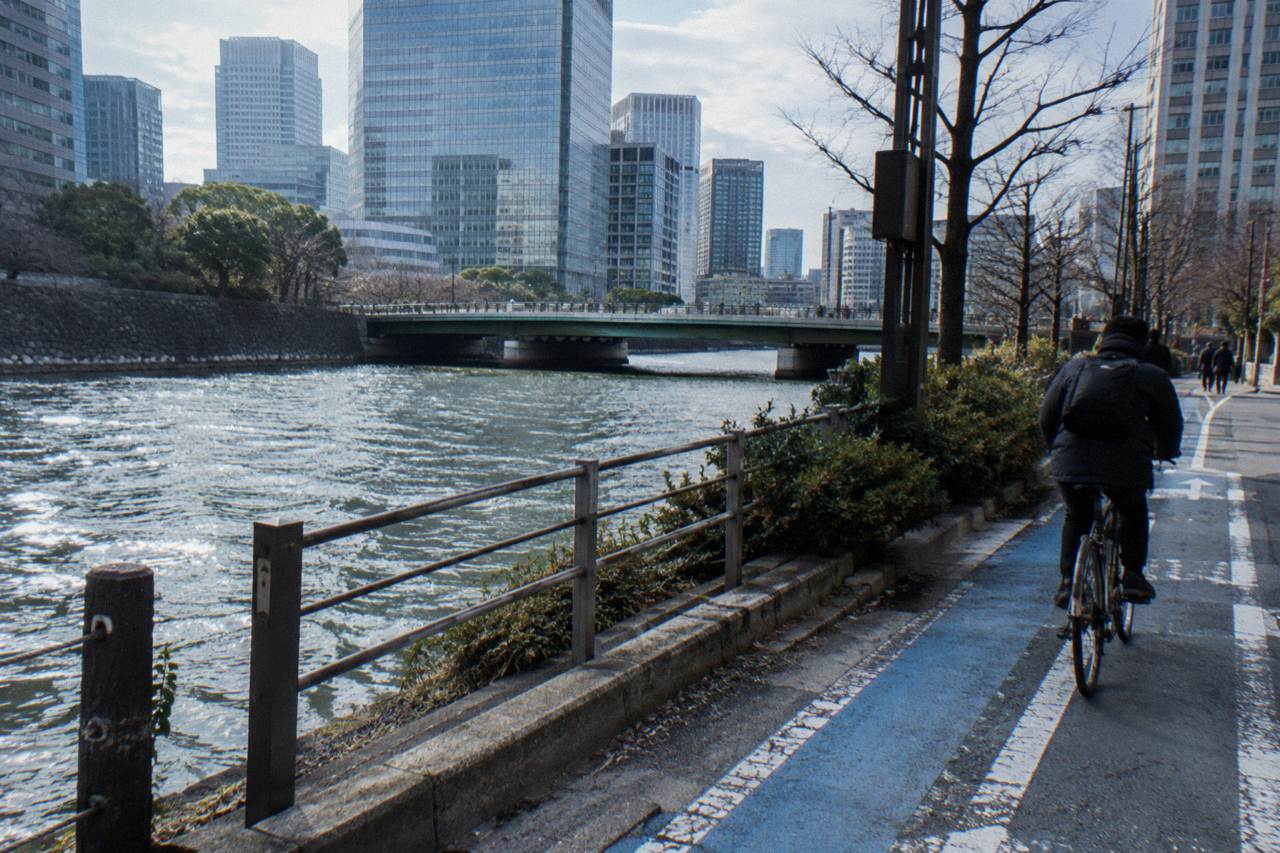
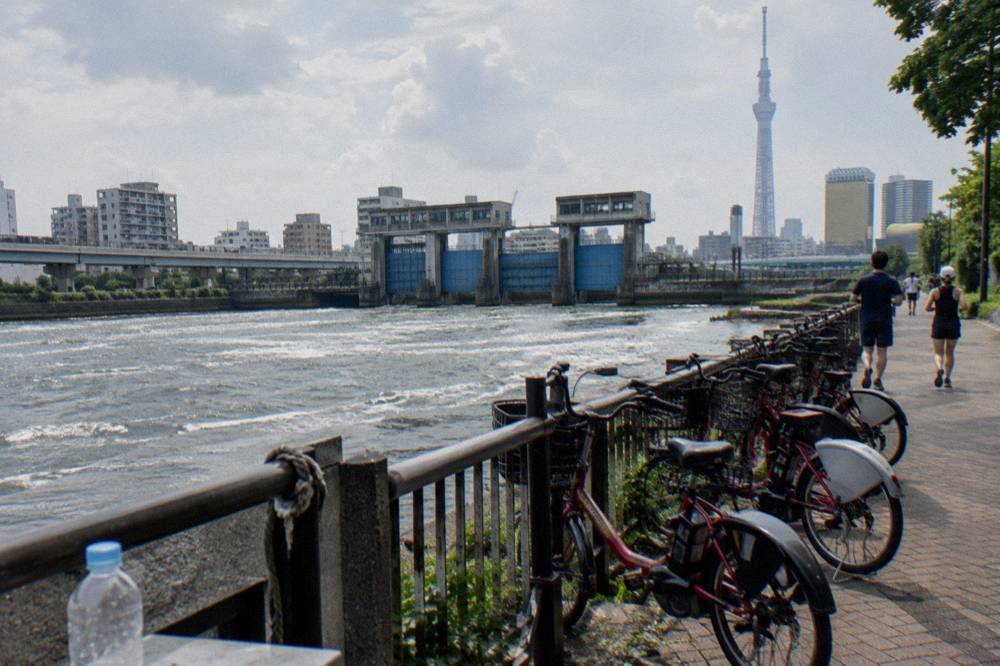
Where do the marked lanes fit? Tokyo has been steadily painting bicycle lanes, blue surfaced strips, and shared arrows onto streets and riverside paths, and route guides describe continuous riverside riding along the Arakawa and Sumida corridors with long traffic-light-free sections. But a lane is a convenience layered on the rule, not a replacement for it. On an ordinary street without a lane, the correct position remains the left edge of the roadway. More detail on the big car-free and riverside corridors sits in the Tokyo cycling routes overview and the Arakawa cycling road guide.
| Where you ride | Legal status in Tokyo | Key duty |
|---|---|---|
| Roadway, left side | Default and expected | Follow signals, lights at night, no phone |
| Signed sidewalk | Permitted where the blue sign allows it | Walking pace near the roadway edge, yield to pedestrians |
| Unsigned sidewalk | Only for under 13, over 70, disabled riders, or unsafe roadway | Same slow, yielding duties |
| Marked bike lane on the roadway | Part of the roadway | Same rules as the roadway itself |
| Pedestrian crossing | Ride across only where bicycle crossing is allowed | Stop for pedestrians, dismount where signed |
One more point that surprises visitors: tandem bicycles are now allowed on public roads across all of Tokyo's 23 wards and the wider prefecture, a change the police rules page notes explicitly. And there is no statutory speed limit for bicycles, though posted limits apply and sidewalk riding must stay at walking pace.
What Do The Blue Ticket Rules Mean For Visitors?
Since 1 April 2026, riders aged 16 and over, overseas tourists included, can be issued a traffic violation notice, the blue ticket, carrying a fixed fine between 3,000 and 12,000 yen for a listed violation. Officers normally start with guidance and a warning, and tickets target malicious or dangerous riding. Under 16, riders receive guidance only.
The system is the biggest change to Tokyo cycling rules in years. The Tokyo Metropolitan Police Department's violation notice page sets out the framework, and the department's English traffic rules page confirms in plain words that cyclists will be issued tickets for traffic offences, with no exemption for visitors. The official tourism body repeats the point for overseas travelers on its bicycles guide for visitors. In practice the tone is educational first: guidance and warnings outnumber tickets, and enforcement concentrates on riding that could cause an accident.
The fine amounts are fixed nationally, and the headline number belongs to the phone. Holding a phone to talk or watching its screen while riding draws 12,000 yen, the highest bicycle fine. Signal violations, riding against traffic, and the wrong roadway-sidewalk division sit at 6,000 yen. Riding with an umbrella in one hand, earphones blocking sound in both ears, or no light at night costs 5,000 yen, and riding two abreast or carrying a passenger costs 3,000 yen.
| Violation | Fixed fine (yen) |
|---|---|
| Holding a phone to talk or view its screen | 12,000 |
| Entering a closing or alarmed rail crossing | 7,000 |
| Ignoring a signal, riding against traffic, wrong sidewalk division | 6,000 |
| No light at night, umbrella or dual earphones, missed stop sign | 5,000 |
| Riding two abreast | 3,000 |
| Carrying a second rider | 3,000 |
Two categories sit outside the blue ticket entirely. Drunk cycling remains a criminal matter, with penalties up to five years imprisonment or a one million yen fine for riding while alcohol-impaired, and providing a bicycle to a drunk person or riding along as a passenger are also criminal offenses. Hand-held phone use that creates actual danger escalates beyond the fixed fine too, up to one year imprisonment or 300,000 yen. The practical read for a visitor is simple: a sober, attentive rider on the correct side of the road with lights after dark has nothing to fear from the system.
For families, the age line matters. A 14-year-old riding with a parent cannot be ticketed under this system; the parent can be ticketed for their own violations, and guardians carry obligations around child helmets. The Tokyo bike tour with kids guide covers how family rides handle these duties in practice.
If reading fine tables makes Tokyo sound forbidding, it is worth remembering what a guided ride actually feels like: a small group rolling through residential lanes at conversational speed, with the guide calling every turn. The three options below are well matched to a first day on Tokyo roads.
Which Tokyo Streets And Paths Do Guided Tours Use?
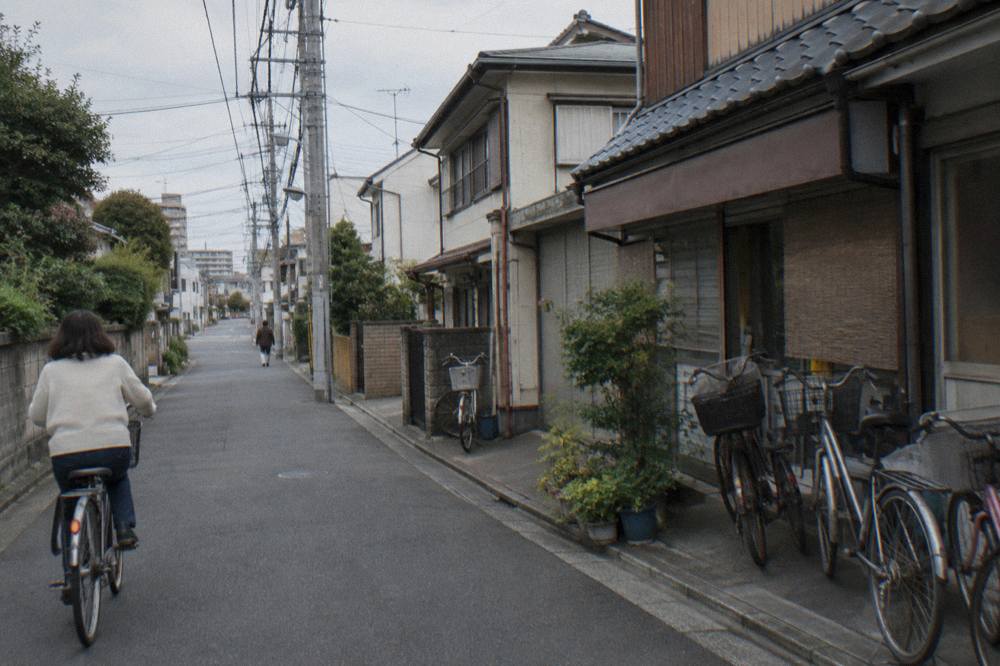
Guided tours in Tokyo concentrate on residential backstreets, riverside paths and park perimeter roads rather than major arterials, because those streets carry light traffic and suit group riding at a moderate pace. A typical full-day route covers roughly 20 km, mixing signed lanes, quiet neighborhood streets and short shared stretches where the group walks the bikes.
The pattern is consistent across operators. The Full-Day Traditional Ride from BREZZA covers about 20 km on a full-day loop, rated 4.8 across 139 reviews and from $97 per person, and its selling point is precisely the street selection: old-town lanes wide enough for one car, temple approaches, and canal-side segments where the traffic question answers itself. The Small-Group Long City Ride goes further, six and a half hours with a group capped at five riders, from $106.89 per person, meeting at Tokyo Opera City Sankun Garden, giving the guide near-private control over pacing and lane choices.
Shorter rides follow the same logic on a smaller footprint. The 2.5-Hour Central Short Ride from Tokyo Backstreets Bike Tour, from $51.82 per person with a group max of six, sticks to central backstreets, and route guides describe Shibuya-area rides ending near the scramble crossing, where riders walk their bikes across the busy spots rather than ride them.
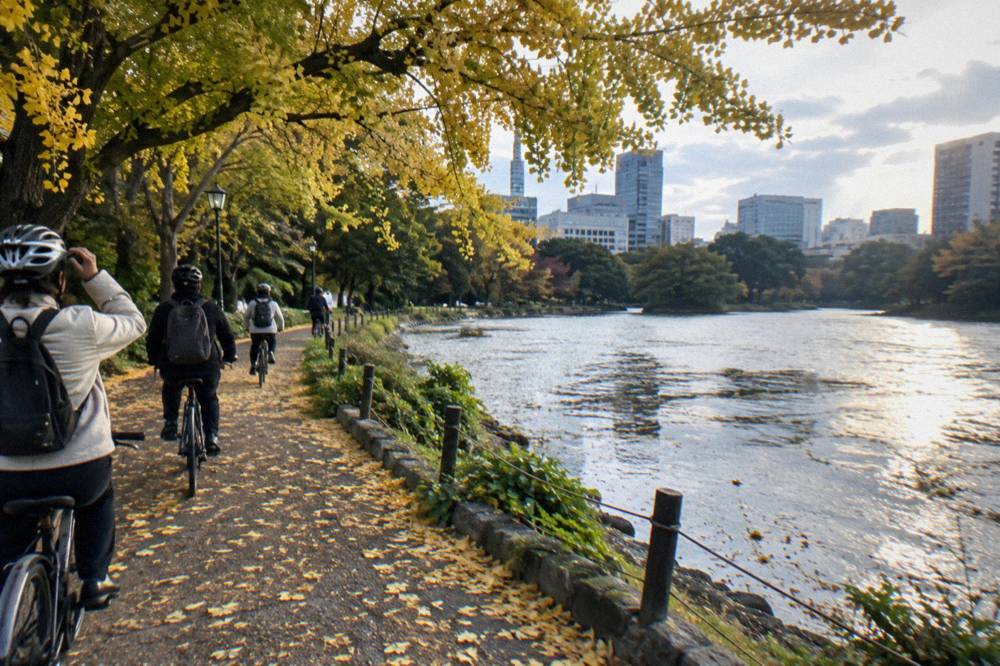
Why does the street selection matter so much? Because the rule framework rewards it. A backstreet at 15 km/h on the correct left side generates zero interaction with the fine system, while a big arterial with tram lines, bus lanes and double-parked delivery vans demands constant judgment about sidewalk exceptions and lane position. Guides also solve the parking question, since leaving a bike in the wrong place near a station can see it removed, a topic covered in full in the Tokyo bike parking guide.
| Ride | Duration | Group max | Price from | Rating |
|---|---|---|---|---|
| Small-Group Long City Ride | 6 hours 30 minutes | 5 | $106.89 | 5.0 from 1,308 reviews |
| Full-Day Traditional Ride | Full day, about 20 km | Not stated | $97 | 4.8 from 139 reviews |
| 4-Hour Downtown Backstreets Ride | 4 hours | 6 | $77.74 | 4.9 from 124 reviews |
| Shibuya-Harajuku 3-Hour Ride | 3 hours | 6 | $57.01 | 4.8 from 57 reviews |
| 2.5-Hour Central Short Ride | 2 hours 30 minutes | 6 | $51.82 | 5.0 from 25 reviews |
The table shows the real spread: a backstreets specialist can cost less than half the headline full-day option while covering the same category of street. What you pay for at the top end is time, group size and depth, not a different legal environment. Every one of these tours includes the bike, and the longer rides include a helmet.
A natural question at this point is whether the street-savvy version is worth booking before you have ridden Tokyo at all.
How Do Sidewalk And Crossing Rules Work In Practice?
On a permitted sidewalk you ride slowly along the edge nearest the roadway, at about walking pace, and you stop for pedestrians, who always have priority. At crossings you must stop for pedestrians on the crossing, and at signed locations you dismount and walk. Failing to stop for a pedestrian at a crossing carries a 6,000 yen fine, and sidewalk duty failures carry 3,000 yen.
The sidewalk duties are where good intentions most often wobble. A visitor on a permitted sidewalk, say the signed stretch along a wide arterial, may legally ride, but the obligation set is strict enough that many riders simply dismount in crowds: walking pace near the roadway edge, stopping whenever a pedestrian's path crosses yours, and never threading between people. The police rules page frames the pedestrian as having absolute priority on sidewalks, and the fine table backs it: 3,000 yen for the slow-down and stop duty on a sidewalk, 6,000 yen for failing to stop for a pedestrian at a crossing.
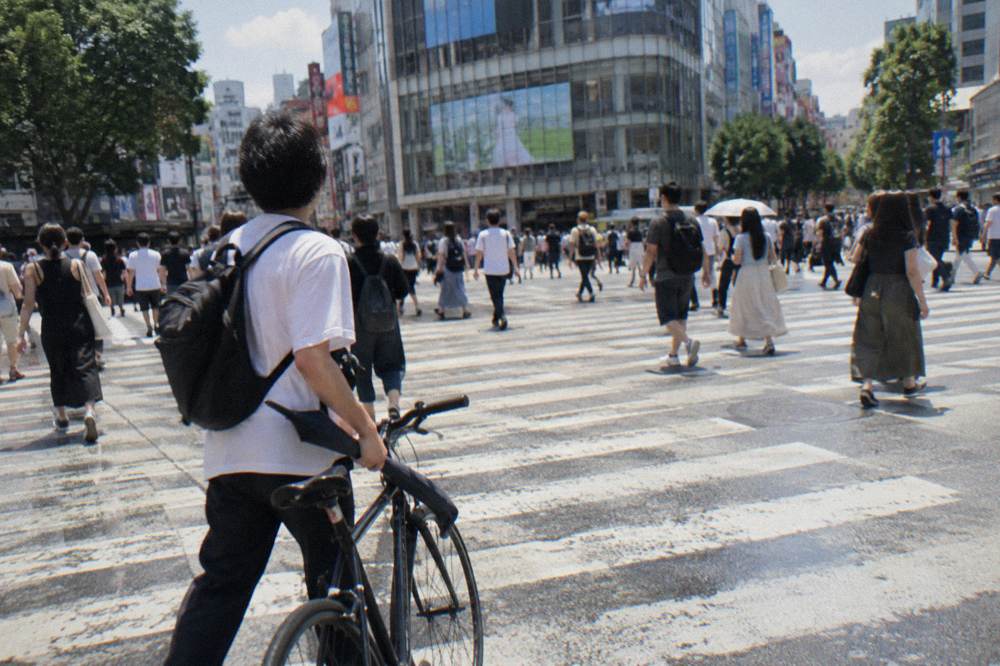
The roadside strip matters too. Many Tokyo sidewalks have a bricked or colored strip nearest the road intended for bicycles and the blind-tactile paving zone for pedestrians; riding the pedestrian side of that division counts as a wrong-division violation at 6,000 yen. It sounds fussy until you see it working: on a signed sidewalk, cyclists trickle along the strip and pedestrians own the rest, and everyone moves at the speed of the slowest person.
At night the rules converge on equipment. Lights are required after dark, a white or pale-yellow headlight visible from 10 meters, with a fine of 5,000 yen for riding unlit. Earphones in both ears are penalized because they block ambient sound; one ear is the workable compromise, none is better. Umbrella-in-one-hand riding, extremely common in the rainy season, is explicitly penalized at 5,000 yen, which is one reason the Tokyo cycling in rain guide recommends rain gear over umbrellas for anyone riding.
What Should You Know About Helmets And Insurance On Tokyo Roads?
Helmets are an effort obligation for every age since April 2023, meaning you must try to wear one, with no fine attached. Liability insurance is mandatory for all cyclists in Tokyo under a metropolitan ordinance since 1 April 2020, and rental businesses must insure renters and explain what the policy covers.
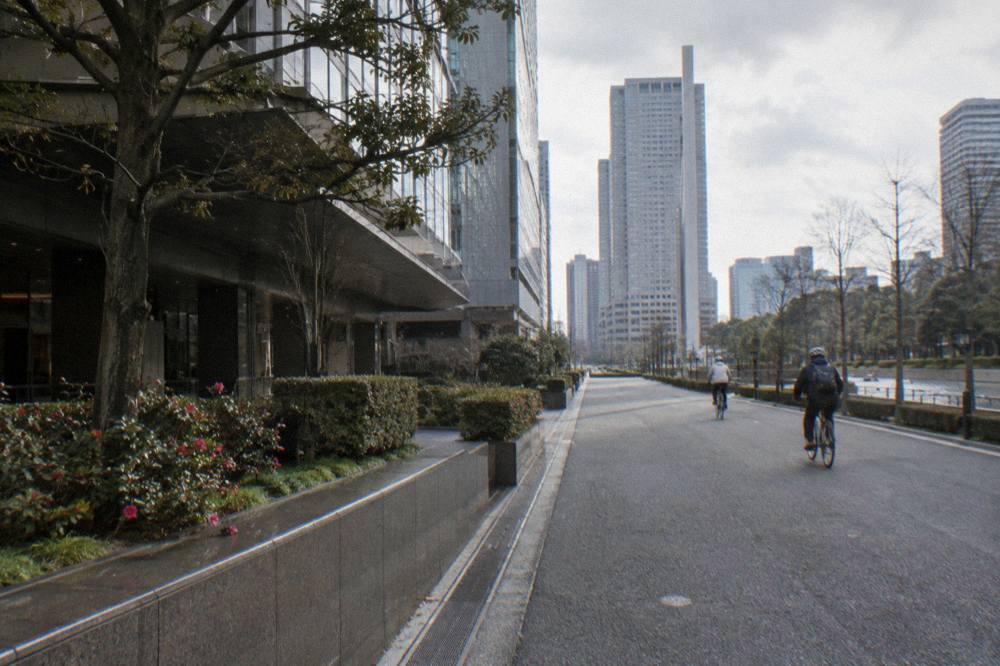
These two rules confuse visitors in opposite directions. Helmets are not legally mandatory in the way seatbelts are: the Road Traffic Act asks every cyclist of any age to endeavor to wear one, with no penalty, and parents carry the same obligation for children. But the police push the message hard, and for a sobering reason: the Metropolitan Police Department reports that 63.5 percent of cycling deaths in Tokyo between 2021 and 2025 involved fatal head injuries, and the fatality rate without a helmet runs 2.3 times higher. Among the tours covered here, most include a helmet in the price; a couple of operators rent one for 1,000 yen in cash on the day, so check the inclusions before assuming.
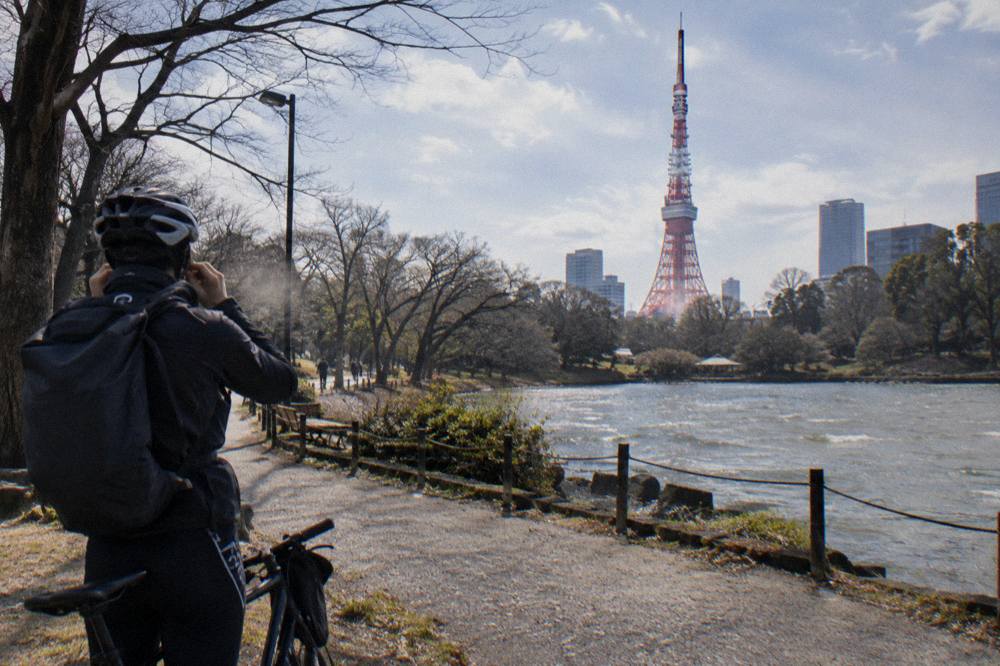
Insurance is the opposite: genuinely required. The Tokyo ordinance obliges every cyclist in the prefecture to hold bicycle liability insurance or an equivalent, and the official visitor guidance repeats this for tourists. Before panic sets in, the coverage net is wider than it sounds: existing travel, home, accident or credit-card policies with a personal liability rider generally count, and the ordinance obliges rental businesses, including guided tour operators, to insure the hirer's use and to tell renters what is covered. If you join a guided ride, the operator's cover answers the requirement for the duration of the rental. Independent riders should confirm their travel policy includes personal liability before renting.
| Requirement | Status in Tokyo | Penalty | Notes for visitors |
|---|---|---|---|
| Helmet | Effort obligation, all ages, since April 2023 | None | Included with most guided tours here |
| Liability insurance | Mandatory since April 2020 | Ordinance-based | Rental and tour operators must cover renters |
| Night lights | Required after dark | 5,000 yen fine | White or pale-yellow, visible 10 m |
| Left-side roadway riding | Default rule | 6,000 yen for riding against traffic | Sidewalk only when signed or qualified |
The insurance question is one of several reasons the e-bike format has grown quickly: operators carry the compliance load and the rider carries only the ride. The 3-Hour Highlights option from TRB BIKE TOUR, rated 4.9 across 980 reviews and from $61.54 per person, lets each rider choose a regular bike or an e-bike, meeting at the Statue of Commodore Perry, though its helmet is a separate 1,000 yen cash rental on the day.
How Does Weather Shape Riding On Tokyo Roads?
Tokyo's most rideable months by the numbers are the dry winters and late autumn: January averages 5.4 C with 59.7 mm of rain, November 12.5 C with 96.3 mm, against a soggy October at 234.8 mm and September at 224.9 mm. Summer means a mean August maximum of 31.3 C combined with high humidity, which argues for short morning rides.
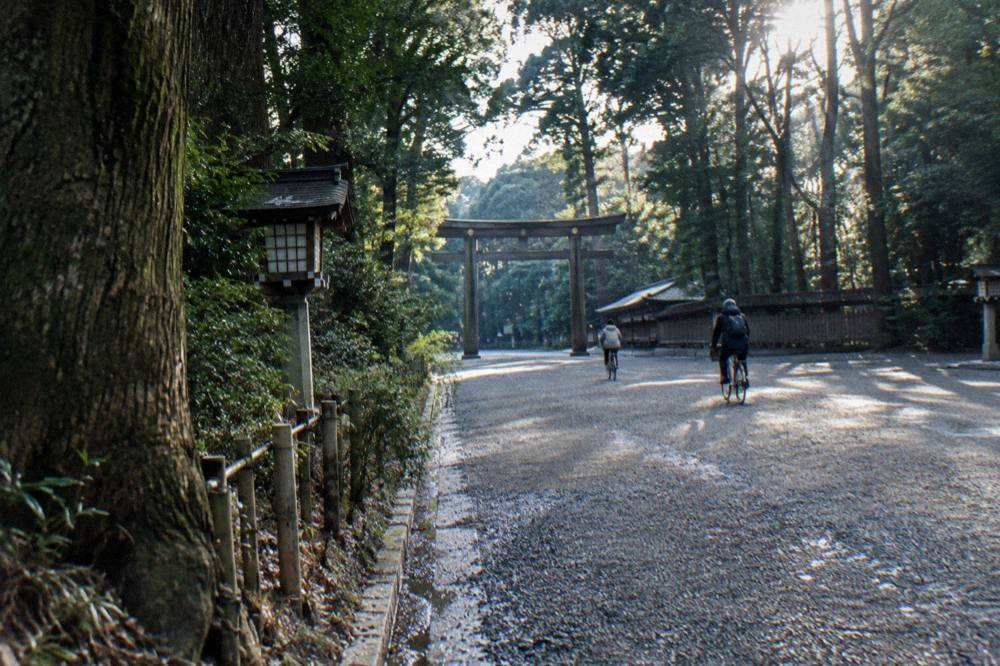
The figures come from the Japan Meteorological Agency's 1991 to 2020 normals for the Tokyo station, and they reward a close read. The wettest months are October and September, not the June rainy season many visitors expect, and the driest are December, February and January. For a touring cyclist the pattern suggests a shape: winter and early spring for long days in the saddle, late spring for blossoms with a rain jacket packed, summer for short early rides or night rides, and October traded for indoor plans or flexible bookings.
Blue Ticket Fines For Bicycle Violations In Tokyo
Fixed fines under the traffic violation notice system since 1 April 2026
The blossom season deserves its own note because it is the single most requested time for a Tokyo ride, and the dates move. Tokyo's first bloom came on 19 March in 2026, five days earlier than the 24 March normal, with full bloom on 28 March against a 31 March normal. Anyone planning a petal-season ride should build in a margin of about a week either side of late March and treat the exact peak as a forecast, not a fact; the cherry blossom bike tour guide covers the strategy in detail.
| Month | Mean temp C | Mean daily max C | Precipitation mm |
|---|---|---|---|
| January | 5.4 | 9.8 | 59.7 |
| March | 9.4 | 14.2 | 116.0 |
| May | 18.8 | 23.6 | 139.7 |
| August | 26.9 | 31.3 | 154.7 |
| October | 18.0 | 22.0 | 234.8 |
| November | 12.5 | 16.7 | 96.3 |
Weather also interacts with the road rules directly. Rain pushes careless riders toward the 5,000 yen umbrella fine, and wet painted surfaces and tram rails demand more careful braking. Cold, dry winter mornings, by contrast, are close to ideal: light traffic, clear air, and frequently strong visibility toward Mount Fuji from the riverside levees.
Do You Need A Guide For Tokyo Roads Or Can You Ride Alone?
You can legally ride Tokyo alone with no guide and no license, and confident cyclists do it daily with a rental or a share bike. A guide adds value on the first day by choosing the streets, timing the crossings, and removing the constant micro-decisions about lanes, sidewalks and parking that otherwise consume a visitor's attention.
The case for going alone is real. Bike share puts an electric-assist bicycle a short walk from most central hotels, with day passes that make spontaneous riding cheap, and the basics of riding a mamachari are covered in the mamachari guide and the Tokyo bike share guide. The roadway rule, the left side and the sidewalk exceptions fit on an index card. Plenty of experienced riders never book a tour.
The case for a guide is attention. Riding alone in Tokyo means reading unfamiliar signage while traffic flows past, deciding sidewalk exceptions in real time, and finding legal parking at every stop. A guide converts that cognitive load into scenery. It also bundles the equipment question: bikes and usually helmets arrive with the tour, insurance coverage is the operator's duty, and the route is pre-vetted for the kind of street where the rules feel natural rather than restrictive. First-time visitors, families, and anyone nervous about left-side riding in a big city consistently get more from a first guided day than from a solo map session.
The private format takes the idea to its limit. The Harajuku Shop Private Road Bike option from Ono Wheel, rated 5.0 across 22 reviews and priced from $129 per person, lets a rider choose the machine and set the pace through Harajuku's side streets. Budget-conscious riders get the same logic cheaper from the Hidden Gems E-Bike option, which keeps groups to six.
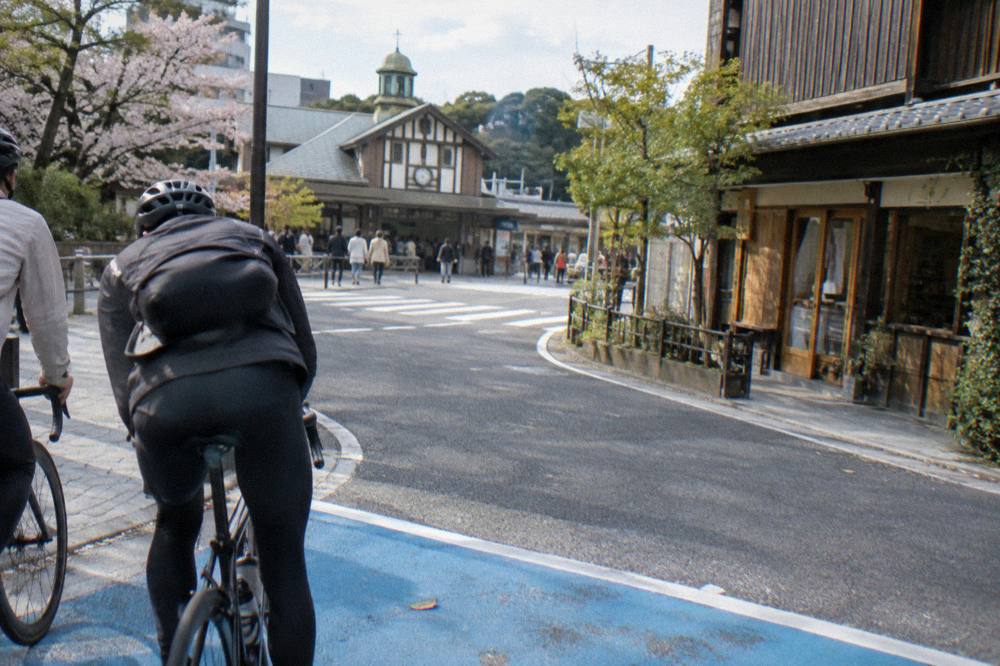
A middle path works well too: book one guided ride early in your trip, treat it as a rolling rules lesson, then rent independently once the street logic feels familiar. Riders who start with Tokyo Bike Tours listings often do exactly this, using the guided day to learn which lanes connect and which arterials to avoid, then repeating the loop alone later in the week.
Common Questions About Tokyo Lanes And Road Rules
Where Are You Actually Allowed To Ride In Tokyo?
The roadway, on the left side, is the default for bicycles. Sidewalks are legal only where a sign permits it, for riders under 13 or over 70, for riders with a disability, or when the roadway is temporarily unsafe, and then only at walking pace with priority given to pedestrians.
Do The Blue Ticket Rules Apply To Tourists?
Yes. Since 1 April 2026 the traffic violation notice system applies to riders aged 16 and over in Tokyo, including overseas visitors, with fixed fines from 3,000 to 12,000 yen. Officers normally begin with guidance and a warning, and tickets target dangerous or malicious riding.
Can You Ride Two Abreast In Tokyo?
No. Riding side by side is prohibited except on rare signed roads, and it carries a 3,000 yen fixed fine. Guided tours ride single file, which is one reason a group of five or six moves so easily through narrow backstreets.
Are Helmets Legally Required In Tokyo?
Helmets are an effort obligation for every age since April 2023, meaning riders must try to wear one, but there is no fine. Police data showing 63.5 percent of Tokyo cycling deaths from 2021 to 2025 involved head injuries explains the strong official push, and most guided tours include a helmet.
Is Cycling On Tokyo Sidewalks Illegal?
It is illegal without qualification: unsigned sidewalks are open only to riders under 13, over 70, disabled riders, or when road conditions make the roadway unsafe. On signed sidewalks, ride slowly near the roadway edge and stop for pedestrians, who always have priority.
Do You Need A Guide To Ride In Tokyo?
No guide or license is required, and many visitors ride alone with a rental or share bike. A guide adds value on a first day by handling street selection, crossings, timing and parking, which is why first-time visitors and families often book one guided ride and then explore independently afterward.