Tokyo Cycling Routes: Rivers, Palaces And Bay Paths
Tokyo's rideable geography falls into a handful of route families: two rivers, a bayfront, a palace moat and old-town streets. Here is how each one rides, and which guided tours cover them.
Short answer
Tokyo's cycling routes group into five families: the Sumida and Arakawa river paths, the Odaiba bayfront, the Imperial Palace loop, and old-town streets like Yanaka and Asakusa. Guided options run from $46 to $106.89 per person, most last 3 to 6 hours, and nearly all include the bike, a guide and free cancellation.
Tokyo is a river city with a bay attached, and that shapes everything about riding it. The rivers, the Sumida and the Arakawa, run levee paths past temples, towers and housing blocks; the bayfront around Odaiba opens out to bridges and waterfront parks; the Imperial Palace moat gives central Tokyo its most famous short loop; and the old-town streets of Yanaka and Asakusa put riders on quiet residential lanes where the city slows down. Route guides describe each of these families as a distinct ride, with different surfaces, traffic levels and scenery, and matching them to your time and fitness is the single biggest planning decision you will make.
Self-guided riding is cheap and flexible, but it leaves you to read the road rules, find the paths and fix your own navigation. That is why many riders end up comparing routes and tours at the same time, which is exactly what this page does. The route descriptions below draw on official visitor guidance and operator route information, and the tour figures come straight from each tour's booking page. For a wider look at how guided rides compare, the Tokyo Bike Tours home page lays out the full range of options by category.
What Are The Best Cycling Routes In Tokyo?
The best Tokyo cycling routes are the Sumida river path between Asakusa and the bay, the Arakawa levee ride downstream toward Kasai Rinkai Park, the Odaiba bayfront loop, the roughly 5 km Imperial Palace perimeter, and the old-town streets of Yanaka and Asakusa. Each suits a different rider, from a one-hour sampler to a full-day 30 km riverside leg.
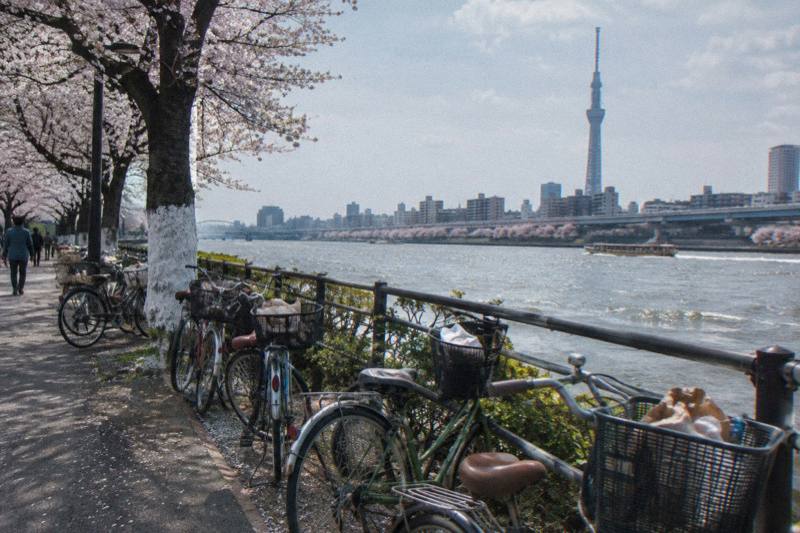
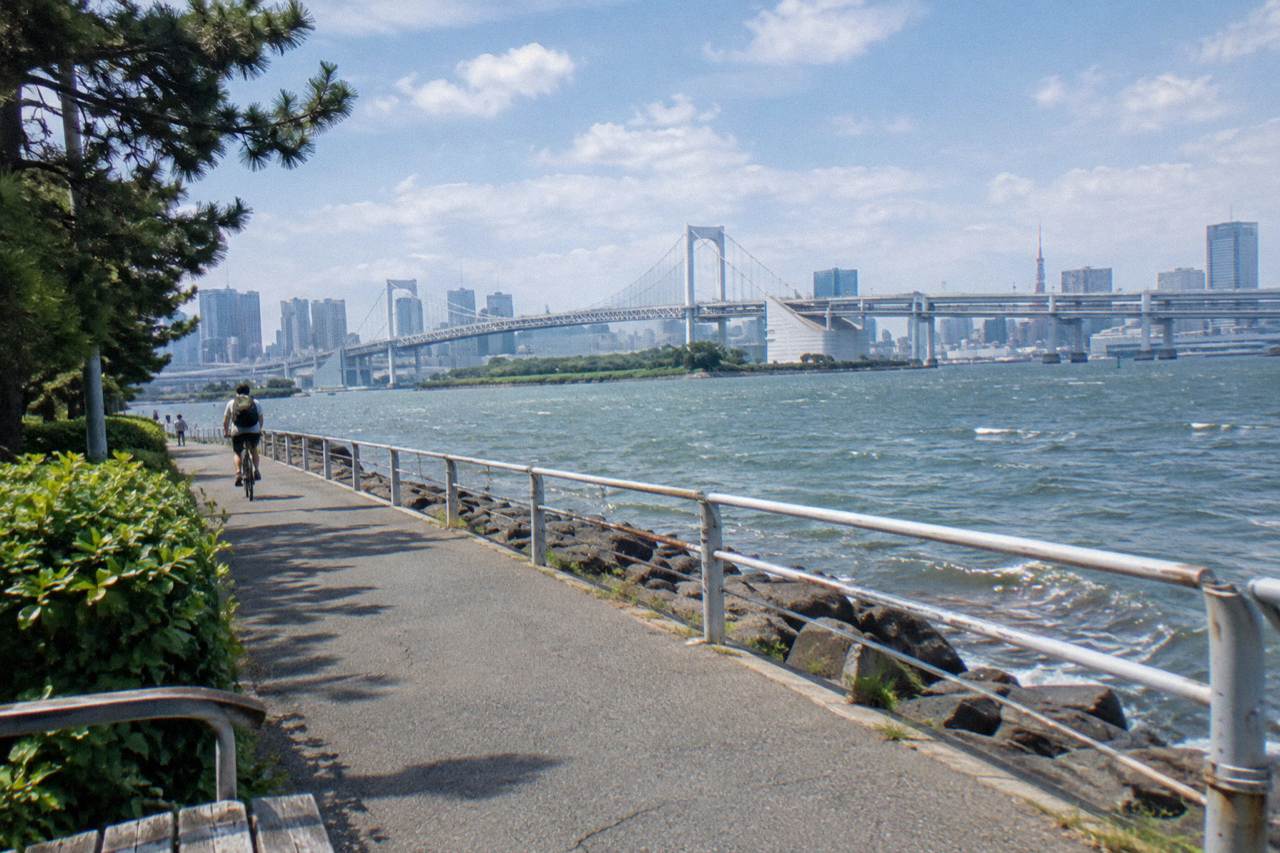
Those five families cover almost everything worth riding inside the city, and each has a different character. The Sumida side is urban and landmark-dense, with route guides reporting Skytree views and temple approaches. The Arakawa is the long-distance option: fresh reporting describes a scenic segment of roughly 30 km running from Ukima Park in northern Tokyo downstream along the levees to Kasai Rinkai Park at Tokyo Bay, with parts described as free of traffic lights. The bayfront around Odaiba is flatter and more modern, built around waterfront parks and bridge views. The palace loop is short and central, and the old-town streets are slow, narrow and full of stops.
Choosing between them is mostly a matter of time and confidence. A rider with one free morning who is nervous about Japanese road rules will be happier on a guided old-town ride than alone on a levee. A confident rider with a full day will get more from the Arakawa than from three laps of the palace. If you are new to riding in Japan at all, the beginners guide to a Tokyo bike tour walks through the basics before you pick a route.
| Route family | Character | Typical rider | Guided coverage |
|---|---|---|---|
| Sumida river path | Urban riverside, landmark views | Half-day sightseer | Riverside e-bike rides, full-day city rides |
| Arakawa levee | Long, open, few stops | Confident long-distance rider | Limited, mostly self-guided |
| Odaiba bayfront | Flat waterfront, bridges and parks | Families, photographers | Bay and Olympic-site rides |
| Imperial Palace loop | Short central circuit | First-time rider, time-poor visitor | Highlights rides, night rides |
| Yanaka and Asakusa streets | Slow old-town lanes | Culture and food focused | Old-town and food-focused tours |
Tokyo By Bike: Five Neighborhood Routes Worth Riding
The five neighborhood routes worth riding in Tokyo are the Sumida river corridor from Asakusa toward the bay, the Yanaka and Yanesen old-town lanes, the Shibuya and Harajuku west side, the Imperial Palace and central backstreets, and the Odaiba and Tokyo Bay waterfront. Together they cover rivers, temples, shopping streets, moat roads and bridges in a single frame.
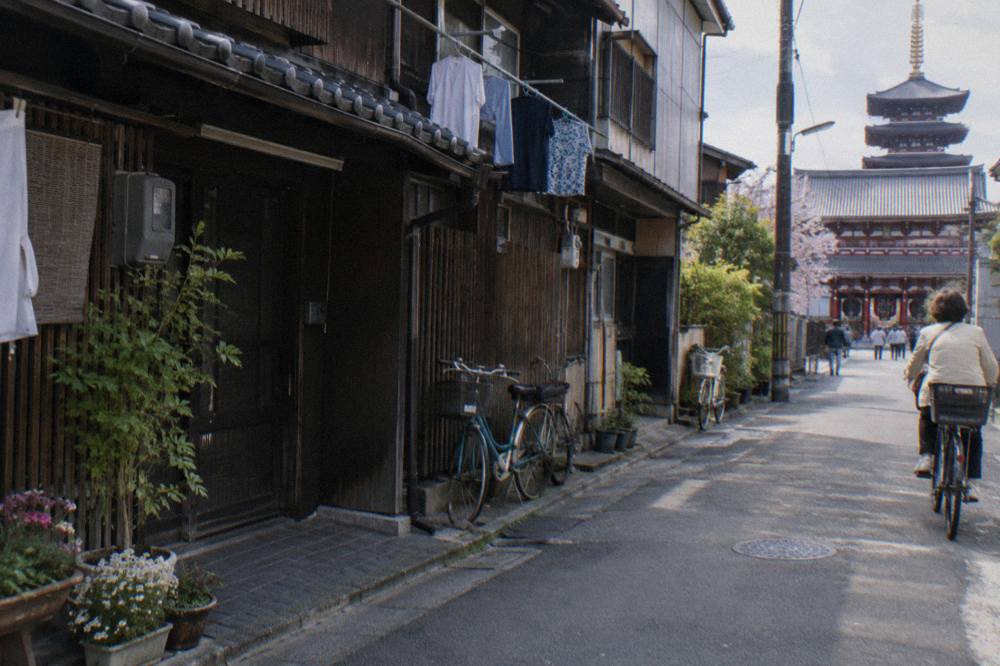
Each route deserves a short description, because the differences matter more than the names suggest. The Sumida corridor links Senso-ji territory to river paths, and route guides report a roughly 4 km example segment from Asakusa to Ryogoku with Skytree and temple views along the way. Yanaka, part of the Yanesen old-town area with Nezu Shrine and Yanaka Ginza, rewards slow riding and frequent stops; guided tours combine it with Ueno, Nezu and Asakusa on roughly 20 km routes using cycle lanes and quiet streets. Shibuya and Harajuku sit on the west side, where a 3-hour small-group ride from $57.01 per person covers the scramble-crossing district on non-electric bikes with a group cap of 6. The palace and central backstreets are the default for first-timers short on time. Odaiba closes the list with waterfront paths and the bridge views that most visitors never see from ground level.
The west side has a food angle too. The West-Side Cycling With Food Stops tour from DIG Tokyo Tours starts at Koenji Station, runs 3 hours 30 minutes, is rated 5.0 across 223 reviews and costs from $106.89 per person with the total depending on group size, with a group cap of 8 and the bike and guide included. That is a different proposition from a pure sightseeing loop: the route is built around stops rather than distance, which suits riders who measure a day in snacks as much as kilometres.
For riders who want the widest single slice of the city, the Small-Group Long City Ride from Bicycle Tours Tokyo starts at Tokyo Opera City Sankun Garden, runs 6 hours 30 minutes, is rated 5.0 across 1,308 reviews and costs from $106.89 per person, with a group cap of just 5, bike, helmet and guide included and free cancellation on the booking page. It is the most reviewed ride of this set and it stitches several route families into one day.
A shorter sampler also exists on the west-of-centre streets: the 2.5-Hour Central Short Ride from Tokyo Backstreets Bike Tour is rated 5.0 across 25 reviews and costs from $51.82 per person with a group cap of 6 and the bike included. For route planners deciding between going alone and letting someone else read the map, the honest summary is that the old-town and riverside routes are navigable solo with a maps app, while the food stops, the commentary and the logistics of a 6-hour day are where a guided ride earns its price.
Which Tokyo Tours Ride Which Route?
Tour routes map cleanly onto the five families: full-day rides cover rivers and old town together, 3-hour highlights rides cover the palace and central backstreets, e-bike hidden-gems rides cover the riverside, night rides cover Shibuya and Tokyo Tower, and the west-side and bay rides cover food streets and the waterfront. Prices run from $32.39 to $142 per person.
The pairing matters because the tour name rarely announces the route. A "highlights" ride is almost always a palace-and-backstreets circuit; a "hidden gems" ride trends toward riverside and residential lanes; a "food" ride trades distance for stops. The table below groups the main guided options by the route family they ride, using each tour's own figures for price, duration and group size. Every price is a per-person from-price; where a total depends on group size, the booking page is the place to confirm it.
| Tour | Route family covered | Duration | Price from | Reviews |
|---|---|---|---|---|
| Small-Group Long City Ride | Rivers, old town, central | 6h 30m | $106.89 | 5.0, 1,308 reviews |
| 6-Hour Full City Ride | City-wide, rivers | 6h | $97.17 | 4.9, 842 reviews |
| West-Side Cycling With Food Stops | West side, food streets | 3h 30m | $106.89 | 5.0, 223 reviews |
| Shibuya-Harajuku 3-Hour Ride | West side | 3h | $57.01 | 4.8, 57 reviews |
| 3-Hour Highlights, Bike or E-Bike | Palace, backstreets | 3h | $61.54 | 4.9, 980 reviews |
| 2-Hour Night Lights Ride | Shibuya, Tokyo Tower at night | 2h | $55.06 | 5.0, 31 reviews |
| Olympic Sites Bay Ride | Bayfront, Odaiba area | 3h | $48.59 | New listing |
Two patterns stand out. First, the biggest review pools sit on the 3-hour highlights format, which suggests most visitors land on the palace-and-backstreets circuit as their default. Second, the e-bike options cluster around $61 to $63 per person, which makes them barely more expensive than non-electric rides of the same length; the choice is really about hills and heat rather than price, a trade-off covered in detail in the e-bike versus regular bike guide.
The 6-Hour Full City Ride, rated 4.9 across 842 reviews at from $97.17 per person with a group cap of 12, is the city-wide option for riders who want one booking to cover everything. Its larger group cap is the trade-off against the five-person cap on the 6 hours 30 minutes small-group ride.
For route-focused riders, the Sumida river cycling guide goes deeper on the river corridor than any tour can, including access points and where the path runs beside the water.
How Do The River Routes Compare: Sumida Or Arakawa?
The Sumida is central, landmark-dense and easy to reach from Asakusa; the Arakawa is longer, quieter and better for distance, with fresh reporting describing a roughly 30 km levee segment from Ukima Park to Kasai Rinkai Park that is partly free of traffic lights. Pick Sumida for sights in half a day, Arakawa for a proper ride.
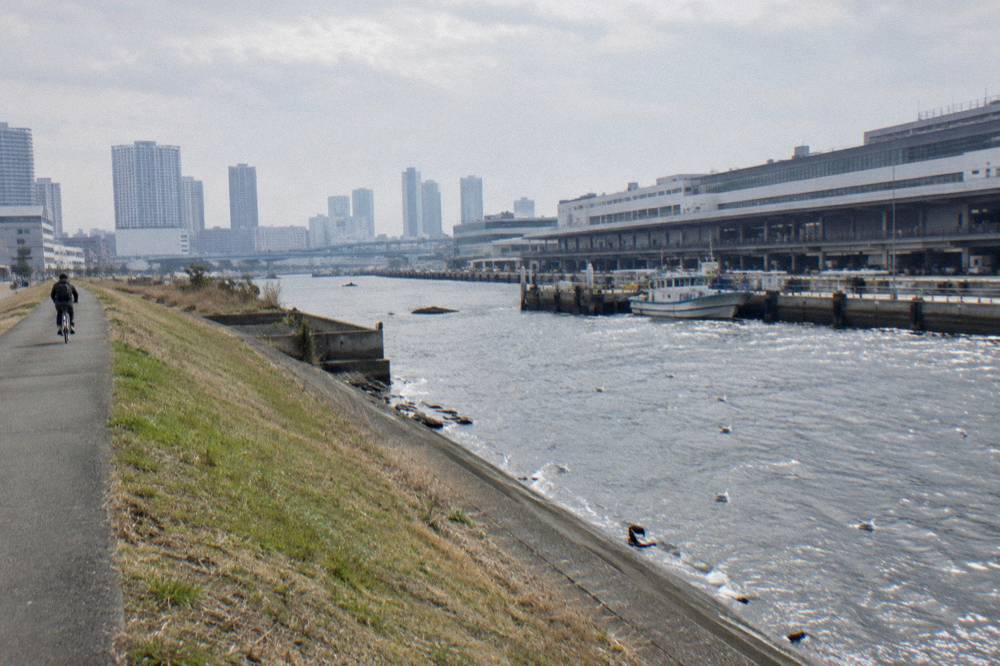
The two rivers bracket the city's riding styles. Sumida paths thread through the most visited part of town, so they suit riders who want Senso-ji, Skytree views and river bridges in a single morning; route guides describe a roughly 4 km segment from Asakusa to Ryogoku as a representative taste. The Arakawa, by contrast, is reported as one of Tokyo's longest riverside paths, and its levee segments feel closer to countryside cycling than city sightseeing, running toward Kasai Rinkai Park at the bay. The red and blue water gates that regulate flow between the Arakawa and Sumida are landmarks riders pass on the downstream sections.
Guided coverage follows the same split. Riverside e-bike rides from TRB BIKE TOUR run 3 hours at from $85 per person, rated 5.0 across just 10 reviews so far, while the 6-Hour Full City Ride covers the headline sights in a longer circuit. Neither guided format matches the full 30 km Arakawa segment; that distance is realistically a self-guided day with a rental or share bike, which the Tokyo bike rental guide covers alongside the share schemes.
One practical note from the rules side: riverside paths still count as roads in the legal sense where they join traffic, and the roadway-left rule applies the moment you leave a dedicated path. The Tokyo Metropolitan Police maintain an English-language bicycle rules page covering roadway riding, sidewalks, lights and side-by-side riding, worth a read before a long river day.
What Should You Know About The Imperial Palace Loop?
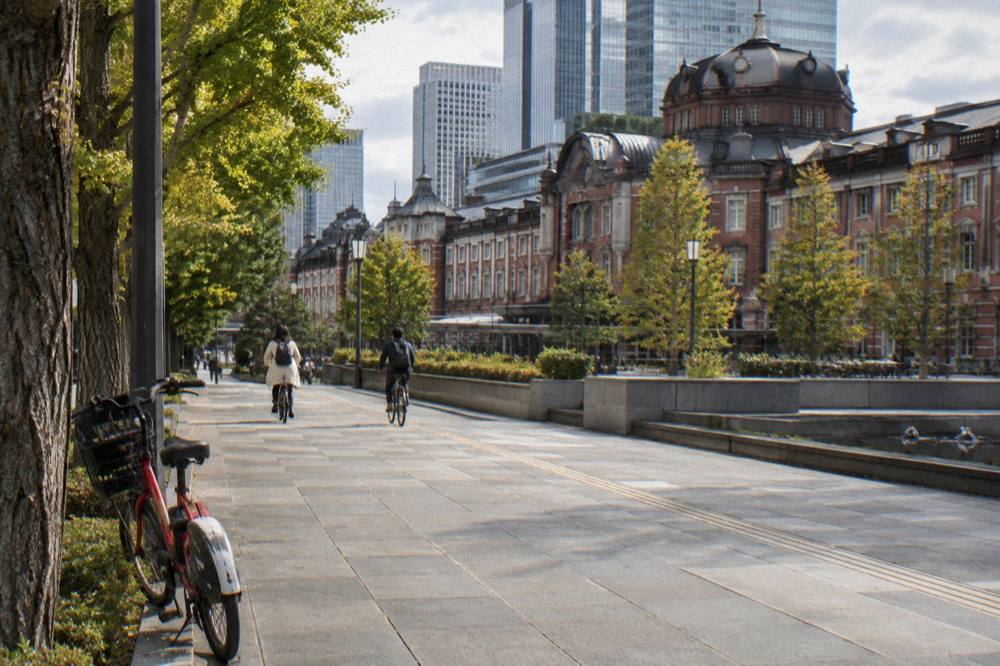
The Imperial Palace perimeter is a roughly 5 km loop on ordinary roads, rideable any day, while a car-free Sunday opening called Palace Cycling closes about 3 km of moat road to cars from 10:00 to 16:00, with free bike loans of around 70 bikes reported since April 2026. It is central Tokyo's easiest meaningful ride.
The loop is the default route for the 3-hour highlights format that dominates the guided market. The 3-Hour Highlights, Bike or E-Bike ride from TRB BIKE TOUR, meeting at the Statue of Commodore Perry, is rated 4.9 across 980 reviews and costs from $61.54 per person, with the rider choosing between an e-bike and a regular bike; helmets rent for 1000 yen in cash on the day if you want one, since they are not included. The Sunday car-free opening adds a different flavour: route reporting describes the Iwaidabashi to Hirakawa-mon moat segment closing to cars, with cancellations for rain judged on the prior Friday forecast.
Around the palace, the surrounding backstreets of Chiyoda and Kanda are where most guided rides spend their remaining time, and they are also where the rules bite hardest: narrow lanes, pedestrians and one-way streets. The Full-Day Traditional Ride from BREZZA, about 20 km and rated 4.8 across 139 reviews at from $97 per person, shows how the palace loop gets folded into a longer old-town day.
When Is The Best Season To Ride Tokyo Cycling Routes?
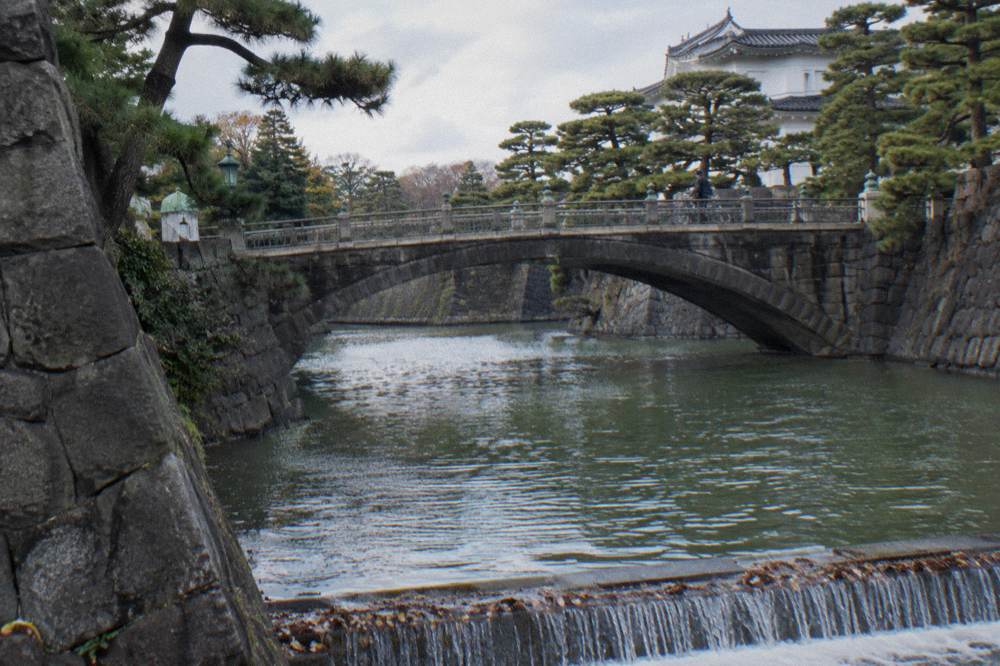
The best months for Tokyo cycling are late March to April for cherry blossoms and October to November for cool, dry air and autumn colour; June to August is hot and humid with mean August highs of 31.3 C, and September and October are the wettest months at 224.9 mm and 234.8 mm of rain. Winter is cold but dry and rideable.
The seasonal case comes from the Japan Meteorological Agency's 1991 to 2020 normals for the Tokyo station, which put the wettest months in early autumn and the driest in winter. Blossom timing adds a specific draw: JMA data recorded Tokyo's 2026 first bloom on 19 March, five days earlier than the 24 March normal, with full bloom on 28 March against a 31 March normal. Riders planning a blossom trip around the Sumida or the palace moat should treat late March as the target window and check the best time to cycle in Tokyo guide for the fuller picture.
| Month | Mean temp C | Mean daily max C | Precipitation mm | Riding verdict |
|---|---|---|---|---|
| Jan | 5.4 | 9.8 | 59.7 | Cold, dry, fine |
| Mar | 9.4 | 14.2 | 116.0 | Blossom window |
| Apr | 14.3 | 19.4 | 133.7 | Excellent |
| Jun | 21.9 | 26.1 | 167.8 | Hot, rainy season |
| Aug | 26.9 | 31.3 | 154.7 | Very hot |
| Sep | 23.3 | 27.5 | 224.9 | Wettest tier |
| Oct | 18.0 | 22.0 | 234.8 | Wettest month |
| Nov | 12.5 | 16.7 | 96.3 | Cool, good light |
Summer riding shifts the arithmetic toward e-bikes and night rides. The 2-Hour Night Lights Ride from COG EXPLORER JAPAN, meeting at Umayamichi Park, is rated 5.0 across 31 reviews and costs from $55.06 per person with the total depending on group size; after dark the heat drops and the Shibuya and Tokyo Tower lighting does the scenery work. For riders committed to a daytime summer ride, the what to wear cycling in Tokyo guide covers the practical clothing side.
What Rules Apply On Tokyo Cycling Routes?
Since 1 April 2026 a blue-ticket system issues fixed fines to riders aged 16 and over, from 3,000 yen for riding two abreast up to 12,000 yen for holding a phone while riding; helmets are an effort obligation for every age with no fine, and Tokyo ordinance has required bicycle liability insurance since April 2020. Visitors are covered by the same rules.
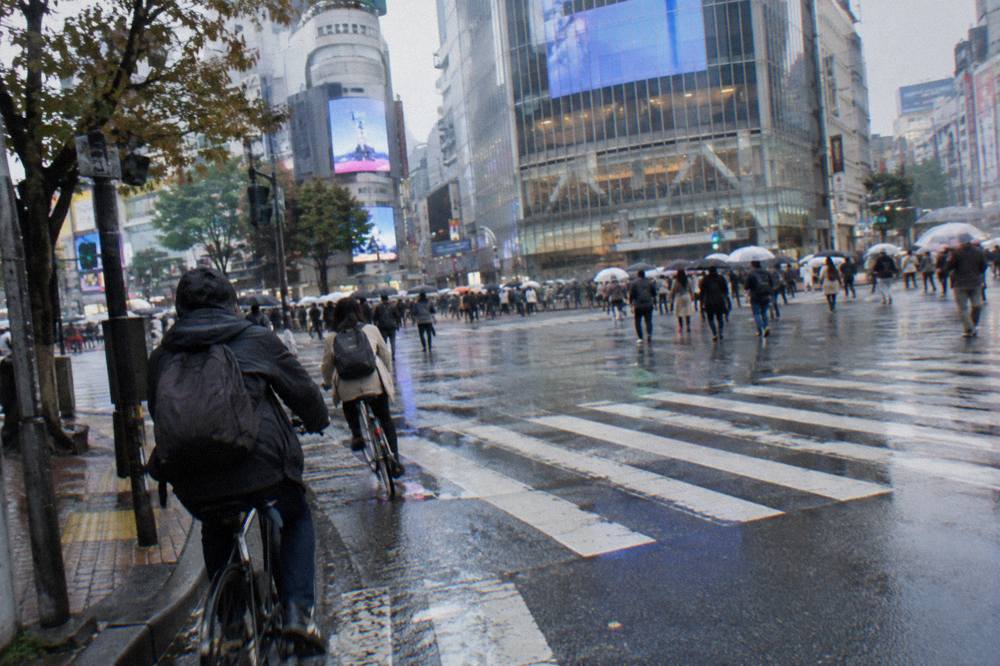
The fine schedule is fixed nationally and applies to overseas visitors, a point the Tokyo Metropolitan Police state plainly on their English traffic rules page. Officers normally give guidance and a warning first, with tickets aimed at malicious or dangerous violations. Drunk cycling stays a criminal matter, with penalties up to five years imprisonment or a one million yen fine for riding while alcohol-impaired. Helmets wearing is a legal endeavour obligation rather than a mandate, which is why most guided tours include one but rental shops may not. Insurance is the quiet one: rental businesses must insure the hirer's use and tell renters what is covered, so a guided tour already satisfies the ordinance for you.
| Violation | Fixed fine (yen) |
|---|---|
| Holding a phone to talk or watch the screen | 12,000 |
| Entering a closing rail crossing | 7,000 |
| Ignoring a signal, riding against traffic | 6,000 |
| No light at night | 5,000 |
| Umbrella or earphones blocking sound | 5,000 |
| Failing to stop at a stop sign | 5,000 |
| Riding two abreast | 3,000 |
| Carrying a second rider | 3,000 |
For route planning the practical takeaways are few and simple: ride on the left on the roadway, do not ride two abreast even on the wide levee paths where it feels harmless, put the phone away, and check that lights work before a night ride. The official GO TOKYO visitor guide to bicycles restates the essentials for tourists, including the insurance requirement.
Should You Ride Self-Guided Or Book A Guided Tour?
Ride self-guided if you are confident riding on the left, want the full 30 km Arakawa segment or need the lowest prices, with guided rides starting from $32.39 per person and share bikes at 165 yen per 30 minutes; book a guided tour if you want commentary, food stops, a set route and the rules handled for you, with the fuller formats at from $51.82 to $106.89 per person.
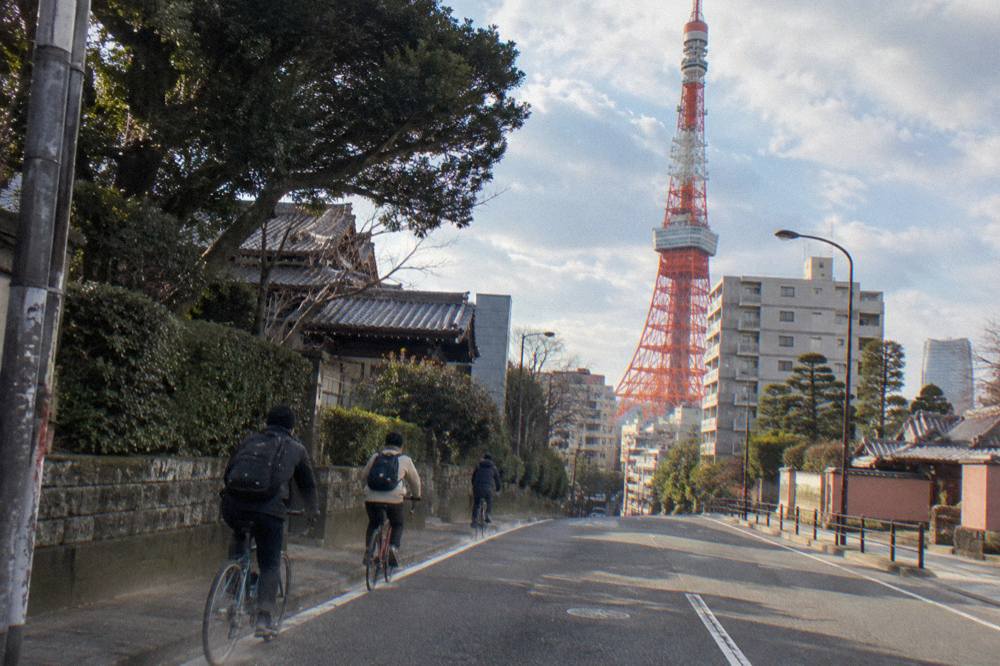
The cost gap is smaller than it looks. A day of share cycling, at the official Docomo Bike Share Tokyo rate of 165 yen per 30 minutes or a 1,650 yen day pass bought at a convenience store, undercuts any tour, but it buys transport rather than an experience. Guided tours include the bike, route, guide and, on most options here, free cancellation; several also fold in food stops or a night-time route that is awkward to plan alone. The strongest argument for a guide on the old-town and riverside routes is not navigation but interpretation: the Yanaka lanes and Sumida banks carry stories a map will not tell you.
| Approach | Typical cost | What you get | Best for |
|---|---|---|---|
| Share bike, pay per ride | 165 yen per 30 min | Bike only | Short palace loop, point to point |
| Share bike, day pass | 1,650 yen | Unlimited same-day rides | Independent full day |
| Guided 2.5-hour ride | From $51.82 | Bike, guide, group max 6 | First-time visitor |
| Guided 6-hour ride | From $97.17 to $106.89 | Bike, guide, full-day route | One-day overview |
| Private e-bike from hotel | From $156.77 | Private guide, hotel start | Families, cruisers |
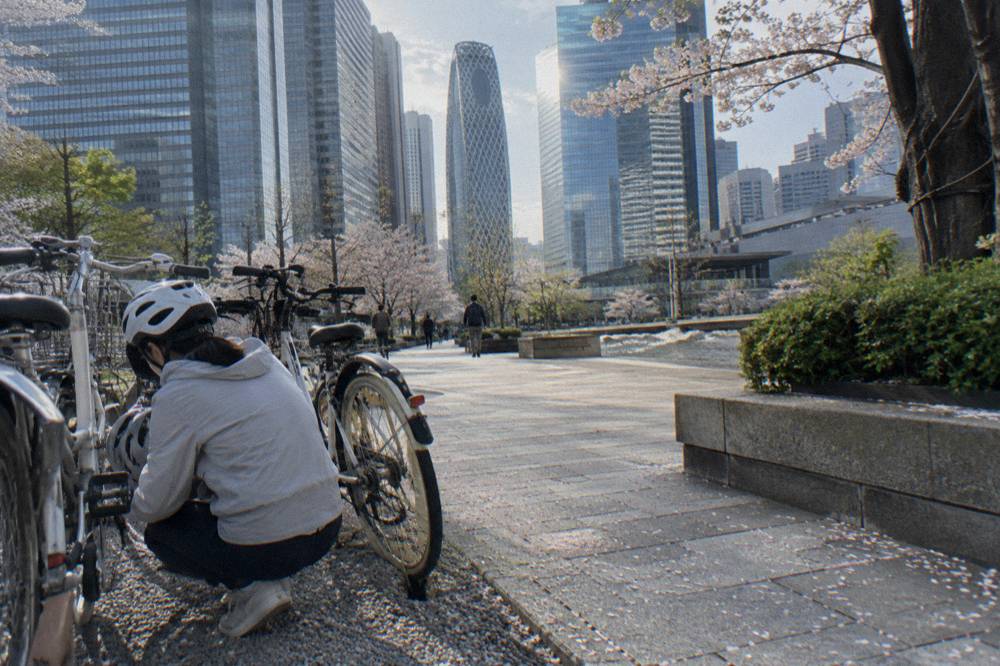
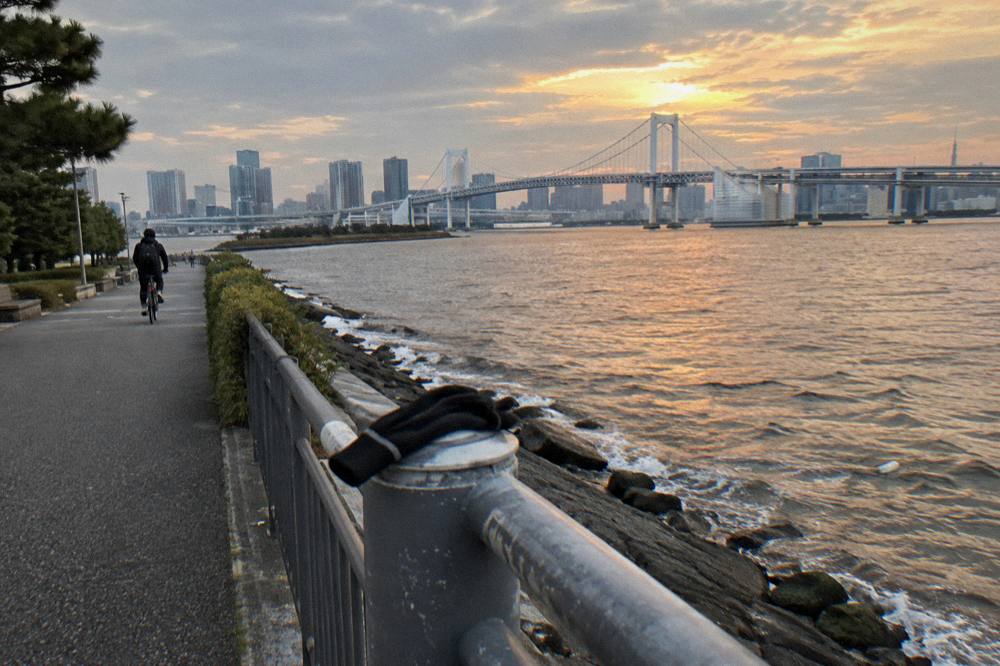
The bayfront is the one family where guided coverage adds real access value, since Olympic-site and bay rides such as the 3-hour Olympic Sites Bay Ride at from $48.59 per person, a new listing without reviews yet, string together waterfront stretches that are simple to ride but tedious to link alone. The Odaiba and Tokyo Bay cycling guide covers the same ground for independent riders.
A final framing thought: most visitors have exactly one or two half-days to give cycling in Tokyo. A 3-hour highlights ride plus a 2-hour night ride, at their combined from-prices of $61.54 and $55.06 per person, covers the palace, the backstreets, Shibuya and the tower lit after dark, which is a defensible way to spread the budget across two route families rather than one long day. Riders with a full day and good legs should instead take the 6-hour format and let the guide join the rivers to the old town in a single loop.
Common Questions About Tokyo Cycling Routes
What Are The Best Cycling Routes In Tokyo?
The best routes are the Sumida river path from Asakusa toward the bay, the roughly 30 km Arakawa levee segment from Ukima Park to Kasai Rinkai Park, the Odaiba bayfront, the roughly 5 km Imperial Palace perimeter, and the old-town streets of Yanaka and Asakusa. Each suits a different rider and time budget.
Tokyo By Bike: Five Neighborhood Routes Worth Riding?
The five are the Sumida river corridor, the Yanaka and Yanesen old-town lanes, the Shibuya and Harajuku west side, the Imperial Palace and central backstreets, and the Odaiba waterfront. Guided rides exist for every one of them, from an 80-minute Shibuya sampler at from $46 to a 6 hours 30 minutes small-group day at from $106.89 per person.
Can Tourists Ride The River Paths In Tokyo?
Yes. The riverside paths are public and open to bicycles, and the official GO TOKYO guide covers cycling for visitors including the insurance requirement. The roadway-left rule applies wherever a path joins traffic, and the blue-ticket fines introduced in April 2026 apply to overseas visitors as well as residents.
How Long Does The Imperial Palace Cycling Loop Take?
The full perimeter is roughly 5 km on ordinary roads and takes most casual riders under an hour. On Sundays the Palace Cycling opening closes about 3 km of moat road to cars from 10:00 to 16:00, with free bike loans reported, though it is cancelled for rain and on event days.
Which Tokyo Bike Tour Covers The Most Routes In One Day?
The Small-Group Long City Ride from Bicycle Tours Tokyo runs 6 hours 30 minutes with a group cap of 5, is rated 5.0 across 1,308 reviews and costs from $106.89 per person. The 6-Hour Full City Ride, rated 4.9 across 842 reviews at from $97.17 per person, is the larger-group alternative.
When Is The Best Month To Cycle In Tokyo?
Late March to April for cherry blossoms, with JMA data showing Tokyo full bloom on 28 March in 2026 against a 31 March normal, and October to November for cooler, drier riding. October is actually the wettest month at 234.8 mm of rain, so November is the safer autumn pick.