Bike Parking In Tokyo: Where To Lock Up And What It Costs
Tokyo removes tens of thousands of badly parked bicycles every year, and the rules visitors break most often are the ones nobody explains at the rental counter. Here is what actually happens when you lock a bike in the wrong spot, what it costs to get it back, and how to avoid the problem entirely.
Short answer
Tokyo has no free-for-all sidewalk parking: bikes left near stations or on pavements can be removed to an impound lot, and Minato City charges a 2,000 yen fee per impounded bicycle. Use signed bicycle lots, underground station parking, or share-bike ports like Docomo's stations, which require return to a designated port. A guided tour removes the parking question altogether.
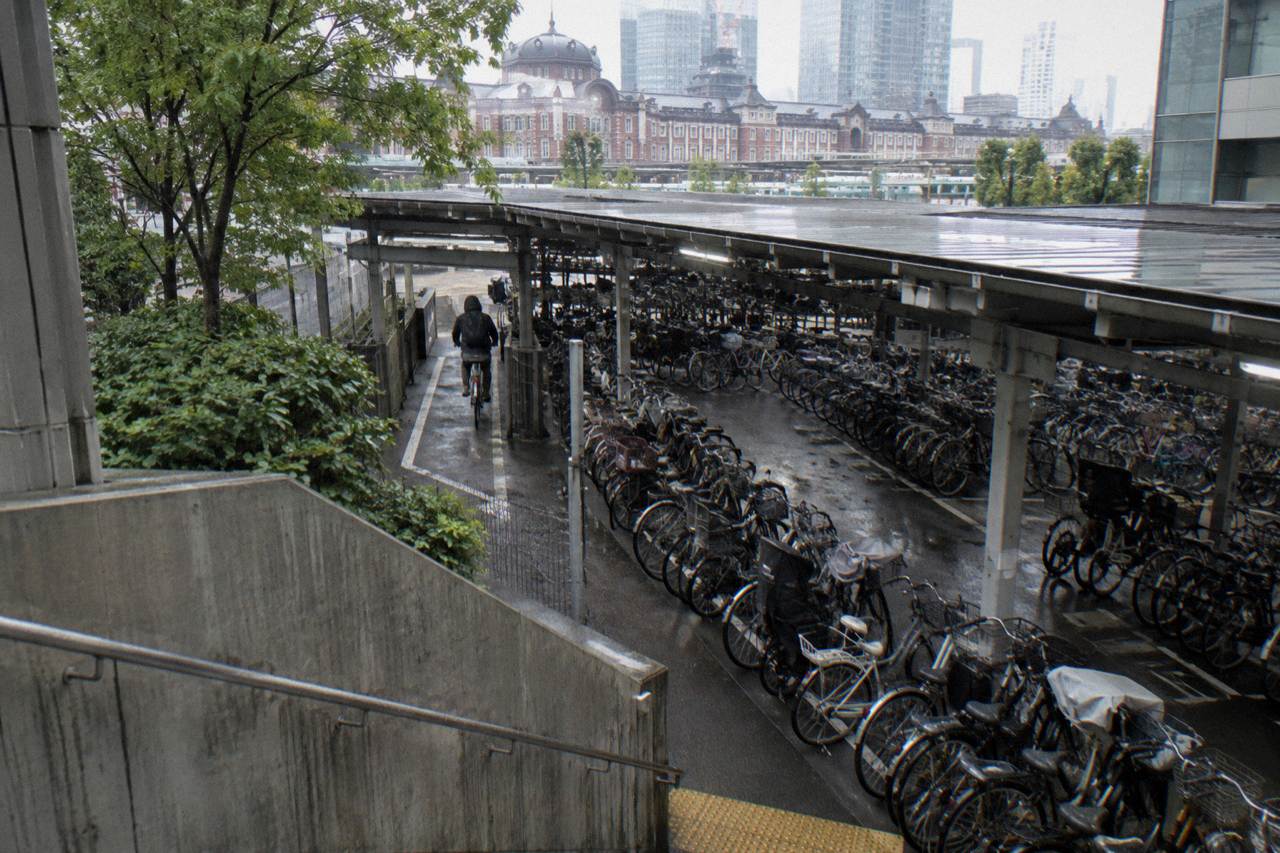
Tokyo moves an enormous number of bicycles every day, and an enormous number of them end up parked in the wrong place. Ward offices run removal crews around major stations on a rolling basis, hauling bikes off pavements, railings and bridge approaches into impound lots, and the owner then has to go and pay to get the bike back. For a visitor on a rental or a share bike this is a genuinely stressful scenario: an unfamiliar district, a missing bicycle, a phone translator, and a deadline to catch a train.
The good news is that the system is logical once you know the shape of it. Tokyo offers three clean answers to the parking question: signed bicycle lots and station parking facilities, the port-based share systems that handle storage as part of the product, and guided tours that start and end at a single meeting point so the bike is only ever your responsibility while you are riding it. This page walks through all three, plus what happens when things go wrong and your bike disappears from the spot where you left it.
Where Can You Legally Park A Bike In Tokyo?
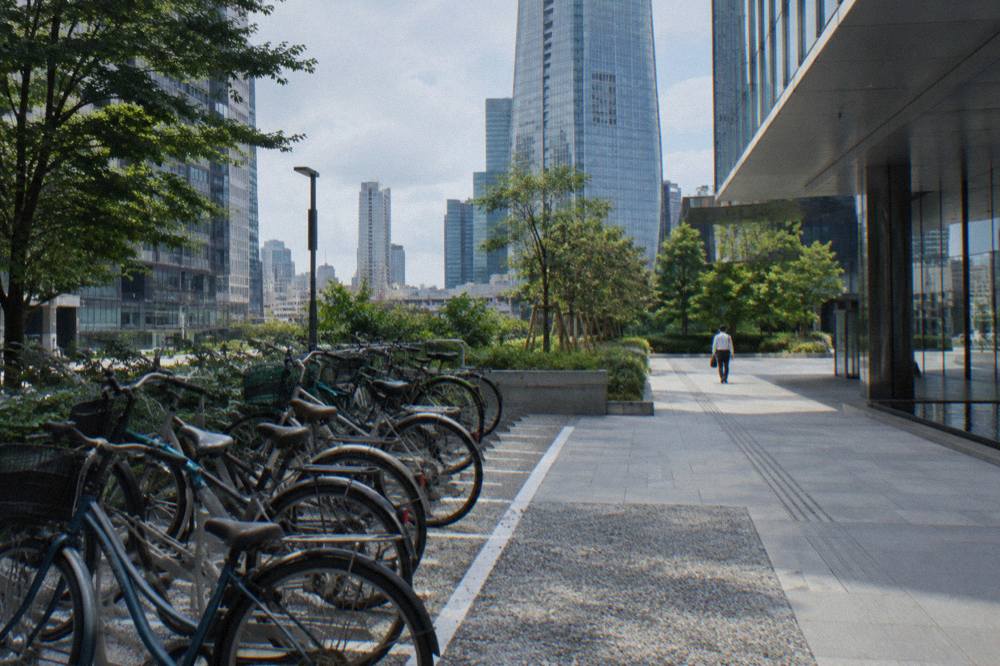
The legal options are signed bicycle parking lots (many operated by wards or stations), underground and multistorey cycle facilities at major stations, designated share-bike ports, and private racks at shops, temples and other destinations that permit them. Pavements, station forecourts, bridge walkways and the space around railings are not legal parking, and bikes left there can be removed by ward crews.
Roughly speaking, if a spot has a painted line, a rack, or a sign saying bicycles may be parked there, it is fair game. If it does not, you are betting on how busy the removal truck has been that week.
The pattern around stations is the most important thing to understand. The areas immediately around big stations are the most heavily policed for badly parked bikes, because that is where the crowding problem is worst and where ward offices get complaints. Shinjuku, for example, runs an active removal programme for bicycles parked near stations, and its English-language pages on abandoned and removed bicycles confirm that the city removes bikes and charges a handling fee, the amount of which is not stated on the English page. The treatment is the same everywhere in spirit: the closer to a station entrance you park, the more likely removal becomes.
Away from stations the pressure eases but does not vanish. Commercial streets often have short-stay racks intended for shoppers, usually with a time limit posted in Japanese. Temples, larger stores and some public facilities have their own racks, and using them while you are actually visiting that destination is normally fine. The one thing that unites all of the legal options is that somebody has decided bikes belong there, and usually put paint or steel on the ground to say so.
A useful habit for visitors: before you set off, decide where you will stop, and check in advance whether your destination has parking. The official GO TOKYO guide to bicycles for visitors explains the basics of cycling and parking etiquette for tourists, including the insurance requirement, and it is worth a read before your first ride. For route planning that keeps you near sensible stopping points, the Tokyo cycling routes guide on this site maps out river paths and neighbourhood loops where parking is far less fraught than around the big rail hubs.
What Does Bike Parking Cost In Tokyo?
Verified, printable costs are limited: Minato City charges a 2,000 yen impound fee to release a removed bicycle, and the Docomo Bike Share day pass costs 1,650 yen from a convenience store (2,200 yen with an IC card), with per-ride pricing of 165 yen per 30 minutes. Regular lot and garage fees vary by facility and are not published on a Tokyo-wide basis, so check each lot's posted rates.
The honest answer for everyday parking prices is that there is no single city-wide tariff; each lot posts its own rates at the entrance.
What we can say with confidence is the structure of the costs you might face:
| Cost type | Amount | Basis |
|---|---|---|
| Minato City impound release fee, bicycle | 2,000 yen | Per impounded bicycle, verified ward fee |
| Minato City impound release fee, scooter | 3,000 yen | Per impounded scooter, verified ward fee |
| Shinjuku removal handling fee | Not stated | Fee exists, amount not published on the English page |
| Docomo Bike Share one-time ride | 165 yen | First 30 minutes, then 165 yen per further 30 minutes |
| Docomo Bike Share day pass | 1,650 yen | Convenience store purchase, valid until 23:59 same day |
| Docomo Bike Share day pass with IC card | 2,200 yen | Requires photo ID |
| Docomo Bike Share monthly plan | 3,300 yen | First 30 minutes of each ride free |
The Docomo figures above come from the operator's official Tokyo price page, and they illustrate the hidden logic of share systems: the port return rule is the parking policy. You are not paying separately for parking, you are paying for a system in which the bike must end up back in a designated station, which is exactly why the streets around those stations stay clear. The day pass needs an SMS-capable phone for registration, which is worth knowing before you rely on it.
For private rental bikes the calculus is different. A day rental gives you flexibility but makes parking entirely your problem for the whole day, which is a real cost in time and mental effort around the busiest districts. It is one reason many visitors who are not confident about the parking rules end up preferring a guided format. The Small-Group Long City Ride starts at Tokyo Opera City Sankun Garden, caps the group at five riders, and includes bike, helmet and guide from $106.89 per person, with free cancellation per the listing.
If a small-group city ride sounds right, these three options all keep parking off your plate:
Each of these starts and finishes at a fixed point, so the bike is handed back the moment the ride ends rather than becoming something you have to house for the afternoon.
What Happens If Your Bike Gets Removed In Tokyo?
Ward removal crews take badly parked bicycles to an impound lot, hold them for a set period, and charge a release fee, 2,000 yen per bicycle in Minato City. The bike is tagged and stickered at the removal spot if possible, but often it simply disappears. Unclaimed bikes are eventually disposed of, so if your rental vanishes from where you locked it, treat removal as the first explanation, not theft.
The window for reclaiming is limited, and rental deadlines make the clock matter.
The practical sequence when a bike disappears is: first, check whether it has been moved along the same street (crews sometimes relocate rather than impound); second, look for a removal sticker or tag on the railing or post where you left it; third, ask at the nearest koban (police box), where officers deal with this constantly and can usually point you to the ward's impound lot; fourth, contact the rental operator, because for share bikes this is a different problem entirely, since a share bike left outside a port just keeps accruing charges until somebody returns it.
- City Bike Tours$32.39
- Private Tours$45.35
- Night Rides$55.06
- E-Bike Tours$61
- Day Trips By Bike$76
For rental bikes there is a further wrinkle: the release fee is on top of whatever the rental operator charges for late return or recovery, and rental businesses in Tokyo are required to tell renters what their insurance covers, which is worth checking when you pick the bike up. The Tokyo Metropolitan Police insurance page explains that rental operators must insure the hirer's use and inform renters of the coverage.
The cleanest way to make this entire section irrelevant is to not own the parking problem at all. A guided tour with a fixed meeting point hands the bike back the moment you finish riding, and the operators covered here all list free cancellation, which means a weather change or a plan shift does not strand you with a booking you cannot use.
How Does Bike Share Parking Work In Tokyo?
Share bikes must be returned to a designated port or station, not left anywhere: Docomo Bike Share requires return to a Bike Station, with extension fees continuing to run outside one, and HELLO CYCLING requires return to any of its stations within the network. This port rule is the system's parking policy, and it is why share bikes are the lowest-stress option for visitors who want to hop between areas.
You pay per ride or by day pass, and storage is solved by design.
Docomo Bike Share covers a wide central-Tokyo area with ports near stations and attractions, and its official price page (in English) lays out the 165 yen per 30 minute rate, the 3,300 yen monthly plan, and the 1,650 yen day pass bought at convenience stores. Registration needs a smartphone and a credit card, and the day pass requires an SMS-capable phone. The bikes are electric-assist, which flattens Tokyo's few hills and makes multi-stop days easier.
HELLO CYCLING works on a similar principle with one account usable across partner stations nationwide, prices set per prefecture and vehicle in the app. GO TOKYO lists HELLO CYCLING, LUUP and Charichari among the Tokyo share services. The practical difference for a visitor is coverage density around where you actually want to go, and the app's port map answers that before you commit. The page on Tokyo bike share and Docomo ports goes into the systems in more detail.
The share approach has one clear limitation worth naming: it does not suit a continuous day of riding with lots of stops at places without ports nearby, because every gap between rides leaves you parking-less again. For a full day of riding, or a day built around a specific experience like a food crawl, a guided format with a bike that stays with you is often simpler.
Do Guided Tours Solve The Parking Problem In Tokyo?
Yes, largely: every guided tour on this site starts and ends at a fixed meeting point, so the bike exists only for the duration of the ride and parking between stops is the operator's concern, not yours. For visitors unsure about Japanese parking signage, ward removal policies and port rules, this is the single biggest argument for a guide-led format over self-guided rental.
The trade-off is fixed timing rather than total freedom.
Consider how the day actually feels. On a self-guided rental, every stop involves a small decision: is this rack legal, is there a time limit, is this street a removal zone, how long will we be inside? Multiply that by six stops and it adds up to a background hum of low-level stress. On a guided ride, the guide knows where the group can pause, the bikes stay with the group or at a sanctioned spot, and the only parking decision you make is where you personally stand while eating. Other pages covering the same trip are gathered on Tokyo Bike Tours.
The guided options here also bundle things a rental does not. The Small-Group Long City Ride includes the bike and helmet, caps the group at five, and covers six and a half hours from $106.89 per person with a 5.0 rating across 1,308 reviews. The West-Side Cycling With Food Stops tour from DIG Tokyo Tours starts at Koenji Station, runs three and a half hours with a group cap of eight, and is rated 5.0 across 223 reviews from $106.89 per person, with the total depending on group size. The 4-Hour Downtown Backstreets Ride from Tokyo Backstreets Bike Tour costs from $77.74 per person, group max six, bike and helmet included, rated 4.9 across 124 reviews, with the total depending on group size.
The food-focused format is worth singling out for the parking angle: food stops are precisely where self-guided riders get caught, because restaurant streets are busy, narrow and heavily patrolled. A guided food ride removes that specific friction.
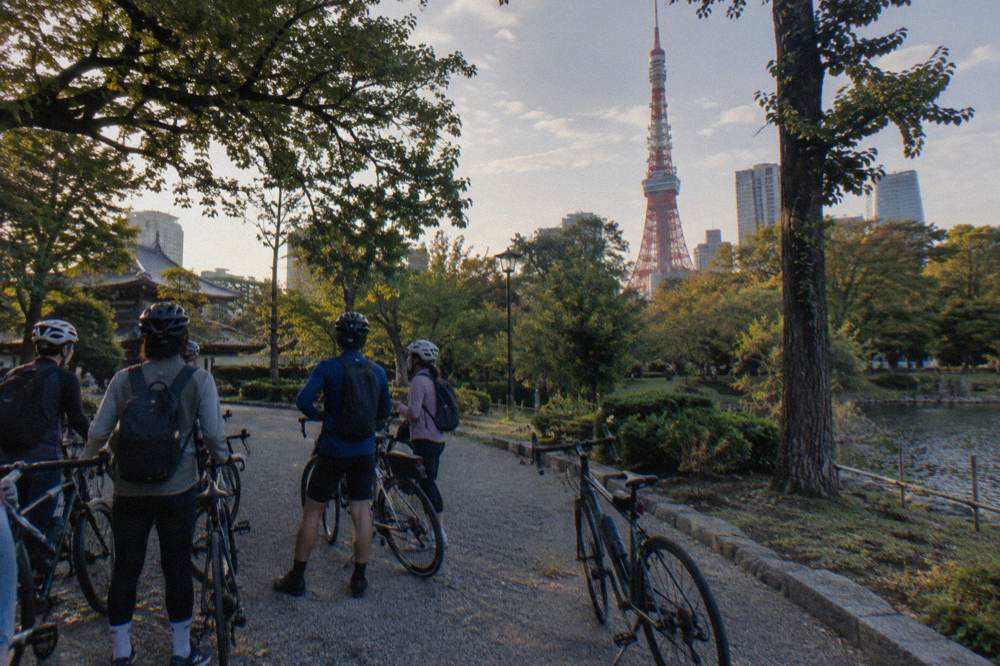
For riders who want privacy rather than a group, private formats work the same way on parking. The Private E-Bike From Your Hotel option from Tokyo Bike Bliss is a 3-hour e-bike ride rated 5.0 across 171 reviews, from $156.77 per person with the total depending on group size. The budget end of the private range is the Private Highlights E-Bike, Budget tour from Trip Port, from $54 per person, rated 4.4 across 47 reviews, with no hotel pickup. Both hand the bike back at the end of the ride.
Which Areas Of Tokyo Are Hardest For Bike Parking?
The areas around major rail terminals, Shinjuku, Shibuya, Ikebukuro, Tokyo Station and Ueno, are the most aggressively cleared of illegally parked bikes, with ward removal crews working those zones on a near-continuous basis. Historic districts with narrow streets, such as Yanaka and the old town around Asakusa, are manageable but tight, and river paths and park edges are the most relaxed environments for stopping.
The rule of thumb is simple: crowd density drives removal pressure.
Around the big terminals the pressure is not just enforcement but physical: the sidewalks are full, and a bike left anywhere near a station exit is both an obstruction and a target. If your route must pass through a major terminal area, plan to park a block or two away at a signed lot rather than right at the station, or use a share port, which by design sits in legal positions near stations.
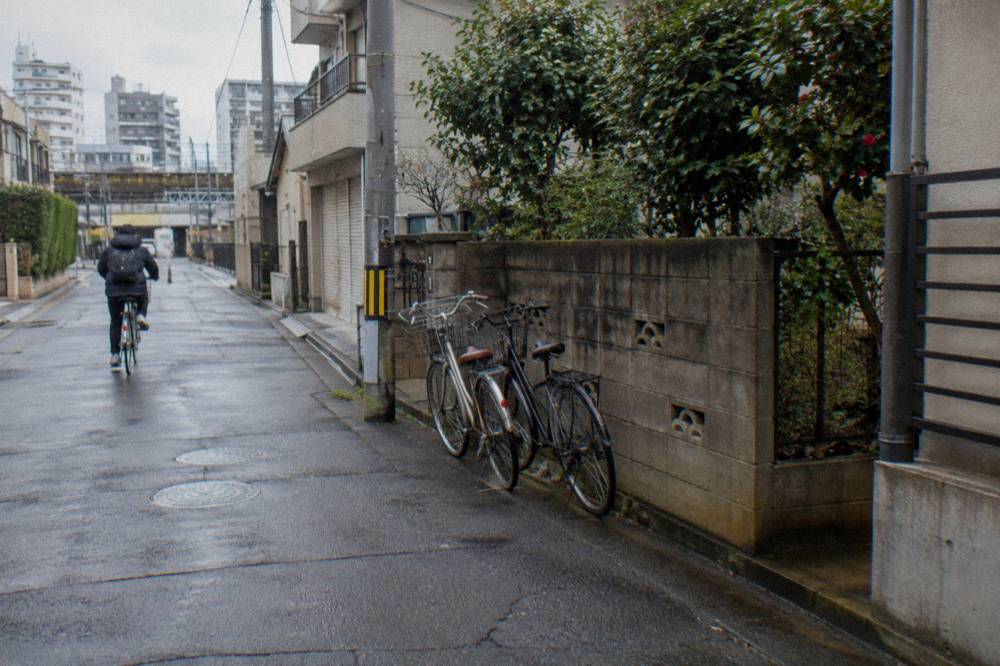
In the older low-rise neighbourhoods the problem changes shape. Streets are narrower, there is less formal parking, and local residents park mamachari bikes in unofficial clusters that a visitor cannot necessarily distinguish from legal spots. The safe approach is to stop only at racks or at your destination's own facilities. The Yanaka bike tour guide covers that neighbourhood's cycling character in detail, and the Tokyo backstreets bike tour guide does the same for the downtown lanes.
River paths and waterfront parks are the easy case. The Arakawa and Sumida river cycling roads have wide shoulders and informal stopping spots where a brief pause for photos or a drink is normal, and guided groups use these routinely. Route guides describe segments connecting toward Tokyo Bay and Odaiba as relaxed, car-light riding. Nothing here exempts you from the rules, but the enforcement pressure and the crowding are both far lower than at a rail hub.
What Rules Should Visitors Know Before Parking In Tokyo?
Visitors should know three things: the blue-ticket violation system from 1 April 2026 applies to riders aged 16 and over including overseas visitors, riding on sidewalks is an exception rather than the default, and bicycle liability insurance is required by Tokyo ordinance for all cyclists, with rental operators obliged to cover renters and explain the coverage. Parking itself sits alongside these rules rather than inside the ticket system.
The Tokyo Metropolitan Police English traffic rules page states plainly that cyclists will be issued with tickets for traffic offences, and GO TOKYO confirms this applies to tourists from overseas.
The blue-ticket system matters to parking mainly at its edges: riding the wrong way down a one-way street hunting for a spot, or mounting a crowded pavement to reach a rack, can themselves draw fines. Signal violations carry a 6,000 yen fine, riding against traffic 6,000 yen, and holding a phone while riding 12,000 yen, the highest bicycle fine. Officers normally give guidance and a warning first, with tickets reserved for malicious or dangerous violations. Helmet use is an effort obligation for every age since April 2023, with no fine attached. The MPD helmet page notes that 63.5 percent of cycling deaths in Tokyo between 2021 and 2025 involved fatal head injuries, which is why every guided tour on this site either includes a helmet or offers one.
| Rule | Detail | Fine or penalty |
|---|---|---|
| Holding phone while riding | Talk or screen viewing, hand-held | 12,000 yen blue ticket |
| Riding against traffic | Wrong side of road | 6,000 yen blue ticket |
| Ignoring a traffic signal | Red light | 6,000 yen blue ticket |
| Riding two abreast | Side by side, prohibited | 3,000 yen blue ticket |
| Carrying a passenger | Double riding, non child-seat | 3,000 yen blue ticket |
| No light at night | After dark riding | 5,000 yen blue ticket |
| Drunk cycling | Criminal offence, not blue ticket | Up to 5 years or 1,000,000 yen |
| Helmet | Effort obligation, all ages | No fine |
Insurance is the quiet one visitors skip. Tokyo has required bicycle liability insurance since 1 April 2020, and existing travel, home or credit-card policies with a personal liability rider can count, so check before you ride. If a rental operator hands you a bike, the operator must insure your use and tell you what is covered. Large liability judgments in Japan have run to tens of millions of yen, which is the context for the ordinance.
| Situation | Best parking move | Why |
|---|---|---|
| Day trip around one neighbourhood | Signed lot or destination rack | Short stops, low exposure |
| Multi-district hopping | Share bike with port returns | Storage solved by the system |
| Full-day exploration | Guided tour with fixed meeting point | Bike never left unattended long |
| Station area visit | Park a block away in a legal lot | Terminal zones are cleared fastest |
| Night ride | Port or well-lit signed lot | Same rules apply after dark |
For weather-aware planning, the JMA 1991 to 2020 normals for the Tokyo station show September and October as the wettest months at 224.9 mm and 234.8 mm of rain respectively, with December, January and February the driest. Rain changes parking behaviour citywide: share ports empty fast, covered lots fill, and a guided tour's covered meeting point looks increasingly attractive. The cycling in rain guide covers the wet-day decisions.
Is A Guided Ride Better Than Self-Guided For Avoiding Parking Trouble?
For most first-time visitors, yes: a guided ride eliminates the parking question at every stop, provides a guide who knows where groups can legally pause, and returns the bike at a fixed endpoint, while self-guided rental suits confident riders who plan their stops around signed lots or share ports. The cost gap is smaller than it looks once a day rental's total is counted honestly.
The right answer depends on confidence and itinerary, not budget alone.
Count the self-guided day properly: the rental itself, plus parking fees at each lot, plus the risk, small but real, of a removal fee and a lost afternoon at an impound lot. Against that, the entry-level guided options here start from $46 to $64 per person for short rides. The 2.5-Hour Central Short Ride from Tokyo Backstreets Bike Tour is from $51.82 per person, rated 5.0 across 25 reviews, group max six. The Shibuya-Harajuku 3-Hour Ride from COG EXPLORER JAPAN is from $57.01 per person, rated 4.8 across 57 reviews, meeting at Umayamichi Park. The 3-Hour Highlights, Bike or E-Bike option from TRB BIKE TOUR lets the rider choose bike type, from $61.54 per person, rated 4.9 across 980 reviews, meeting at the Statue of Commodore Perry, though note the helmet rental costs 1,000 yen in cash on the day.
The 80-Minute Shibuya Ride from JAPANKART is the shortest option, from $46 per person with a group max of five, though it has only 5 reviews so far, too few for a star rating. At the value end, the Certified Guide, 5-Hour History Ride is from $32.39 per person with 4 reviews, again too few for a rating claim. Both illustrate that the low end of the guided market is genuinely cheap; the trade-off is a thinner review history, and the booking page shows the current detail.
For a first Tokyo visit, the most reviewed option here is the Small-Group Long City Ride at 1,308 reviews with a 5.0 rating, and its six and a half hour format is long enough that the parking question would otherwise be a real burden if you were self-guiding. This is, in the end, the cleanest argument: the longer the day, the more stops, and the more stops, the more a guide-led format earns its price.
If you are weighing formats, these three span the range from full-day small group to food-focused to private:
Common Questions About Bike Parking In Tokyo
Can I Park My Bike On The Sidewalk In Tokyo?
No. Pavements, station forecourts and areas around railings are not legal parking, and ward removal crews clear bikes from these spots regularly. Use a signed bicycle lot, a station parking facility, a share-bike port, or a rack at the destination you are visiting. A bike left on a sidewalk near a major station is a strong candidate for removal to an impound lot.
How Much Does It Cost To Get An Impounded Bike Back In Tokyo?
Minato City charges a 2,000 yen release fee per impounded bicycle and 3,000 yen for a scooter. Shinjuku removes bikes near stations and charges a handling fee, but the amount is not stated on its English page. Other wards set their own fees, so confirm at the impound lot; bring photo identification.
Where Do I Go If My Bike Disappears In Tokyo?
Check for a removal sticker where you left it, ask at the nearest koban police box, and contact your rental operator. Most bikes near stations that vanish have been removed rather than stolen. Unclaimed bikes are eventually disposed of, so act quickly, especially with a rental return deadline.
Do Share Bikes Solve The Parking Problem In Tokyo?
Largely, yes. Docomo Bike Share and HELLO CYCLING require return to a designated port or station, so storage is part of the product. The trade-off is that between rides you have no bike at all, and leaving a share bike outside a port keeps extension fees running. Day passes and per-ride rates are on the operators' official price pages.
Is A Guided Bike Tour Better Than Renting For Avoiding Parking Trouble?
For most visitors, yes. Every guided tour starts and ends at a fixed meeting point, so the bike is only your responsibility while riding, and the guide handles where the group stops. Guided options here start from $46 per person for short rides, with free cancellation listed on the booking page, which makes the format low-risk for first-time visitors.
Are There Bike Parking Rules At Night In Tokyo?
The same parking rules apply at night, and riding after dark requires a working front light, with a 5,000 yen blue-ticket fine for riding without one. Night guided rides such as the 2-Hour Night Lights Ride, from $55.06 per person and rated 5.0 across 31 reviews, return the bike at the meeting point, so night parking never becomes the rider's problem.