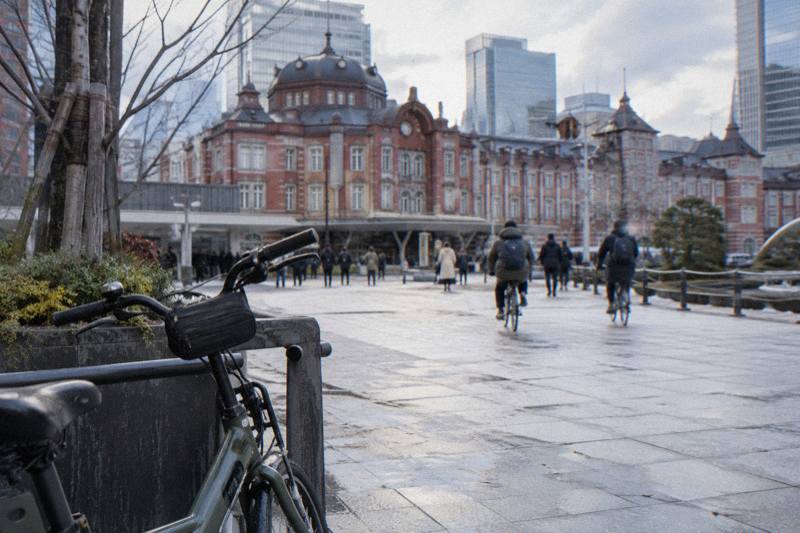
What Is Japanese Bike Culture Known For?
Mamachari bikes, roadway riding on the left, strict parking rules, mandatory liability insurance and the 2026 blue ticket system: what defines cycling culture in Tokyo and Japan, and how a visitor can ride it.
Japanese bike culture is known for everyday utility riding rather than sport: millions of step-through mamachari bikes carrying shopping, children and commuters, ridden with remarkable discipline on the left side of the roadway, governed by strict parking rules, compulsory liability insurance in Tokyo and, since 1 April 2026, a system of fixed fines for traffic violations that applies to overseas visitors too.
If you prefer riding a track-style bike with no freewheel, the question of whether fixed gear bikes are legal in Japan comes down less to the drivetrain and more to having a working brake.
That is the short version. The longer version is a culture that treats the bicycle less as recreation and more as a household appliance, something like a refrigerator with wheels. In Tokyo the bike is how a parent does the school run, how an office worker reaches a station that is fifteen minutes on foot from home, and how a shop owner moves boxes without paying for a van. The infrastructure, the laws and the etiquette all grew around that daily reality, and they look strange to visitors until you understand what they are optimised for.
The contrast with cycling cultures in Europe or North America is instructive. In Amsterdam or Copenhagen the bicycle is a political identity and a mode of transport. In Tokyo it is simply a tool, and nobody thinks twice about using one. That indifference to cycling as a statement is itself the most distinctive cultural trait: riding a bike in Japan carries no lifestyle signalling, no lycra expectation, and no judgement if your machine cost the equivalent of a nice dinner. What matters is that you ride it the way everyone else does, predictably, on the correct side, and park it where parking is allowed.
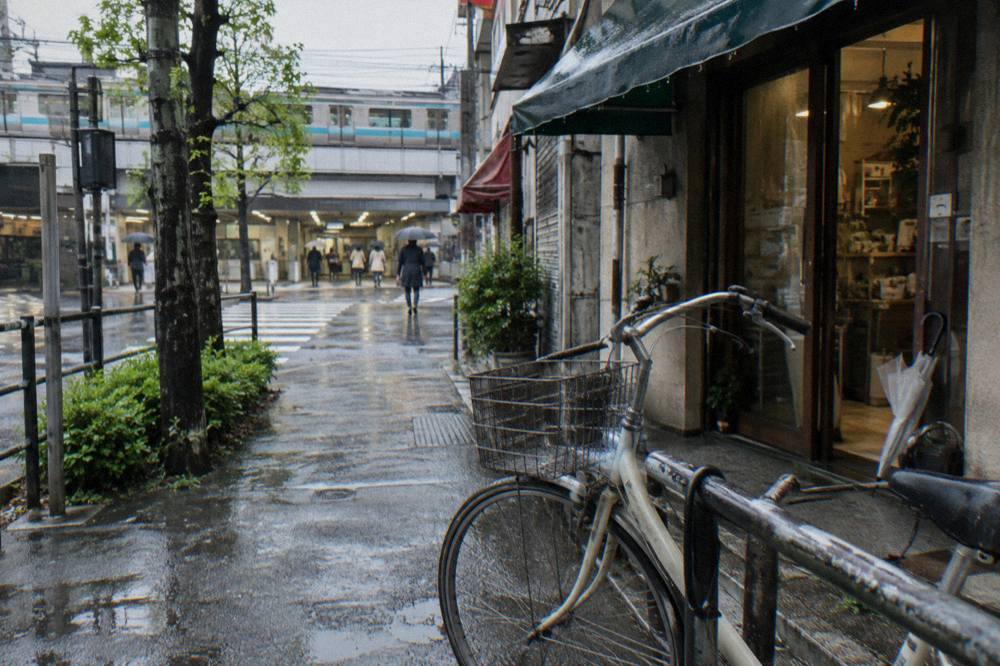
For a visitor, the fastest way to read this culture is to ride through it with someone who lives inside it. The 3-Hour Highlights, Bike or E-Bike tour from TRB BIKE TEAM, listed as "3-Hour Highlights, Bike or E-Bike", starts at the Statue of Commodore Perry, runs from $61.54 per person, and is rated 4.9 across 980 reviews; each rider chooses a regular bike or an e-bike at the start. You can check the ride details on the tour page or read more about formats in the Tokyo e-bike tour guide.
Why Does Everyone In Tokyo Ride A Mamachari?
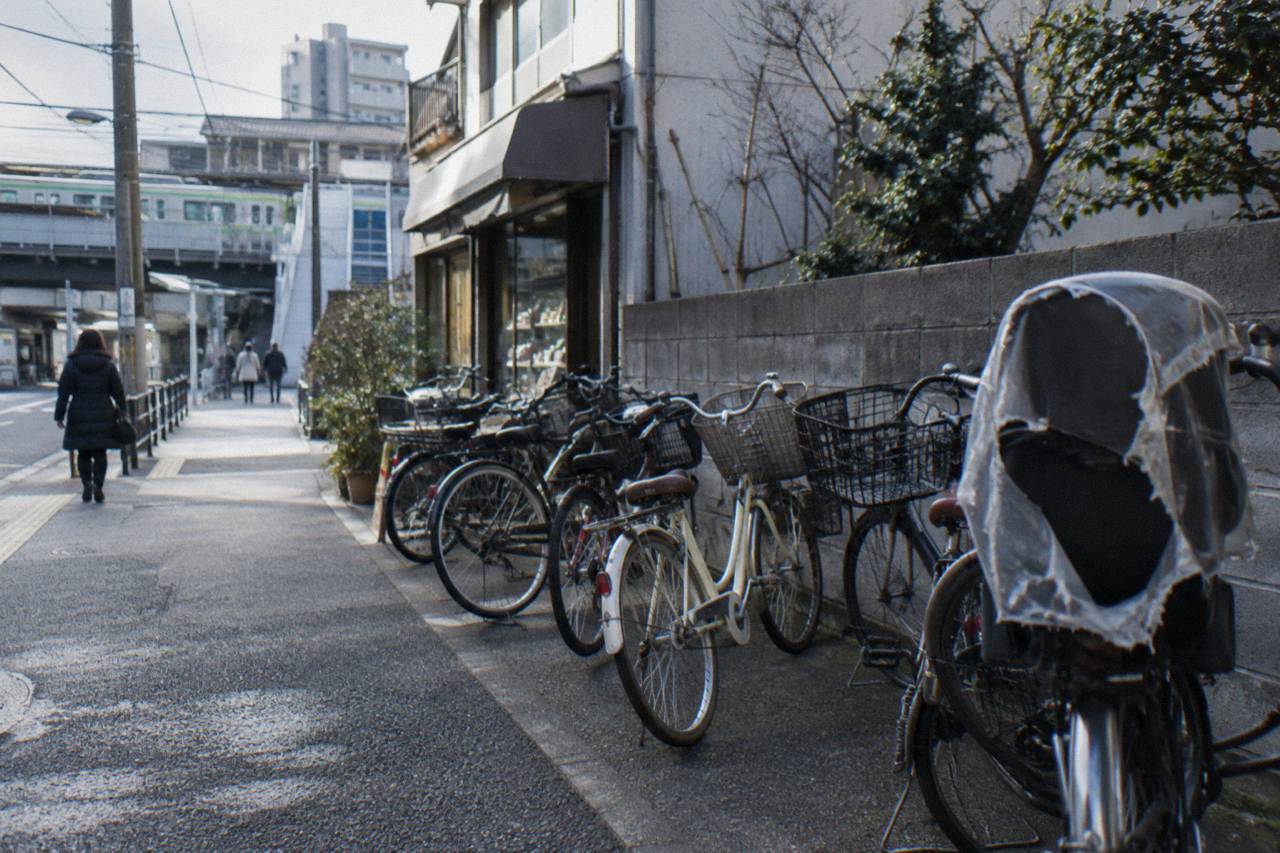
The mamachari, short for "mama's chariot", is Japan's default bicycle: a sturdy step-through frame with a front basket, a rear rack, a built-in lock, usually a single gear and often a child seat. It exists because Japanese cycling is errand cycling, and its design optimises for mounting in a skirt, carrying groceries and surviving a decade outdoors with minimal maintenance.
- City Bike Tours$32.39
- Private Tours$45.35
- Night Rides$55.06
- E-Bike Tours$61
- Day Trips By Bike$76
Walk down any residential street in Tokyo and you will see them by the hundred, parked in clusters outside supermarkets, kindergartens and station bicycle lots. The step-through frame is not a style choice; it is what lets a rider get on and off while holding a bag and a small child's hand. The front basket, typically wide enough for two days of vegetables, replaced the backpack decades ago. Chain guards and skirt guards keep clothing clean, and the integrated ring lock means the bike is secured in three seconds, reflecting a reality where the machine itself is cheap enough that elaborate locking is not the norm.
The mamachari also explains a piece of Japanese cycling etiquette that surprises visitors: the bell. Ringing a bell at a pedestrian is not rude in Japan; it is a polite, expected warning, the audible equivalent of "excuse me". Mamachari bells are used constantly, on shared paths and station underpasses, and pedestrians generally step aside without a glance. A visitor who hesitates to ring, worried it sounds aggressive, is misreading the local grammar.
What the mamachari is not, is fast. The classic single-speed version tops out at a gentle commuting pace, and that suits the culture: speed is not the point, arrival is. Riders who want hills handled without sweat have shifted the market toward electric-assist versions, and the share fleets reflect this too. Docomo Bike Share's Tokyo fleet, for instance, is built around electric-assist bikes, per its official price page. The everyday machine and the shared machine have converged on the same idea: modest, effortless, practical movement.
Where Are You Actually Allowed To Ride In Tokyo?
Japanese law treats the bicycle as a light vehicle: the default place to ride is the roadway, on the left side. Sidewalk riding is an exception, permitted only where a "bicycles may use sidewalk" sign allows it, for riders under 13 or over 70, for riders with disabilities, or when road conditions are genuinely unsafe. On a permitted sidewalk, riders must slow near the roadway edge and stop for pedestrians.
This single rule is the biggest cultural adjustment for visitors from countries where bikes belong on sidewalks. The Tokyo Metropolitan Police state it plainly on their bicycle rules page: roadway riding on the left is the principle, sidewalk riding the exception. In practice, Tokyo's residential backstreets function as the network that other cities build with bike lanes, narrow streets where cars travel slowly and bikes hold a predictable line. Guided tours lean on exactly this: the Akihabara and Palace E-Bike Loop from TOKYO ACTIVE TOURS, listed as a 3-hour e-bike ride capped at 4 riders, rated 5.0 across 65 reviews and from $97.17 per person, threads the palace moat roads and low-traffic districts where the roadway-first rule feels natural rather than intimidating.
“We always try to join a bike tour when we travel cities. This was by far the best one yet! The route chosen was truly a backstreet, off the beaten path route. The tour guide was so friendly, and informative. He truly made the tour amazing and memorable.”
Two more rules shape daily behaviour. Riding two abreast is prohibited, carrying a passenger (outside child-seat exceptions) is prohibited, and both carry fixed fines under the new system. Night riding requires a working light. None of this is enforced aggressively: the MPD's English traffic rules page confirms tickets apply to overseas visitors, but officers generally begin with guidance and a warning, and tickets follow dangerous or repeated violations.
| Rule | What Japanese Law Says | Typical Fine From April 2026 |
|---|---|---|
| Where to ride | Roadway, left side, by default; sidewalk only where signed or exempt | 6,000 yen for wrong division use |
| Two abreast | Prohibited except on rare signed roads | 3,000 yen |
| Carrying a passenger | Prohibited outside child-seat exceptions | 3,000 yen |
| Phone in hand | Prohibited to hold or view while riding | 12,000 yen, the highest bicycle fine |
| Light at night | Required, white or pale-yellow, visible 10 m | 5,000 yen |
The table above uses the fixed fine amounts published in the Tokyo Metropolitan Police bicycle rulebook. Visitors should read them as the ceiling of a graduated system: guidance first, warning second, ticket for dangerous or repeated conduct.
How Do Parking Rules Shape Tokyo Bike Culture?
Parking, not riding, is where Tokyo bike culture shows its discipline. Bikes left near stations are removed by ward authorities, and in Minato City the impound fee is 2,000 yen per bicycle, while Shinjuku City runs removal sweeps around stations with a handling fee on collection. The result is a landscape of designated bicycle lots, paid parking and a strong habit of parking exactly where the ward allows.
The economics explain the behaviour. A century of everyday cycling around stations produced tidal waves of parked mamachari, and the wards responded with removal trucks rather than tolerance. Minato City publishes its removal and impound rules in English, as does Shinjuku City for abandoned and removed bicycles. A visitor who parks a share bike outside a designated port, or a rented bike on a station walkway, can expect a sticker, then a removal, then a fee and a trip to an impound yard on the city's edge.
This is one reason share systems suit Tokyo so well. Docomo Bike Share and HELLO CYCLING both require return to designated ports, which converts the parking problem into an app problem: the port map tells you where a dock has space, and the fee clock keeps running if you abandon the bike outside one. The official Docomo price page lists one-time use at 165 yen per 30 minutes, a 1,650 yen day pass bought at a convenience store, and a 2,200 yen IC-card day pass, all tax included. HELLO CYCLING sets its prices per prefecture and vehicle in the app, per its official price page.
For travellers, the parking culture quietly argues for guided tours. Every tour on this site includes the bike, and the operator handles where machines start and finish, so the visitor never has to learn the unwritten map of legal parking spots around a station they have never used. That convenience is invisible until your first afternoon with a rental bike and nowhere legal to leave it.
Why Is Bicycle Liability Insurance Normal In Tokyo?
Since 1 April 2020, a Tokyo ordinance has required every cyclist in the prefecture to hold bicycle liability insurance or an equivalent that covers damage to others, and rental businesses must insure each hire and tell renters what is covered. Many existing home, auto, accident or credit-card policies with a personal liability rider already satisfy the requirement.
The rule exists because Japanese courts have handed down devastating judgements against cyclists, and the official MPD insurance page cites awards of more than 90 million yen in past pedestrian-injury cases. The cultural effect is that insurance is simply part of owning a bike in Tokyo, as unremarkable as the bell. Parents arrange cover for minors, employers for staff who ride for work, and rental operators for their customers.
Visitors are inside this system too. The ordinance applies to everyone riding in Tokyo, and GO TOKYO, the official tourism guide, tells visitors the same thing. In practice, a guided tour removes the question entirely: the operator's mandatory hire-cover applies, and the rental business is legally obliged to explain what it protects. A traveller borrowing a friend's bike, or using a share service, should check what personal liability cover their travel insurance or credit card already carries.
“Amazing fun and enjoyed the whole experience. Saw the quiet streets of Tokyo to the parts you would only find with a knowledgeable guide.”
What Changed With The 2026 Blue Ticket System?
From 1 April 2026, a national traffic violation notice system, the "blue ticket", applies to bicycle riders aged 16 and over, with fixed fines from 3,000 to 12,000 yen for offences such as phone use, signal violations and wrong-way riding. Officers normally give guidance and a warning first, tickets target malicious or dangerous violations, and the system applies to foreign visitors as well as residents.
Because the same rules apply to visitors, our guide to cycling in Japan as a tourist covers helmets, insurance and what a guided tour includes.
The fines are listed in the table earlier on this page, and the hierarchy they encode tells you what Japanese bike culture cares about most. The single highest bicycle fine, 12,000 yen, is for holding a phone to talk or watch while riding, double the fine for running a red light. Distraction is treated as the gravest everyday offence, drunk cycling far more seriously still: it stays a criminal matter, with up to five years' imprisonment or a fine of up to one million yen for riding while alcohol-impaired.
Helmets sit outside the fine system entirely. Since April 2023 every cyclist of any age has been under an effort obligation to wear one, meaning the law asks but does not penalise, and parents carry the same obligation for children. The police helmet guidance reports that 63.5 percent of cycling deaths in Tokyo between 2021 and 2025 involved fatal head injuries, and that the fatality rate without a helmet is 2.3 times higher. Culture, not enforcement, drives helmet use: many commuters still ride bare-headed, while tours increasingly include one, and listing details matter here, since on the 3-Hour Highlights ride the helmet is an optional rental at 1,000 yen in cash on the day, while most e-bike operators on this site include one.
The blue ticket's deeper cultural significance is that Japan chose education over punishment as the front line. Guidance and warnings vastly outnumber tickets, and the public messaging around the change has been relentless. A visitor riding sensibly on the left, phone pocketed, light on after dark, is overwhelmingly likely to receive nothing but a nod.
“Great tour and fun way to experience Tokyo! The tour was a perfect mix of hot spots and green areas of the city, and our guide was fantastic. She was attentive, knowledgeable, and fun to be around throughout the day.”
How Can A Visitor Ride Tokyo Bike Culture Rather Than Read About It?
The most direct way into the culture is a guided ride on the backstreets the mamachari population actually uses: a three-hour small-group tour with a local guide costs from about $57 to $64 per person, e-bike versions from about $61 to $97, and every option includes the bike, so the visitor experiences the roadway-left rule, the bell etiquette and the parking order with a guide absorbing the risk.
The format matters more than the itinerary. A self-guided rental drops you into a rule system you have read about for twenty minutes; a guided ride hands you the rules through practice, with someone ahead of you demonstrating the line to hold at an intersection and the speed to take a shared underpass. The two strong candidates differ mainly in intimacy. The Akihabara and Palace E-Bike Loop caps groups at 4 riders; the 3-Hour Highlights ride lets each rider pick a pedal bike or an e-bike and has drawn 4.9 across 980 reviews, the deepest review pool among the city's short rides.
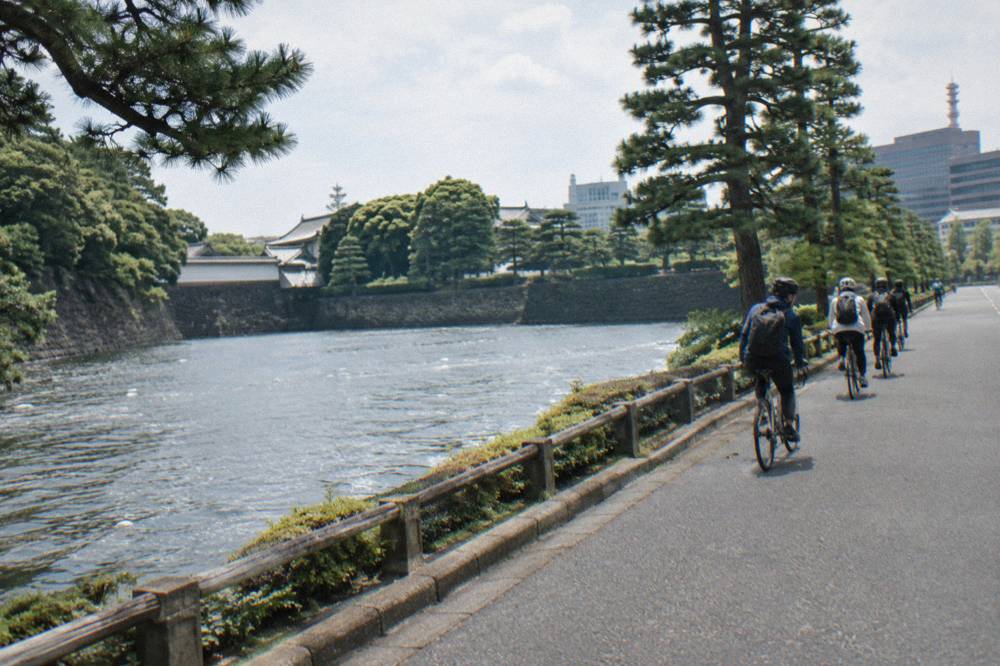
Private options let you set the pace around cultural detours, a shotengai shopping street, a shrine bicycle racks fill up before noon. Private E-Bike From Your Hotel from Tokyo Bike Bliss is a 3-hour private e-bike ride rated 5.0 across 171 reviews, from $156.77 per person, with the total depending on group size, so the booking page gives the real figure for your party. It begins at your hotel door, which in Tokyo is a genuine cultural immersion of its own: your guide rides the mamachari geography of your own neighbourhood before heading for the sights. You can also compare the trade-offs in the private or group bike tour guide.
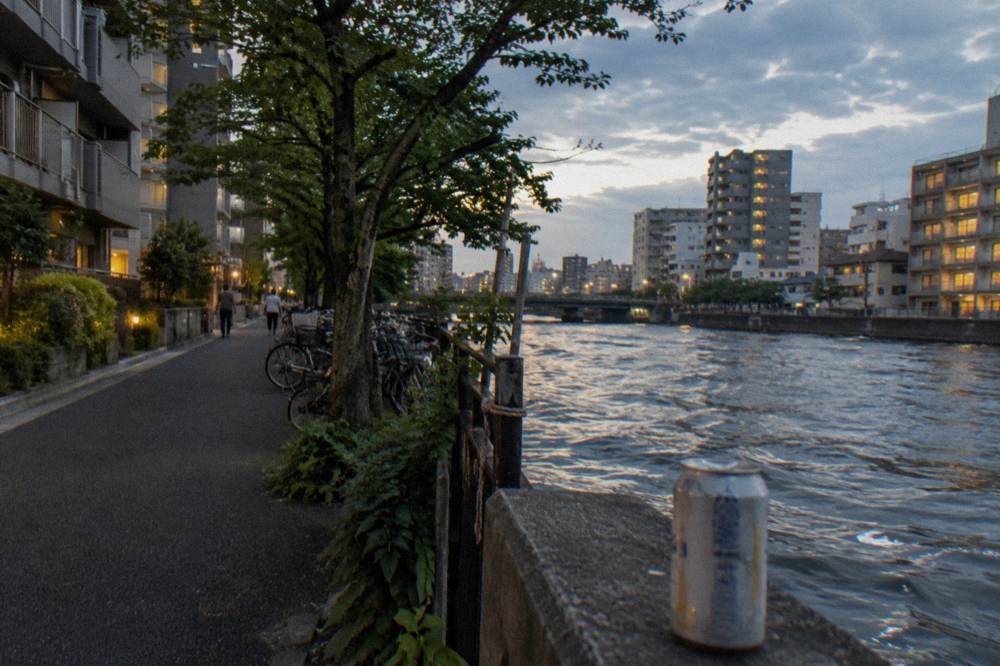
Timing shapes what you see. The palace moat roads, the riverside paths along the Arakawa and Sumida, and the Sunday cycling openings reported around the Imperial Palace all reward a morning start, and autumn's late-November colour along the ginkgo-lined streets is, by common account, the season the city photographes best from a saddle. Whatever the month, riding with a guide rather than alone means the small cultural tells, the bell as courtesy, the left-side instinct, the neat parking geometry, are pointed out instead of missed.
For everything else, the pages on Tokyo Bike Tours break the options down by format, neighbourhood and season, and the is a Tokyo bike tour worth it piece weighs the question most culture-curious visitors arrive with.
Common Questions About Japanese Bike Culture
What Is Japanese Bike Culture Known For?
Everyday utility riding on mamachari bikes, disciplined left-side roadway cycling, strict parking enforcement near stations, compulsory liability insurance in Tokyo, and since April 2026 a fixed-fine system for traffic violations that applies to visitors as well as residents.
Do Locals In Tokyo Ride Bikes On The Sidewalk?
Rarely, and only where the law allows it. The roadway on the left is the default, and sidewalk riding is permitted only with a specific sign, for riders under 13 or over 70, for riders with disabilities, or when the road is genuinely unsafe. On a permitted sidewalk, riders must slow down and stop for pedestrians.
Is Wearing A Helmet Required In Tokyo?
No. Since April 2023 helmet use is an effort obligation for every age, which means the law asks riders to wear one but imposes no fine. Police data links a large share of cycling deaths to head injuries, and guided tours increasingly include a helmet, though some list it as a paid rental.
Do The 2026 Bicycle Fines Apply To Tourists?
Yes. The Tokyo Metropolitan Police's English traffic rules page confirms tickets apply to overseas visitors, and GO TOKYO repeats the same for tourists. In practice officers normally give guidance and a warning first, with tickets reserved for dangerous or repeated violations.
What Kind Of Bicycle Do Most People In Tokyo Ride?
The mamachari: a single-speed or lightly assisted step-through bike with a basket, a rear rack, a skirt guard and a built-in lock. It is designed for errands and short station commutes rather than speed, and it defines what most of the city's bikes look like.
Can Visitors Join A Guided Ride In Tokyo?
Yes, with a range of formats. A three-hour highlights ride with a choice of regular bike or e-bike runs from $61.54 per person, an e-bike loop capped at four riders from $97.17, and private hotel-start e-bike rides from $156.77 per person with the total depending on group size.