Japan Cycling Rules For Tourists: Lights, Helmets And Fines
Japan tightened its cycling enforcement in April 2026 with a blue ticket fine system that applies to overseas visitors too. Here is what the rules actually say, what the fines are, and how a guided ride takes the guesswork out of them.
Short answer
The core rules: ride on the left side of the roadway, use sidewalks only where signed or permitted, carry lights at night, never hold a phone while riding, and carry liability insurance in Tokyo. Since 1 April 2026 riders aged 16 and over can be fined between 3,000 and 12,000 yen for violations, and the system applies to tourists.
Japan rewired its bicycle enforcement on 1 April 2026. A traffic violation notice system, known widely as the blue ticket, extended fixed fines to cyclists aged 16 and over, and the Tokyo Metropolitan Police states plainly on its English traffic rules page that overseas visitors are included. For a tourist renting a bike or joining a ride such as the Small-Group Long City Ride, a 6 hour 30 minute tour rated 5.0 across 1,308 reviews, that changes the stakes of a casual mistake: riding through a red light or holding a phone while pedaling is no longer just a warning matter. Since the same penalties apply to riding in the wrong place, our guide to where you may legally cycle in Tokyo explains the roadway-first rule and the sidewalk exceptions that catch many visitors off guard.
The good news is that the rules themselves are short and logical, and officers normally start with guidance and a warning rather than a ticket. This guide walks through every rule a visitor realistically meets: where to ride, helmets, lights, insurance, drink riding, phone use and parking, with the exact fine amounts published by the Tokyo police. It also explains where a guided tour fits, since a guide handles route choices that keep you on the right side of all of it. If you're still working out whether you can rent and ride a bike as a visitor at all, start with the can tourists ride bikes in Japan guide.
What Are The Main Japan Cycling Rules For Tourists?
The five rules that matter most are: ride on the left side of the roadway, use sidewalks only where a sign permits it, stop at signals and crossings, never hold a phone while riding, and use front and rear lights after dark. Since April 2026 each of these can carry a fixed fine of between 3,000 and 12,000 yen for riders aged 16 and over, and the police confirm the system applies to foreign visitors.
- City Bike Tours$32.39
- Private Tours$45.35
- Night Rides$55.06
- E-Bike Tours$61
- Day Trips By Bike$76
A bicycle is classified in Japan as a light vehicle, which is the root of almost everything else. The roadway is the default place to ride, on the left half of the lane. Sidewalks are an exception, allowed where a blue sign reads "ordinary bicycle sidewalk passage permitted", for riders under 13 or over 70, for riders with disabilities, and where road conditions make the roadway genuinely unsafe. Where you do take a permitted sidewalk, the duty is to ride slowly on the side nearest the roadway and stop for pedestrians, who always have priority.
The Metropolitan Police lay all of this out on their official bicycle rules page, and the city's tourism body repeats the essentials for visitors in its official guide to bicycles. One detail surprises many visitors: tandem bicycles are allowed on all public roads across Tokyo's 23 wards and the wider prefecture, a local allowance that is not common elsewhere in Japan.
| Rule | What It Means In Practice | Fine If Ticketed |
|---|---|---|
| Ride on the left of the roadway | The roadway is the default; keep left | 6,000 yen for riding against traffic |
| Sidewalk only where signed | Otherwise it is an exception case | Up to 50,000 yen as a criminal penalty |
| Stop at signals and crossings | Full stops at stop signs, signals, rail crossings | 5,000 to 6,000 yen |
| Lights after dark | White or pale-yellow front light visible at 10 m | 5,000 yen |
| No phone in hand | Holding to talk or watch the screen | 12,000 yen |
Enforcement philosophy matters as much as the numbers. Police guidance says officers normally give guidance and a warning first, and tickets are aimed at malicious, dangerous or repeated violations. A tourist who drifts onto a signed sidewalk slowly and carefully is in a different category from a rider weaving through a scramble crossing against the light. The system is designed to change habits, and warnings do most of that work.
Riding with a guide removes most of these judgment calls entirely. Tours such as the 6-Hour Full City Ride, rated 4.9 across 842 reviews and from $97.17 per person, route groups along streets the operator already knows, and the group sizes, up to 12 on that ride, keep everyone within a guide's line of sight. If the rulebook feels heavy, the practical answer is to let someone who rides it daily make the decisions.
Do You Need A Helmet To Cycle In Tokyo?
No law forces a helmet on any age of rider. Since April 2023 every cyclist in Japan, of any age, is under an effort obligation to wear one, which means the law asks you to try but imposes no fine for skipping it. Tokyo police data adds a hard reason to comply: 63.5 percent of cycling deaths in Tokyo between 2021 and 2025 involved fatal head injuries, and the fatality rate without a helmet is 2.3 times higher.
The effort obligation, written into the Road Traffic Act, also extends to parents, who must try to have children wear helmets, and to adults carrying child passengers. The police helmet guidance frames it as a safety choice backed by those fatality statistics rather than a punishment matter, and no blue ticket fine exists for a bare head.
On tours the question answers itself, because most operators include a helmet in the price. The Small-Group Long City Ride lists both bike and helmet as included, as does the 4-Hour Downtown Backstreets Ride, rated 4.9 across 124 reviews and from $77.74 per person. One budget note worth knowing: on the 3-Hour Highlights, Bike or E-Bike tour, rated 4.9 across 980 reviews and from $61.54 per person, the helmet is a separate rental at 1,000 yen, payable in cash on the day, which is the kind of small detail that decides whether you bring notes.
| Helmet Situation | Legal Status | Practical Reading |
|---|---|---|
| Adult without a helmet | Effort obligation only, no fine | Strongly advised by police data |
| Child rider without a helmet | Parents carry the effort obligation | Standard practice is to wear one |
| Helmet included on a tour | Listed per tour, check inclusions | Most Tokyo tours include one |
| Helmet as a paid extra | Example: 1,000 yen cash on one tour | Bring cash if the listing says so |
Visitors who want the wider safety picture around riding in the capital can follow the site's deeper write-up on whether cycling in Tokyo is safe, which pulls together the accident context behind these rules.
Where Are You Allowed To Ride In Tokyo?
The roadway, on the left, is the default everywhere in Japan. Sidewalks are legal only with a specific permitting sign, for riders under 13 or 70 and over, for riders with disabilities, or where the roadway is genuinely unsafe, and even then you must crawl along near the curb and stop for pedestrians. Riding two abreast is prohibited, carrying a passenger is prohibited, and both carry fines.
The two-abreast ban is the one visiting club riders trip over. Japan's Road Traffic Act Article 19 forbids side by side riding on ordinary roads, with rare signed exceptions, and the blue ticket fine is 3,000 yen. Riding with a passenger, beyond approved child seats, is the same 3,000 yen. On a guided tour this is invisible because groups ride single file behind the guide by habit.
Pedestrian crossings carry their own duty: if someone is crossing, you stop. Failing to stop for a pedestrian at a crossing is a 6,000 yen fine, the same tier as running a red light. Rail crossings require a stop and look even when no train is visible, and entering one as the barriers come down jumps to 7,000 yen.
Night riding adds the lighting rules. A white or pale-yellow front light visible from 10 meters and a rear reflector are required, and riding without them after dark is a 5,000 yen fine. Umbrella holding and earphones in both ears sit in the same 5,000 yen tier, a Tokyo prefectural rule that catches visitors who ride one-handed under a parasol in summer rain.
For visitors who would rather absorb these habits than memorize them, a small-group ride is the efficient route. The Small-Group Long City Ride caps its group at 5 riders, includes the bike and helmet, and starts from Tokyo Opera City Sankun Garden, all of which keeps the logistics simple while the guide handles street choices. Free cancellation is listed on the tour's booking page, so a change of plans does not lock you in.
What Are The Blue Ticket Fines For Cyclists In Tokyo?
Fines run from 3,000 to 12,000 yen. The top fine, 12,000 yen, is for holding a phone to talk or watch while riding. Red lights, riding against traffic and unsafe sidewalk riding are 6,000 yen. Stop sign failures, no lights at night, umbrella holding and earphone use are 5,000 yen. Two-abreast riding and carrying a passenger are 3,000 yen.
The system started on 1 April 2026 under an amended Road Traffic Act and applies nationwide to riders aged 16 and over; under 16 receives guidance and warnings rather than tickets. The Metropolitan Police notice on the new system is the primary source, and their English pages confirm the rules reach foreign riders. Drunk cycling sits outside this ladder entirely: it is a criminal matter carrying up to 5 years imprisonment or a fine of up to 1,000,000 yen.
Fixed Fines For Cycling Rule Violations In Japan
Blue ticket amounts since April 2026 for riders aged 16 and over, including visitors
| Violation | Fine | Notes |
|---|---|---|
| Holding a phone to talk or view | 12,000 yen | Highest bicycle fine |
| Red light, wrong side, unsafe sidewalk riding | 6,000 yen | Also failure to stop for pedestrians |
| Rail crossing entered while closing | 7,000 yen | Simple non-stop at a crossing is 6,000 yen |
| Stop sign failure, no night light, umbrella, earphones | 5,000 yen | Earphones must block sound in both ears |
| Defective or missing brake | 5,000 yen | Checked on rentals before you set off |
| Two abreast, carrying a passenger | 3,000 yen | Child seats exempt |
A separate criminal tier sits above the fines. Hand-held phone use that creates actual danger carries up to 1 year imprisonment or a fine up to 300,000 yen, and ordinary phone holding short of danger carries up to 6 months or 100,000 yen. These are not blue ticket amounts, and no tourist should treat the 12,000 yen figure as a ceiling for genuinely dangerous riding.
For background on how the 2026 change fits Japan's wider rulebook, the site's blog piece on the new bicycle rules in Japan covers the national picture.
Is Bicycle Insurance Required In Tokyo?
Yes. Since 1 April 2020 a Tokyo ordinance requires every cyclist in the prefecture to hold bicycle liability insurance or an equivalent that covers damage to others, and the requirement explicitly includes visitors. Many home, travel, accident and credit card policies with a personal liability rider already count, so check before buying anything.
The ordinance also puts duties on businesses: rental shops must insure the hirer's use and must tell renters what the insurance covers, and parents are responsible for minors. The police insurance page sets this out, including two court judgments the city cites as the reason: a 95,210,000 yen award in Kobe and a 92,660,000 yen award in Tokyo following serious collisions.
For tourists the practical chain is short. If you join a guided tour, the operator's rental insurance obligation covers the ride as part of the booking. If you rent independently, the shop must explain the cover before you roll out. If you ride a share bike, the operator's terms apply. Reading those two sentences at the counter is the whole task.
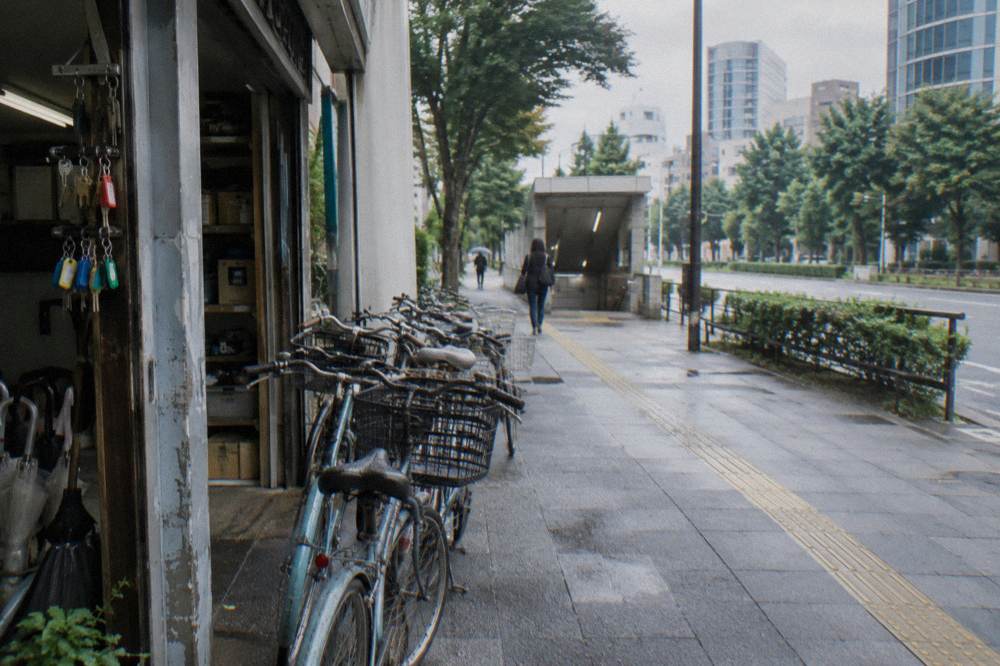
Guided options make this effortless by design. The Local Life E-Bike, Starts Near Station tour, rated 4.9 across 753 reviews and from $63.48 per person, includes the e-bike and guide with group sizes capped at 6, and every tour on this site lists free cancellation on its booking page unless noted otherwise.
How Do Drink Riding And Phone Rules Work In Japan?
Drunk cycling is a criminal offense, not a blue ticket matter, with penalties up to 5 years imprisonment or a 1,000,000 yen fine, and riding over the alcohol limit carries up to 3 years or 500,000 yen. Hand-held phone use is the single most expensive blue ticket at 12,000 yen, and dangerous phone use can escalate to criminal penalties up to 1 year or 300,000 yen.
The drink riding tiers extend further than most visitors expect. Providing a bicycle to someone who has been drinking carries up to 3 years or 500,000 yen, and serving the alcohol or riding along as a passenger carries up to 2 years or 300,000 yen. After a night izakaya crawl, the rule is simple: do not touch a bike, and do not hand your companion one either.
The phone rule is the one that most often catches otherwise careful riders. Holding a phone to navigate, talk or check a map while moving is the 12,000 yen fine, and phone use judged dangerous jumps to the criminal tier. Mounted phone holders are the standard workaround, and many tour guides handle navigation precisely so guests never need to.
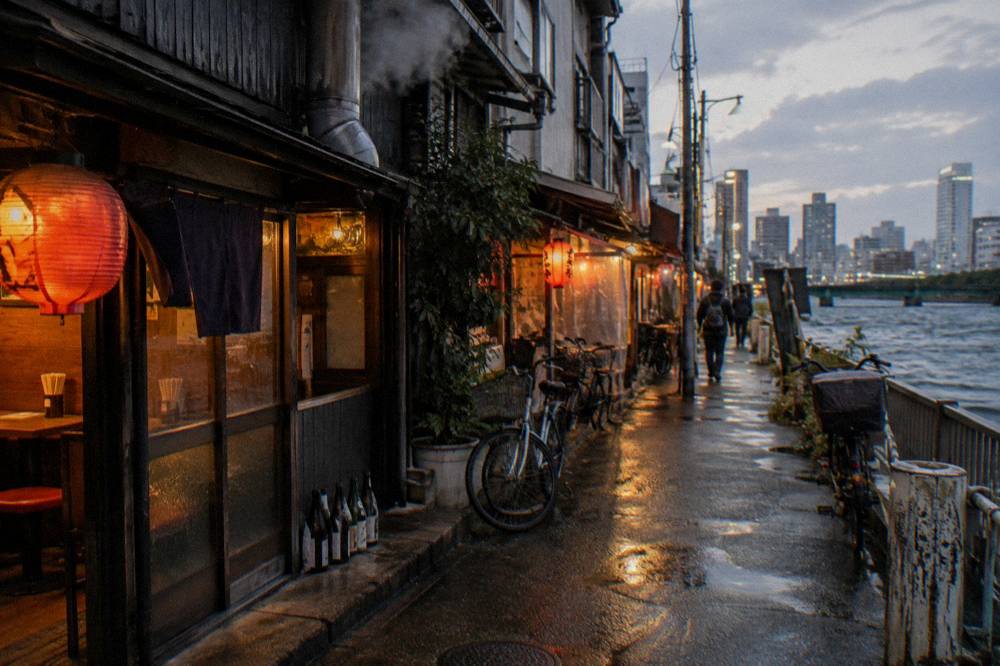
Night rides organized around the lights rather than the bars sidestep the whole question. The 2-Hour Night Lights Ride, rated 5.0 across 31 reviews and from $55.06 per person, tours Shibuya and Tokyo Tower after dark with a group capped at 6, and dinner is simply not part of the itinerary. The site's guide to Tokyo night bike tours covers the format in detail.
Where Can You Park A Bike In Tokyo?
Not on sidewalks, not against railings, and not near station entrances. Wards tow parked bikes from no-parking zones and charge a release fee, for example 2,000 yen for a bicycle at the Minato City impound. Use designated parking lots, share-bike ports, or return the bike to the shop, and never assume a quiet corner is fine.
Ward-level enforcement is aggressive around stations. Minato City publishes its removal and impound rules on an English impound information page, and Shinjuku City runs its own removal program near stations, with the handling fee stated only at release. The towing happens fast in morning peaks, and recovering a bike costs an afternoon as well as the fee.
Share bikes solve parking cleanly because they must be returned to designated ports. Docomo Bike Share, the largest scheme, charges 165 yen per 30 minutes on one-time use, with a 1,650 yen day pass bought at a convenience store, though registration needs a smartphone and an SMS capable phone, which trips up some foreign visitors. The site's Tokyo bike share guide works through the options.
| Parking Situation | What Happens | Cost Or Rule |
|---|---|---|
| Sidewalk near a station in a no-parking zone | Bike removed to a ward impound | Example release fee 2,000 yen in Minato |
| Designated bicycle parking lot | Legal, time limited in places | Fees vary by facility, check the sign |
| Share bike returned to a port | Correct method, fees stop | 165 yen per 30 min on one-time Docomo use |
| Share bike left outside a port | Extension fees keep running | Return rules are strict |
| Tour bike at the end of a guided ride | Operator collects it | Nothing for you to do |
On a guided tour, parking ceases to be your problem: rides start and finish at a fixed meeting point and the operator takes the bikes back. That sounds trivial until you have watched a tourist chase a towed mamachari across two ward offices.
How Does A Guided Tour Handle The Rules For You?
A guided tour supplies the bike, the helmet where listed, the insurance that rental operators must provide, and above all a route chosen by someone who already rides these streets. Group caps of 3 to 12 keep the group controllable, guides set the single-file spacing, and every tour on this site lists free cancellation on its booking page unless a listing states otherwise.
The economics are friendlier than many visitors assume. Rule-checking riders often prefer a guided ride precisely because the rule burden transfers to the operator. Prices across the main group options run from about $55 to about $107 per person, and the premium options mostly buy duration and depth rather than privilege.
| Tour | Duration | Rating And Reviews | From Price | Group Max |
|---|---|---|---|---|
| Small-Group Long City Ride | 6 hours 30 minutes | 5.0, 1,308 reviews | $106.89 | 5 |
| 6-Hour Full City Ride | 6 hours | 4.9, 842 reviews | $97.17 | 12 |
| 4-Hour Downtown Backstreets Ride | 4 hours | 4.9, 124 reviews | $77.74 | 6 |
| Local Life E-Bike, Starts Near Station | 3 hours | 4.9, 753 reviews | $63.48 | 6 |
| 2-Hour Night Lights Ride | 2 hours | 5.0, 31 reviews | $55.06 | 6 |
Duration is the honest differentiator. A 2-hour ride shows you a district; a 6 hour 30 minute ride such as the Small-Group Long City Ride covers a cross-section of the city with a break in the middle, still at a group size of 5. First-time visitors unsure of their legs can start with the site's Tokyo bike tour guide or its piece on Tokyo bike tours for beginners before committing to a full day.
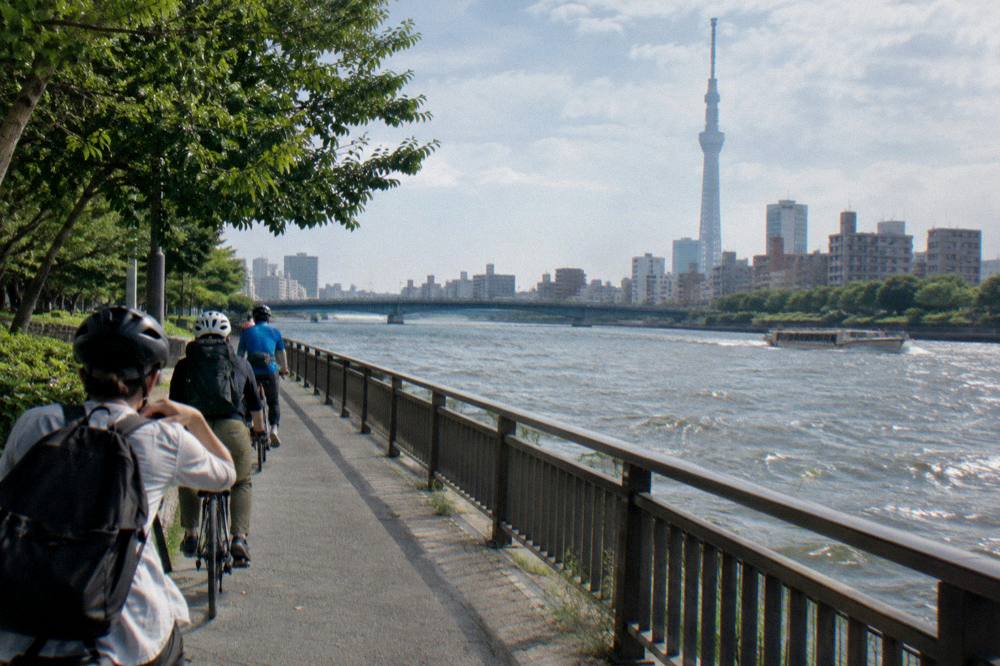
The rule knowledge travels with the guide, not the bike. Where a sidewalk is legally rideable, the guide knows it; where a crossing habit differs, the guide calls it. After a few hours you internalize the rhythm of left-side riding without ever having studied a fine table, which is arguably the fastest way to learn a country's cycling culture. If you want Tokyo Bike Tours to carry that load, the options above are the places to start.
Common Questions About Cycling Rules In Tokyo
Do You Need A Helmet To Cycle In Tokyo?
No. Since April 2023 helmets are an effort obligation for every age, meaning the law asks you to wear one but imposes no fine. Tokyo police report that 63.5 percent of cycling deaths in the city between 2021 and 2025 involved head injuries, and most guided tours include a helmet in the price.
What Are The Main Japan Cycling Rules For Tourists?
Ride on the left of the roadway, use sidewalks only where signed or otherwise permitted, stop at signals, crossings and rail crossings, use lights after dark, never hold a phone, and never ride after drinking. Since 1 April 2026 violations by riders 16 and over can draw fixed fines of 3,000 to 12,000 yen.
Do The Blue Ticket Rules Apply To Foreign Visitors?
Yes. The Tokyo Metropolitan Police English traffic rules page states that cyclists will be issued tickets for traffic offences, and the official visitor guide confirms this also applies to tourists from overseas. Officers normally give guidance and a warning first.
Is Bicycle Insurance Required In Tokyo?
Yes, since 1 April 2020 a Tokyo ordinance requires all cyclists, including visitors, to hold liability insurance or an equivalent. Rental businesses must insure the hirer's use and explain the cover, and existing travel or credit card policies with a personal liability rider may already count.
Can You Ride On The Sidewalk In Tokyo?
Only where a sign permits ordinary bicycles on the sidewalk, for riders under 13 or 70 and over, for riders with disabilities, or where the roadway is unsafe. Even then you must ride slowly near the roadway side and stop for pedestrians. Riding two abreast and carrying a passenger are both prohibited.
What Happens If You Park A Bike On A Tokyo Sidewalk?
Wards remove bikes parked in no-parking zones near stations and charge a release fee, for example 2,000 yen for a bicycle at the Minato City impound. Use designated lots, share-bike ports or your tour's fixed start and finish point.