Is Cycling In Tokyo Safe? Traffic, Sidewalks And Etiquette
Tokyo cycling is safer than its reputation suggests, but the rules changed in April 2026 and the police now fine riders aged 16 and over for repeated violations. Here is what the rules actually say, where the risks sit, and how a guided ride lowers them.
Short answer
Yes, for most visitors, cycling in Tokyo is reasonably safe when the rules are followed. Tokyo reports low cyclist fatality numbers relative to trips, helmets are recommended for every age, and since 1 April 2026 riders aged 16 and over can be fined for violations such as phone use or riding against traffic. A guided tour removes most of the guesswork.
Tokyo moves roughly 20 million people a day across trains, roads and pavements, and a large share of local trips still happen on ordinary bicycles. For a visitor watching the flow at Shibuya or Asakusa, the mixture of bikes, pedestrians and cars can look chaotic. It is more orderly than it looks, and the rules that govern it are written down, enforced, and since April 2026 backed by real fines. The question "is cycling in Tokyo safe" has a more specific answer than most guidebooks give, and it starts with the police.
The short version: Tokyo cycling is safe for visitors who ride predictably, keep left, and follow the signage. The Metropolitan Police publish the rules in English, the blue-ticket violation system now applies to overseas visitors as much as to residents, and the simplest way to absorb all of it in one morning is to follow someone who already knows. The Small-Group Long City Ride run by Bicycle Tours Tokyo, rated 5.0 across 1,308 reviews and priced from $106.89 per person, exists almost entirely for that reader: the person who wants to see the city by bike but does not want to work out the traffic alone. This page walks through the rules, the risks and the etiquette, and finishes with the options that reduce the learning curve. If you are still unsure where you are actually allowed to ride, the guide to Tokyo bike lanes and road rules explains when the sidewalk is permitted and what those blue tickets can cost you.
- City Bike Tours$32.39
- Private Tours$45.35
- Night Rides$55.06
- E-Bike Tours$61
- Day Trips By Bike$76
Is Cycling In Tokyo Safe For First-Time Visitors?
For most first-time visitors the answer is yes, with conditions. Tokyo cycling is calm by big-city standards, riders keep to the left, and speeds are low, but the safety depends on following local conventions rather than importing habits from home. Since 1 April 2026 the police can fine riders aged 16 and over, and the rules apply to tourists explicitly. Preparation matters more than nerve.
Two things surprise new riders in Tokyo. The first is that bicycles are treated as light vehicles with a real legal status, not as pedestrians on wheels. The second is how much of the network is ordinary neighbourhood streets rather than separated lanes. Riding in Tokyo is mostly riding on small roads shared with cars, and the safety case rests on the fact that those cars move slowly and expect bikes.
The official visitor guidance backs this up. The GO TOKYO city guide to bicycles tells overseas visitors plainly that the traffic rules apply to them, including the insurance expectation and the sidewalk rules, and the official visitor cycling guide is worth two minutes before any ride. For the deeper detail on what changed in 2026, the companion piece Japan cycling rules for tourists covers the national picture.
For a first-timer, three habits carry most of the safety value: keep left, match the speed of the traffic around you, and dismount at the places locals dismount, which usually means crowded shopping streets and the biggest crossings. Riders who do those three things rarely have a problem. Riders who treat sidewalks as bike paths, or who check a phone while moving, are the ones the new rules were written for.
Where Are You Allowed To Ride In Tokyo?
The default place to ride is the roadway, on the left side, because a bicycle is legally a light vehicle. Sidewalk riding is an exception, allowed only where a blue sign permits it, for riders under 13 or over 70, for riders with disabilities, or where the road is genuinely unsafe. On a permitted sidewalk, ride slowly near the kerb and give way to pedestrians.
That hierarchy is the single most important thing to internalize, because it is the opposite of what many visitors assume. The Tokyo police bicycle rules page sets it out: roadway first, left side, and sidewalk only under the listed conditions. When you do use a permitted sidewalk, pedestrians have absolute priority, and failing to slow or stop for them is a fineable violation under the 2026 system.
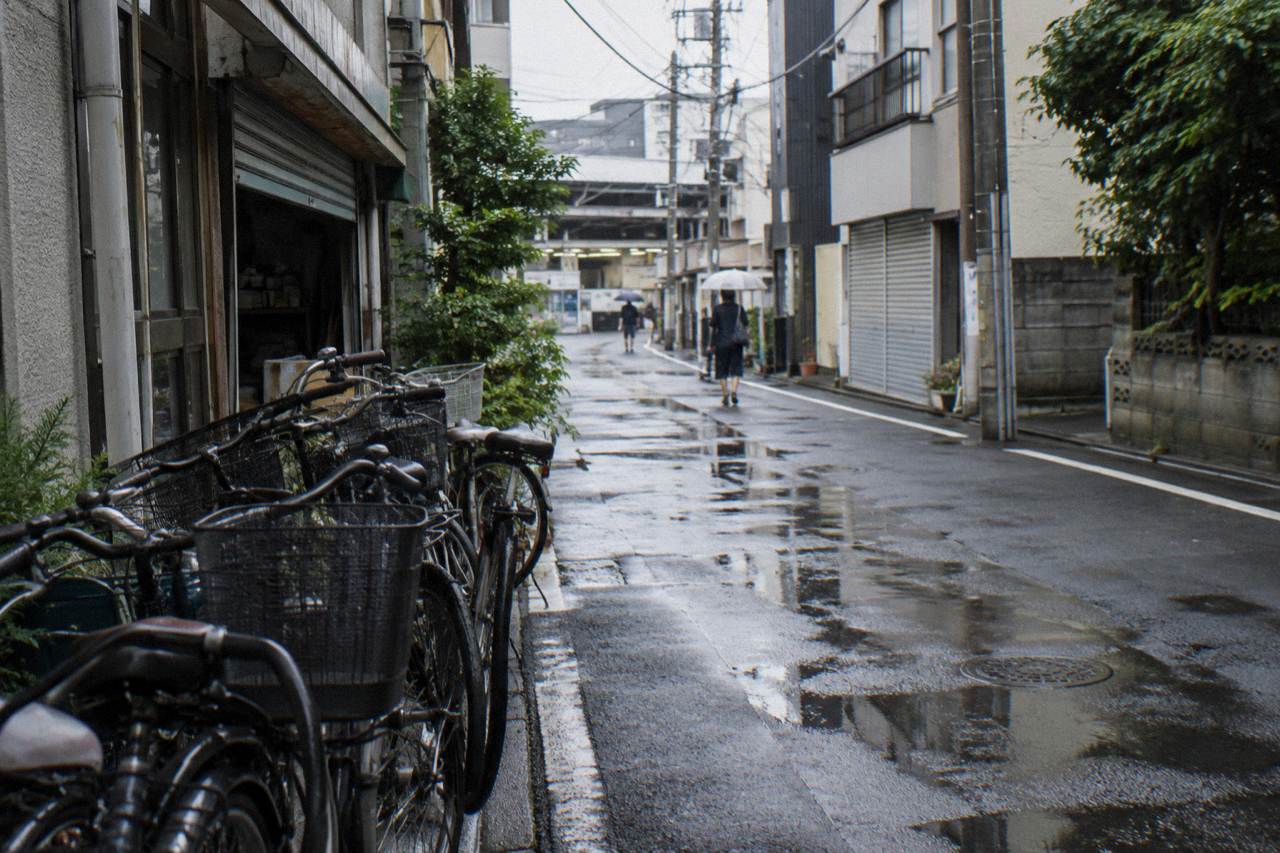
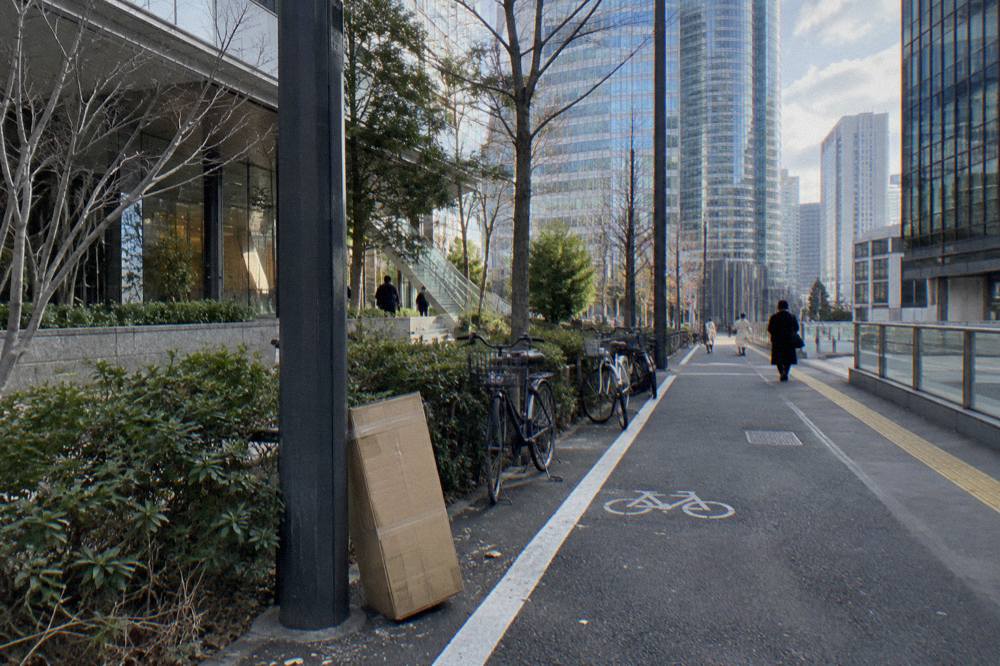
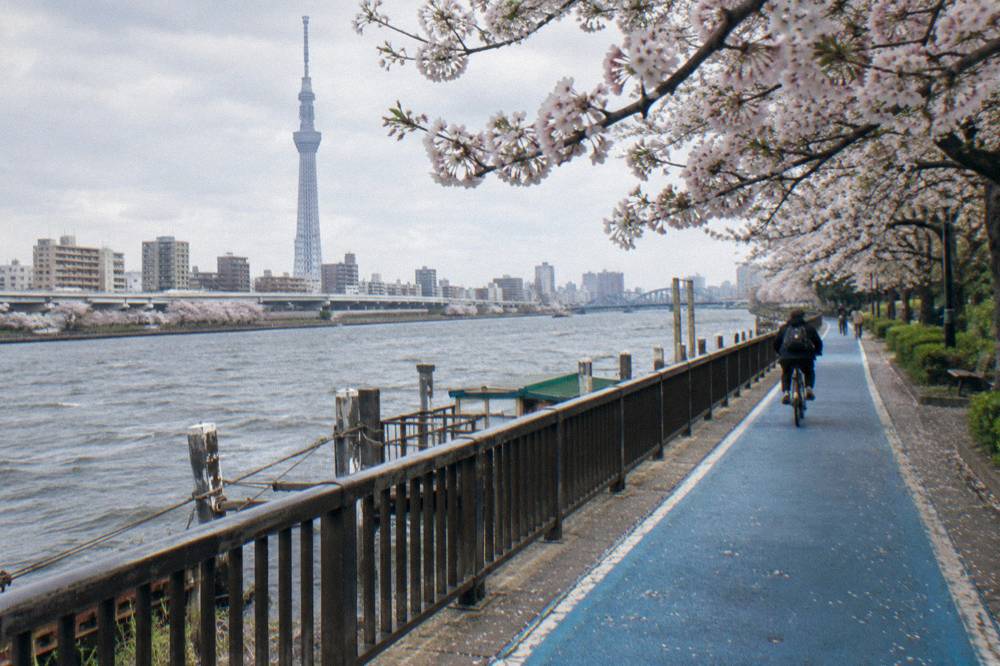
In practice, Tokyo gives a rider three kinds of surface. Marked bicycle lanes exist on some main corridors but are a minority of the network. Painted sidewalk-level bicycle paths, often blue, carry bikes in both directions on a widened pavement, and these are common along rivers and newer streets. Everything else is a shared neighbourhood road, and this is where most riding happens, at low speed, with cars that expect bicycles.
Guided tours spend most of their time on exactly the surfaces that suit a newcomer. The 6-Hour Full City Ride, rated 4.9 across 842 reviews and from $97.17 per person, uses backstreets and riverside segments where traffic is light, and the guide's positioning does the navigation work. For riders who want a shorter introduction at the lowest price, the Flexible 3-6 Hour Small-Group Ride, from $64.78 per person and rated 4.9 across 212 reviews, lets you choose the duration, with a group capped at 8.
Choosing between a regular bike and an electric-assist one also changes where you will comfortably ride, because the extra boost matters on bridges and longer bay segments; the comparison in e-bike or regular bike in Tokyo works through that trade-off in detail.
What Are The Bicycle Rules In Tokyo Since April 2026?
Since 1 April 2026, riders aged 16 and over can be issued a blue ticket, a fixed-fine notice, for traffic violations. Police normally give guidance and a warning first, and tickets are aimed at malicious or dangerous riding, but the fines are real and the system explicitly covers foreign visitors. The top fine, 12,000 yen, is for using a hand-held phone while riding.
If you ride a fixed gear bike, our article on whether fixies are legal under Japan's cycling rules explains how brake requirements fit into the new fine system.
The police notice on the 2026 system and the English-language traffic rules page both confirm the visitor coverage. The fixed fines are tiered, and the tier tells you what the police care about most: distraction, signals, direction of travel, and pedestrian priority.
| Violation | Fixed fine (yen) | What it means in practice |
|---|---|---|
| Hand-held phone use while riding | 12,000 | Holding a phone to talk or watching the screen; the highest bicycle fine |
| Ignoring a red signal | 6,000 | Applies to bikes as light vehicles |
| Riding against traffic | 6,000 | Keep left applies on the roadway |
| Wrong roadway or sidewalk division | 6,000 | Riding where bikes are not permitted |
| Entering a closing rail crossing | 7,000 | Stop when the barriers are moving |
| No light at night | 5,000 | A working headlight is required after dark |
| Umbrella or earphones in both ears | 5,000 | Blocking ambient sound is a fineable distraction |
| Failing to stop at a stop sign | 5,000 | The most common ticket nationally |
| Riding two abreast | 3,000 | Single file is the default |
| Carrying a passenger | 3,000 | Child seats are the exception |
Two categories sit outside the blue-ticket system entirely. Drunk cycling is a criminal matter with penalties up to five years imprisonment or a fine of up to 1,000,000 yen, and hand-held phone use that creates actual danger carries up to one year or 300,000 yen. Neither is a fixed-fine situation; both are red-ticket territory. For night riders, the rules and the lighting requirement are covered from a different angle in is it safe to cycle in Tokyo at night.
For most visitors the practical takeaway is smaller than the table suggests. Do not touch your phone while moving, do not ride against traffic, and take the earphones out. Riders who follow those three habits are unlikely to meet an officer at all, since police guidance says warnings come first and tickets target dangerous conduct.
Do You Need A Helmet To Cycle In Tokyo?
A helmet is not legally mandatory. Since April 2023 every cyclist of any age has an effort obligation to wear one, which means riders are expected to try, with no fine attached. The police statistics make the case better than the law does: 63.5 percent of Tokyo cycling deaths between 2021 and 2025 involved fatal head injuries, and the fatality rate is 2.3 times higher without a helmet.
For the rest of your kit, the seasonal Tokyo cycling clothing guide covers helmets, rain gear and footwear for every time of year.
The police helmet guidance frames the rule as an obligation to endeavour rather than a requirement, and parents carry the same obligation for children. Most guided tours remove the question entirely by including a helmet in the price. On the tours covered here, the Small-Group Long City Ride, the 4-Hour Downtown Backstreets Ride from $77.74 per person, and the Shibuya-Harajuku 3-Hour Ride from $57.01 per person all list a helmet as included.
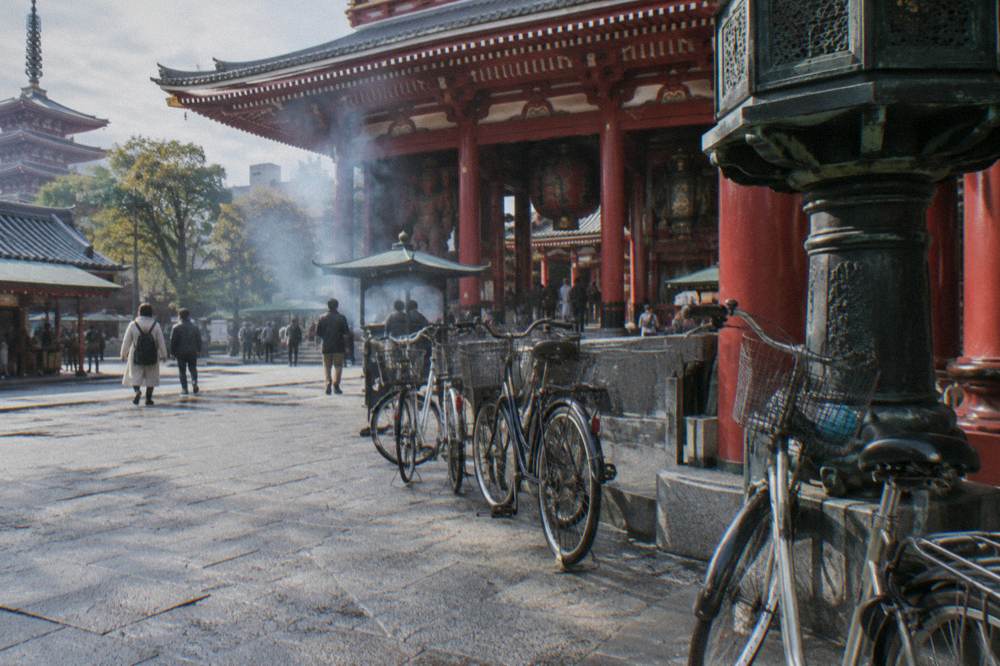
Insurance is the quieter sibling of the helmet question. Since 1 April 2020 a Tokyo ordinance has required cyclists to hold liability insurance, and rental businesses must cover the hirer's use and explain what is covered. On a guided tour that obligation sits with the operator. On a rented or shared bike it is worth reading the terms, and the background is in bike rental in Tokyo alongside the practicalities of picking up a bike at all.
Which Tokyo Streets And Neighbourhoods Feel Safest To Ride?
The calmest riding in Tokyo is on riverside paths, bayfront segments and residential backstreets, with the Arakawa and Sumida river levees, the Yanaka old-town lanes and the Odaiba waterfront the most frequently recommended. The busiest spots, including the Shibuya scramble and crowded shopping arcades, are places riders normally walk their bikes rather than ride.
Route guides describe the Arakawa Cycling Road as one of the region's longest riverside paths, with a scenic segment of roughly 30 km from Ukima Park downstream to Kasai Rinkai Park at the bay, parts of it free of traffic lights. The Sumida River paths link Asakusa toward the bay with Skytree views along the way. Both are surfaces where the main safety question is other cyclists, not cars, and the dedicated pages on Sumida river cycling and the Arakawa cycling road map them in detail.
| Area | Riding character | Why it suits a cautious rider |
|---|---|---|
| Arakawa levees | Long riverside path, few crossings | No car traffic for long stretches |
| Sumida River paths | Waterside lanes linking Asakusa to the bay | Separated from the roadway |
| Yanaka and Yanesen | Narrow residential streets | Very low car speeds |
| Imperial Palace perimeter | Roughly 5 km moat loop | Sunday car-free cycling course |
| Odaiba and the bayfront | Wide waterfront paths | Space, and light traffic |
| Shibuya and Harajuku crossings | Dense pedestrian zones | Guides dismount and walk these |
The Imperial Palace loop deserves its own note. Roughly 3 km of the moat road opens as a car-free cycling course on Sundays, with free bicycle loans of around 70 bikes available since April 2026, lending from 10:00 with return by 16:00. Opening depends on weather and events, so treat it as a bonus rather than a plan. The Imperial Palace bike tour page covers it fully.
A guided route is essentially a curated version of this table. The West-Side Cycling With Food Stops tour, run by DIG Tokyo Tours from Koenji Station, 3 hours 30 minutes, rated 5.0 across 223 reviews and from $106.89 per person, spends its time in exactly the kind of low-traffic west-side neighbourhood streets where a hesitant rider relaxes within the first kilometre.
How Does A Guided Tour Reduce The Risks Of Cycling In Tokyo?
A guided tour transfers the three hardest judgements to someone who makes them daily: which lane to take, when to dismount, and how to read an intersection. The bike, helmet and insurance obligations sit with the operator, and the group rides single file at local speed. For a visitor whose main worry is traffic, a guided group converts an unfamiliar system into a following exercise.
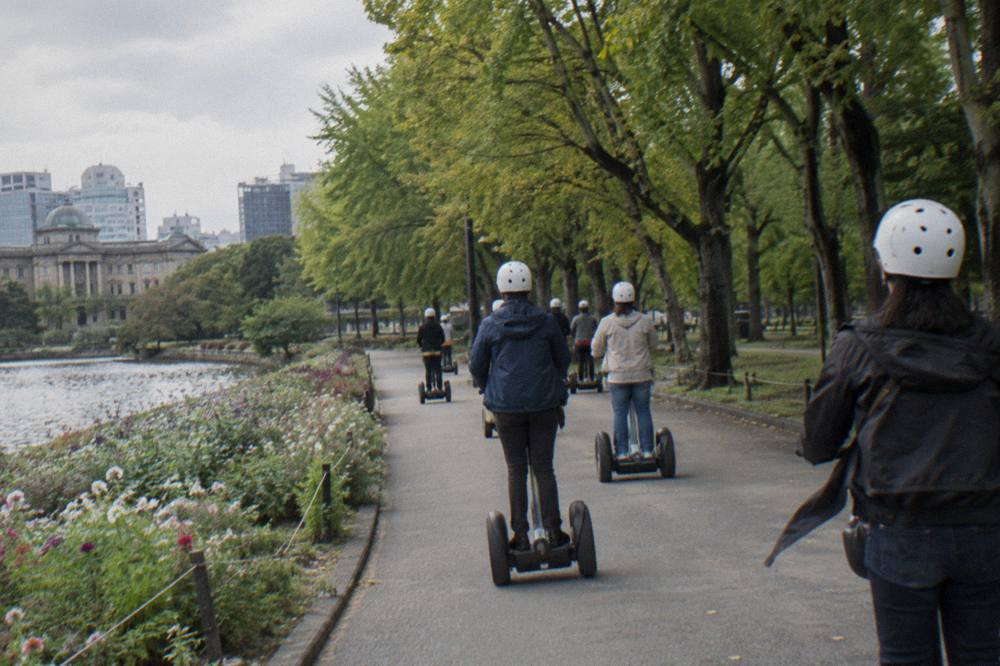
The decision usually comes down to group size and format. A group capped at 5, such as the Small-Group Long City Ride, keeps the guide within conversation distance the whole way, which matters when the question is not "where are we" but "what is that sign". Larger groups cost a little less and still benefit from the guide's positioning, and the trade-offs are laid out in private or group bike tour in Tokyo.
| Tour | Duration | Group max | Rating and reviews | From price per person |
|---|---|---|---|---|
| Small-Group Long City Ride | 6 hours 30 minutes | 5 | 5.0 from 1,308 reviews | $106.89 |
| 6-Hour Full City Ride | 6 hours | 12 | 4.9 from 842 reviews | $97.17 |
| Flexible 3-6 Hour Small-Group Ride | 3 to 6 hours | 8 | 4.9 from 212 reviews | $64.78 |
| 4-Hour Downtown Backstreets Ride | 4 hours | 6 | 4.9 from 124 reviews | $77.74 |
| Shibuya-Harajuku 3-Hour Ride | 3 hours | 6 | 4.8 from 57 reviews | $57.01 |
Every tour in that table includes the bicycle, and all but the Full City Ride list a helmet as included. All five carry free cancellation per their listings. The backstreets format deserves a special mention for safety-anxious riders: the 4-Hour Downtown Backstreets Ride deliberately avoids the big arterials, which is why its routes suit people whose cycling experience is a city with different conventions entirely.
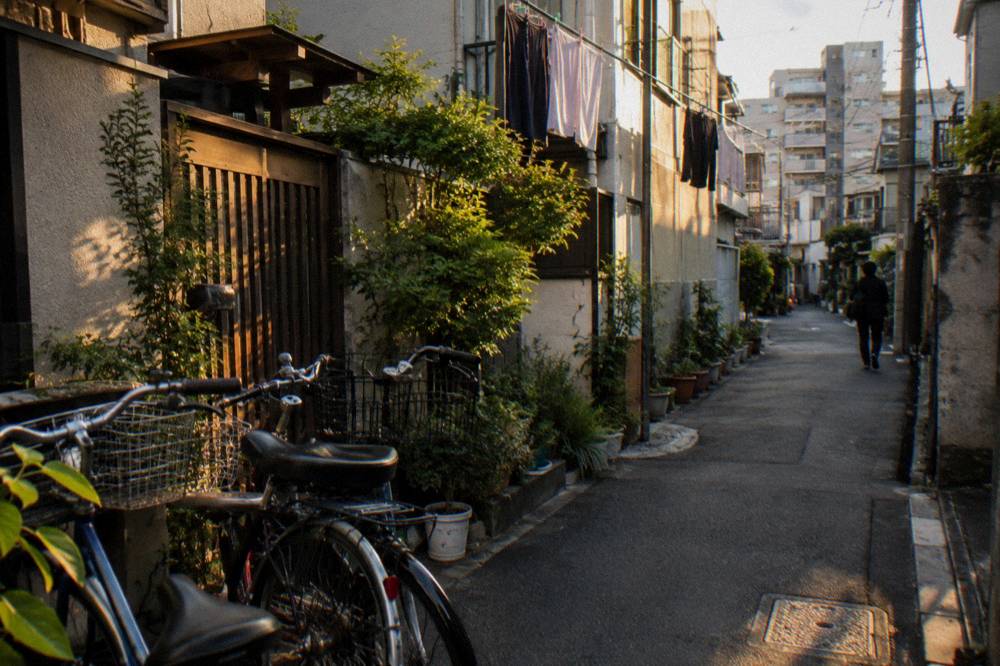
Beginners get the same logic in a dedicated page, Tokyo bike tour for beginners, which pairs the safety angle with practical first-ride advice.
When Is Cycling In Tokyo More Or Less Safe?
Weather and season change the risk more than the route does. Tokyo is wettest in October and September, with 234.8 mm and 224.9 mm of rain respectively, hottest in August with a mean daily maximum of 31.3 degrees, and driest and coolest from December to February. Early spring and late autumn offer the most forgiving conditions on JMA 1991 to 2020 normals for the Tokyo station.
Fixed Fines For Tokyo Cycling Violations
Blue-ticket amounts in yen for riders aged 16 and over, since 1 April 2026
| Season | Conditions on JMA normals | What it means for riding |
|---|---|---|
| December to February | Driest months, 56.5 to 59.7 mm rain; January mean 5.4 C | Cold but dry and clear; layers and gloves |
| March to April | 116 to 133.7 mm rain, warming through 14.3 C mean | Cherry blossom season; expect crowds on riverside paths |
| June to mid July | Rainy season, around 167.8 mm in June | Wet roads and humidity; check the forecast |
| July to August | Mean daily max 29.9 to 31.3 C | Heat is the main hazard; ride early, carry water |
| September to October | Wettest months, 224.9 and 234.8 mm | Wet-season tail; flexibility on dates |
Heat deserves more respect than visitors give it. An August afternoon ride in Tokyo combines 31-degree temperatures with humidity, and guided operators schedule around it, which is one reason the summer evening format exists. The seasonal detail, including blossom timing based on JMA first-bloom data, is worked through in best time to cycle in Tokyo, and wet-weather tactics have their own page in Tokyo cycling in rain.
What Should You Do If Something Goes Wrong While Cycling In Tokyo?
Stop, stay calm, and expect the process to be formal. Traffic incidents in Japan involve the police by default, and the Tokyo insurance ordinance exists because liability claims can be large, with judgments above 90 million yen cited in official material. On a guided tour the guide handles the immediate steps; riding alone, call the police emergency number and do not leave the scene.
The insurance logic explains why the ordinance exists at all. The police insurance page cites court judgments of 95,210,000 yen in Kobe and 92,660,000 yen in Tokyo arising from cycling collisions, which is the scale of harm the rules are designed to prevent and to compensate. Visitors are covered on guided tours through the operator's rental insurance obligation; independent riders should check that any rental or share agreement includes liability cover, and the mechanics of that are in Tokyo bike share and Docomo.
For everyday friction rather than collisions, the etiquette list is short. Ring the bell once, gently, well before a pedestrian rather than at them. Dismount when in doubt, especially at shrine approaches, market streets and station forecourts. Park only where bikes are parked; Minato City, for example, charges an impound fee of 2,000 yen for a removed bicycle, and other wards run comparable schemes, which the Tokyo bike parking page details.
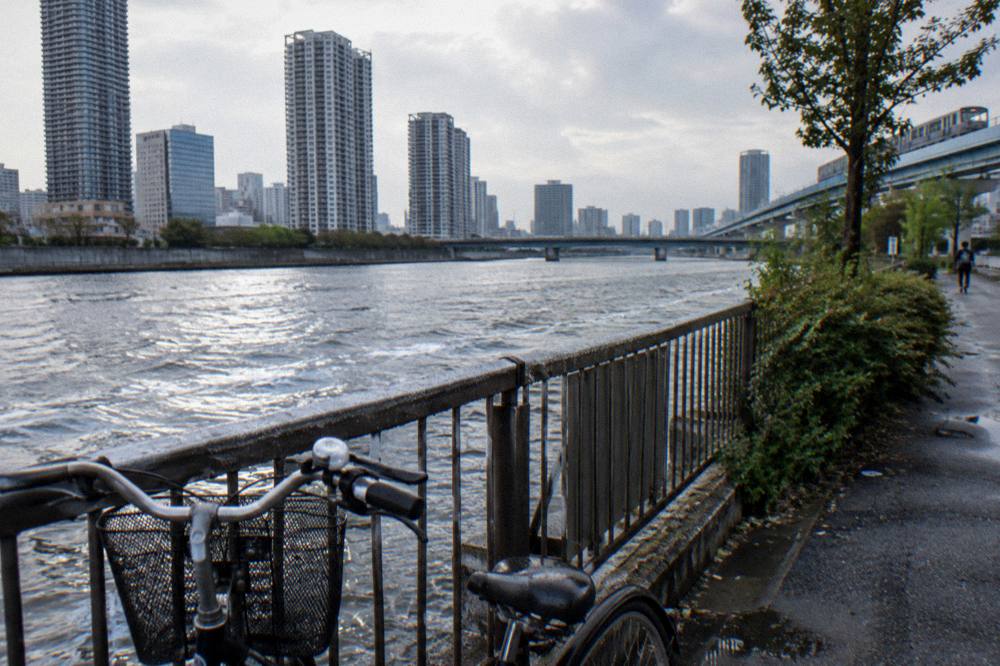
A final reassurance for the cautious reader. None of the rules above are hostile to visitors; they are written for everyone, published in English by the Metropolitan Police, and enforced with warnings before fines. The genuine risk in Tokyo cycling is concentrated in a handful of behaviours, phone use, wrong-way riding and drunk cycling, all of which are fully within a visitor's control on the first morning. For anyone who would still rather not ride point-to-point alone, Tokyo Bike Tours exists to close that gap, and the small-group format does most of it on the first kilometre.
Riders weighing a guided day against going alone can also compare the formats at bike tour or walking tour in Tokyo before committing, and the broader question of value is weighed in is a Tokyo bike tour worth it.
The 6-Hour Full City Ride above is the larger-group alternative for readers who want a full day at a slightly lower price, still with the bike included and free cancellation per the listing. For a shorter commitment, the Flexible 3-6 Hour Small-Group Ride from $64.78 per person, rated 4.9 across 212 reviews and capped at 8 riders, lets a cautious first-timer start with three hours and extend only if the confidence holds.
Common Questions About Cycling Safety In Tokyo
Is Cycling In Tokyo Safe For First-Time Visitors?
Yes, for most visitors who follow the local conventions: keep left, ride at the speed of surrounding traffic, and dismount at crowded crossings. Since 1 April 2026 the police can fine riders aged 16 and over, including tourists, so knowing the basics before the first ride matters more than confidence.
Where Are You Allowed To Ride In Tokyo?
The roadway on the left is the default, because a bicycle is legally a light vehicle. Sidewalks are an exception, permitted where a sign allows it, for riders under 13 or over 70, for riders with disabilities, or where the road is unsafe; on a permitted sidewalk, ride slowly and give way to pedestrians.
Do You Need A Helmet To Cycle In Tokyo?
Helmets are not mandatory. Since April 2023 every rider of any age has an effort obligation to wear one, with no fine attached. Police statistics show 63.5 percent of Tokyo cycling deaths between 2021 and 2025 involved fatal head injuries, and the fatality rate is 2.3 times higher without a helmet.
What Are The Fines For Cycling Violations In Tokyo?
Under the blue-ticket system in force since 1 April 2026, fixed fines run from 3,000 yen for riding two abreast to 12,000 yen for hand-held phone use. Police normally give guidance and a warning first, with tickets aimed at dangerous or repeated violations.
How Does A Guided Tour Reduce The Risks Of Cycling In Tokyo?
A guide handles the lane choices, the dismount points and the intersections, while the operator covers the bike, usually a helmet, and the rental insurance obligation. Group caps of 5 to 8 keep the guide within reach, which is the format best suited to a hesitant rider.
When Is The Best Season To Cycle In Tokyo?
On JMA 1991 to 2020 normals, the driest months are December to February and the wettest are October and September, while August is the hottest with a mean daily maximum of 31.3 degrees. Early spring and late autumn offer the most comfortable combination of dry roads and mild temperatures.