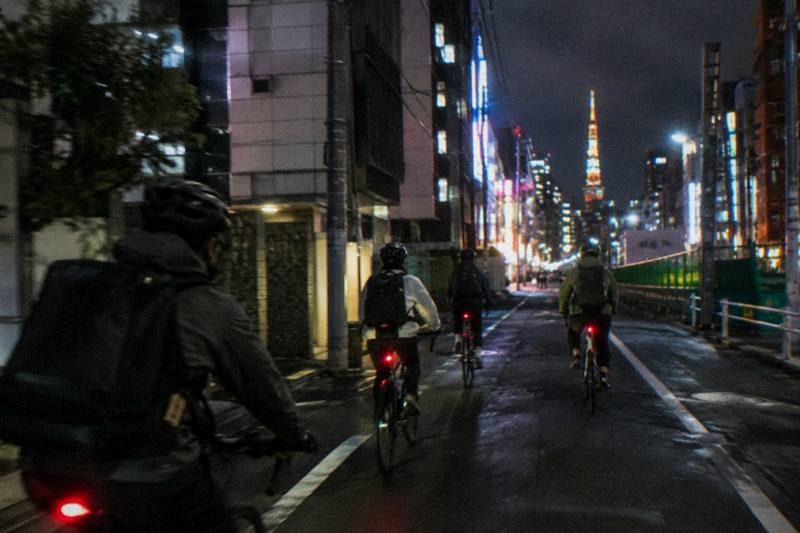
Tokyo Night Bike Tour: Lights, Safety And Routes
Tokyo after dark is a different city, and a guided night ride is one of the few ways to see Shibuya, the bay and the old backstreets lit up without the daytime crowds. Here is what the evening options cost, what the rules require after dark, and how to pick a tour.
Short answer
Night bike tours in Tokyo run from about $55 to $142 per person for guided rides of roughly 2 to 3 hours, and bikes are included on every one of them. Japan requires a working light after dark, a 5,000 yen fine under the blue-ticket regime if you ride without one, and guided tours supply lit bikes and a route that avoids the worst traffic.
Tokyo changes character when the office towers empty and the neon takes over. Daytime rides fight for space on busy streets; after sunset the traffic thins, the temperature drops, and the city's lit landmarks, from Shibuya's crossing to Tokyo Tower, become the scenery rather than the background heat. A guided night bike tour is the simplest way to ride it: someone else supplies a bike with lights, picks a route that avoids the heaviest traffic, and gets you back before the last train stops mattering.
This guide covers the evening options you can actually book, what they cost and include, the rules that apply to anyone riding after dark in Japan, and what the routes look like. The night category on this site carries five tours, and several sunset e-bike departures blur the same line, so the field is wider than most visitors expect.
Why Ride A Bike In Tokyo At Night?
Riding a bike in Tokyo at night works because the air is cooler, the traffic is thinner, and the city is lit from street level. Guided tours turn those conditions into a two or three hour loop, with the bike, the lights and the route already handled by an operator, so all you have to do is ride and take it all in.
The practical case is strongest in summer, when daytime means daily maxima above 30 degrees Celsius, and weakest in winter, when evening temperatures fall toward the low single digits. Prices are not lower at night, but the experience is genuinely different rather than a rebranded daytime ride.
The case for a guide specifically is that night riding in Tokyo rewards local knowledge. Route guides describe riverside paths along the Sumida and bayfront sections around Odaiba as rideable and scenic, but a first-time visitor cannot easily tell which streets calm down after dark and which do not. A guide who rides them weekly can. Guided tours also handle the two things visitors most often get wrong on their own: lights, which are legally required after dark, and sidewalk etiquette, where pedestrians always have priority.
Tokyo's own climate data explains some of the timing logic. The Japan Meteorological Agency's 1991 to 2020 normals for the Tokyo station put August as the hottest month, with a mean daily maximum of 31.3 degrees Celsius and a mean minimum of 23.5, so an evening departure is often the only comfortable window in midsummer. In January the same table shows a mean daily minimum of 1.2 degrees, which pushes night riders toward gloves and layers rather than away from the idea entirely.
There is also a simple numbers argument. The night category is small, five tours, and group sizes are capped low: six riders on most of them, three on the cat-temple ride. That keeps the experience closer to a friends-and-a-local outing than a coach tour with a flag.
Which Night Bike Tours Can You Book In Tokyo?
The bookable evening options are a 2-hour Night Lights Ride from $55.06, a 2-hour premium e-bike Night Hidden Gems tour from $142, a 3-hour Bay Sunset to Night e-bike ride from $62.19, and a 2 to 3 hour Night Ride With Ramen from $84.21, all with bikes included.
Group sizes run from four to eight depending on the tour, and every one of these lists free cancellation on its booking page.
The most established of them is the 2-Hour Night Lights Ride run by COG EXPLORER JAPAN, which meets at Umayamichi Park and covers Shibuya's city lights and Tokyo Tower in two hours with a group capped at six, from $55.06 per person, with the total depending on group size. It carries a 5.0 rating across 31 reviews, a small but spotless pool, and it is the same operator's format as their well-reviewed Shibuya and Harajuku daytime ride. Because it is short, cheap and central, it works as a first night ride for visitors who want the highlights without committing an entire evening. Dinner is not included.
At the other end of the price range sits the Night Hidden Gems E-Bike tour from TRB BIKE TOUR, from $142 per person for two hours on an e-bike with a group of at most six, rated 4.8 across 27 reviews. Food and drink are not included, but the e-bike format and the premium pricing suggest a smaller, quieter itinerary than the big-lights loops. For riders who want the evening meal folded into the ride itself, the Night Ride With Ramen from Tokyo Backstreets Bike Tour is a new listing, from $84.21 per person for 2 to 3 hours with a group capped at six; as a new listing it has no review history yet, so there is no rating to report.
The crossover option is the Bay Sunset to Night e-bike tour from Japan Wonder Travel, from $62.19 per person for three hours with a group of at most six. It starts at sunset rather than after dark, so it delivers the Odaiba bayfront in golden light and then the city lit up, all on an e-bike with helmet and guide included. Four reviews so far is too few for a star claim, but the operator's Hidden Gems e-bike daytime tour carries 4.9 across 895 reviews, which says something about the shop behind it. It also has free cancellation per the booking page.
If none of the fixed group departures fits your evening, there is a private route too: Harajuku Shop Private Road Bike from Ono Wheel, a Harajuku bike shop, runs 2 to 3 hours from $129 per person, rated 5.0 across 22 reviews, with the total depending on group size since it is a private tour. A private evening ride means the route bends toward whatever you most want to see lit up, at the cost of a higher per-person price.
For a longer look at what the category offers across all five tours, the site's Tokyo Bike Tours collection includes every night option alongside the day trips, and the questions below cover how to choose between them.
What Does A Night Ride Cost And What Is Included?
Expect roughly $55.06 to $142 per person for a guided evening ride, with the bike always included, the helmet included on most regular-bike tours, food and drink almost never included, and free cancellation offered on every night tour except the premium TRB e-bike option.
Night e-bike tours cluster near $62.19, regular-bike tours spread wider, and private tours start at $45.35 per person, with some operators, such as Tokyo Bike Bliss, quoting totals that vary by group size.
The comparison is easier to read side by side. The table below lists the evening and sunset crossover options with their from-prices, durations, group caps and what the booking page says is and is not included.
| Tour | Price (per person) | Duration | Group max | Included | Not included |
|---|---|---|---|---|---|
| 2-Hour Night Lights Ride | from $55.06, total depends on group size | 2 hours | 6 | bike, helmet, free cancellation | dinner |
| Night Hidden Gems E-Bike | from $142 | 2 hours | 6 | e-bike, guide | food and drink |
| Bay Sunset to Night E-Bike | from $62.19 | 3 hours | 6 | e-bike, helmet, guide, free cancellation | None listed |
| Night Ride With Ramen | from $84.21 | 2 to 3 hours | 6 | bike, helmet, free cancellation | private transportation |
| Summer Night Bay E-Bike Ride | from $63.48 | 3 hours | 4 | e-bike, helmet, guide, free cancellation | food and drinks |
| Harajuku Shop Private Road Bike | from $129 per person, private tour | 2 to 3 hours | private | bike, helmet, free cancellation | snacks, bottled water |
Two patterns are worth noticing. First, e-bikes barely cost more than regular bikes here: the bay sunset e-bike tour at $62.19 sits ten dollars above the two-hour regular-bike night loop, so the choice is more about riding style than budget. Second, the cheapest evening option is not the weakest: the $55.06 Night Lights Ride carries the best rating in the category, 5.0 from 31 reviews, while the most expensive option, the $142 TRB premium ride, rates slightly lower at 4.8 from 27. Price tracks exclusivity and format, not quality.
The one outlier to check before booking is the Summer Night Bay E-Bike Ride, a new listing from Cycling Holiday Tokyo at $63.48 for three hours with a group cap of four, the smallest in the table after the private option. It has no reviews yet, so the only evidence is the operator's other listing, the Local Life E-Bike tour, which rates 4.9 across 753 reviews.
Beyond the ticket price, budget for almost nothing on the ride itself. Food and drink are excluded on most of these tours, and the ones that stop at a ramen counter or convenience store expect riders to pay their own way. Gratuities are not customary in Japan and none of these listings adds a service charge, so the from-price is realistically the whole cost for a rider who skips extras.
Is It Safe To Cycle In Tokyo At Night?
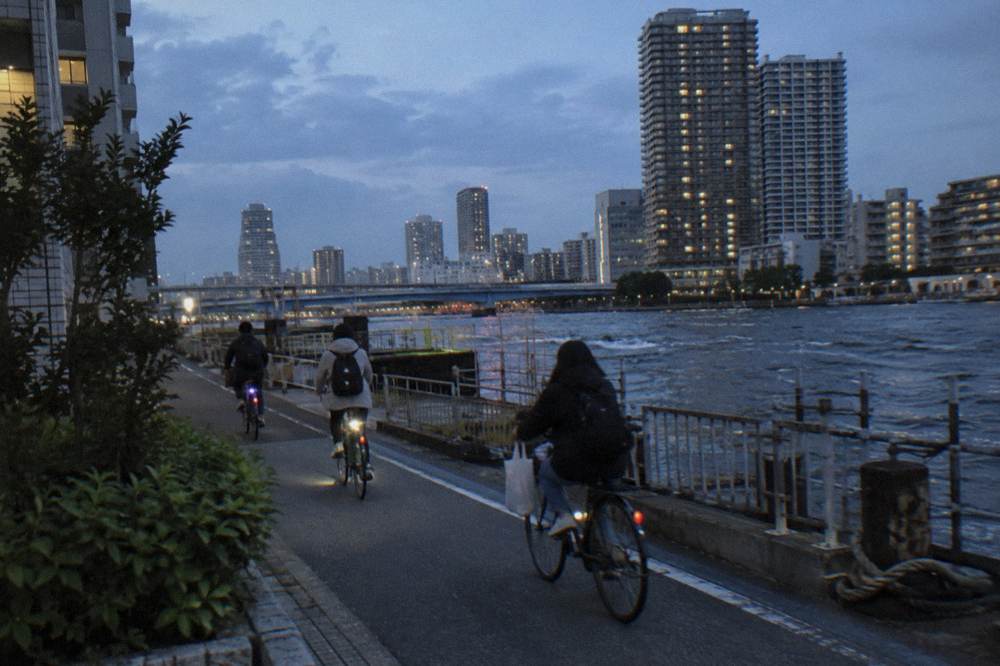
Tokyo is a disciplined place to ride after dark, with strict light requirements, sober-riding enforcement and low group sizes on tours, and the main real risks are dark side streets, rain-slicked paint and tired legs rather than aggressive traffic.
No tour on this page promises safety outcomes, and none should, but the structural factors, well-lit major streets, small guided groups and a police culture of guidance before penalties, all point the right way.
The rule framework is the strongest safety argument. Since 1 April 2026 a national traffic violation notice system, the blue ticket, applies to riders aged 16 and over, with fixed fines for the violations that cause night accidents: 6,000 yen for running a red light or riding against traffic, 5,000 yen for riding without a light after dark, and 12,000 yen, the highest bicycle fine, for holding a phone while riding. The Tokyo Metropolitan Police notice explains the system, and officers are directed to give guidance and a warning first, reserving tickets for malicious or dangerous riding. Drunk cycling is not a blue-ticket matter at all but a criminal one, with penalties up to five years imprisonment or a one million yen fine, which is one reason every guided tour in this category is alcohol-free until the finish.
- City Bike Tours$32.39
- Private Tours$45.35
- Night Rides$55.06
- E-Bike Tours$61
- Day Trips By Bike$76
Guided night tours stack further margins on top of the rules. Every one of them supplies the bike, so riders are not gambling on a rental's lamp, and the listings show helmets included on the regular-bike tours. Group caps of six or fewer keep the group visible and controllable on narrow streets. For a fuller treatment of the risk picture, the site's night cycling safety guide covers visibility, road surfaces and what the accident data does and does not say.
Weather is the honest wildcard. Tokyo's two wettest months on the 1991 to 2020 normals are October, 234.8 mm of rain, and September, 224.9 mm, and a wet evening makes painted lane lines and metal manhole covers slick. Tours run in light rain with the operator's judgment, and riders who prefer to skip the question entirely can read cycling in rain in Tokyo for what actually changes.
What Are The Rules For Lights After Dark?
Japanese law requires a lit headlight and rear reflector at night, the headlight white or pale-yellow and visible from 10 metres, and riding without a light is a 5,000 yen blue-ticket fine, while helmets are an effort obligation for every age with no fine attached.
Tour bikes come equipped, so in practice the rule matters most on the way to and from the meeting point.
The specification comes straight from the Tokyo police bicycle rules page: ride on the left of the roadway by default, use sidewalks only where a sign permits it and give way to pedestrians, and keep the bike lit between dusk and dawn. The fine schedule from April 2026 attaches money to each of these, summarized below for the ones a night rider is most likely to encounter.
| Violation | Blue-ticket fine (yen) |
|---|---|
| Holding a phone to talk or watch while riding | 12,000 |
| Entering a rail crossing as the barrier closes | 7,000 |
| Ignoring a traffic signal | 6,000 |
| Riding against traffic / on the wrong side | 6,000 |
| Riding without a light at night | 5,000 |
| Riding two abreast | 3,000 |
| Carrying a passenger | 3,000 |
Two more points complete the picture. Tokyo's bicycle liability insurance ordinance has required every cyclist in the prefecture to carry cover since 1 April 2020, and as the official GO TOKYO visitor guide notes, this applies to overseas tourists too; rental and tour operators must insure their bikes and tell renters what is covered, so a guided tour satisfies the requirement automatically. And tandem bicycles are legal across all of Tokyo's 23 wards, a curiosity rather than a night-tour concern, but one worth knowing given how unusual it is nationwide.
The helmet rule is deliberately softer. Since April 2023 every rider of any age must endeavour to wear one, with no fine for skipping it, though Tokyo police point out that 63.5 percent of cycling deaths in the city between 2021 and 2025 involved fatal head injuries, and that the fatality rate without a helmet is 2.3 times higher. Every night tour in the table above except the premium TRB ride lists a helmet as included; the TRB tours rent one for 1,000 yen, cash on the day.
Where Do Night Rides Go In Tokyo?
Night routes concentrate on three lit corridors: the Shibuya to Tokyo Tower stretch on the west side, the Odaiba and bayfront paths where sunset tours start, and the older low-rise streets around Ueno, Yanaka and Asakusa on the east, with the Sumida riverside reported as a traffic-light-free link in parts.
Which one suits you depends on whether you want neon, water or temples at night.
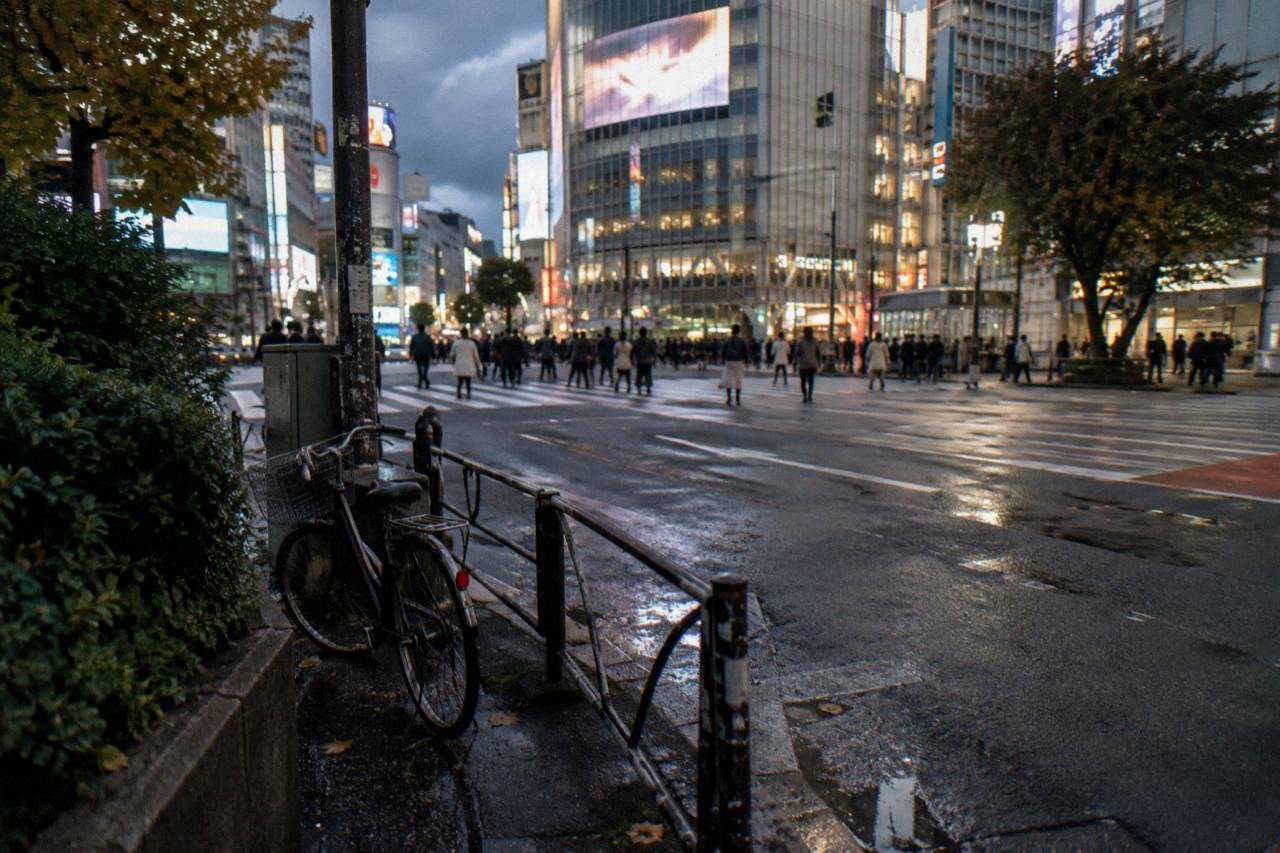
The Shibuya and Tokyo Tower pairing is the signature. The 2-Hour Night Lights Ride covers exactly this, meeting at Umayamichi Park and working from the scramble-crossing brightness toward the tower lit orange against the sky. It is the tightest two-hour loop available and the reason the format sells: the two most photographed lit landmarks in the city, connected by streets a guide knows how to time. Riders mostly walk bikes across the busiest spots on this corridor, which is standard practice and worth expecting.
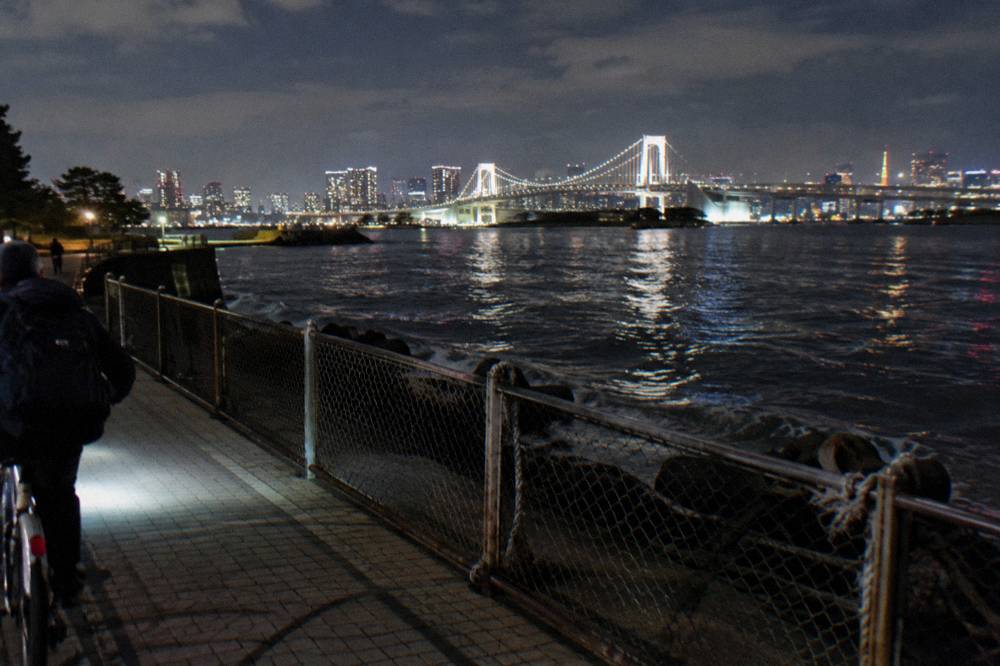
The bay is the sunset crowd's answer. The Bay Sunset to Night e-bike tour runs three hours around the Odaiba waterfront, catching the light on the water before the skyline takes over. Route descriptions of the bayfront paths describe them as rideable and scenic, and this is the one evening option where the first hour happens in daylight, a real consideration in November when the sun sets before 5 pm and a 2 pm rider sees nothing but night. The private Lake Ashi and bay-area evening e-bike options sit on this same waterfront instinct at larger scale.
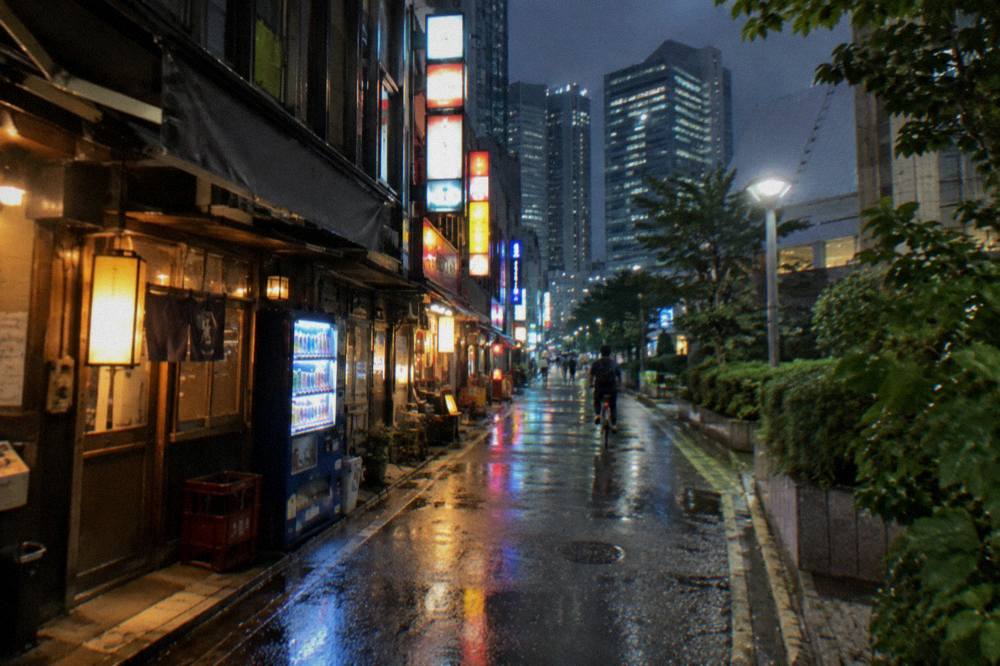
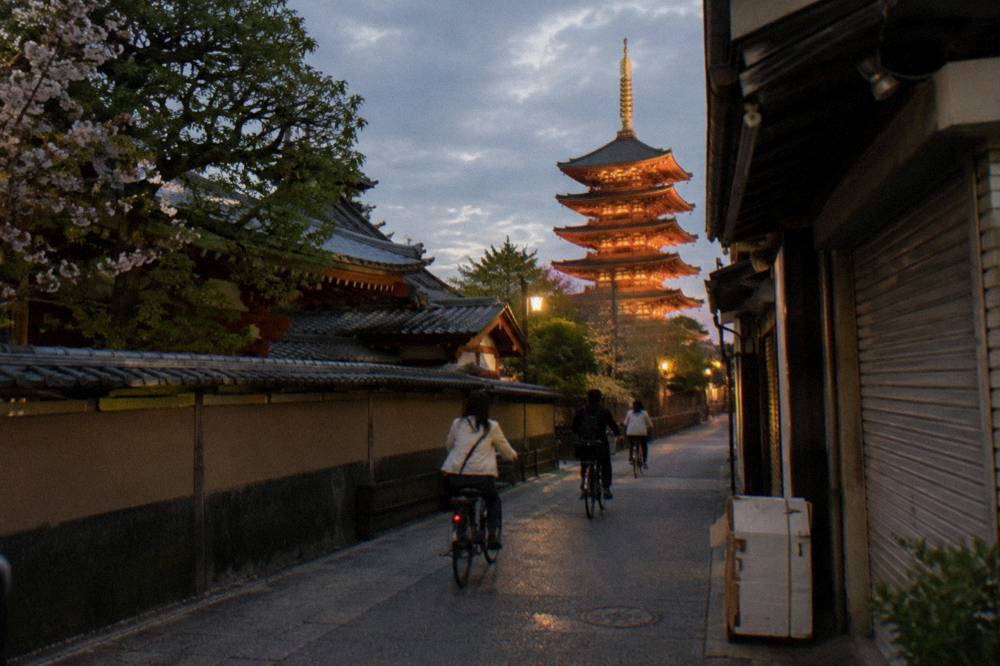
The east side is quieter. The Night Ride With Ramen threads the downtown backstreets, the same low-rise lanes the operator covers by day, ending at food rather than at a viewpoint. Route reports describe Yanaka and the Yanesen old-town area, with Nezu Shrine and Yanaka Ginza, as feasible for calm backstreet cycling, and the Sumida paths linking Asakusa toward Skytree as roughly a four-kilometre riverside segment. For more on that corridor, the site's Sumida river cycling guide maps the paths in daylight detail.
When Is The Best Season For A Night Ride?
The comfortable window is late March through May and again from late September through November, when evening temperatures sit between roughly 9 and 19 degrees Celsius on the 30-year normals, while midsummer nights stay above 23 degrees and midwinter evenings fall toward 1 degree.
October and September are the wettest months, so shoulder-season bookings carry the highest rain risk.
The numbers behind that come from the JMA 1991 to 2020 normals for the Tokyo station. March evenings average a 5.0 degree minimum against a 14.2 degree daytime high, April 9.8 against 19.4, May 14.6 against 23.6: ideal riding weather with a layer. The same logic runs in reverse after summer: October nights average 14.8 degrees, November 8.8. August, by contrast, holds a 23.5 degree mean minimum, which is exactly why the bay sunset e-bike format exists, and January's 1.2 degree mean minimum is why winter night riders are rare.
| Month | Mean daily max | Mean daily min (C) | Precipitation (mm) | Night-ride verdict |
|---|---|---|---|---|
| Jan | 9.8 | 1.2 | 59.7 | cold, dry, possible |
| Mar | 14.2 | 5.0 | 116.0 | good with layers |
| Apr | 19.4 | 9.8 | 133.7 | excellent |
| May | 23.6 | 14.6 | 139.7 | excellent |
| Jul | 29.9 | 22.4 | 156.2 | hot, humid |
| Aug | 31.3 | 23.5 | 154.7 | sunset e-bike format |
| Oct | 22.0 | 14.8 | 234.8 | mild but wettest |
| Nov | 16.7 | 8.8 | 96.3 | excellent, cool |
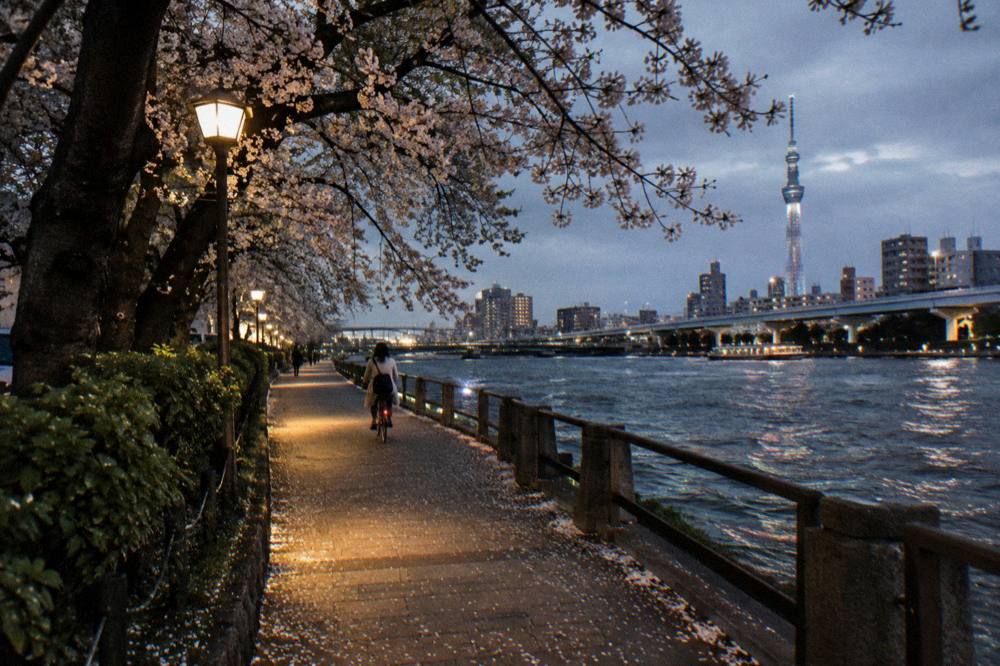
There is a seasonal bonus worth planning around: late March and early April bring the cherry blossoms, with Tokyo's 2026 first bloom on 19 March and full bloom on 28 March, both a few days ahead of the 24 and 31 March normals. A night ride in that window passes lit-up sakura spots, and the site's cherry blossom bike tour guide covers the petal-chasing logic in detail. Autumn colour peaks in late November in central Tokyo, which lands neatly on the mild, drier side of the shoulder season.
With the seasons mapped, the choice comes down to format. Here again are the three evening rides that best cover the range: the compact Shibuya and tower loop, the bay sunset e-bike crossover, and the private Harajuku-shop option for riders who want their own route.
Common Questions About Tokyo Night Bike Tours
Is A Night Bike Tour In Tokyo Worth It?
For most visitors, yes. Evening departures avoid the summer heat, the traffic thins after the rush, and the lit landmarks are the payoff rather than a detour. Prices start near a daytime tour's, from $55.06 per person for the two-hour Night Lights Ride rated 5.0 across 31 reviews, so the premium over a daytime loop is small and the scenery is different rather than repeated.
Do I Need A Light On My Bike At Night In Tokyo?
Yes, it is legally required. The headlight must be white or pale-yellow and visible from 10 metres, and riding without one is a 5,000 yen blue-ticket fine. Every guided night tour supplies the bike with its lights fitted, so the rule mainly matters if you ride to the meeting point on a shared or rented bike.
Are E-Bikes Available For Night Tours?
Yes. The Bay Sunset to Night e-bike tour from Japan Wonder Travel runs three hours from $62.19 per person, and TRB BIKE TOUR's Night Hidden Gems e-bike ride runs two hours from $142. Both include the e-bike, and both cap groups at six riders. The regular night rides, including the two-hour Night Lights loop, use non-electric bikes.
What Is The Cheapest Night Bike Tour In Tokyo?
The 2-Hour Night Lights Ride by COG EXPLORER JAPAN, from $55.06 per person with the total depending on group size. It includes the bike and helmet, caps the group at six, excludes dinner, and lists free cancellation. It is also the best-rated option in the category at 5.0 across 31 reviews.
Is It Safe To Ride A Bike At Night In Tokyo?
The rule environment is strict and enforcement starts with guidance rather than fines, tour groups are capped at six or fewer, and every tour bike carries the required lights. No operator promises safety, and wet evenings in September and October, Tokyo's rainiest months, deserve respect. Helmets are included on most of the tours and are an effort obligation rather than a legal requirement for all riders.
What Should I Wear On A Night Bike Ride In Tokyo?
Layers, and more than the daytime temperature suggests. Evening lows average 8.8 degrees in November and 5.0 in March, while August nights hold near 23.5 degrees. Closed shoes for pedals, something reflective or light-coloured, and a small bag for the helmet-off meal stop cover the practicalities; the site's guide to what to wear cycling in Tokyo goes deeper.