What Are The New Bicycle Rules In Japan As Of April 2026?
Japan's April 2026 bicycle rules explained for visitors: the blue-ticket fine system, helmets, insurance, sidewalk riding and drunk cycling penalties, with what they mean for a Tokyo bike tour.
Japan's bicycle rules changed in a big way on 1 April 2026. That is the day a new traffic violation notice system, widely called the blue ticket, took effect for cyclists across the country, backed by a ladder of fixed fines running from 3,000 to 12,000 yen. The change sits on top of rules that were already in force but that many visitors never hear about: a helmet obligation that applies to every age, a liability insurance requirement in Tokyo, and criminal penalties for drunk cycling that far outweigh anything the new fines can dole out. To understand the everyday habits behind these laws, the guide to Japan's distinctive bike culture explains how locals actually ride and what a visitor should expect on the street.
For a tourist planning to ride, the practical picture is less alarming than the headlines suggest. Police guidance says officers normally start with verbal guidance and a warning, and tickets are aimed at malicious or dangerous riding rather than a visitor wobbling the wrong way out of a parking lot. Still, the fines are real, they apply to overseas visitors, and knowing the ladder before you roll out is the difference between a relaxed ride and an expensive lesson. This page walks through every rule change, in plain language, with the verified fine amounts and the Tokyo specifics that matter on a guided ride.
The headline change is the blue-ticket system, in force since 1 April 2026, which applies to riders aged 16 and over and adds fixed fines from 3,000 to 12,000 yen for specified violations. Officers are directed to give guidance and a warning first, with tickets reserved for dangerous or malicious riding. Helmets remain an effort obligation with no fine, and Tokyo's liability insurance requirement is unchanged.
If you ride a fixed gear bike, the question of whether fixies are legal on Japanese roads comes down to your brakes rather than the drivetrain.
“Amazing fun and enjoyed the whole experience. Saw the quiet streets of Tokyo to the parts you would only find with a knowledgeable guide.”
The system's formal name is the traffic violation notice scheme, and the Tokyo Metropolitan Police overview page is the clearest official summary of how it works. Three points matter most to a visitor. First, the age line: riders under 16 receive guidance and warnings rather than tickets, so families with children are not looking at fines for a child's sidewalk wobble. Second, the escalation logic: the police instruction is that guidance comes first, a warning second, and a ticket only when the violation is malicious, dangerous or repeated, or immediately dangerous. Third, the reach: the Metropolitan Police's English traffic rules page states plainly that cyclists will be issued tickets for traffic offences, and the official Tokyo tourism guide adds that this also applies to tourists from overseas. Nobody is exempt by passport.
What has not changed matters just as much. The bicycle remains classified as a light vehicle, which means the roadway on the left is the default place to ride, with sidewalks reserved for signed sections, children, older riders and genuinely unsafe roads. Night lights were required before April 2026 and still are. Drunk cycling was and remains a criminal matter, not a blue-ticket one, with penalties up to five years imprisonment or a fine of up to 1,000,000 yen for alcohol-impaired riding. The new system did not relax anything; it added a middle tier of administrative fines between a warning and a criminal case.
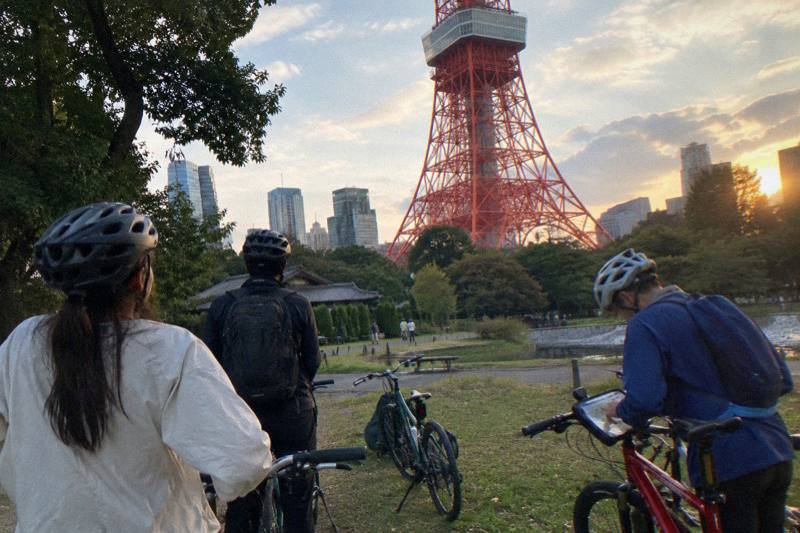
For most visitors the question is not whether the rules are tolerable but how to ride inside them without thinking too hard. That is exactly what a guided ride does well. The Small-Group Long City Ride from Bicycle Tours Tokyo caps groups at five riders, includes the bike and helmet, and is rated 5.0 across 1,308 reviews, from $106.89 per person with free cancellation per the listing. Expect the safety briefing to cover the phone and earphone rules, and check that the tour bike has a working lamp before a night ride; the earphone and umbrella rule is Tokyo's own, not national law.
How Much Are The New Bicycle Fines In Japan?
The verified fine ladder runs from 12,000 yen for holding a phone while riding down to 3,000 yen for riding two abreast or carrying a passenger. Signal violations and riding against traffic draw 6,000 yen, while a stop-sign failure, riding without lights at night, or an umbrella or earphones blocking your hearing draw 5,000 yen.
These amounts are set nationally, not ward by ward, except the umbrella and earphone fines, which come from Tokyo's own local rules. The table below sets out the violations a visitor is most likely to brush against, with the fine that applies to riders aged 16 and over.
| Violation | Fixed fine (yen) | What it means in practice |
|---|---|---|
| Holding a phone to talk or watch the screen | 12,000 | The highest bicycle fine; mount the phone or stop |
| Entering a closing or alarmed rail crossing | 7,000 | Always stop and look at crossings |
| Ignoring a traffic signal | 6,000 | Includes early starts on pedestrian phases |
| Riding on the wrong side, against traffic | 6,000 | Keep left on the roadway |
| Riding two abreast | 3,000 | Single file everywhere unless signed otherwise |
| Carrying a second rider | 3,000 | Child seats are the exception |
| Failing to stop at a stop sign | 5,000 | Come to a full stop where signed |
| No light at night | 5,000 | Check your lamp before an evening ride |
| Umbrella or earphones blocking hearing | 5,000 | One earbud is the common reading; two is not |
Two aggravations sit above the whole ladder. Hand-held phone use that creates actual danger carries a criminal penalty of up to one year imprisonment or a fine of up to 300,000 yen, and lesser phone offences up to six months or 100,000 yen. Drunk cycling stays fully criminal: up to five years or 1,000,000 yen for impaired riding, up to three years or 500,000 yen over the breath limit, and penalties even for someone who lends a bicycle to a drunk rider. The blue ticket is the middle of the scale, not the top of it.
The phone fine deserves a special note for visitors following a map on screen. Holding a mounted, hands-free phone is the compliant approach, and most guided tours handle navigation entirely, which removes the temptation. The Shibuya-Harajuku 3-Hour Ride from COG EXPLORER JAPAN, for instance, runs a set route with a guide in front, from $57.01 per person with a group capped at six.
Wondering whether a guided ride suits you at all after reading a fine table? It is a fair instinct, and it is the safest way to learn the local habits on day one rather than by trial and error.
Do I Have To Wear A Helmet On A Bike In Japan?
Helmets are an effort obligation for every cyclist of any age, in place since April 2023, which means you are legally expected to try to wear one but there is no fine for riding bareheaded. Parents carry the same obligation for children, and in Tokyo the police press the point hard in safety campaigns.
The police helmet guidance is explicit that the duty covers all ages and carries no penalty, but it also publishes the reason the police keep pushing: 63.5 percent of cycling deaths in Tokyo between 2021 and 2025 involved fatal head injuries, and the fatality rate without a helmet is 2.3 times higher. Those two figures do more to explain Tokyo's helmet culture than the law does. You will see commuters without helmets, and you will also see schoolchildren in them by default, because the guardian obligation is taken seriously.
For tour riders the question usually answers itself, because most operators include a helmet in the base price. The Small-Group Long City Ride lists a helmet as included, as do the Full-Day Traditional Ride from BREZZA and the 4-Hour Downtown Backstreets Ride. One exception worth checking before you book: the 3-Hour Highlights, Bike or E-Bike tour from TRB BIKE lists helmets as a rental extra at 1,000 yen in cash on the day, so read the inclusions on the booking page for any ride you are comparing.
If you are renting independently rather than joining a tour, ask for a helmet when you pick the bike up. Rental businesses in Tokyo are required to tell renters what their liability insurance covers, and a shop that explains insurance is usually a shop that hands over a helmet without being asked. The city's shared bikes generally do not come with one, which is worth knowing before you plan a long self-guided day; the official visitor guide to cycling covers the basics of share services and rules in one place.
- City Bike Tours$32.39
- Private Tours$45.35
- Night Rides$55.06
- E-Bike Tours$61
- Day Trips By Bike$76
Can I Still Ride On The Sidewalk In Tokyo?
Yes, but only in specific cases: where a bicycle-may-use-sidewalk sign is posted, for riders under 13 or over 70, for riders with disabilities, or when the roadway is genuinely unsafe. On a permitted sidewalk you must ride slowly on the roadway side and give way to pedestrians, and pedestrians always have priority.
The rule predates April 2026, but the new fine ladder now attaches money to the way you ride a permitted sidewalk. Failing to slow or stop for pedestrians carries a 3,000 yen fine, and dangerous sidewalk riding that startles pedestrians or forces them to stop is treated more severely at 6,000 yen. Simply being on a permitted sidewalk without causing trouble typically draws guidance first, in line with the warnings-before-tickets instruction. Riding on a sidewalk where it is not permitted at all remains a criminal matter on paper, with penalties up to three months imprisonment or a 50,000 yen fine, though again, guidance comes first for an ordinary visitor.
In practice Tokyo's sidewalk network is patchier than the law suggests. Many central streets have no sidewalk at all, just narrow roads where cyclists share space with cars by convention, and the signage that permits sidewalk riding appears and disappears block by block. Route guides describe riverside paths along the Arakawa and Sumida as the escape valve, with long traffic-light-free sections that make the sidewalk question moot. This is the single strongest argument for a guide on a first ride: the guide has already internalized which block of which street calls for the road and which calls for the path.
Food-focused rides lean on this local knowledge hardest, because the best eating streets are also the narrowest. West-Side Cycling With Food Stops from DIG Tokyo Tours runs three and a half hours out of Koenji Station through exactly that kind of backstreet, capped at eight riders with the bike and guide included, from $106.89 per person, and it is rated 5.0 across 223 reviews.
“Loved our bike tour! We learned so much about Japanese culture and the area in general. We ate some yummy food and saw areas we would never find on our own. I highly recommend this trip.”
What Rules Apply To E-Bikes And Night Riding In Tokyo?
E-bikes fall under the same rules as ordinary bicycles, including the blue-ticket ladder, the left-side roadway default and the light requirement, because pedal-assist bikes are legally light vehicles. Night riding adds a mandatory white or pale-yellow headlight visible from ten metres, with a 5,000 yen fine for riding unlit after dark.
There is no separate, harsher regime for electric assist, which surprises riders from countries where e-bikes are classed by motor power. Japan's system turns on whether the bike assists only while you pedal, and the tour bikes used in the city, both regular and pedal-assist, sit in the ordinary bicycle category. That means an e-bike rider holding a phone earns the same 12,000 yen fine as anyone else, and an e-bike group riding two abreast earns the same 3,000. The one practical difference is weight and speed on shared paths: assist makes it easier to exceed a walking pace on sidewalks, so the slow-down duty deserves extra attention.
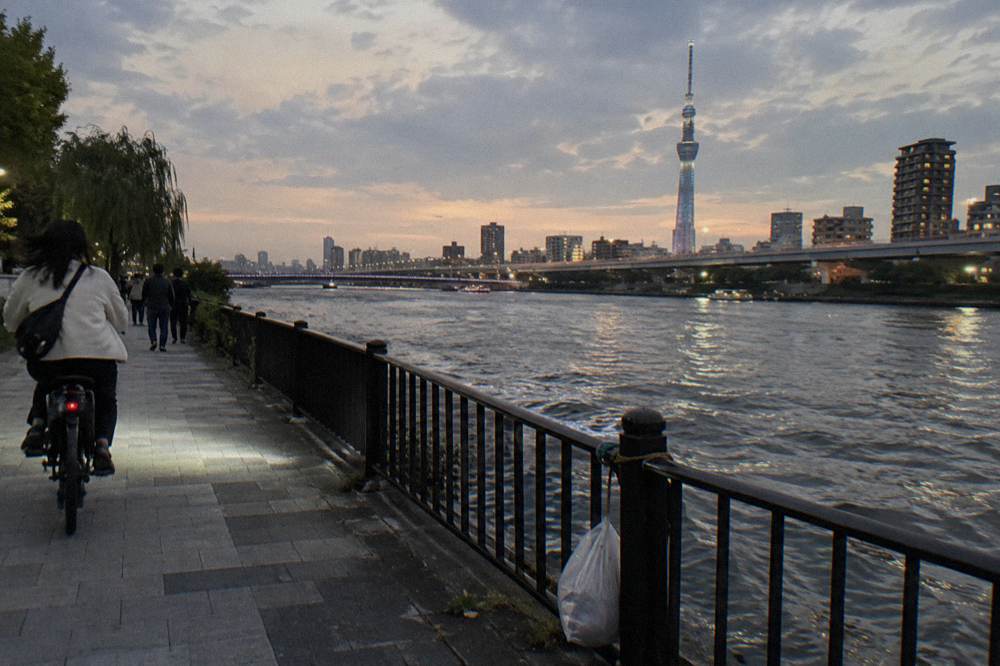
Night tours handle the equipment question for you, and the light rule is one reason the night segment of the market is dominated by operators rather than self-guided riders. The Night Hidden Gems E-Bike, Premium ride from TRB BIKE runs two hours with a maximum of six riders, bikes and guide included, from $142 per person, and it is rated 4.8 across 27 reviews. At the regular-bike end, the 2-Hour Night Lights Ride from COG EXPLORER JAPAN covers Shibuya and Tokyo Tower after dark from $55.06 per person, rated 5.0 across 31 reviews. Either way, check that your tour bike has a working lamp before you head out after dark.
One rule worth knowing before you arrive: no earphones in both ears while riding. The fine attaches to earphones or an umbrella blocking your surrounding sound, and the police reading treats both ears as the problem. Riders who keep one ear free and keep the phone mounted are compliant on both counts. Guides will usually say exactly this in the pre-ride briefing, and it is worth arriving five minutes early to hear it.
Do Tourists Need Bicycle Insurance To Ride In Tokyo?
Yes, a Tokyo ordinance has required every cyclist in the prefecture to hold bicycle liability insurance since 1 April 2020, and that includes visitors. Rental businesses must insure the hirer's use and must tell renters what the coverage includes, so a booked tour bike arrives covered.
The insurance rule is the oldest of the three obligations visitors ask about, and it is the one the market has quietly solved. If you join a guided tour or rent from a Tokyo shop, the operator's duty is to cover the rental and disclose the coverage, which means the question to ask at pickup is not whether insurance exists but what it covers and what it excludes. If you bring your own bike, check your travel or home policy for a personal liability rider before you fly, because existing policies with that rider count as satisfying the ordinance.
The reason Tokyo legislated at all is the size of the worst outcomes. The police insurance page cites court judgments of 95,210,000 yen in Kobe and 92,660,000 yen in Tokyo arising from cycling collisions, figures that explain why an obligation with no spot-check still carries real force. A rider who causes serious injury without cover is exposed personally, visitor or not.
For a deeper comparison of group formats, the private versus group ride guide works through the trade-offs, and the rules for visitors overview covers the same obligations from a planning angle. The short version for this page: book a tour and the operator carries the compliance load on insurance, helmets and bike condition, leaving you the traffic rules, which are the part a guide also helps you follow in real time.
That combination, a compliant bike plus someone watching the road rules for you, is why Tokyo Bike Tours exist as a category at all. The fine ladder is manageable for an alert rider, but a first day in a new city with new conventions is exactly when a guide earns their fee.
How Do The New Rules Change A Guided Tour In Tokyo?
For a tour rider, expect the guide's briefing to cover the phone and earphone rules, which target earphones worn in both ears, and check that the tour bike has a working lamp. The umbrella and earphone fines come from Tokyo's own regulations, the rest from national ones. It pays to follow the guide's line through signed sidewalk sections, and note that the phone and earphone fines come from Tokyo's own regulations, not national ones. The umbrella and earphone fines come from Tokyo's own regulations, not national ones.
Expect these rules to come up in the tour safety briefing. Pre-ride briefings now spend more time on the phone rule, because the 12,000 yen figure is the one that lands with a room of visitors, and group rides keep single-file discipline tighter than before, since two-abreast riding now carries a named fine. Group sizes were already small, and the caps you see on booking pages, five, six or eight riders, make the single-file habit automatic rather than a struggle.
The format you pick shapes how much of the rulebook you personally carry. A small-group ride such as the Flexible 3-6 Hour Small-Group Ride, from $64.78 per person and rated 4.9 across 212 reviews, puts a guide in front of up to eight riders through central neighborhoods. A private option like the Private E-Bike From Your Hotel ride from Tokyo Bike Bliss, rated 5.0 across 171 reviews from $156.77 per person, lets you set the pace and the route with the guide's judgment on tap, and the total depends on group size, so the booking page is the place to check your number. Neither format exempts you from the rules, but both put a daily rider between you and the judgment calls.
“Great tour and fun way to experience Tokyo! The tour was a perfect mix of hot spots and green areas of the city, and our guide was fantastic. She was attentive, knowledgeable, and fun to be around throughout the day.”
Common Questions About The New Bicycle Rules In Japan
What Are The New Bicycle Rules In Japan As Of April 2026?
The blue-ticket system took effect on 1 April 2026, applying fixed fines from 3,000 to 12,000 yen to riders aged 16 and over for violations such as phone use, signal breaches and riding two abreast. Helmets remain an effort obligation with no fine, and Tokyo's bicycle liability insurance requirement continues unchanged.
Do The New Fines Apply To Foreign Tourists?
Yes. The Tokyo Metropolitan Police's English traffic rules page states that cyclists will be issued tickets for traffic offences, and the official Tokyo tourism guide confirms this also applies to tourists from overseas. In practice, officers are instructed to give guidance and a warning before writing a ticket.
Can I Be Fined For Not Wearing A Helmet In Japan?
No. Helmets are an effort obligation for all ages since April 2023, which carries no fine. Parents are expected to have children wear one, and police safety campaigns push the point, citing a fatality rate 2.3 times higher for riders without helmets.
Is It Illegal To Use A Phone While Cycling In Japan?
Holding a phone to talk or watch the screen carries a 12,000 yen fine, the highest on the bicycle ladder. If the use creates danger, it becomes criminal, with penalties up to one year imprisonment or a 300,000 yen fine. A mounted, hands-free setup is the compliant approach.
Can Tourists Ride On The Sidewalk In Tokyo?
Only where a sign permits it, or for riders under 13, over 70, with disabilities, or when the roadway is unsafe. On a permitted sidewalk, ride slowly on the roadway side and give way to pedestrians, who always have priority.
Do I Need Insurance If I Rent A Bike On A Tour In Tokyo?
A Tokyo ordinance has required bicycle liability insurance since 1 April 2020, and rental businesses must insure the hirer's use and explain what is covered. Joining a tour satisfies the requirement through the operator, and the pre-ride pickup is the moment to ask what the policy excludes.