Is It Safe To Cycle In Tokyo At Night?
Night cycling in Tokyo is popular and well lit, but the rules matter more after dark. This guide covers the laws, the fines, the guided night rides and how to prepare.
Tokyo keeps its streetlights on, its trains running past midnight and its convenience stores lit around the clock, so the city never really closes for a cyclist. What changes at night is the legal burden on the rider. Lights are compulsory, some fine amounts are steeper than people expect, and a rule change in April 2026 means traffic violations by cyclists now carry fixed financial penalties in Japan, including for visitors. The short version: night riding in Tokyo is a normal, popular activity, done safely by thousands of people every evening, provided the bike is legal and the rider follows the same rules that apply by day.
Yes, in the practical sense that millions of Tokyo residents cycle after dark every year on lit, well maintained streets, and guided night rides are an established part of the city's tourist offer. Night safety in Tokyo is mostly about legality and visibility rather than personal security. Riders who use lights, keep left and follow signals are doing what the police guidance asks of everyone.
“Amazing experience biking through the city, neighborhoods, shops and a beautiful cemetery at night. A great way for us to get an overview of a few areas while avoiding day time crowds and heat. Our guide Tai Chi was excellent, pointing out architectural aspects, local food areas, and cultural facts. Very peaceful riding at night. Highlight experience for our family ages 19-69. Loved it!”
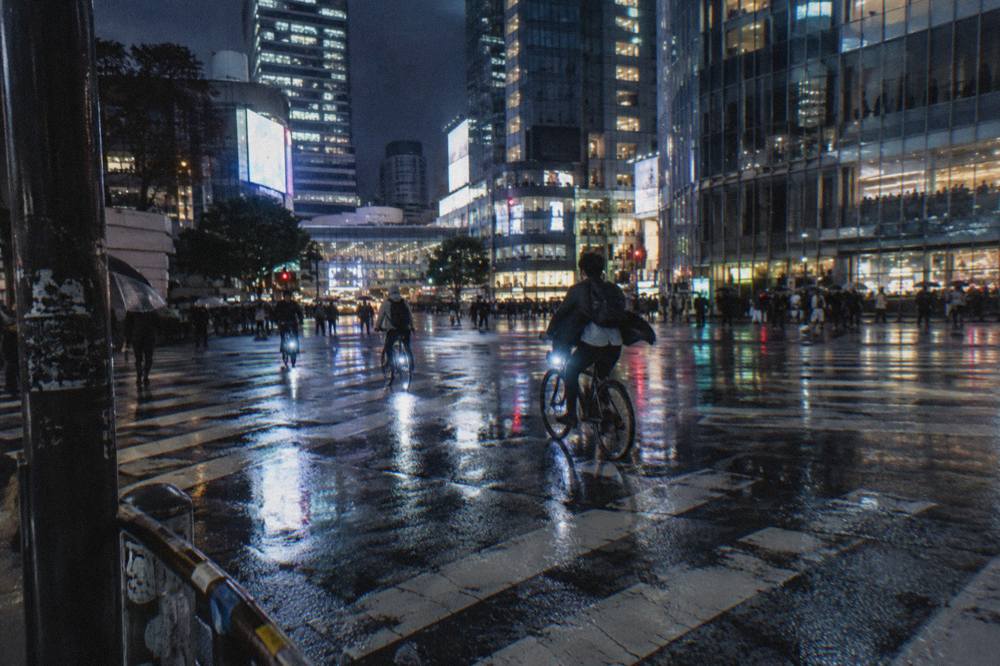
That answer needs unpacking, because "safe" collapses two different questions. The first is whether the streets are dangerous at night, and by the standards of a megacity they are remarkably calm: traffic thins after the evening rush, main roads stay lit, and the famous scramble crossings of Shibuya are crowded until late, which is exactly why night tours sell. The second question is whether the rider is legal, and that is where night cycling differs from daytime cycling in one specific way: Japanese law requires every bicycle to carry a front light and a rear reflector between dusk and dawn. Riding without a light at night is a violation with a fixed fine of 5,000 yen under the violation notice system introduced on 1 April 2026, and the Tokyo Metropolitan Police state plainly that overseas visitors are included. The rules pages live at the MPD English traffic rules page.
- City Bike Tours$32.39
- Private Tours$45.35
- Night Rides$55.06
- E-Bike Tours$61
- Day Trips By Bike$76
None of this makes night riding risky in the way the question implies. The guided evening options listed below exist precisely because demand is strong: operators run two-hour and three-hour rides through Shibuya, Tokyo Tower districts and the bay area several evenings a week, and the longest-running of them carry review histories in the hundreds. What a guide adds at night is not protection from anything sinister. It is route knowledge, a legal bike with lights already fitted, and someone else watching the signals while you watch the city.
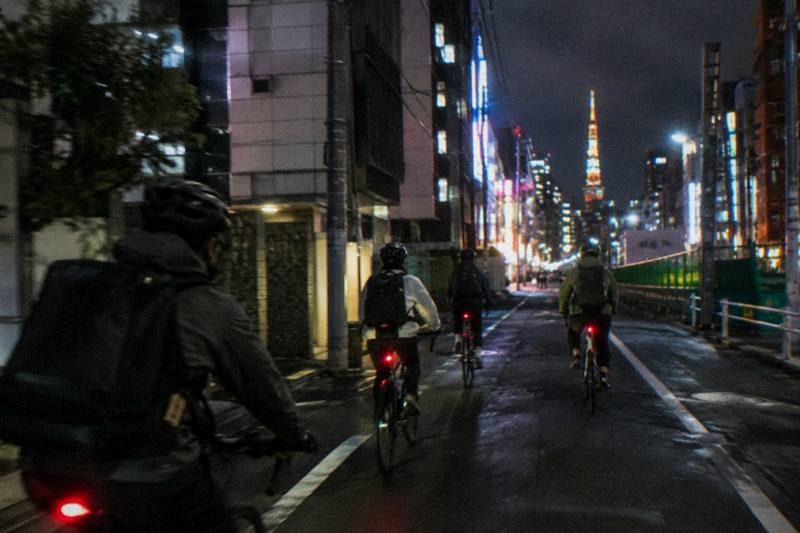
For a sense of what an evening ride actually looks like, the 2-Hour Night Lights Ride run by COG EXPLORER JAPAN starts at Umayamichi Park, takes a maximum of six riders on regular bikes with helmets included, and covers the Shibuya and Tokyo Tower areas, from $55.06 per person, with the total depending on group size. It is rated 5.0 across 31 reviews, a small pool but a consistently pleased one. This site, Tokyo Bike Tours, keeps a fuller set of evening options, and the comparison table further down lists all five night rides currently bookable.
Which Rules Apply To Night Cycling In Tokyo?
At night in Tokyo you must ride on the left of the roadway, fit a white or pale-yellow front light visible from ten metres, carry a rear reflector, obey signals, and never hold a phone or ride drunk. From April 2026, riders aged 16 and over face fixed fines, from 3,000 yen for riding two abreast to 12,000 yen for hand-held phone use, while helmets stay an effort obligation for all ages with no fine.
Tokyo's bicycle law follows the national Road Traffic Act, and the Metropolitan Police publish the essentials on their bicycle rules page. The bicycle counts as a light vehicle, so the default position is the roadway, on the left. Sidewalk riding is an exception, allowed only where a sign permits it, for riders under 13 or over 70, for riders with a disability, or where the roadway is genuinely unusable. Where sidewalk riding is permitted, the rider must slow to near walking speed near the kerb side and stop for pedestrians. Guided tours lean on this: route leaders keep groups on quiet roads and dismount at the busiest crossings, because walking the bike across a crowded junction is faster than riding it.
The violation notice system, known widely as the blue ticket, took effect on 1 April 2026 and applies to riders aged 16 and over, visitors included. Police guidance says officers normally begin with guidance and a warning, and reserve tickets for malicious or dangerous violations, so a tourist who misses a stop sign is far more likely to get a word than a fine. The amounts, though, are now fixed in law and worth knowing before you roll out at dusk.
| Violation | Fixed fine |
|---|---|
| Holding a phone to talk or watch the screen while riding | 12,000 yen |
| Entering a closing or alarmed rail crossing | 7,000 yen |
| Ignoring a traffic signal | 6,000 yen |
| Riding against traffic or on the wrong side | 6,000 yen |
| Riding without a light at night | 5,000 yen |
| Holding an umbrella or wearing earphones in both ears | 5,000 yen |
| Failing to stop at a stop sign | 5,000 yen |
| Riding two abreast | 3,000 yen |
| Carrying a second adult passenger | 3,000 yen |
Two categories sit above the fine system entirely. Drunk cycling is a criminal matter, with penalties up to five years' imprisonment or a fine of up to 1,000,000 yen for riding while alcohol-impaired, and hand-held phone use that creates danger carries up to a year or 300,000 yen. Nobody on a night tour needs to worry about either, but a visitor combining an izakaya crawl with a share bike should. Insurance matters too: a Tokyo ordinance has required all cyclists in the prefecture to hold bicycle liability insurance since 1 April 2020, and rental businesses must insure their bikes and tell renters what is covered, which is one quiet argument for guided tours and share schemes over borrowing a bike informally. The official visitor guidance is on the GO TOKYO bicycles page.
Helmets are not a fine matter at any age. Since April 2023 every cyclist in Japan must endeavour to wear one, and parents carry the same obligation for their children. The police put real weight behind it: their helmet page records that 63.5 percent of cycling deaths in Tokyo between 2021 and 2025 involved fatal head injuries, and that the fatality rate without a helmet was 2.3 times higher. Most of the guided night rides listed below include a helmet in the price.
Which Guided Night Bike Rides In Tokyo Are Available?
Five guided night rides are currently bookable in Tokyo: two short regular-bike rides focused on Shibuya and the city lights, two e-bike rides covering hidden backstreets and the bay at sunset into darkness, and one new ramen-finish ride. Prices run from $55.06 to $142 per person, durations from 2 to 3 hours, and all but one include free cancellation per the booking pages.
The table below compares them on the facts that matter at booking time. Prices are per person "from" figures as shown on each booking page; where the total depends on group size, the booking page shows the exact amount for your party.
| Ride | Bike | Duration | Group max | Price from | Reviews |
|---|---|---|---|---|---|
| 2-Hour Night Lights Ride | Regular | 2 hours | 6 | $55.06 | 5.0 across 31 |
| Bay Sunset to Night E-Bike | E-bike | 3 hours | 6 | $62.19 | 4 reviews, too few for a rating claim |
| Summer Night Bay E-Bike Ride | E-bike | 3 hours | 4 | $63.48 | New listing, no reviews |
| Night Ride With Ramen | Regular | 2 to 3 hours | 6 | $84.21 | New listing, no reviews |
| Night Hidden Gems E-Bike | E-bike | 2 hours | 6 | $142 | 4.8 across 27 |
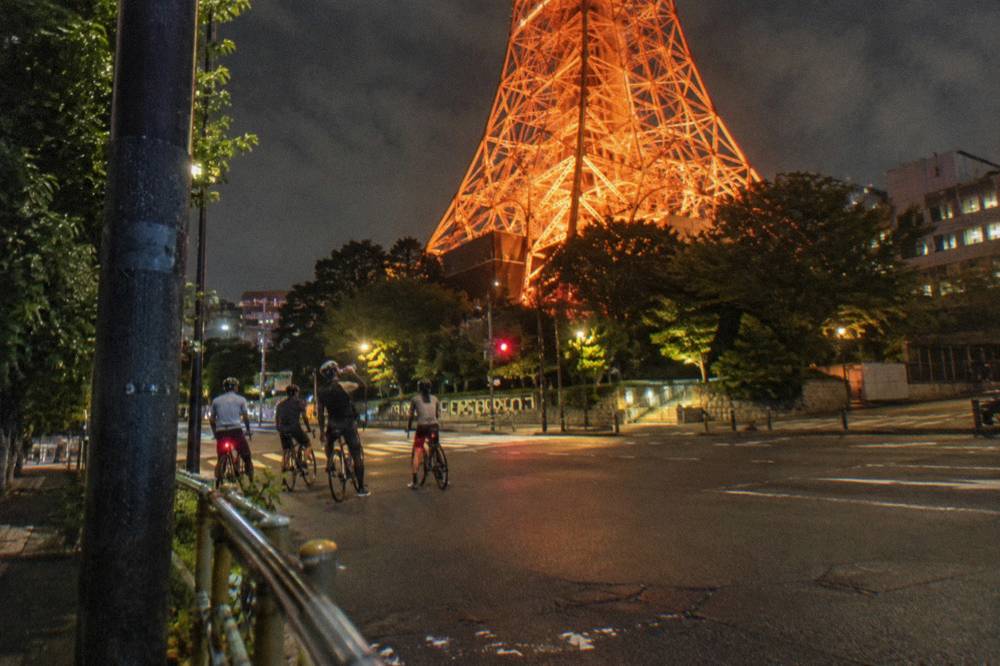
The 2-Hour Night Lights Ride is the entry point most first-time visitors choose: it starts at Umayamichi Park, caps groups at six, includes bike, helmet and guide, and covers the Shibuya scramble and Tokyo Tower viewpoints in a single loop. Dinner is not included, so it pairs well with a late reservation afterwards.
The premium end of the evening market is the Night Hidden Gems E-Bike ride from TRB BIKE TOUR, rated 4.8 across 27 reviews, from $142 per person for two hours on an e-bike with a guide. The price reflects a deliberately small-group format through backstreets most visitors never see lit. Food and drink are not included. If the appeal of night cycling is food rather than lights, the Night Ride With Ramen from Tokyo Backstreets Bike Tour is a new listing built around exactly that, from $84.21 per person, regular bikes, groups of up to six, with the ride ending at a ramen counter.
“This is a great way to see some of Tokyo city. The bikes are in great condition and Tokyo is very cycle friendly so you feel safe. Takashe was a wonderful guide and made our day a fun and memorable one. Highly recommend this tour.”
The bay option deserves a specific mention because of its timing. The Bay Sunset to Night E-Bike ride from Japan Wonder Travel begins while it is still light, catches the sunset over the water, and finishes after dark, which makes it a good choice for riders who want to ease into night riding rather than start in it. It runs from $62.19 per person for three hours, e-bikes, groups of up to six, helmet and guide included, free cancellation per the booking page. Its review pool is still tiny, only four reviews so far, so judge it on the route description rather than a rating. For a fuller comparison of electric and pedal options, the Tokyo e-bike tour guide breaks down the trade-offs.
How Should You Prepare For Cycling In Tokyo After Dark?
Prepare three things: a legal bike with a working front light and rear reflector, a helmet, and a route that avoids the busiest junctions at peak hours. Check your insurance position, keep your phone in a bag rather than your hand, and if you drink, do not ride. Guided rides handle all of this for you, which is why they dominate evening cycling for visitors.
Start with the bike. Every rental bike from a legitimate Tokyo business should come with a front light, and the rental company is required to tell you what its liability insurance covers, so take ten seconds to ask. Share bikes are electric-assist with built-in lights, but note that helmets are not a standard provision of the share systems, and the Docomo day pass needs an SMS-capable phone, which excludes some travellers. The practical share-bike basics are covered in the Tokyo bike share guide.
Give the light itself a real check rather than a glance. The standard the police publish is a white or pale-yellow beam visible from ten metres ahead, and rental fleets vary, so switch it on before you leave the pickup point and look at it from a few parked metres away. A rear reflector is part of the same requirement, and it costs nothing to confirm it is clean and intact. If either is missing or dead, a functioning shop will swap the bike on the spot, because it is their legal exposure as much as yours.
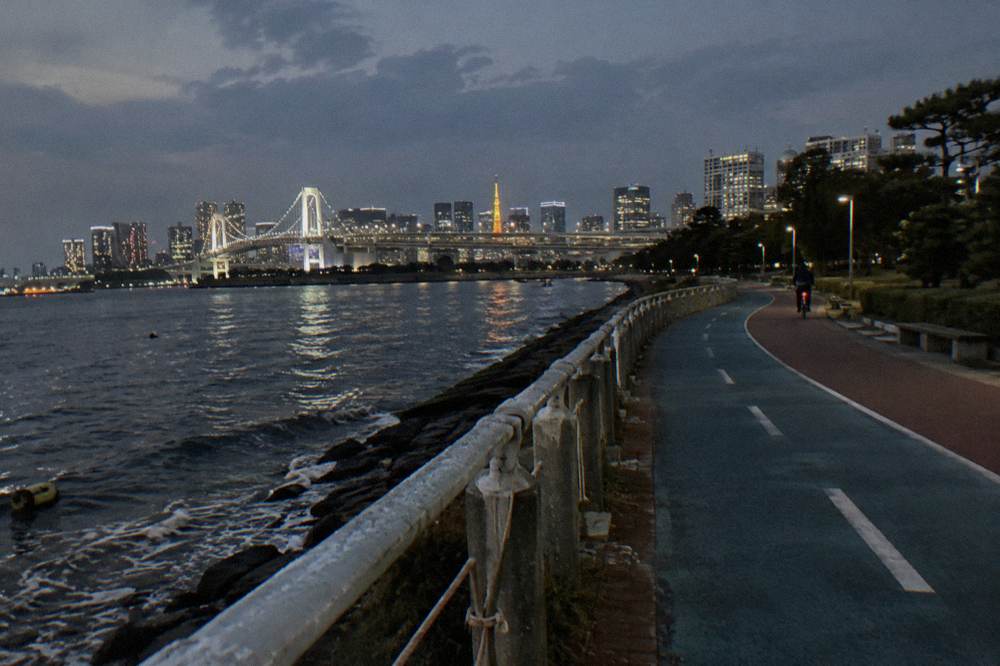
Then the route. Night cycling in Tokyo is at its best away from the mega-crossings: the riverside paths along the Sumida stay lit and calm, the Palace perimeter is rideable on ordinary roads at any hour, and route guides describe bayfront paths around Odaiba as a favourite evening stretch. The main cycling course in Yoyogi Park became bicycle-dedicated between 9:00 and 17:00 from April 2026, which helps daytime riders more than evening ones, so after dark treat it as shared and give runners room.
Finally, the rider. Tokyo's weather shapes the experience more than most visitors expect. Evening temperatures in the wettest months, September at 224.9 mm of rain and October at 234.8 mm per the JMA 1991 to 2020 normals for the Tokyo station, mean a light shell is worth packing in those months, while August nights average a low of 23.5 degrees, so hydration matters even at 9 p.m. December through February are the driest, coldest, and often clearest evenings of the year, with January lows around 1.2 degrees.
Which Tokyo Areas Are Best Ridden At Night?
The best night riding in Tokyo is on the riverside paths along the Sumida, around the bayfront at Odaiba, and on the quiet perimeter roads of the Imperial Palace. The busiest pedestrian junctions, above all the Shibuya scramble, are better crossed on foot pushing the bike. Guided night routes are built around exactly this logic.
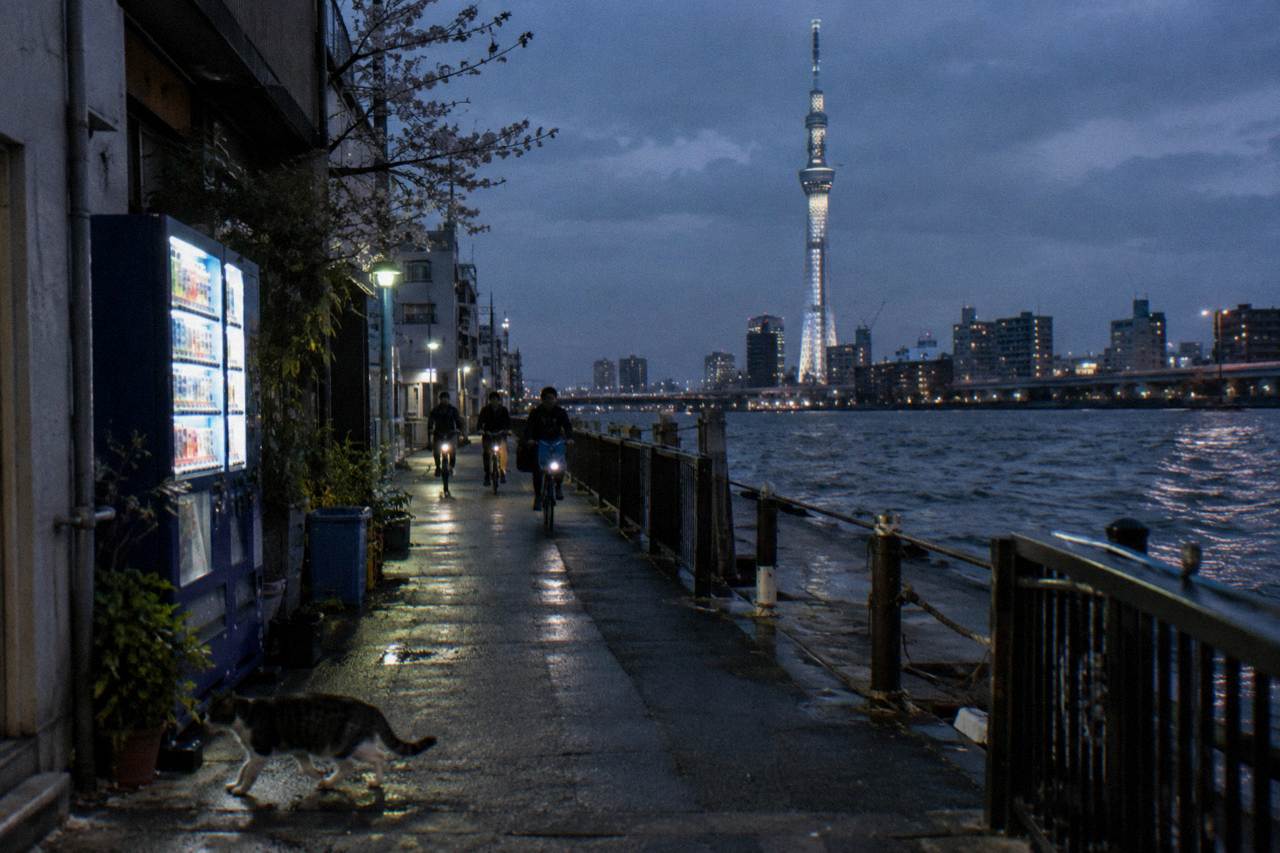
Riverside paths solve the night rider's core problem: they are lit, they are away from traffic, and they connect neighbourhoods without a single busy crossing. Route reports describe a roughly four-kilometre stretch along the Sumida from Asakusa toward Ryogoku with Skytree views as a classic evening ride, and the bayfront around Odaiba as a car-light zone where the city lights do the scenery work. The Sumida River cycling guide covers the riverside options in detail.
The palace loop works differently. Its famous Sunday car-free openings happen in daylight hours, but the roughly five-kilometre perimeter on ordinary roads is rideable any evening, and the moat lighting makes it one of the calmest night rides in central Tokyo. What to avoid at night is what you would avoid by day: the scramble and its approaches at peak crossing times, and narrow shopping streets with heavy foot traffic, where riding is legal on the roadway but slow and stressful for everyone.
“It’s a great day covering a lot of Tokyo, such a fun way to explore. Experiencing places that aren’t on the normal tourist maps.”
For riders who want the scenery without the planning, the guided evening rides compress all of this. The Summer Night Bay E-Bike Ride from Cycling Holiday Tokyo is built around the bay at night, three hours, groups capped at four, from $63.48 per person, e-bikes with helmet and guide included, free cancellation per the booking page. It is a new listing without reviews yet, so read the route description carefully before booking.
Common Questions About Cycling In Tokyo At Night
Is It Safe To Cycle In Tokyo At Night?
Millions of rides happen after dark in Tokyo every year on lit, orderly streets, and guided night rides are an established tourist activity, so in practice yes, provided the bike is legal. The real risks at night are rule violations and low visibility, not crime. Use lights, keep left, obey signals, and wear a helmet.
Do I Need A Light On My Bike At Night In Tokyo?
Yes, a front light is legally required between dusk and dawn, and the standard is a white or pale-yellow light visible from ten metres, plus a rear reflector. Riding at night without a light carries a fixed fine of 5,000 yen under the violation notice system in force since April 2026. Rental and share bikes come with lights fitted.
Can Tourists Get Fined For Cycling Violations In Tokyo?
Yes. The Tokyo Metropolitan Police's English guidance states that cyclists will be issued tickets for traffic offences and that the rules apply to overseas visitors. In practice officers normally start with guidance and a warning, and tickets target dangerous or repeated violations. Fines for riders aged 16 and over range from 3,000 to 12,000 yen.
Are Helmets Required For Night Cycling In Tokyo?
Helmets are an effort obligation for every age in Japan, in place since April 2023, which means you are legally asked to wear one but cannot be fined for not doing so. The police link 63.5 percent of Tokyo cycling deaths between 2021 and 2025 to head injuries, and most guided night rides include a helmet in the price anyway.
Is It Safe To Ride An E-Bike At Night In Tokyo?
E-bikes are a popular night option and several guided evening rides use them, including bay sunset-to-night tours from around $62.19 per person. The same rules apply as on regular bikes, and the electric assist helps on bridges and river levees. Check that the bike's light works before you set off.
Which Guided Night Bike Ride In Tokyo Is The Cheapest?
The 2-Hour Night Lights Ride from COG EXPLORER JAPAN is the least expensive evening option, from $55.06 per person with the total depending on group size, covering Shibuya and Tokyo Tower with a maximum of six riders. The Night Hidden Gems E-Bike ride sits at the other end at from $142 per person.