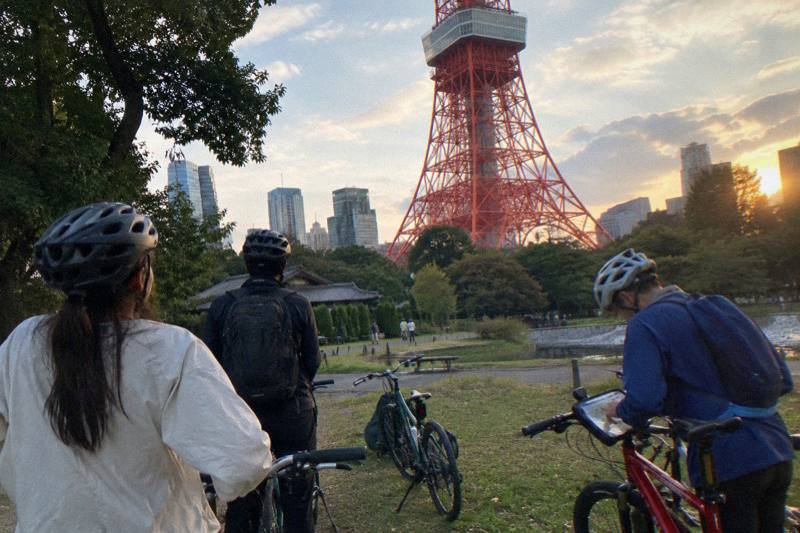
How To Get Around Tokyo: Trains, Taxis And Two Wheels
Tokyo rewards planners who mix transport modes: the rail network covers distance fast, while a bicycle, borrowed or guided, turns the spaces between stations into the actual sightseeing.
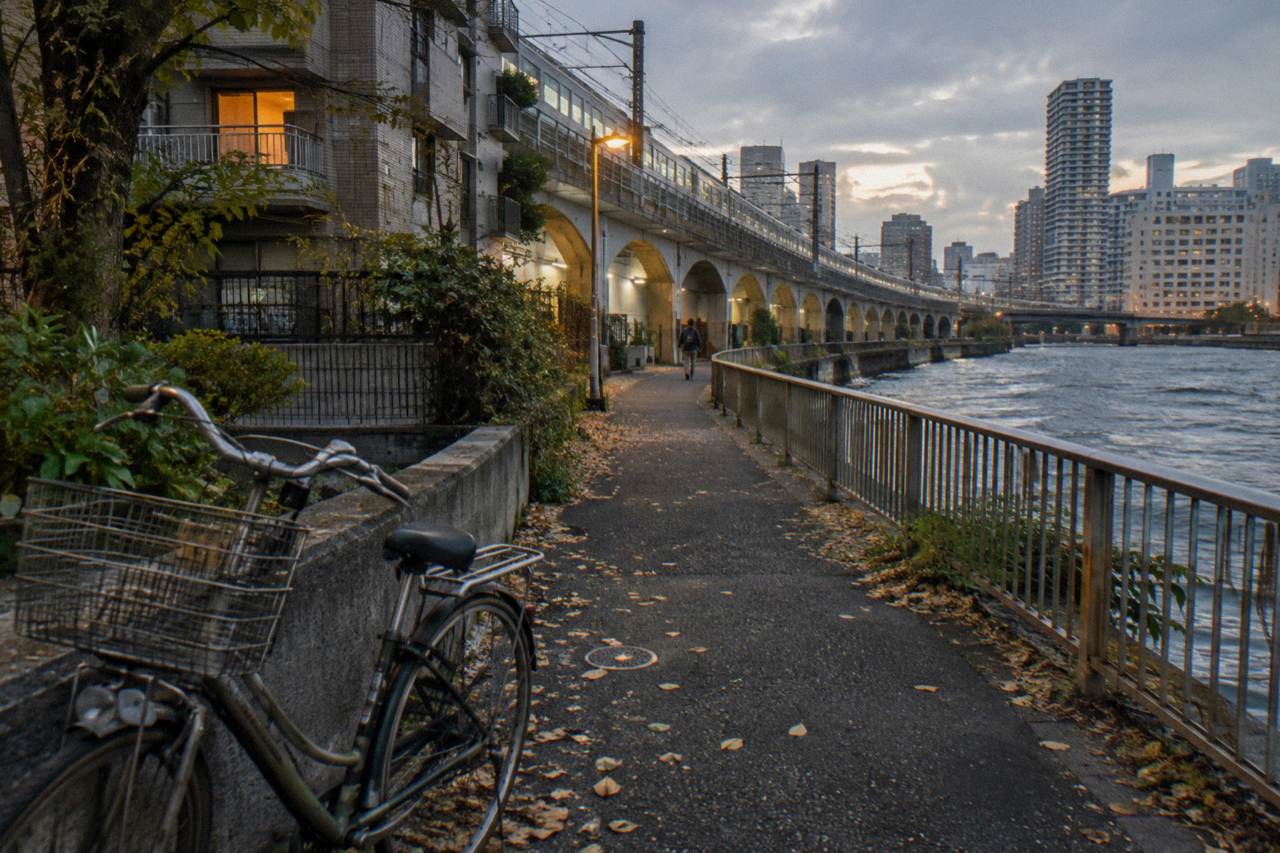
Short answer
Tokyo's rail network is the fastest way to cover long distances, while bicycles win for neighbourhood-scale exploring. Docomo Bike Share charges 165 yen per 30 minutes with a 1,650 yen day pass, and guided rides run from $46 to $107 per person, bikes and guides included.
Tokyo moves roughly the way its rivers do: a few wide, fast channels carrying most of the flow, and countless small tributaries threading between them. The rail network is the fast channel. Trains arrive on a famous schedule, stations stack whole shopping malls on top of themselves, and most visitors treat the train as the default answer to every distance. That instinct is right about half the time. The other half of Tokyo, the maze of temple backstreets, shopping arcades and riverside paths, sits between stations, and that is where two wheels quietly outperform everything else. For a side-by-side look at how rail, shoe leather and pedals compare across the city, the guide to seeing Tokyo by train, foot or bike sorts out which mode fits which kind of trip.
This guide walks through the four main ways of getting around the city: trains, taxis, bike share and guided bike tours. It sticks to figures that are verified: bike-share prices from the operators' own pages, tour prices and durations from the tour descriptions, road rules from the Tokyo Metropolitan Police, and climate data from the Japan Meteorological Agency. Metro and JR fares change with distance and are not reproduced here; check the fare charts at any station.
What Is The Fastest Way To Get Around Tokyo?
For crossing the city quickly, the rail network is unbeatable: trains run every few minutes, connect every district a visitor wants, and run on time. For distances under about three kilometres inside one neighbourhood, a bicycle is usually faster door to door, because it skips station stairs, transfers and the walk at each end.
The honest framing is that Tokyo transport is not a contest with one winner. A taxi from Shibuya to Asakusa costs far more than the train and sits in the same traffic. The same trip by bike takes a leisurely hour and a half but passes through Harajuku, the Imperial Palace moat and the Sumida riverside on the way, which is the point. Speed is the wrong metric for the second half of that sentence. A rider choosing the bicycle is choosing the route as the sightseeing, not just the arrival.
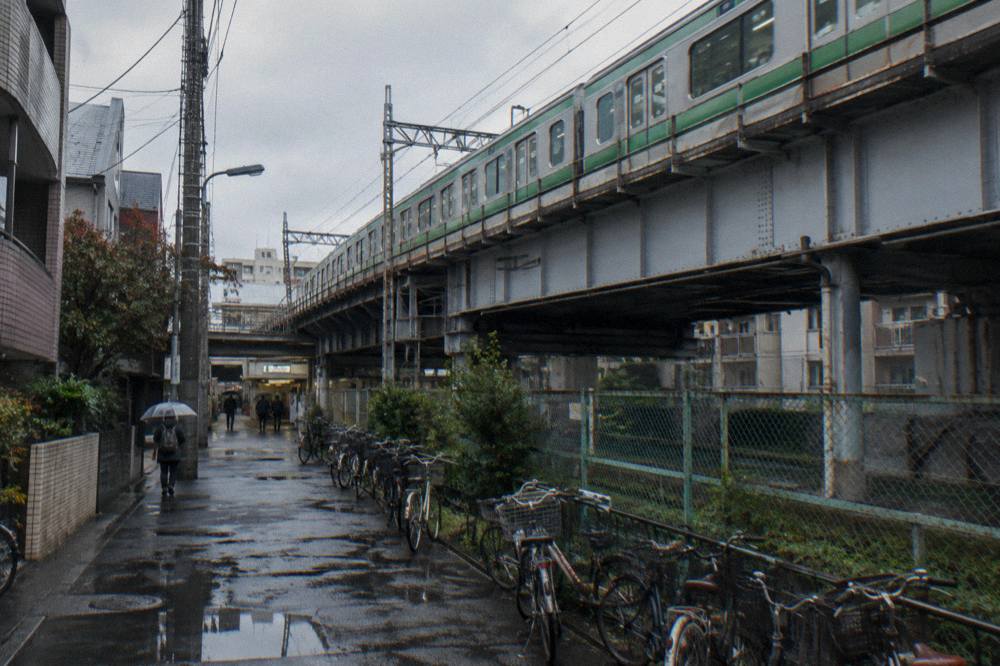
Taxis fill a narrow but real role: late-night returns when trains have thinned out, airport runs with luggage, and short hops for anyone whose legs have given up. They are clean, door handles swing open automatically, and payment by card is routine. What they are not is a daily sightseeing tool, because Tokyo's arterial roads move slowly at peak hours and the meter keeps counting.
The table below is a planning summary, not a price list: rail fares vary by distance and are deliberately left blank rather than guessed.
| Mode | Best for | Typical use | Watch out for |
|---|---|---|---|
| Trains | Long cross-city distances | Daily backbone of any trip | Crowds at rush hour, station stairs |
| Taxi | Late night, luggage, short hops | Occasional comfort | Slow in traffic, cost over distance |
| Bike share | 1 to 3 km neighbourhood hops | Flexible point to point riding | Must return to a designated port |
| Guided bike tour | Sightseeing between districts | Half-day exploring | Fixed start times |
| Walking | Dense old districts | Temple and market streets | Slow beyond one neighbourhood |
For readers weighing the walking alternative too, the bike tour versus walking comparison breaks down which districts reward each mode.
Why Does A Bicycle Work So Well In Tokyo?
Tokyo is flat, its neighbourhoods are dense with small streets, and its rivers and canals form car-light corridors through the middle of the city. A bicycle covers a district like Yanaka or the riverside in the time a train passenger spends on platforms, and every metre of the ride is the sightseeing rather than the wait between it.
Three physical facts do the work. First, most of central Tokyo sits on the flat Kanto plain; there is no serious climbing between Asakusa and Shibuya. Second, the street grid is fine-grained, full of narrow residential lanes where traffic is light and speeds are low, which is exactly the terrain guided operators seek out for their backstreet routes. Third, the rivers, the Sumida, the Arakawa and the canal network around Tokyo Bay, carry long cycling paths that route reports describe as traffic-light-free in sections, connecting central Tokyo to the waterfront without a single set of lights.
The Imperial Palace adds a bonus. On Sundays a roughly three kilometre segment of the moat road opens to bicycles as a car-free course, and free bike loans of around seventy bicycles have been offered there since April 2026, with returns due by 16:00. Route guides describe the full perimeter loop, about five kilometres, as rideable on ordinary days via the normal roads. For a fuller picture of riding the whole circuit, our guide to cycling the Imperial Palace loop covers the gates, the moats and the Sunday car-free rules.
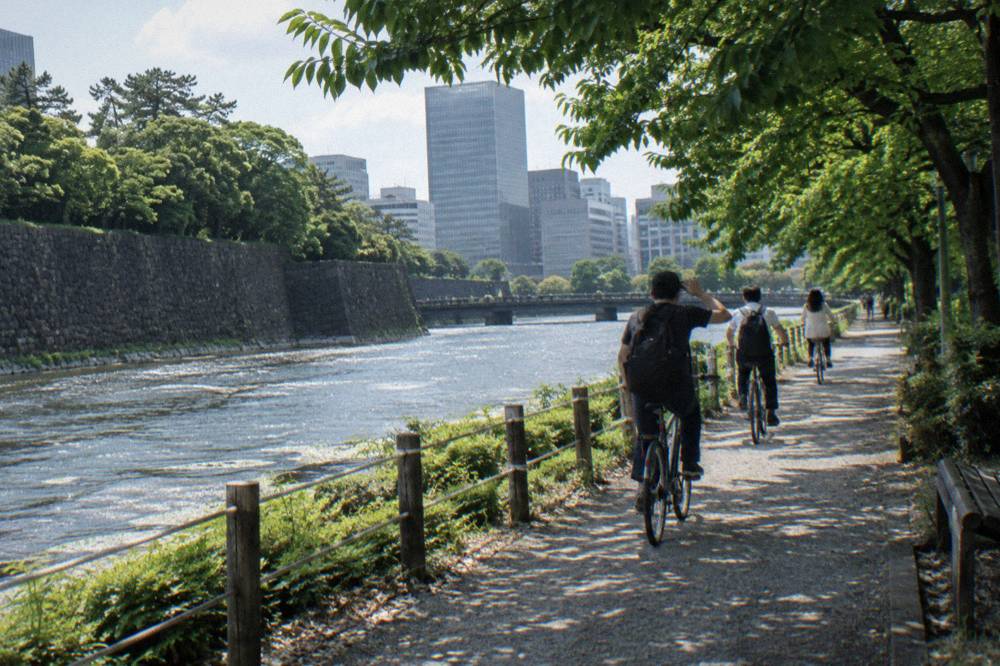
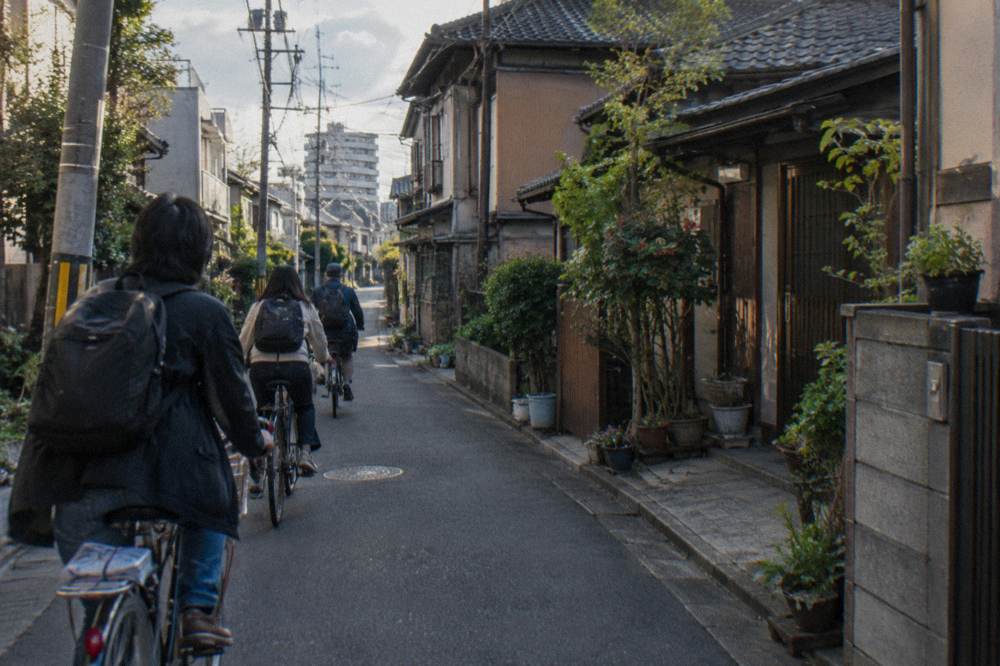
This is also why the guided rides listed below are more than transport with a commentary. A tour like the Small-Group Long City Ride, rated 5.0 across 1,308 reviews, is capped at five riders and spends its day exactly where the trains are not: the quiet lanes, the local lunch stops and the levee paths. The most reviewed ride in this comparison, at 1,308 reviews, it is also a good illustration that the format has a serious track record. Its price is from $106.89 per person with bike, helmet and guide included, meeting at Tokyo Opera City Sankun Garden.
The 6-Hour Full City Ride, 4.9 across 842 reviews and from $97.17 per person, runs a similar full-day shape with a group cap of twelve. The 3-Hour Highlights, Bike or E-Bike option, 4.9 across 980 reviews and from $61.54 per person, lets each rider choose an electric or regular bike and meets at the Statue of Commodore Perry, which suits a visitor who wants a shorter taste between other plans.
Which Tokyo Ride Suits A First-Time Visitor?
A first-time visitor with half a day should take a three to six hour guided ride from the city tour list: the Flexible 3-6 Hour Small-Group Ride from $64.78 per person or the 4-Hour Downtown Backstreets Ride from $77.74 per person both hand over the bike, the route and the local knowledge in one booking, with free cancellation per the listings.
The reason is simple. Tokyo's cycling culture has unwritten conventions, sidewalk etiquette, bell manners, which side to pass on, and a guide absorbs all of that for you on day one. Riders who prefer to start even shorter can take the 2.5-Hour Central Short Ride, rated 5.0 across 25 reviews and priced from $51.82 per person, which keeps the distance modest while still reaching the backstreets behind the central district.
Neighbourhood taste should drive the pick. The Shibuya-Harajuku 3-Hour Ride, 4.8 across 57 reviews and from $57.01 per person, starts at Umayamichi Park and covers the west side's youth-culture districts. The Olympic Sites Bay Ride, from $48.59 per person, is a new listing with no reviews yet and heads for the Tokyo Bay waterfront. And the West-Side Cycling With Food Stops tour, 5.0 across 223 reviews, from $106.89 per person, meets at Koenji Station and folds local eating into a three and a half hour route, capped at eight riders.
| Ride | Duration | Rating and reviews | Price from |
|---|---|---|---|
| Small-Group Long City Ride | 6 hours 30 minutes | 5.0 across 1,308 reviews | $106.89 per person |
| 6-Hour Full City Ride | 6 hours | 4.9 across 842 reviews | $97.17 per person |
| 3-Hour Highlights, Bike or E-Bike | 3 hours | 4.9 across 980 reviews | $61.54 per person |
| Flexible 3-6 Hour Small-Group Ride | 3 to 6 hours | 4.9 across 212 reviews | $64.78 per person |
| 4-Hour Downtown Backstreets Ride | 4 hours | 4.9 across 124 reviews | $77.74 per person |
| 2.5-Hour Central Short Ride | 2 hours 30 minutes | 5.0 across 25 reviews | $51.82 per person |
| Shibuya-Harajuku 3-Hour Ride | 3 hours | 4.8 across 57 reviews | $57.01 per person |
Two tours from the same family sit close together in the table.
Whatever the pick, the listings describe free cancellation, so a rainy forecast does not strand the booking. That flexibility matters in a city where October, at 234.8 mm of rain on the 1991 to 2020 JMA normals for the Tokyo station, is the wettest month of the year.
How Does Bike Share Work In Tokyo?
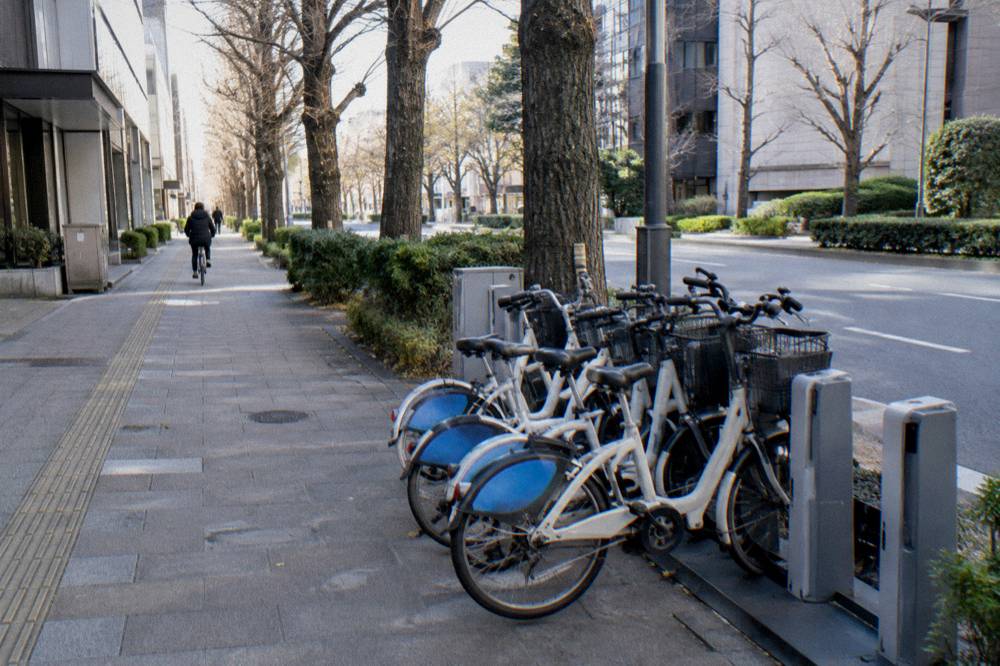
Tokyo's main share system, Docomo Bike Share, rents electric-assist bikes from ports across 16 central wards at 165 yen per 30 minutes, with a 1,650 yen day pass valid until 23:59 the same day, and bikes must be returned to a designated port rather than left anywhere on the street.
The mechanics are visitor-friendly. Registration needs a smartphone and a credit card, and foreign cards are accepted through the app. The one-time rate is 165 yen for the first 30 minutes with 165 yen for each further 30 minutes, tax included, per the operator's official price page. The day pass costs 1,650 yen bought at a convenience store or 2,200 yen with an IC card, the latter requiring photo ID, and both are valid until 23:59 on the day of purchase. The convenience-store pass needs an SMS-capable phone number.
HELLO CYCLING runs a parallel nationwide network with one account that can borrow at one station and return at any other HELLO CYCLING station. Its prices are set per prefecture and vehicle type in the app, so check the official pricing page rather than relying on secondhand figures. The Docomo Bike Share price page carries the full Tokyo rate table in English.
The share bike and the guided tour answer different questions, and mixing them across a week works well. Share bikes suit the spontaneous two-kilometre hop; tours suit the day a visitor wants the city explained. The deeper comparison, including where share ports cluster, sits in the guide to Docomo and other share services, and anyone weighing a self-guided rental day can start from the Tokyo bike rental guide.
| Docomo Bike Share item | Price (yen, tax included) | Notes |
|---|---|---|
| One-time use, first 30 min | 165 | Extension 165 per further 30 min |
| Day pass, convenience store | 1,650 | Valid until 23:59, needs SMS phone |
| Day pass, IC card | 2,200 | Photo ID required |
| Monthly plan | 3,300 | First 30 min of each ride free |
One planning caution: ports can fill or empty at rush hours near major stations, so the app's live port map is the tool to trust for real-time availability.
What Cycling Rules Do Visitors Need In Tokyo?
Visitors cycling in Tokyo ride on the left of the road by default, may use sidewalks only where signed or in limited cases, need a front light at night, and since 1 April 2026 face fixed fines from 3,000 to 12,000 yen for traffic violations under the blue-ticket system, which applies to overseas visitors as well as residents.
The blue-ticket regime is the big recent change. Under the amended Road Traffic Act it targets riders aged 16 and over, and officers normally give guidance and a warning first; tickets are for malicious or dangerous violations. The Metropolitan Police's English traffic rules page states plainly that cyclists will be issued tickets for traffic offences, and the official GO TOKYO bicycle guide confirms this applies to tourists from overseas.
| Violation | Fixed fine (yen) |
|---|---|
| Holding a phone to talk or watch while riding | 12,000 |
| Ignoring a traffic signal | 6,000 |
| Riding against traffic | 6,000 |
| No light at night | 5,000 |
| Umbrella or earphones blocking surrounding sound | 5,000 |
| Failing to stop at a stop sign | 5,000 |
| Riding two abreast | 3,000 |
| Carrying a second rider | 3,000 |
Helmets are a separate matter and a common point of confusion. Since April 2023 every cyclist of any age has an effort obligation to wear one, which means strongly advised rather than mandated, and there is no fine for riding bareheaded. The police nonetheless publish a stark statistic: 63.5 percent of cycling deaths in Tokyo between 2021 and 2025 involved fatal head injuries, and the fatality rate without a helmet is 2.3 times higher. Most of the guided tours in the comparison above include a helmet in the price, which quietly removes the decision.
Insurance is the other requirement visitors overlook. A Tokyo ordinance in force since 1 April 2020 requires cyclists in the prefecture to hold bicycle liability insurance, and rental businesses must insure their renters' use and explain what the coverage includes, per the Metropolitan Police insurance page. A tour or rental booking satisfies this automatically; a privately borrowed bike might not. The full rule set, including the finer points of sidewalk etiquette, is laid out in the Japan cycling rules guide.
When Is The Best Season To Explore Tokyo By Bike?
The most comfortable cycling months in Tokyo are March to May and November, when JMA 1991 to 2020 normals show monthly rainfall of 96.3 to 139.7 mm and mean temperatures of 9.4 to 18.8 degrees C; August, with a mean daily maximum of 31.3 degrees C, and the September to October rain peak are the hardest months for long rides.
- City Bike Tours$32.39
- Private Tours$45.35
- Night Rides$55.06
- E-Bike Tours$61
- Day Trips By Bike$76
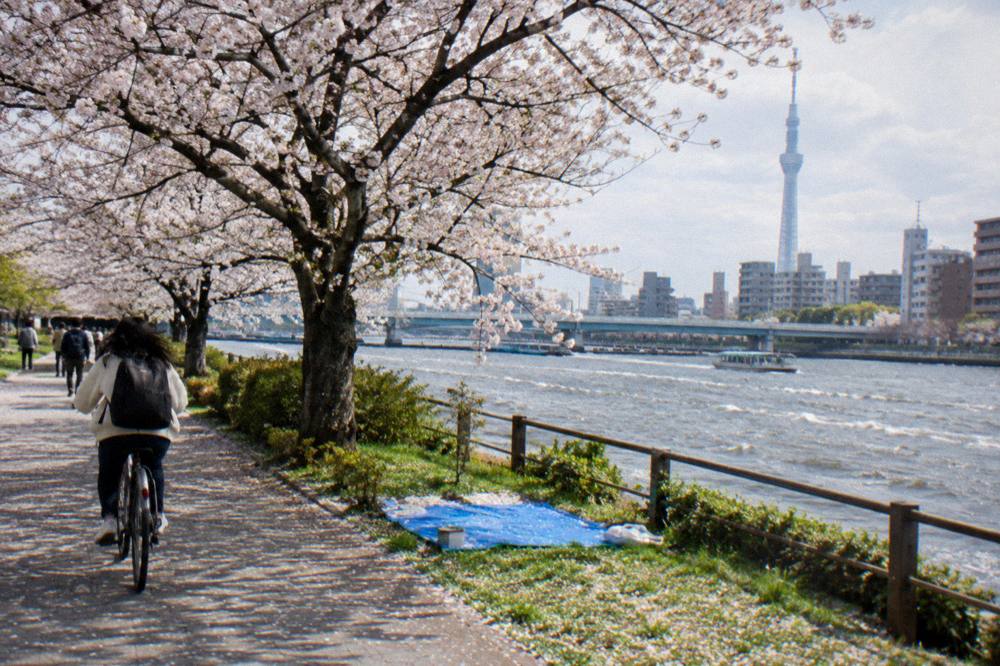
The numbers do not lie, and they are worth reading closely because Tokyo's seasons are extreme at both ends. Spring brings the blossom season, with first bloom around 24 March on the long-term normals and full bloom about a week later, and March's 116 mm of rain is manageable. Summer is the problem: June's 167.8 mm marks the rainy season, July and August push mean daily maxima to 29.9 and 31.3 degrees C, and even the nights stay above 22 degrees. Autumn flips the equation, with November combining a mild 16.7 degree mean maximum with only 96.3 mm of rain. Winter is cold but dry, January means of 5.4 degrees C with 59.7 mm of rain, and perfectly rideable with layers.
Season also reshapes the tour choice. Shorter rides suit August heat; the six-hour formats suit the shoulder months. Night tours come into their own in summer, when evenings finally drop toward bearable, and the night bike tour guide covers those options. Anyone planning around the blossom window will find route ideas in the cherry blossom cycling guide.
Should You Combine Trains And Bikes On One Tokyo Trip?
Yes, and the combination is the standard local pattern: trains for the long legs, share bikes or a guided ride for the district at the far end. A workable day pairs one rail crossing in the morning with a three-hour guided ride such as the 3-Hour Highlights, Bike or E-Bike option from $61.54 per person, then a share bike for evening hops.
If you'd rather bring your own bike along on the rail leg, our guide to rinko bags and Tokyo train rules explains what the railways actually require before you carry a bicycle aboard.
The economics support the mix. A single day pass on Docomo Bike Share at 1,650 yen covers unlimited rides within the day's rules, while one guided booking covers a half day of navigation, commentary, bike and helmet. Neither replaces the train for cross-city speed, and the train cannot wander the backstreets. A visitor who books one guided ride early in the trip also picks up the local riding conventions by observation, which makes later share-bike days smoother.
Practical sequencing helps too. Meeting points for the tours above sit near recognisable landmarks, Tokyo Opera City's Sankun Garden, the Statue of Commodore Perry, Umayamichi Park, Koenji Station, so the rail leg delivers you there and the ride takes over. For the full-day formats, the six and a half hour Small-Group Long City Ride among them, plan nothing else for that day; the shorter formats slot neatly before lunch or after a museum.
That layered approach, train spine, bicycle capillaries, is really the whole answer to getting around Tokyo. The city's transport reputation rests on its rails, and deservedly so, but the part visitors remember is usually the lane the train skipped. Tokyo Bike Tours exists for exactly that gap, and the overview of ways to see the city extends the comparison.
Common Questions About Getting Around Tokyo
What Is The Fastest Way To Get Around Tokyo?
The rail network is fastest for long cross-city distances, with trains running every few minutes. For trips under about three kilometres within one neighbourhood, a bicycle is usually faster door to door because it skips transfers, station stairs and the walk at each end.
Can Tourists Use Tokyo Bike Share?
Yes. Docomo Bike Share accepts foreign credit cards through its app, charges 165 yen for the first 30 minutes, and sells a 1,650 yen day pass at convenience stores, valid until 23:59 the same day. Bikes must be returned to a designated port.
How Much Does A Guided Tokyo Bike Tour Cost?
Guided group rides run from $46 per person for an 80-minute ride to $106.89 for the six and a half hour small-group format, while private e-bike tours span $45.35 to $156.77 per person, with bike and guide included. Private e-bike tour options start from $45.35 per person.
Is Cycling In Tokyo Safe For Visitors?
Casualty rates are low relative to rider numbers and the rules are actively enforced. Since 1 April 2026 traffic violations carry fixed fines from 3,000 to 12,000 yen, visitors included. Helmets are an effort obligation with no fine, and most guided tours include one.
Do You Need Insurance To Cycle In Tokyo?
Yes. A Tokyo ordinance in force since 1 April 2020 requires cyclists to hold bicycle liability insurance, and rental businesses must insure renters' use and explain the coverage. Tour and rental bookings satisfy this; a borrowed private bike might not.
When Is The Best Month To Cycle In Tokyo?
March to May and November. JMA 1991 to 2020 normals show mild temperatures and monthly rainfall of 96.3 to 139.7 mm in those months, while August means reach a 31.3 degree daily maximum and September to October bring the year's heaviest rain.