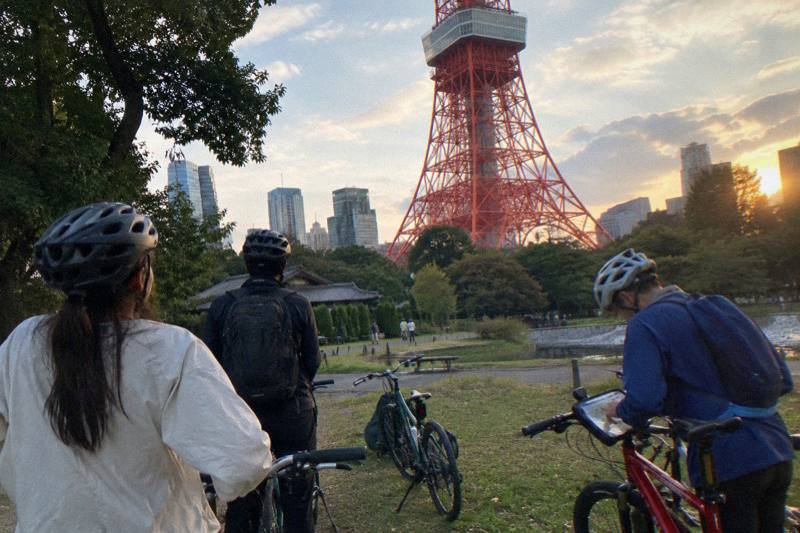
Bike Tour Or Walking Tour In Tokyo: Distance, Pace And Cost
A bike tour in Tokyo covers roughly the ground of three or four walking tours in the same hours, and the price gap between the two formats is smaller than most visitors expect.
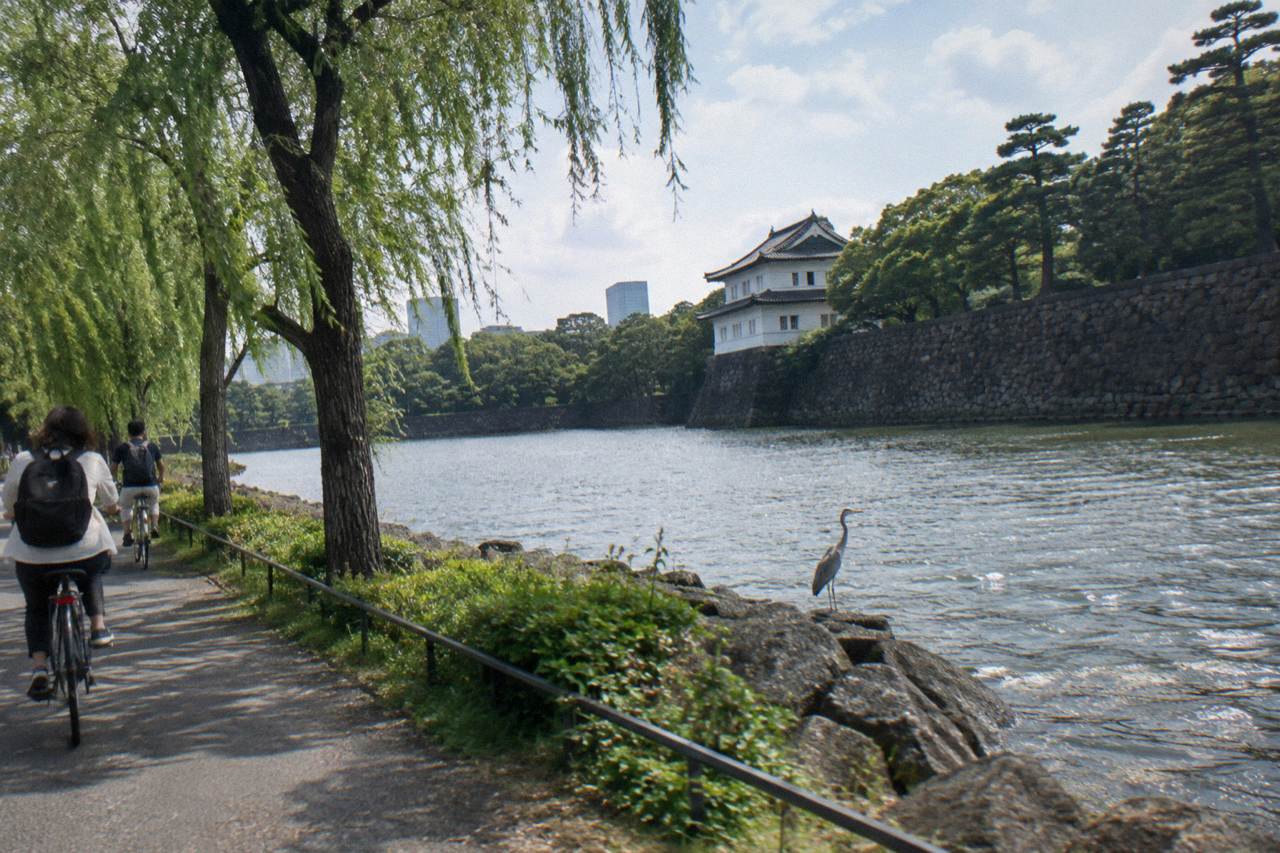
Short answer
A 3-hour guided bike tour in Tokyo runs from $61.54 per person, a 6.5-hour small-group ride from $106.89, and most groups cap at 5 to 8 riders. Walking covers less ground at a slower pace, and free and pay-what-you-want walking tours exist. Bikes suit distance, walking suits single districts.
Most visitors arrive in Tokyo with a plan built around trains and feet, and then discover the city is far larger than the rail map suggests. A walking tour of Asakusa is a lovely morning. A walking tour of Asakusa, the Sumida riverbank, Ryogoku and the palace moats is a marathon. This is the gap a guided bike tour fills, and it is measurable: the tours sold here run from an 80-minute Shibuya loop to a 6.5-hour small-group ride, while a typical guided walk stays inside one district. This page compares the two formats honestly, using the actual durations, prices and group sizes of the bike tours on this site, so a shopper comparing a tokyo walking tour against a ride can decide on facts rather than slogans. If eating your way across the city matters more to you than covering ground, the Tokyo food bike tour guide compares the market-stop rides, their prices and their pace side by side.
What Does A Bike Tour Cover That A Walking Tour In Tokyo Cannot?
A guided bike tour in Tokyo typically covers the distance of three or four walking tours in the same hours. The shortest ride here is about 80 minutes, the longest a full day of roughly 20 km, and the common three-hour format reaches districts a walking tour cannot reach on foot. Group sizes cap at 5 to 8 on most rides.
The arithmetic is not subtle. A comfortable walking pace in a city is roughly 4 to 5 km per hour, and a guided walking tour moves slower than that because it stops, gathers the group and waits at crossings. A touring pace on a bike in Tokyo's flat central wards is two to three times faster, and the stopping is the point: a guide pauses at a shrine or a market street, then everyone rolls on without the dead time of a long walk between sights.
The clearest example on this site is the Full-Day Traditional Ride, a full-day route of about 20 km operated by BREZZA, from $97 per person and rated 4.8 across 139 reviews. No walking tour covers 20 km of Tokyo in a day. Even the half-day formats dwarf it on foot: the 6-Hour Full City Ride, from $97.17 per person and rated 4.9 across 842 reviews, spends six hours moving through central Tokyo with a group capped at 12. The comparable walking commitment for one district, say Yanaka or Asakusa alone, would take most of a day by itself.
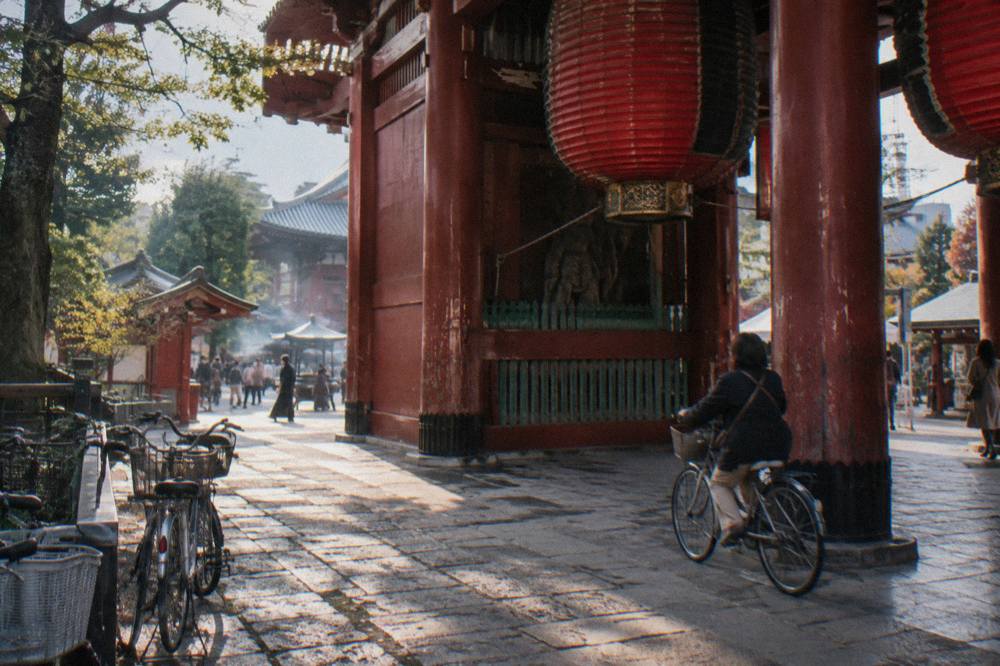
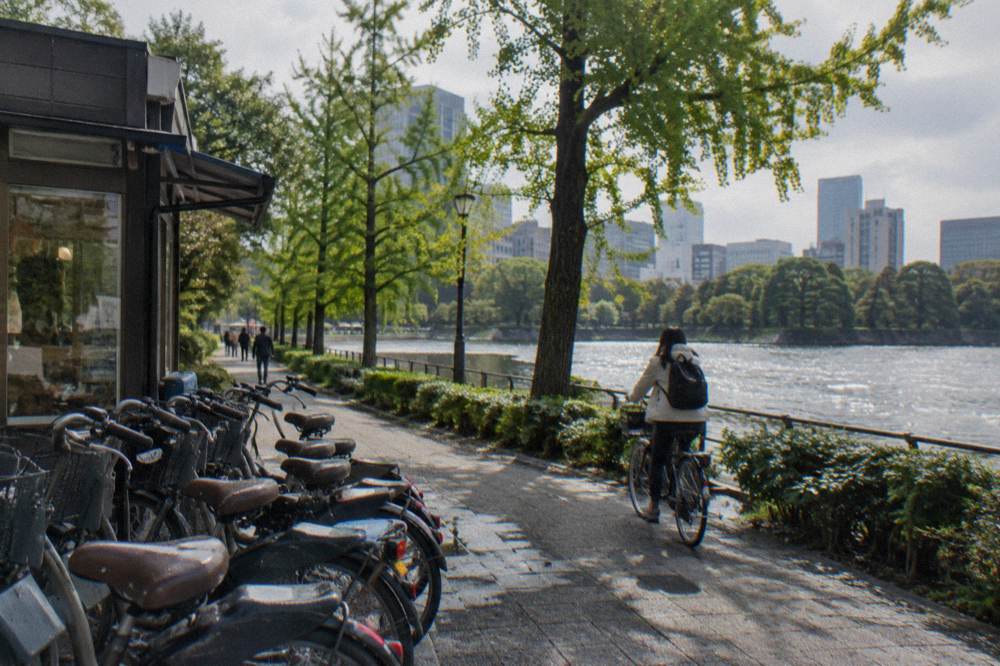
The trade is not only distance. Riding changes what a tour can include. Route guides describe riverside segments along the Sumida and Arakawa where a walking group would have to choose one bank and one bridge. The GO TOKYO official guide to bicycles for visitors makes the same point: cycling along the water is one of the recommended ways to see the bayfront and river corridors, on paths that exist precisely because they are pleasant to ride and impractical to walk end to end.
Which Tokyo Neighbourhoods Suit Bikes And Which Suit Walking?
Asakusa, Shibuya, Yanaka and the Imperial Palace perimeter all appear on guided bike routes here, and each also works on foot. The deciding factor is whether a visit needs one district in depth or several in one day: bikes win on stitching neighbourhoods together, walking wins on density inside a single one.
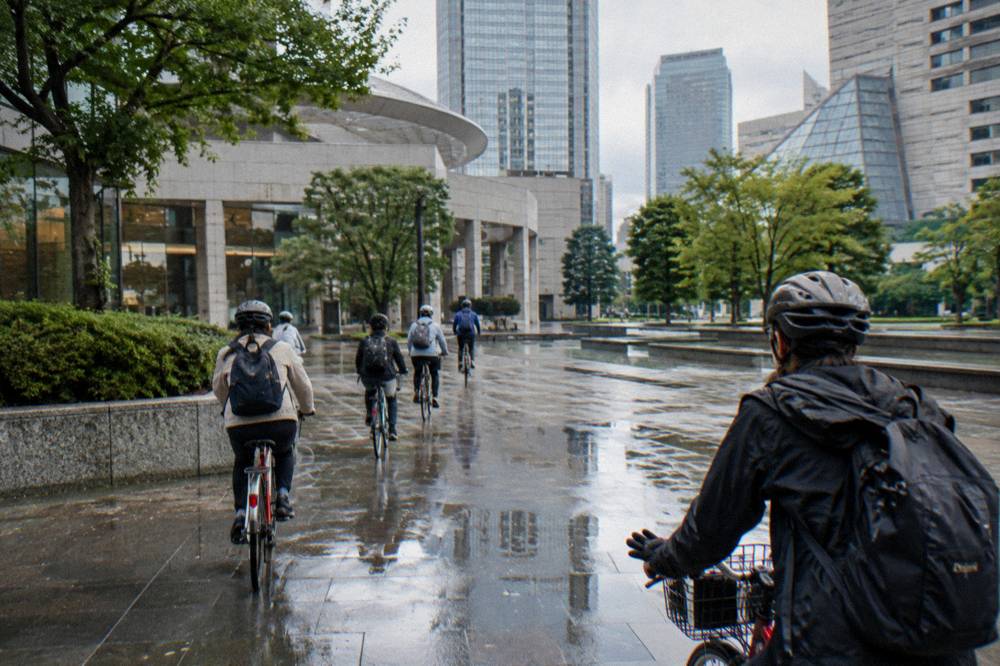
Inside a single compact district, walking is hard to beat. Yanaka's lane-scale temple paths, Asakusa's market arcade and Shibuya's crossing function at pedestrian speed, and riders dismount at the busiest spots anyway, because Tokyo's rules keep bicycles off crowded sidewalks except where signs permit them. The Tokyo Metropolitan Police bicycle rules page is explicit: the roadway is the default, sidewalks are an exception, and pedestrians have priority wherever bikes share them. A guided ride handles this by routing quiet streets, which is exactly what the backstreet formats are built around.
Between districts, the balance flips. The 4-Hour Downtown Backstreets Ride from Tokyo Backstreets Bike Tour, from $77.74 per person and rated 4.9 across 124 reviews, moves through downtown districts with a group capped at 6. The Shibuya-Harajuku 3-Hour Ride from COG EXPLORER JAPAN, from $57.01 per person and rated 4.8 across 57 reviews, starts at Umayamichi Park and links two neighbourhoods that a walking tour would treat as separate outings. The shorter 2.5-Hour Central Short Ride, 5.0 across 25 reviews from $51.82, exists precisely for visitors who want a taste of this without committing half a day.
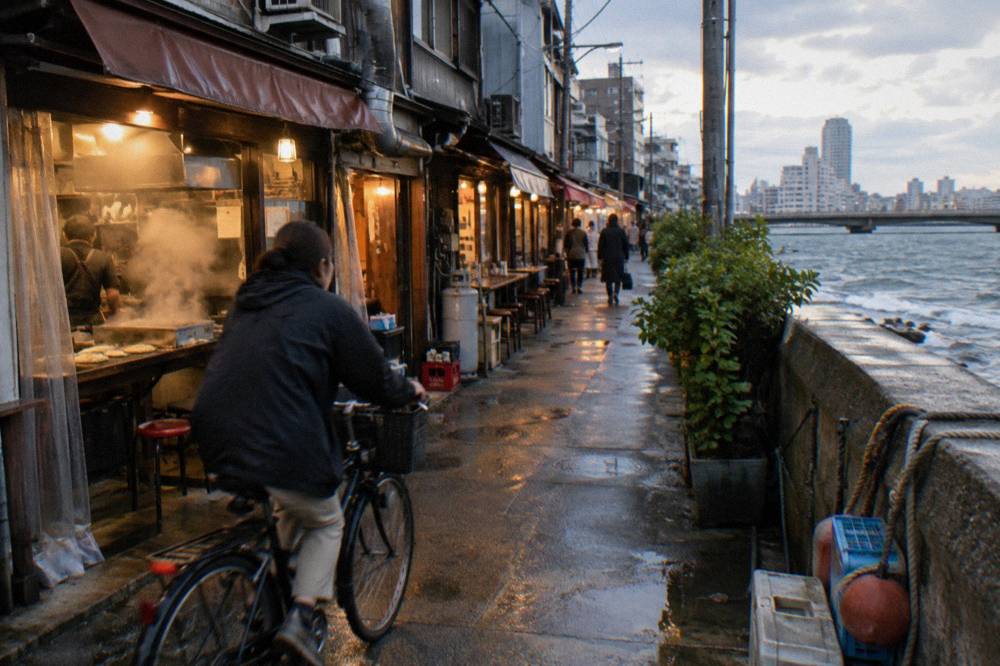
Food-focused visits are the one case where the formats converge on foot speed. The West-Side Cycling With Food Stops tour from DIG Tokyo Tours, from $106.89 per person and rated 5.0 across 223 reviews, starts at Koenji Station and spends its 3 hours 30 minutes partly standing still, eating. You still cover more ground than a Koenji walking tour between stops, but the pace is set by the snacks, not the wheels. Shoppers weighing food tours specifically should read the food bike tour comparison on this site as well.
The three rides above bracket the real choice. The Small-Group Long City Ride from Bicycle Tours Tokyo is the deep option: 6 hours 30 minutes, a group capped at 5, rated 5.0 across 1,308 reviews, from $106.89 per person, meeting at Tokyo Opera City Sankun Garden. The West-Side ride is the food option. The Local Life E-Bike, 3 hours from Cycling Holiday Tokyo, from $63.48 and rated 4.9 across 753 reviews, is the assisted middle path for anyone unsure about a regular bike for three hours.
How Do The Costs Of A Bike Tour And A Walking Tour In Tokyo Compare?
Guided bike tours in Tokyo run from $46 to $107 per person for group formats, with private e-bike rides from $45.35 to $156.77. Walking tours are not priced on this page, but free and pay-what-you-want walking tours exist, so the honest comparison is bike tour prices against what a visitor values an extra half city for.
Bike tour prices here cluster tightly. The table below shows every group-format ride on this site that a walking-tour shopper would realistically compare against, with the basis exactly as each listing states it. Private tours are per-person from-prices whose totals depend on group size, so the booking page, not this table, gives the real figure for a couple or a family.
| Tour | Duration | From price per person | Rating and reviews | Group max |
|---|---|---|---|---|
| 80-Minute Shibuya Ride | about 80 minutes | $46 | 5 reviews, new | 5 |
| Certified Guide, 5-Hour History Ride | 5 hours | $32.39 | 4 reviews, new | Not stated |
| 2.5-Hour Central Short Ride | 2 hours 30 minutes | $51.82 | 5.0 from 25 reviews | 6 |
| Shibuya-Harajuku 3-Hour Ride | 3 hours | $57.01 | 4.8 from 57 reviews | 6 |
| 3-Hour Highlights, Bike or E-Bike | 3 hours | $61.54 | 4.9 from 980 reviews | Not stated |
| Local Life E-Bike, Starts Near Station | 3 hours | $63.48 | 4.9 from 753 reviews | 6 |
| Hidden Gems E-Bike, 3-4 Hours | 3 to 4 hours | $62.19 | 4.9 from 895 reviews | 6 |
| 4-Hour Downtown Backstreets Ride | 4 hours | $77.74 | 4.9 from 124 reviews | 6 |
| Full-Day Traditional Ride | full day, about 20 km | $97 | 4.8 from 139 reviews | Not stated |
| 6-Hour Full City Ride | 6 hours | $97.17 | 4.9 from 842 reviews | 12 |
| Small-Group Long City Ride | 6 hours 30 minutes | $106.89 | 5.0 from 1,308 reviews | 5 |
| West-Side Cycling With Food Stops | 3 hours 30 minutes | $106.89 | 5.0 from 223 reviews | 8 |
Read that as a price-per-hour story. The two cheapest full experiences, the Certified Guide history ride at $32.39 for 5 hours and the Shibuya and Harajuku ride at $57.01 for 3 hours, both undercut what many visitors assume a guided tour costs. Both, notably, have review pools too small for a star claim beyond what the table prints, so treat the price as the draw and the ratings as unformed. The 3-Hour Highlights, Bike or E-Bike ride from TRB BIKE TOUR is the volume choice at 4.9 across 980 reviews, with one catch: helmets rent for 1,000 yen on the day, cash, because they are not included.
Against walking, the honest framing is this: a free or pay-what-you-want walking tour costs nothing at the door, and this page prints no walking figures beyond that. What a bike tour buys is not the guiding, which walking tours also provide, but the radius. Paying roughly $60 for three hours that reach Shibuya, Harajuku and the palace edge in one loop is a different product from a free two-hour walk around one of them. For a fuller breakdown of what goes into these prices, the Tokyo bike tour cost breakdown on this site does the arithmetic line by line.
There is also the fine print that separates rides: every tour in the table above includes the bike, and nearly all list free cancellation. The Hidden Gems Ride, Bike or E-Bike variant from TRB BIKE TOUR, 4.6 across 114 reviews at $63, carries free cancellation like every other tour in the catalogue: cancel up to 24 hours in advance for a full refund. The cancellation line on the booking page still merits a glance before paying, and here it matches the rest.
How Much Time Should You Budget For Each Format In Tokyo?
Budget 3 to 4 hours for a bike tour that touches two or three districts, 6 to 6.5 hours for a full-city ride, and 2 to 3 hours for a single-district walking tour. Tokyo rewards at least one bike day precisely because the big sights are 5 to 10 km apart, which is dead time walking and riding time cycling.
Durations on this site run from the 80-Minute Shibuya Ride, the shortest at about 80 minutes from $46, to the Small-Group Long City Ride at 6 hours 30 minutes. In between sit the 2.5-Hour Central Short Ride, several three-hour formats, a 4-hour backstreets ride, a 5-hour history ride and two 6-hour options. That spread maps cleanly onto visitor schedules: a first-time visitor with one free morning takes a three-hour ride; a visitor with a full day takes the 6.5-hour ride and effectively sees the city.
The Flexible 3-6 Hour Small-Group Ride from Tokyo Bike Tour, from $64.78 per person and rated 4.9 across 212 reviews, is the format that answers the time question directly: its duration is 3 to 6 hours, meeting at the Hyatt Regency Tokyo in Nishi-Shinjuku, with a group capped at 8. That flexibility is rare, and for a traveller who does not yet know whether their legs want three hours or six, it removes the guesswork. Lunch is not included, which suits a format where the end time moves.
The 6.5-hour Small-Group Long City Ride deserves its own paragraph because it is the site's most reviewed tour: 5.0 across 1,308 reviews, from $106.89 per person, bike and helmet included, group max 5, meeting at Tokyo Opera City Sankun Garden. Food, drinks, hotel transfers and gratuities are not included, so the day needs a lunch plan. For a visitor choosing between this and two separate walking tours on consecutive days, the comparison is one guided day against two, at a price near the sum of what many paid walks cost anyway.
Time of day matters as much as total hours. Night formats shrink the map but change its character entirely: the 2-Hour Night Lights Ride from COG EXPLORER JAPAN, 5.0 across 31 reviews from $55.06, and the Night Hidden Gems E-Bike from TRB BIKE TOUR, 4.8 across 27 reviews from $142, both run two hours. A walking tour at night covers a lit district well. A night ride covers several, and the contrast between neon districts and dark river paths is something feet cannot deliver at any pace. The night bike tour formats explained guide on this site covers those rides in detail.
Who Should Choose Walking, And Who Should Choose A Bike Tour?
Choose walking for one dense district, for visitors who cannot ride, and for visits built around markets, eating and photography at street scale. Choose a bike tour for first visits, for families with confident riders, and for anyone trying to see the palace, the rivers and two neighbourhoods in a single day.
Confidence on a bike is the honest gate. Every regular-bike tour on this site uses non-electric city bikes, and the e-bike catalogue exists partly so that hills, distance and stamina stop being reasons to skip the format. The Akihabara and Palace E-Bike Loop from TOKYO ACTIVE TOURS, 5.0 across 65 reviews from $97.17, caps its group at 4, the smallest e-bike group here, which suits nervous riders. The 3-Hour Highlights, Bike or E-Bike ride lets each rider choose the bike on the day, which is the most forgiving structure of all. Riders weighing that specific choice should read the e-bike or regular bike decision before booking either.
For families, group caps matter more than wheels. The Small-Group Long City Ride caps at 5, the Shibuya and Harajuku ride at 6, the food tour at 8. A walking tour has no mechanical limit, but a bike tour with 5 riders and a helmet included keeps a family together and moving. The family-specific considerations, including which tours suit children, are laid out in the bike tour with kids guide.
Age and mobility cut both ways. Visitors who cannot ride, or should not, gain nothing from this page's bike tables, and a walk is the right answer, full stop. But e-bikes have widened the riding window considerably: the Local Life E-Bike, Starts Near Station from Cycling Holiday Tokyo, from $63.48 and rated 4.9 across 753 reviews, exists because assisted riding lets a wider range of visitors cover a three-hour loop. Food and drinks are self-pay at shops along the way, which also makes it a grazing tour rather than a fitness one.
Private formats complicate the choice in a way walking shoppers should understand before comparing prices. A private ride is not a more expensive version of the same product; it is a different one, priced per person from a low base with the total depending on group size. The table below lists the private e-bike options on this site with exactly the basis each listing states.
| Private tour | Duration | From price per person | Rating basis | Bike and guide |
|---|---|---|---|---|
| Private 2-Hour E-Bike Ride | 2 hours | $45.35 | 7 reviews, new | bike and guide included |
| Private Highlights E-Bike, Budget | 3 hours | $54 | 4.4 from 47 reviews | bike and guide included |
| Private E-Bike From Your Hotel | 3 hours | $156.77 | 5.0 from 171 reviews | bike, helmet and guide included |
| Private Asakusa Local E-Bike | 3 hours | $146 | 4 reviews, new | bike, helmet and guide included |
| Harajuku Shop Private Road Bike | 2 to 3 hours | $129 | 5.0 from 22 reviews | bike and helmet included |
The spread there tells its own story: a two-hour private e-bike ride can start as low as $45.35 per person, while the hotel-start version from Tokyo Bike Bliss, 5.0 across 171 reviews, commands a premium for coming to you. Group size changes every total, so the booking page is the only place to price a couple or a family. For the deeper trade-offs between the two structures, the private versus group tour comparison lays them out.
How Do Tokyo's Seasons Affect The Bike Versus Walk Choice?
Tokyo's wettest months are October at 234.8 mm and September at 224.9 mm, its driest are January, February and December, and summer highs average 31.3 degrees in August. Both formats run in rain, but walking tolerates a downpour better, while cycling wins decisively in the cold, dry months when wind chill matters.
- City Bike Tours$32.39
- Private Tours$45.35
- Night Rides$55.06
- E-Bike Tours$61
- Day Trips By Bike$76
Those figures come from the Japan Meteorological Agency's 1991 to 2020 normals for the Tokyo station, and they shape the calendar more than most visitors expect. Cherry blossom season is the famous example: first bloom came on 19 March in 2026 against a 24 March normal, with full bloom on 28 March, so a March or early April visit lands petals and weather in the same fortnight. Riding riverside paths under blossom is a real seasonal product, covered in the cherry blossom bike tour guide, and the petal corridors along the rivers are exactly the long stretches a walking tour cannot reach.
| Month | Mean temp C | Daily max C | Precipitation mm | Better format that month |
|---|---|---|---|---|
| January | 5.4 | 9.8 | 59.7 | Bike, dry and brisk |
| March | 9.4 | 14.2 | 116.0 | Bike, blossom season |
| June | 21.9 | 26.1 | 167.8 | Either, early starts |
| August | 26.9 | 31.3 | 154.7 | Short rides or evening walks |
| September | 23.3 | 27.5 | 224.9 | Walking, rain risk |
| October | 18.0 | 22.0 | 234.8 | Either, best all-round |
| December | 7.7 | 12.0 | 57.9 | Bike, dry and quiet |
The summer rows deserve honesty. A mean daily maximum of 31.3 degrees in August, with high humidity, makes a 6.5-hour ride a serious commitment, and the evening formats, like the Summer Night Bay E-Bike Ride from Cycling Holiday Tokyo, from $63.48 as a new listing with a group capped at 4, exist because daytime riding in August is genuinely hard. A walking tour in August suffers the same heat with less breeze. Neither format wins summer; scheduling does. The cycling in rain guide and the best time to cycle guide cover the practical side, including what riders carry.
Which Tokyo Bike Tour Should A Walking-Tour Shopper Book First?
Book a three-hour format first: the Local Life E-Bike at $63.48 with 4.9 across 753 reviews, or the 3-Hour Highlights, Bike or E-Bike at $61.54 with 4.9 across 980 reviews, both with bikes included and free cancellation listed. A first ride proves the format cheaply before committing to a 6-hour day.
The logic is a walking shopper's logic. Anyone already considering a free or pay-what-you-want walk is budget-conscious and format-curious, so the cheapest credible test of cycling is a three-hour ride under $65, not a $107 full-day commitment. The two rides above are the strongest candidates by review pool, and both meet in central Tokyo. If the test ride sells the format, the Small-Group Long City Ride is the upgrade, and the food tour is the variant for visitors whose real interest was the eating.
The food tour merits its solo card because it is the one ride that competes with a food walking tour head-on: 3 hours 30 minutes, from $106.89 with the total depending on group size, 5.0 across 223 reviews, meeting at Koenji Station, capped at 8. Koenji is a west-side neighbourhood most walking tours skip for being off the central circuit, which is itself part of the argument for wheels.
Safety questions usually surface here, and they have real answers rather than reassurances. Cycling in Tokyo is legal, common and rule-bound: the roadway on the left is the default, helmets are an effort obligation for every age since April 2023 with no fine attached, and liability insurance has been required by Tokyo ordinance since 1 April 2020, with rental businesses obliged to cover renters and explain what is covered. Since 1 April 2026 a traffic violation notice system applies to riders 16 and over, including overseas visitors, with officers normally giving guidance and a warning first. A guided tour largely insulates a visitor from all of this, because the guide carries the route knowledge; the Metropolitan Police notice on the new violation system and the cycling safety guide on this site carry the full detail.
The Local Life E-Bike earns its place as the recommended first ride for one more reason: it starts near a station, which removes the last friction for a visitor staying anywhere on the Yamanote line. A walking tour is convenient because it starts where you are; a station-adjacent bike tour matches that convenience and then triples the radius. That, compressed to a sentence, is the whole comparison on this page.
Tokyo rewards both formats, and the best itineraries use both: a walk through one dense district at street speed, and a ride that stitches four of them together before lunch. For the deeper planning layer, the best way to see Tokyo guide and the one-day bike itinerary set out how the pieces fit, and Tokyo Bike Tours keeps the full catalogue of rides, from the 80-minute Shibuya loop to private e-bike days, in one place for the days you choose wheels.
Common Questions About Bike Tours Versus Walking Tours In Tokyo
Bike Tour Or Walking Tour In Tokyo: Which Covers More Ground?
A bike tour covers roughly three to four times the ground of a walking tour in the same hours. The full-day rides on this site cover about 20 km, and even the three-hour formats reach multiple districts, while a guided walk stays within one.
How Much Does A Guided Bike Tour In Tokyo Cost Compared To A Walking Tour?
Group bike tours run from $32.39 to $106.89 per person depending on length and format, with private e-bike rides from $45.35 to $156.77. Free and pay-what-you-want walking tours exist, so walking can cost nothing at the door, while a bike tour buys a wider radius for the same guided hours.
Can You See Shibuya And Harajuku On A Bike Tour Instead Of Walking?
Yes. The Shibuya-Harajuku 3-Hour Ride links both neighbourhoods in one guided loop, from $57.01 per person, rated 4.8 across 57 reviews, with a group capped at 6 and the bike and helmet included.
Is A Bike Tour In Tokyo Safe For Someone Who Has Never Cycled In A City?
Guided rides use quiet backstreets and small groups, typically 5 to 8 riders, and the guide handles the road rules. Helmets are an effort obligation rather than a fine-backed mandate, and most tours here include one. The bike tour for beginners guide covers first-ride preparation in detail.
Which Tokyo Bike Tour Is Best For A First-Time Visitor Choosing Between Formats?
A three-hour format is the sensible first choice: the Local Life E-Bike from $63.48, rated 4.9 across 753 reviews, or the 3-Hour Highlights, Bike or E-Bike from $61.54, rated 4.9 across 980 reviews. Both include the bike and list free cancellation, so the commitment is low.
Do Bike Tours In Tokyo Get Cancelled For Rain?
Cancellations depend on the operator and conditions, and every tour on this site that states a cancellation policy lists free cancellation. Tokyo's wettest months are September and October by JMA 1991 to 2020 normals, so spring and the dry winter months carry the lowest rain risk for either format.