Taking A Bike On The Train In Tokyo: Rinko Bags Explained
A rinko bag is the fully enclosed bag Japanese railways expect when a bicycle travels as hand luggage, and it is the single piece of kit that decides whether a train-plus-bike day in Tokyo runs smoothly or falls apart at the ticket gate.
Short answer
Tokyo trains normally accept a bicycle only if it is fully enclosed in a rinko bag and carried as hand luggage, with front wheel off, pedals removed (right pedal unscrews counterclockwise, left pedal clockwise) and handlebars rotated. Read your railway operator's rules before travel. Guided rides such as the Small-Group Long City Ride, from $106.89, supply the bike at the meeting point, so no bag is needed.
Tokyo's railway network is one of the reasons the city works, and it is also the reason most visitors never think about putting a bicycle on a train. The convention on Japanese railways is simple: a bicycle may travel only as hand luggage, fully enclosed in a dedicated bag, called a rinko bag after "rinko" the word for train travel with a bicycle. Nothing rides loose in a doorway, nothing leans in a vestibule, and a bare bike at a ticket gate will be stopped.
That convention shapes visitor logistics more than most guidebooks admit. If you rent a bike in Asakusa and want to ride a riverside path in another part of the city, the question of how to bridge the gap comes up fast. The practical answers fall into three groups: bag the bike and board, switch to bike share with its station-to-station returns, or skip the carry altogether by booking a ride that starts where you are. The Small-Group Long City Ride, rated 5.0 across 1,308 reviews and from $106.89 per person, meets at Tokyo Opera City Sankun Garden with bicycles included, which is exactly the kind of arrangement that makes a rinko bag unnecessary for most short trips. Once you've settled on a guided ride, the guide to fitting a bike day into the rest of your Tokyo plans helps you anchor the day around it.
This page explains the bag itself, what the railway expectations are, how packing actually works, and when a tour is the simpler call. Where a rule could not be confirmed from an official source, it says so, because rinko specifics vary by operator and change over time.
- City Bike Tours$32.39
- Private Tours$45.35
- Night Rides$55.06
- E-Bike Tours$61
- Day Trips By Bike$76
What Is A Rinko Bag And Why Do Tokyo Trains Ask For One?
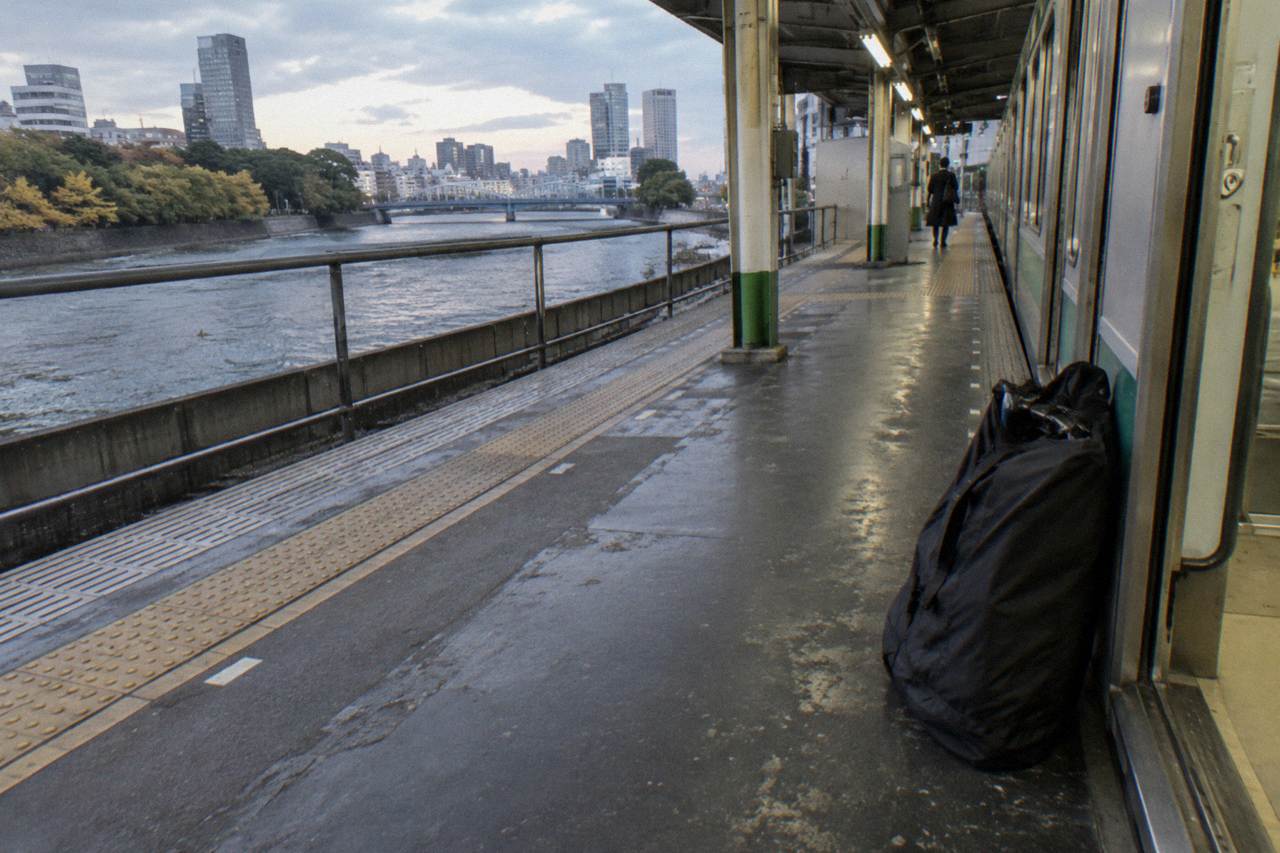
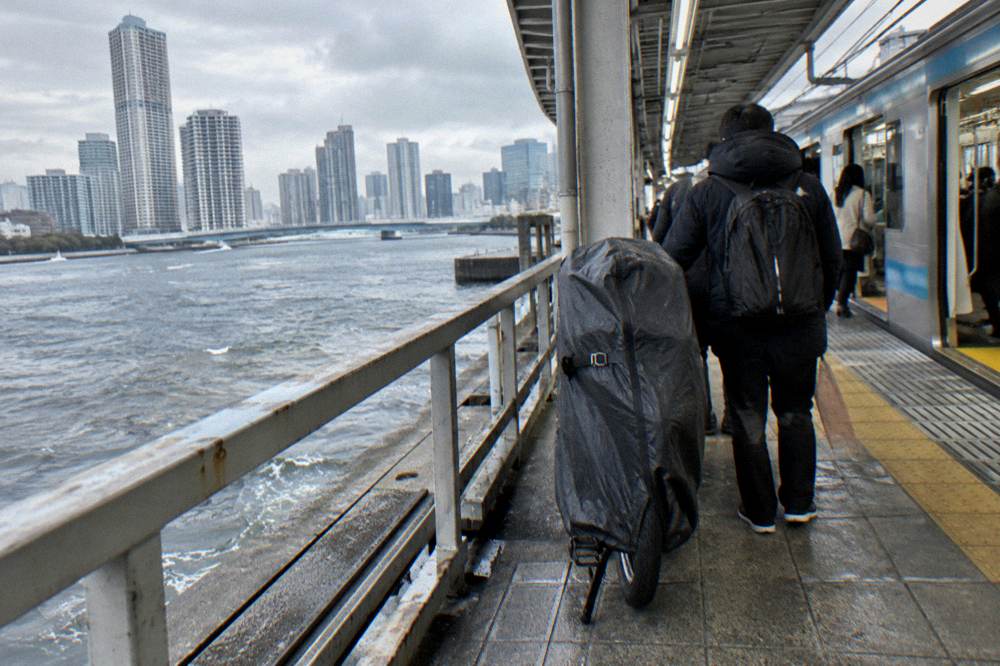
A rinko bag is a purpose-made, fully enclosed bag that a bicycle fits into after partial disassembly, letting it travel on a Japanese train as ordinary hand luggage rather than as a vehicle. Tokyo's railways expect the bike to be invisible: wheels, frame and drivetrain all inside, nothing protruding, and the bag carried rather than wheeled.
The logic is spatial and cultural at once. Train carriages in Tokyo run at crush loads in the peaks, and a bicycle, even a small one, is an object with edges, chains and protruding axles. The fully enclosed bag solves the hygiene problem, a chain cannot touch a stranger's coat, the space problem, the packed bike is a soft parcel that can go in a luggage rack, and the etiquette problem, because a bagged bike reads as luggage rather than as a vehicle claiming floor space.
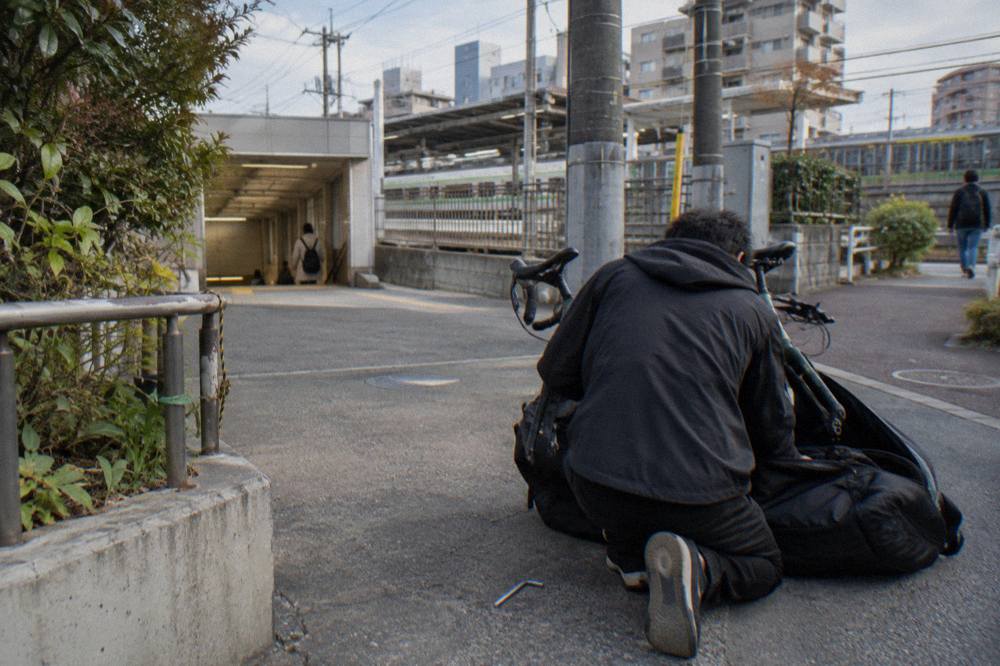
A typical rinko procedure removes the front wheel, fixes it alongside the frame, rotates or removes the pedals, and turns the handlebars parallel to the frame. The bag then zips around the result. Experienced riders manage the whole operation in a few minutes; first-timers should budget longer, especially with rental bikes whose quick-release levers behave unexpectedly. Rinko bags fold down small enough to ride inside a pannier or backpack for the rest of the day, which is why commuters and cycle tourists treat them as standard kit.
What the bag does not do is make the bike smaller in a legal sense. It remains your luggage, you remain responsible for it, and crowded trains remain a poor place for any parcel the size of a bicycle. Travellers planning peak-hour moves with a packed bike are usually advised to wait for the off-peak, and the Tokyo Convention and Visitors Bureau's official cycling guidance for visitors covers the broader etiquette in its guide to bicycles for visitors.
Can You Take A Bike On The Train In Tokyo Without A Bag?
No, in normal circumstances. Under rinko rules, a bike must be dismantled or folded and fully bagged before boarding, with exceptions only for designated cycle trains such as JR East's B.B.BASE. Check the operator's rules. The bag is the condition of carriage, not an optional convenience. Designated cycle trains such as JR East's B.B.BASE are the exception, so check the operator's rules.
The honest caveat is that this page cannot quote chapter and verse from every operator's rulebook. Railway rules on size, weight and piece counts vary between companies and are revised periodically, so the reliable move is to read the rules published by the specific operator you plan to use before you travel. What can be stated as general practice is that carrying a bicycle on trains normally requires a fully enclosed bag, and that anything beyond that, a packed-size limit, a rule about which cars accept large luggage, a fee, belongs to the operator's own pages rather than to secondhand summaries.
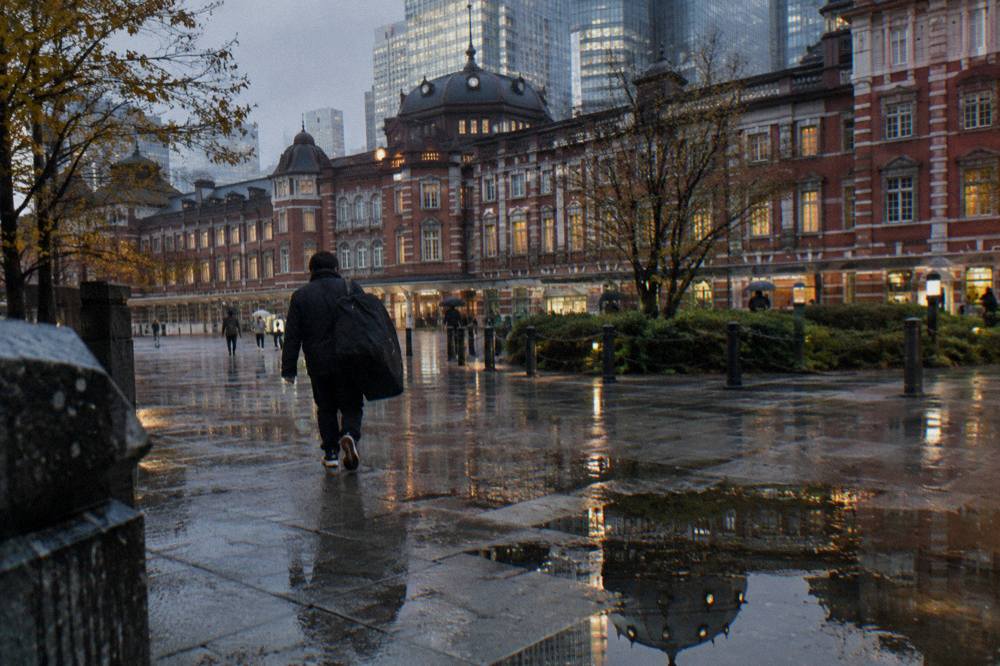
That matters for visitors because secondhand summaries are where most of the folklore lives. Stories circulate about folding bikes waved through without bags, about late-night leniency, about a friend who leaned a road bike against a door for two stops. None of that is a rule. A folding bike packed into its case is luggage; a folding bike rolling on its own wheels is a vehicle, and vehicles do not board.
The realistic alternatives, when a bag is not in the plan, look like this:
| Option | How it works | Best for |
|---|---|---|
| Guided tour with bike included | Bicycle supplied at the meeting point and returned at the end | Visitors who want the ride, not the logistics |
| Bike share (station to station) | Pick up and drop off at network ports across the city | One-way rides within the covered area |
| Rental out and back | Same shop for pickup and return, routed as a loop | Days planned around one neighbourhood |
| Rinko bag carry | Bike disassembled and bagged, carried as hand luggage | Multi-day trips linking rides by rail |
For a first visit, the first row is the one that removes the most friction. The Flexible 3-6 Hour Small-Group Ride, from $64.78 per person and rated 4.9 across 212 reviews, meets at the Hyatt Regency Tokyo in Nishi-Shinjuku in central Tokyo with bikes included, so the railway question never arises. The trade-offs between that style of day and self-guided logistics are laid out in the Tokyo bike tour cost guide, which breaks down what each format includes.
Where Can You Buy A Rinko Bag In Tokyo?
Rinko bags are sold at Tokyo's larger cycling shops and outdoor retailers, and stock is generally reliable in a city where train-plus-bike travel is routine. Prices vary by model and retailer, so treat any figure you see quoted online as indicative and check the shop. Buying in Tokyo after arrival is usually workable, but buying before travel removes a morning of hunting.
The practical shopping picture: major cycling districts and big outdoor chains carry rinko bags in a range of sizes, from minimal wheel-bag-and-frame-sleeve kits to padded full bags for expensive road bikes. Smaller neighbourhood rental shops sometimes sell basic versions too. Sizes differ because bikes differ, a road bike with deep-section wheels needs a different bag from a compact folding bike, and shop staff in Tokyo are used to matching bag to bicycle on the spot. This page deliberately prints no price, size or model list: the figures that circulate in forum threads age badly, and the shop's own shelf label is the number that counts.
A second consideration is whether you will use the bag more than once. A traveller with one transfer between two rides may find a bag a poor investment compared with restructuring the day, and the bike rental in Tokyo guide covers out-and-back rental patterns that avoid the purchase entirely.
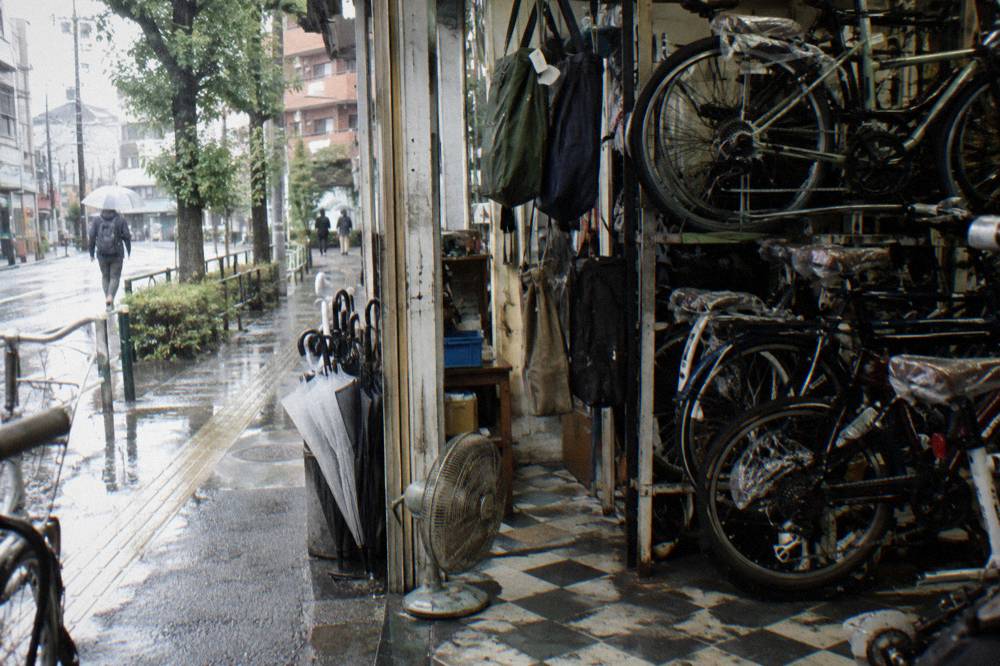
There is also a middle path many visitors miss: booking a ride whose start point is already where the cycling is good. The Shibuya-Harajuku 3-Hour Ride, from $57.01 per person and rated 4.8 across 57 reviews, meets at Umayamichi Park with bicycles and helmets included, which means no train leg with a bike at all for anyone staying on the west side of the city.
How Do You Pack A Bike Into A Rinko Bag Step By Step?
The sequence is: shift into a middle gear, remove the front wheel, secure it to the frame beside the rear wheel, take the pedals off (the right pedal unscrews counterclockwise, the left one clockwise) and stow them in the bag's pocket, rotate the handlebars flat, and zip the bag closed around the whole package. Practise once before travel day, because station platforms are the worst possible classroom.
Packing detail matters most at the edges. The quick-release or thru-axle on the front wheel should go back into the fork after removal, many bags have a pocket for it, because a loose axle in a shared bag will rattle and scratch. Pedals come out counterclockwise on the drive side, clockwise on the non-drive side. Remove them fully rather than threading them back in partway, which can cross-thread the cranks, and stow them in the rinko bag's pocket so they cannot jam against the fabric. Handlebars rotate by loosening the stem bolt a few turns and swinging the bar parallel to the top tube; retighten before riding again.
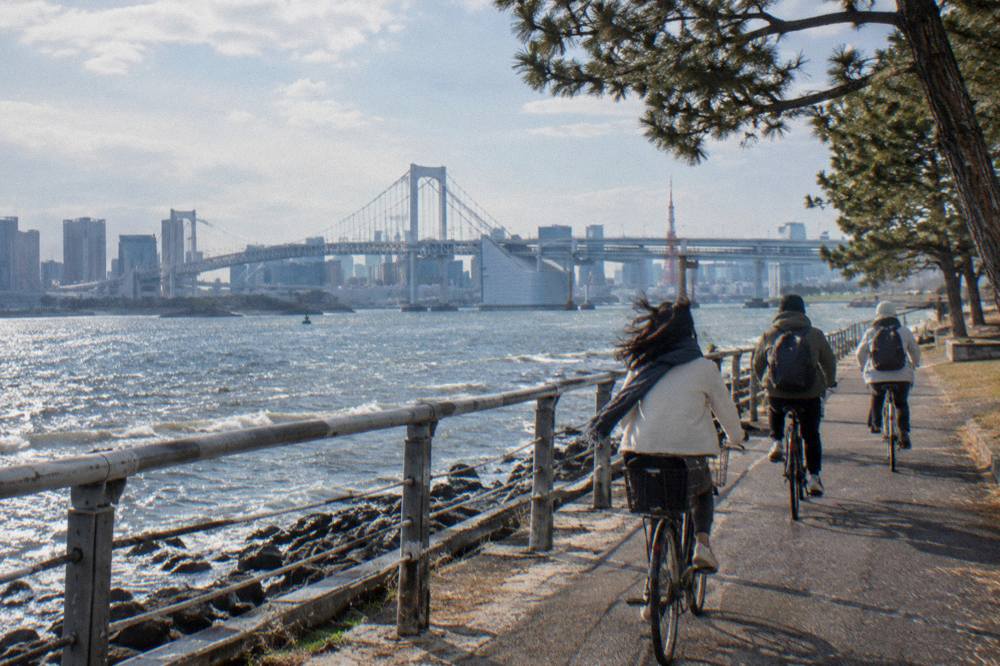
Two Tokyo-specific cautions deserve a line each. First, oil: a bagged drivetrain can mark a carriage floor or another passenger's bag, so a sheet of cardboard or an old towel inside the rinko bag is cheap insurance. Second, timing: allow a relaxed ten to fifteen minutes for your first pack, do it near the station rather than at home if you are renting, and reverse the process on a quiet platform corner, not in a flowing crowd. The Tokyo Metropolitan Police Department's English traffic rules pages are worth a read for the riding either side of the train leg, since rules on sidewalk use and lights apply the moment the wheels touch pavement again.
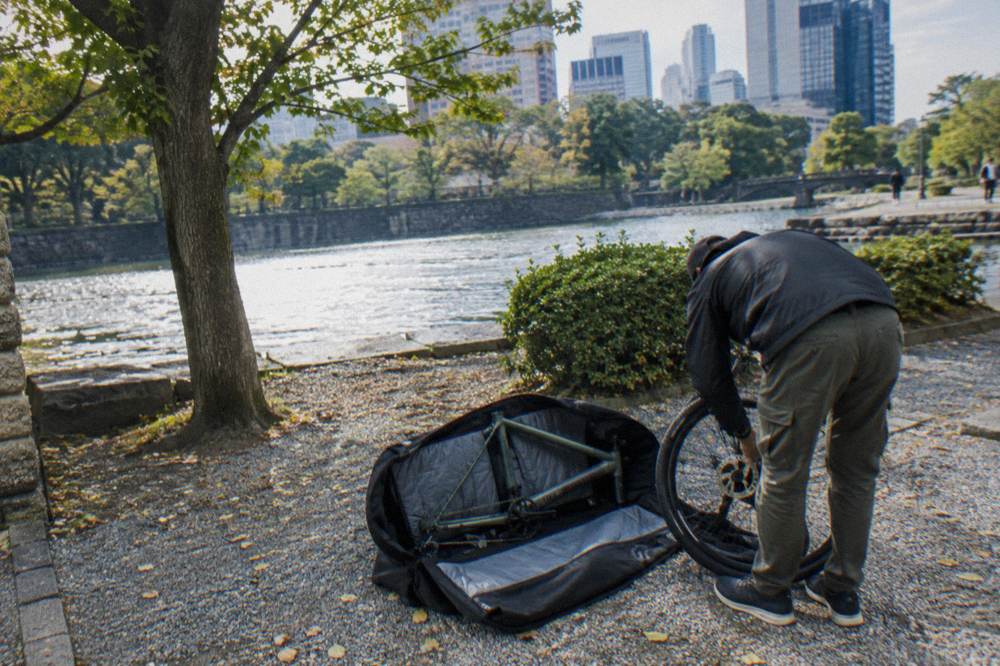
For visitors who read all that and feel their enthusiasm dip, the honest summary is that rinko packing is a skill for repeated use, not a one-day novelty. A single-city visit is usually better served by a ride that hands over the bicycle at the start, and the comparison in bike tour or walking tour in Tokyo addresses exactly that choice for first-time visitors.
Do You Need A Rinko Bag For A Guided Bike Tour In Tokyo?
No. Every guided ride covered here supplies the bicycle at the meeting point and collects it at the end, so nothing goes on a train. This is the quiet advantage of tours for logistics-averse travellers: the bag, the disassembly, the platform etiquette and the operator rulebooks all drop out of the day at once.
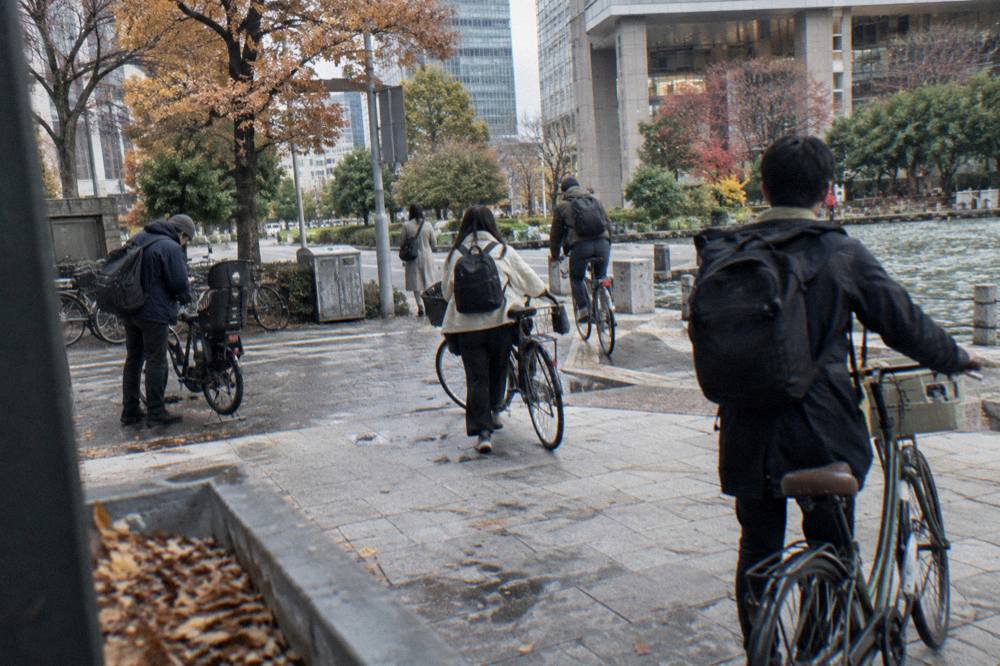
The pattern holds across the board. The Small-Group Long City Ride, from $106.89 per person, includes bike and helmet for a group capped at five, meeting at Tokyo Opera City Sankun Garden. The 6-Hour Full City Ride, from $97.17 per person and rated 4.9 across 842 reviews, includes bikes for groups up to twelve. The 3-Hour Highlights, Bike or E-Bike option, from $61.54 per person and rated 4.9 across 980 reviews, lets each rider choose bike type at the Statue of Commodore Perry meeting point. In each case the bicycle exists only between the start and the finish of the ride, which is the entire point for a visitor whose hotel is a train ride from the cycling district. If you're still weighing whether a bike fits a trip built around the rail network, the comparison of seeing Tokyo by train, foot or bike lays out the tradeoffs district by district.
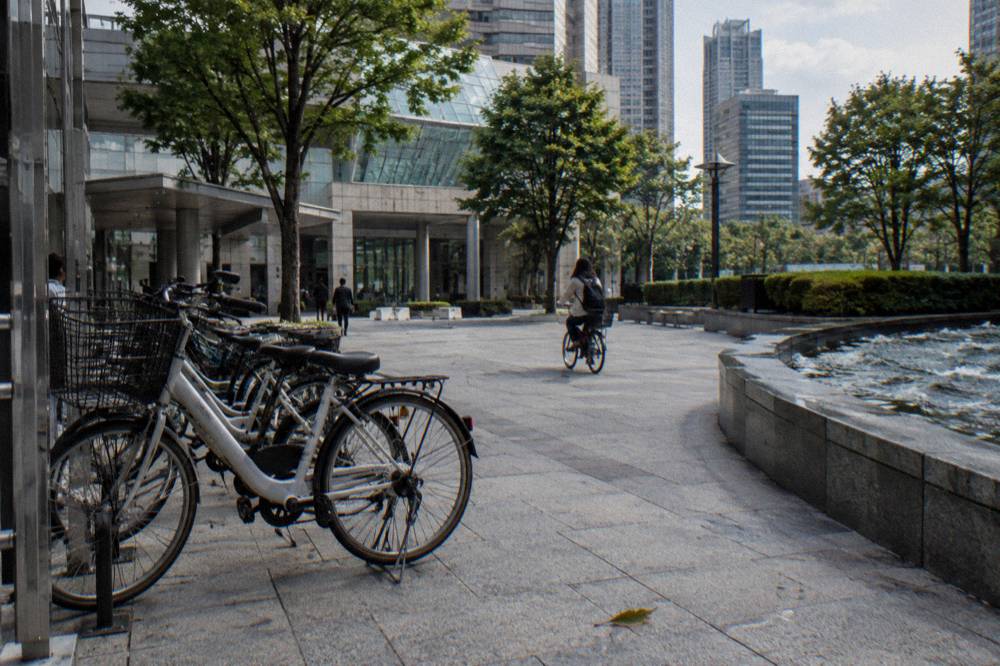
The comparison is not purely about convenience, it is about hours. A self-guided day that includes one bagged train leg spends real time on packing, unpacking, crossing stations with a parcel, and reassembling at the far end. A tour day spends that same time riding.
| Approach | Bike supplied | Train carry needed | Typical group size |
|---|---|---|---|
| Small-Group Long City Ride | Yes, helmet included | No | Max 5 |
| 6-Hour Full City Ride | Yes | No | Max 12 |
| 3-Hour Highlights, Bike or E-Bike | Yes, rider chooses type | No | Not stated |
| Self-guided rental with rinko bag | No, rented separately | Yes | Solo |
| Bike share | Bike per ride segment | No, station returns | Solo |
Day trips follow the same logic with a twist: the longest ones remove even the Tokyo-internal train question by including pickup. The Lake Yamanaka Loop with Fuji views, from $126 per person, picks up at Tokyo hotels around 07:30, includes bikes, helmet and guide, and returns in the early evening, so the only vehicle involved is the tour's own. Multi-day cyclists linking Tokyo to rides elsewhere in Japan are the audience for whom the rinko bag genuinely earns its keep.
What Are The Alternatives To Carrying A Bike On A Tokyo Train?
The main alternatives are station-to-station bike share, out-and-back rental loops, walking-and-riding combinations, and tours with a local start. Bike share is the closest substitute for a train leg, because the bicycle is returned to a port rather than carried anywhere, and registration works through an app on a foreign card.
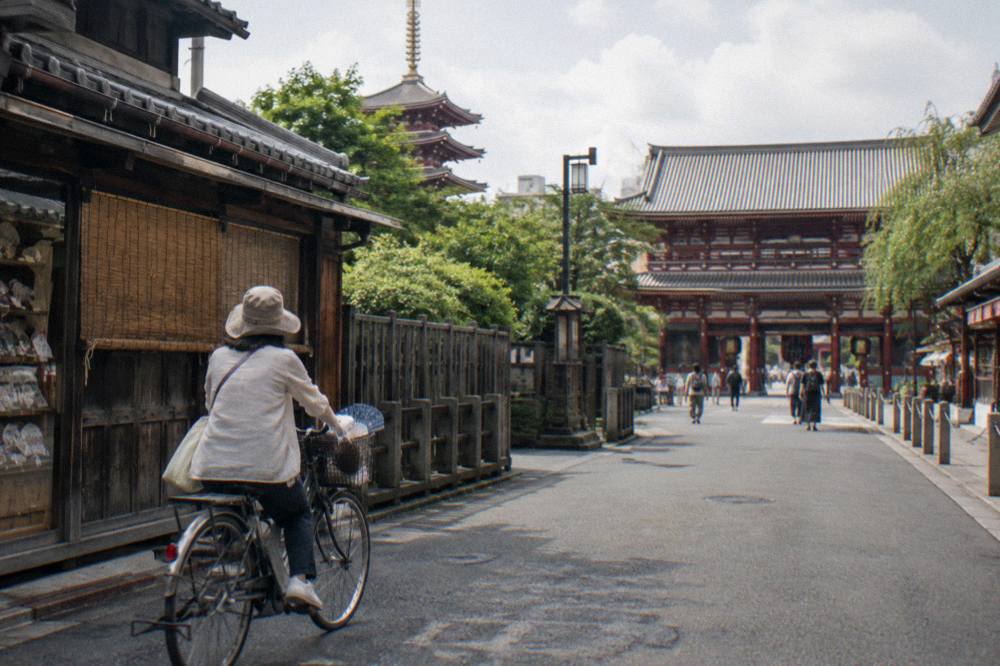
Bike share deserves the longest look. Tokyo's two major networks operate electric-assist bikes from ports clustered around stations, with returns required at designated ports rather than left anywhere. Docomo Bike Share's official Tokyo price page lists one-time use at 165 yen for the first 30 minutes and 165 yen per further 30 minutes, a monthly plan at 3,300 yen, and a same-day pass at 1,650 yen bought at a convenience store or 2,200 yen with an IC card. HELLO CYCLING runs a nationwide station network with prices set per prefecture and vehicle in its app; figures circulate for Tokyo rates, but the app itself is the source that counts. The Tokyo bike share guide walks through registration step by step, and the official Docomo Bike Share price page carries the current English rates.
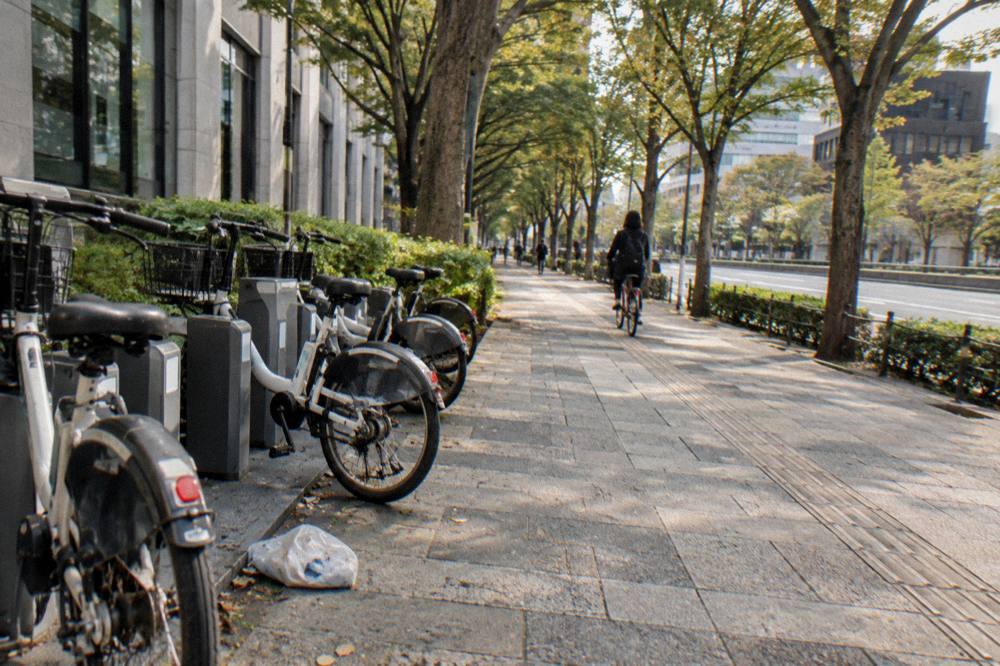
Rental loops are the low-tech alternative. Pick a neighbourhood, rent at a shop there, ride a circuit, return to the same shop, and the train carries only you. The catch is route design: a loop needs a loop-worthy area, and central Tokyo's best cycling corridors, rivers, palace moats, bayfront paths, sit in a band across the city rather than a tidy circle. The Tokyo cycling routes guide maps which neighbourhoods reward an out-and-back plan.
| Alternative | Carry anything on a train? | Extra planning burden | Suits |
|---|---|---|---|
| Rinko bag | Yes, packed bike as luggage | Highest: bag, disassembly, operator rules | Multi-day cyclists |
| Bike share | No | Medium: app registration, port availability | One-way city rides |
| Out-and-back rental | No | Medium: loop route design | Single-neighbourhood days |
| Tour with local start | No | Lowest: book and turn up | Most first-time visitors |
For riders who enjoy the craft side of it, rinko travel remains a genuinely good way to see Japan, and the bike tours in Japan guide covers rides beyond the capital where the bag pays for itself across a week of rail links. Within Tokyo itself, on a two or three day visit, the arithmetic usually favours the simpler options.
Which Months Make Train Plus Bike Days Easiest In Tokyo?
November, December and March through May are the comfortable windows. JMA 1991 to 2020 normals for the Tokyo station put October as the wettest month at 234.8 mm of rain and January as the coldest with a mean of 5.4 C, so the shoulder months balance mild temperatures against drier days for both the riding and any station-side packing.
The numbers behind that summary come from the Japan Meteorological Agency's 30-year normals, and they repay a close read. Midsummer combines heat with weight: August averages a mean of 26.9 C with a daily max of 31.3 C, which turns a packed train platform into an endurance event before the ride starts. September and October lead the year in rainfall, 224.9 mm and 234.8 mm respectively. Winter is dry, 57.9 mm in December and 59.7 mm in January, and mild enough by midday, January's mean daily max is 9.8 C, for a ride in layers.
| Month | Mean temp C | Mean daily max C | Precipitation mm |
|---|---|---|---|
| Jan | 5.4 | 9.8 | 59.7 |
| Mar | 9.4 | 14.2 | 116.0 |
| May | 18.8 | 23.6 | 139.7 |
| Aug | 26.9 | 31.3 | 154.7 |
| Oct | 18.0 | 22.0 | 234.8 |
| Dec | 7.7 | 12.0 | 57.9 |
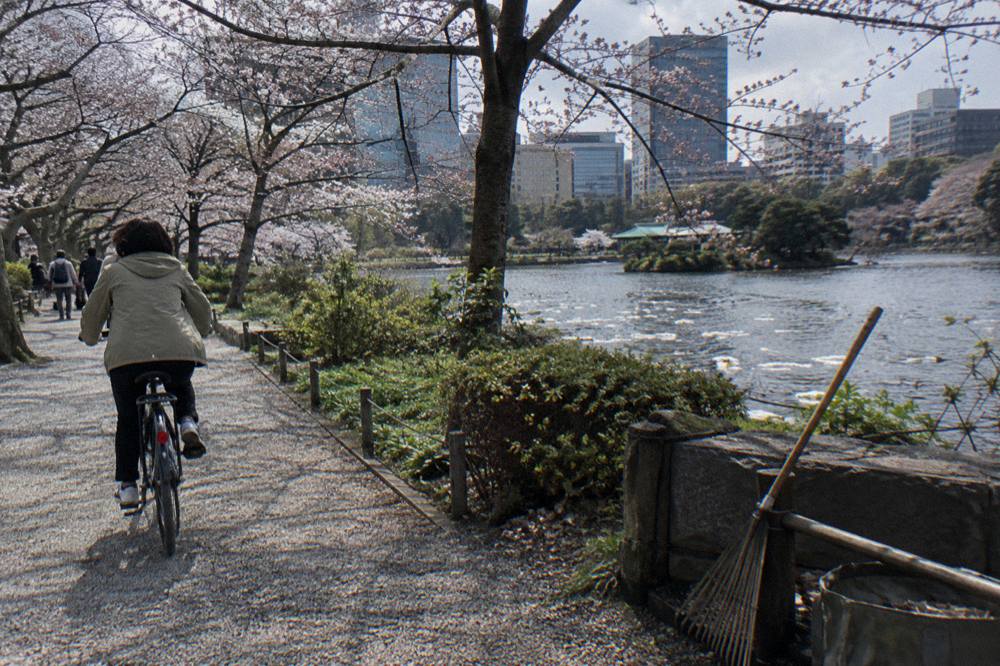
Late March adds a reason of its own: Tokyo's cherry blossoms opened on 19 March in 2026 and reached full bloom on 28 March, both earlier than the 24 March and 31 March normals, and a riverside ride under blossom is the seasonal high point of the cycling year. The Tokyo cherry blossom bike tour guide covers the blossom window in detail.
Guided Tokyo Bike Tour Prices, Train Carry Not Needed
All include bikes supplied at the meeting point, so no rinko bag is needed
The bottom line for most visitors: the rinko bag is a solved problem in Japan, but solving it is only worth the effort when the itinerary genuinely spans multiple rail-linked rides. For a city stay of a few days, Tokyo Bike Tours that start where the cycling starts are the lighter piece of luggage.
Common Questions About Taking A Bike On The Train In Tokyo
Can You Take A Bike On The Train In Tokyo?
Normally only when it is fully enclosed in a rinko bag and carried as hand luggage: front wheel off, handlebars rotated, and pedals removed (right unscrews counterclockwise, left clockwise) and tucked into the bag. Check the specific railway operator's rules before travel, since sizes and conditions are set by each operator.
Do You Need A Rinko Bag For A Guided Bike Tour In Tokyo?
No. Guided rides supply the bicycle at the meeting point and collect it at the end, so nothing travels on a train. The Small-Group Long City Ride, from $106.89 per person, includes bike and helmet with a group capped at five.
Where Can You Buy A Rinko Bag In Tokyo?
Larger cycling shops and outdoor retailers in Tokyo stock them in several sizes. Prices vary by model, so check the shop directly rather than relying on figures quoted online, and match the bag size to your bike before buying.
Is A Folding Bike Exempt From The Rinko Bag Rule?
A folding bike packed into its case travels as luggage; one rolling on its own wheels is treated as a vehicle. The general expectation on Japanese railways is a fully enclosed bag regardless of frame type, so plan to pack it.
What Is The Easiest Alternative To Carrying A Bike On A Train?
Station-to-station bike share avoids the carry entirely, or book a ride with a local start so the bicycle is provided at the meeting point. Docomo Bike Share lists one-time use at 165 yen per 30 minutes with returns required at a Bike Station.