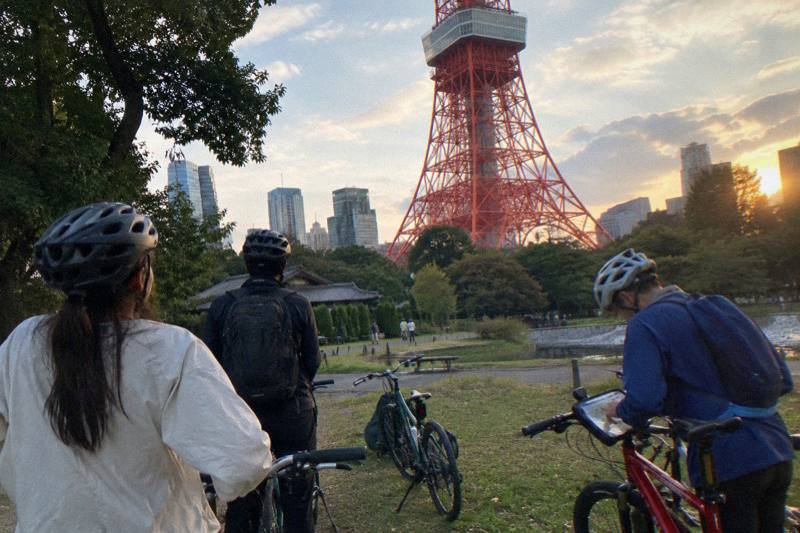
Best Way To See Tokyo: Train, Foot Or Bike
Tokyo is enormous, and the way you move through it decides what you actually see. Here is how train, foot and bike compare, and where a guided ride fits.
Short answer
A guided bike tour is one of the most efficient ways to see Tokyo for first-time visitors: a 3 to 6.5 hour ride covers several districts, from about $52 to $107 per person with a bike and guide included. Trains move you faster between far-apart areas but show nothing in between, and walking limits you to one neighborhood at a time.
Tokyo covers roughly 2,200 square kilometers of prefecture, and even the 23 central wards spread far wider than most visitors expect. Shibuya and Asakusa sit about eight kilometers apart as the crow flies, and the interesting parts between them, the old tram streets of Minami Igusa, the Kanda River lanes, the temple backstreets of Yanaka, do not sit on any direct train line. The question of how to see the city is really a question of what you want between the sights: nothing, or the city itself.
This page compares the three realistic options for a visitor: trains, walking and bicycles, including the guided bike rides that let you cover several districts in 2 to 6.5 hours with a local guide handling navigation. The comparison is honest about the limits of each, and it uses real figures from the tours covered here: prices, durations, group sizes and review counts all come straight from the booking pages, not estimates. For a fuller breakdown of prices across formats, the Tokyo bike tour cost guide goes deeper on value per hour.
What Is The Best Way To See Tokyo In One Day?
For a single day, the strongest pattern is a morning guided bike ride of 3 to 6 hours covering several central districts, followed by an afternoon on foot in one neighborhood you want to linger in. A bike tour reaches backstreets no train passes, a guided 6.5 hour ride covers roughly 20 km of city, and walking afterwards lets you go deep where the ride went broad. Trains fill the gaps when distances get long.
- City Bike Tours$32.39
- Private Tours$45.35
- Night Rides$55.06
- E-Bike Tours$61
- Day Trips By Bike$76
One day is enough to see a real slice of Tokyo, but not by any single method. Trains are fast and the network is excellent, yet a train ride is dead time: you see tunnels and station corridors, arrive at a famous spot, photograph it, and repeat. Walking solves the opposite problem, everything around you is the experience, but Tokyo's districts are big enough that a full walking day rarely gets you beyond two neighborhoods before your feet object.
A bicycle splits the difference. At an easy touring pace you cover three to five times the ground of a walker, and unlike a train you travel through the city rather than under it. The guided rides here make that practical for visitors: the Small-Group Long City Ride from Bicycle Tours Tokyo runs 6 hours 30 minutes, is capped at 5 riders, and starts from Tokyo Opera City Sankun Garden, rated 5.0 across 1,308 reviews, from $106.89 per person with bike, helmet and guide included. At the shorter end, the 2.5-Hour Central Short Ride from Tokyo Backstreets Bike Tour, from $51.82, rated 5.0 across 25 reviews, squeezes a usable loop into a morning.
The mix matters because Tokyo rewards both scales. The ride gives you the sweep: palace moats, market streets, a river path, a temple gate. The afternoon on foot gives you the detail: a specific shop street, a garden, a museum. Trying to do the whole day by any one mode is the classic first-visit mistake, and the best way to see the city in a structured day can be planned around exactly this split.
Train, Foot Or Bike: Which Suits Your Trip?
Bikes win for seeing connected districts up close in limited time, trains win for pure distance between far-apart points, and walking wins when one neighborhood is your whole destination. A guided 3 hour ride typically links 4 to 6 areas; the same 3 hours by train and foot links 2, and by walking alone, 1. Each mode has a real job, and the failure is using one for another's job.
The honest comparison starts with what each mode actually delivers per hour. It is not just speed: it is how much of the city you perceive while moving.
| Mode | What you see while moving | Realistic reach in 3 hours | Main cost | Main limit |
|---|---|---|---|---|
| Train | Station interiors, tunnels | Anywhere in the metro area, but 2 to 3 stops of actual sightseeing | Fare per ride; pass prices vary and are not published here | Zero city between stops |
| Walking | Everything, at street level | One district, part of a second | Free | Distance ceiling hits fast |
| Bike share or rental | Streets, rivers, backstreets | 3 to 5 districts | From 165 yen per 30 minutes on the official Docomo Bike Share Tokyo tariff | Navigation, parking, rules fall on you |
| Guided bike tour | Streets, rivers, backstreets, with a guide's context | Several districts, 2 to 6.5 hours | From $51.82 per person across the options here | Fixed route and schedule |
Train fares and pass prices are deliberately left out of that table: they change often and no verified figure is available here, so check the operator's own pages before budgeting. What can be stated firmly is the structural difference. Trains are a teleport with a fare; they are unbeatable from Shibuya to Asakusa in 35 minutes and useless for the 7 kilometers in between. Tokyo's official visitor guide to bicycles for visitors makes the same point from the other side: the city has spent years building riverside and bayfront paths precisely because they connect neighborhoods trains skip.
For visitors who want the bike experience without the logistics, the guided formats split by budget and commitment. The Flexible 3-6 Hour Small-Group Ride from Tokyo Bike Tour runs from $64.78 per person, rated 4.9 across 212 reviews, and lets you pick the length. The Private Highlights E-Bike, Budget option from Trip Port runs from $54 per person as a private tour, rated 4.4 across 47 reviews. Those two, with the 6-hour small-group ride, span the realistic range for a first visit.
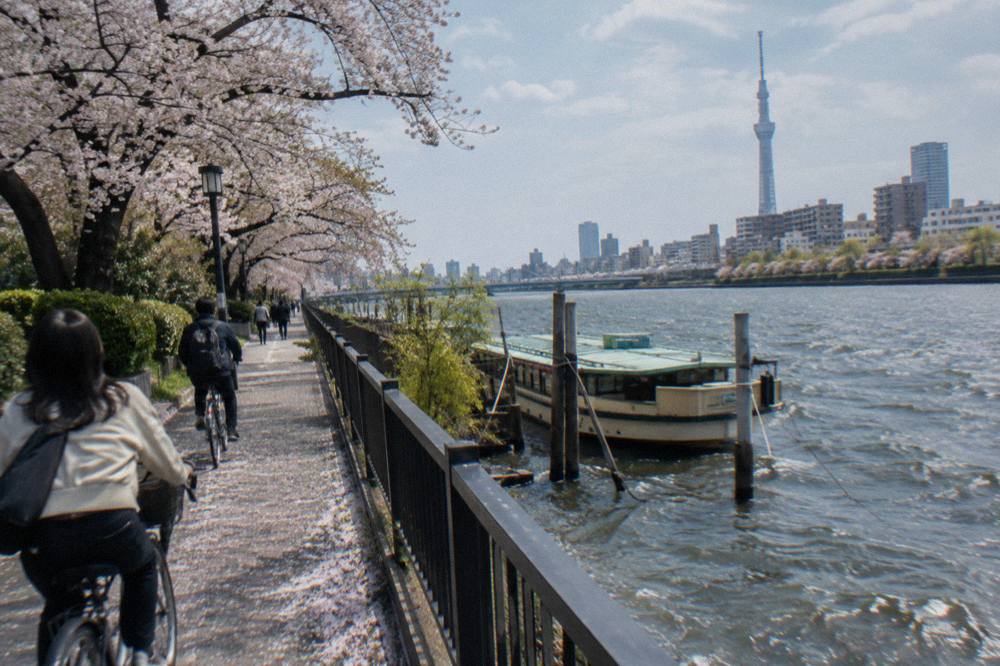
The foot-only case deserves a fair hearing. If your day is Yanaka's temple lanes and Yanaka Ginza's shop street, walking is not the lesser option, it is the correct one, and no bike improves it. The Yanaka bike tour guide shows how even bike-first visitors end up walking the shopping street itself. The failure mode is attempting a whole-city walking day: distances that look adjacent on a map are 40 minutes apart on foot, and the guide to getting around Tokyo maps which pairs of districts actually pair well.
How Much Ground Can A Bike Tour Cover In A Few Hours?
A 3 hour guided ride covers roughly the central belt between the Imperial Palace area and Asakusa or Shibuya, while 6 to 6.5 hour rides extend across most of central Tokyo, about 20 km on the Full-Day Traditional Ride. Even the 80-Minute Shibuya Ride, from $46, gives a focused loop of one district. Duration, not speed, is the real variable: longer tours add districts, not pace.
The tours here map duration onto coverage quite predictably, and the numbers come from the booking pages themselves.
| Tour | Duration | Format | Price from | Reviews |
|---|---|---|---|---|
| 80-Minute Shibuya Ride | About 80 minutes | Regular bike, max 5 | $46 | 5 reviews, new |
| 2.5-Hour Central Short Ride | 2 hours 30 minutes | Regular bike, max 6 | $51.82 | 5.0 across 25 |
| 3-Hour Highlights, Bike or E-Bike | 3 hours | Rider chooses bike type | $61.54 | 4.9 across 980 |
| Shibuya-Harajuku 3-Hour Ride | 3 hours | Regular bike, max 6 | $57.01 | 4.8 across 57 |
| 6-Hour Full City Ride | 6 hours | Regular bike, max 12 | $97.17 | 4.9 across 842 |
| Small-Group Long City Ride | 6 hours 30 minutes | Regular bike, max 5 | $106.89 | 5.0 across 1,308 |
| Full-Day Traditional Ride | Full day, about 20 km | Regular bike | $97 | 4.8 across 139 |
What those durations buy, in spatial terms, is the connected middle of the city. Route descriptions from the rides describe palace moats, river levees and shotengai shopping streets in sequence, the exact texture a train skips. A rough way to hold it: the sub-2-hour rides are one-district loops, the 3-hour rides link three to five central areas, and the 6-hour-plus rides cross central Tokyo end to end with lunch in the middle. Food stops change the arithmetic slightly: the West-Side Cycling With Food Stops tour from DIG Tokyo Tours runs 3 hours 30 minutes from Koenji Station, rated 5.0 across 223 reviews, from $106.89 per person, but its total depends on group size and its kilometers are fewer, because you are eating.
The rider-cap numbers matter as much as the kilometers. A max-5 group, like the Small-Group Long City Ride, moves through narrow streets at walking-pace conversations; a max-12 group, like the 6-Hour Full City Ride, covers similar ground with more of a moving-party feel, from $97.17 per person. Neither is objectively better, they are different products, and the private or group bike tour comparison breaks the choice down by traveler type.
Which Tokyo Districts Are Best Seen By Bike?
Central Tokyo's palace-to-river belt, the old-town streets of Asakusa and Yanaka, and the Shibuya-Harajuku pair are the districts the rides here serve best, because they sit close together and connect by calm backstreets. Bayfront Odaiba and distant Akiruno or Kamakura need different tours entirely, and no single ride covers all of Tokyo.
District choice drives tour choice more than price does. The rides here cluster into clear geographic families:
| District belt | What a bike adds | Example ride from the options here |
|---|---|---|
| Imperial Palace and central backstreets | The full moat loop that walking only partly reaches | Akihabara and Palace E-Bike Loop, 3 hours, from $97.17, 5.0 across 65 |
| Asakusa, Ueno and Yanaka old town | Temple lanes and hill streets a train tunnels under | Full-Day Traditional Ride, about 20 km, from $97, 4.8 across 139 |
| Shibuya and Harajuku | Crossing the gap between them without the crowds of the main streets | Shibuya-Harajuku 3-Hour Ride, from $57.01, 4.8 across 57 |
| Riverside paths | Long traffic-light-free levee riding | Riverside E-Bike Ride, 3 hours, from $85 |
| Koenji and west-side local Tokyo | Retro shopping streets and local food stops | West-Side Cycling With Food Stops, from $106.89, 5.0 across 223 |
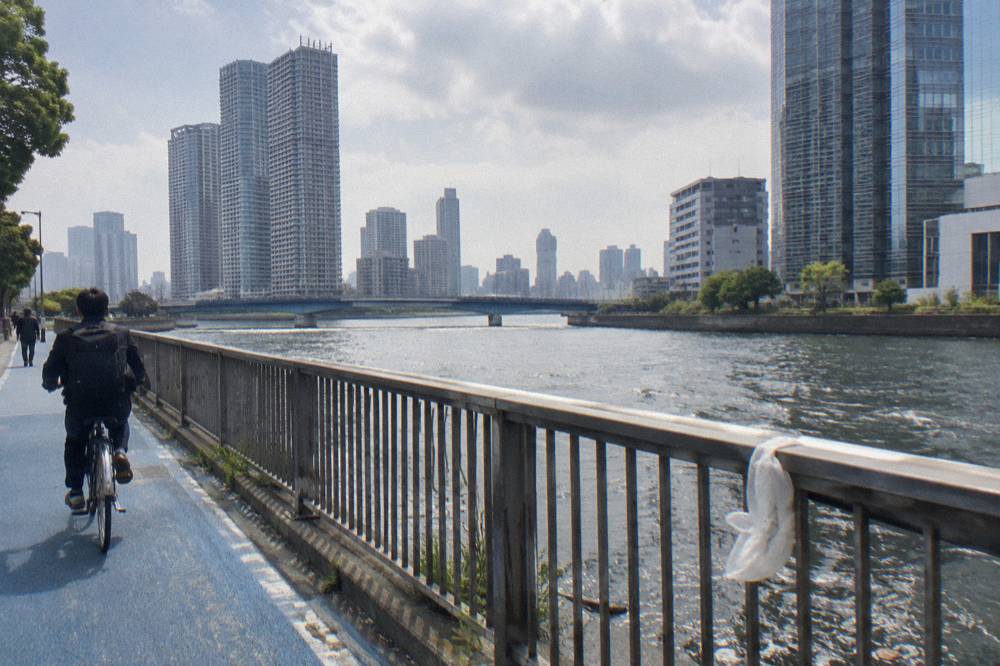
The riverside entries deserve the emphasis fresh route reporting gives them: route guides describe the Arakawa levee path running roughly 30 km from Ukima Park downstream to Kasai Rinkai Park at the bay, mostly free of cross traffic. The Riverside E-Bike Ride puts you on that family of paths for 3 hours from $85, though its review pool, 10 reviews, is too small for a star claim. For the bay end of the system, the Odaiba and Tokyo Bay cycling guide covers the waterfront paths and their quirks.
Outside the central belt, the geography changes the product. The Kamakura Scenic Day Ride starts in Kamakura, not Tokyo, and runs 6 hours from $148.99 with the total depending on group size, rated 4.9 across 15 reviews. The Crystal Clear River Cycling day starts in Akiruno in western Tokyo Prefecture, from $142.52. Two hotel-pickup lake day trips, Lake Yamanaka with Fuji views from $126 and the Private Lake Ashi 10-hour tour from $139, carry the bike to the ride rather than the reverse. These are superb days out, but they are not "seeing Tokyo", they are seeing elsewhere, and booking one expecting a city tour is a real disappointment risk.
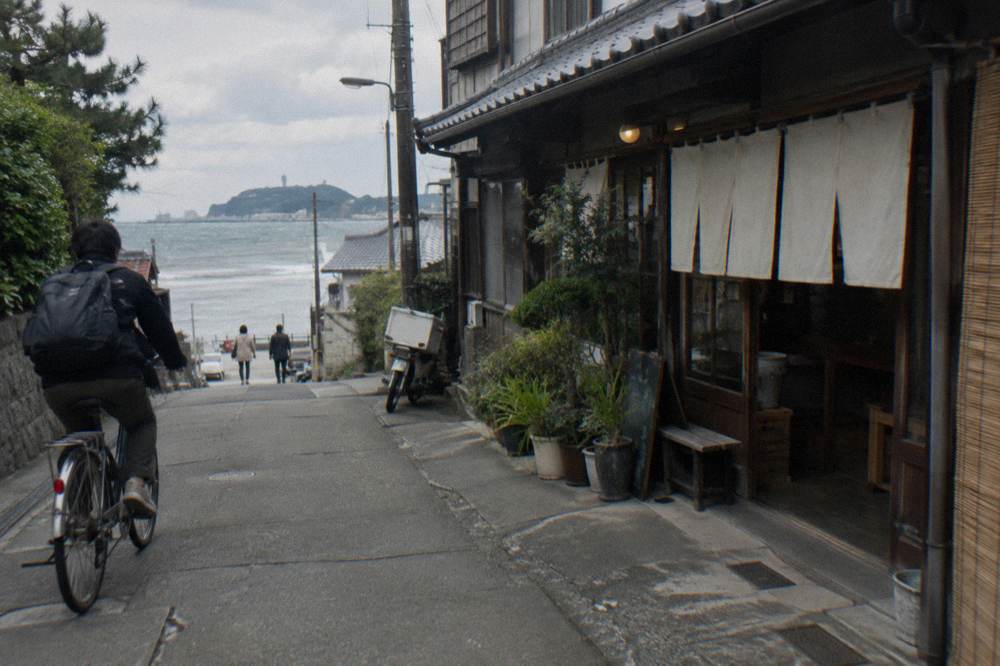
For most first visits the central belt is the answer, and one mid-length ride serves it well. The 3-Hour Highlights, Bike or E-Bike tour from TRB BIKE TOUR, from $61.54 per person and rated 4.9 across 980 reviews, lets each rider choose a regular or electric bike at the same price, meeting at the Statue of Commodore Perry. That choice matters more than people expect in a city with honest hills around the palace and riverbanks, and the e-bike or regular bike comparison works through it in detail.
What About Weather, Timing And The Rules?
Tokyo's mildest cycling months by verified climate normals are March to May and October to November, while June to September brings the most rain and heat; September and October are the wettest months at 224.9 and 234.8 mm. Rules-wise, ride on the left, know the April 2026 blue-ticket system, and use a light at night: fines run from 3,000 to 12,000 yen.
Timing is the quiet variable in the train-versus-bike decision, because trains are weatherproof and bikes are not. The Japan Meteorological Agency's 1991 to 2020 normals for the Tokyo station give the honest picture:
| Period | Mean temp | Precipitation | Cycling verdict |
|---|---|---|---|
| January to February | 5.4 to 6.1 C | 59.7 and 56.5 mm | Cold but dry and bright; fine with layers |
| March to April | 9.4 to 14.3 C | 116.0 and 133.7 mm | Cherry-blossom season; ideal, book ahead |
| May | 18.8 C | 139.7 mm | Comfortable |
| June to August | 21.9 to 26.9 C | 167.8 down to 154.7 mm | Hot, humid; mornings or e-bikes |
| September to October | 23.3 and 18.0 C | 224.9 and 234.8 mm | The two wettest months; hedge your plans |
| November to December | 12.5 and 7.7 C | 96.3 and 57.9 mm | Cool, mostly dry, autumn color |
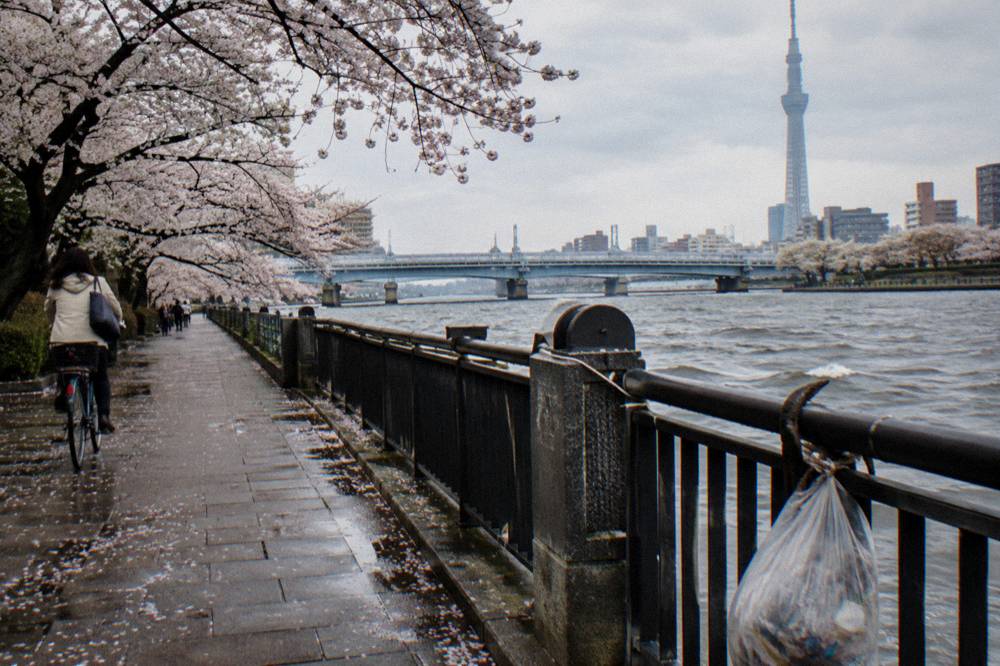
The blossom window is the standout: verified JMA data puts Tokyo's 2026 first bloom on 19 March and full bloom on 28 March, several days ahead of the long-term normals of 24 and 31 March. The cherry blossom bike tour guide is built around exactly that week. If your dates are flexible and you want the city at its best on two wheels, late March to mid-April is the premium window, and tour availability tightens accordingly.
The rules side is short and worth five minutes before you ride. Since 1 April 2026, a traffic violation notice system with fixed fines, the blue ticket, applies to riders aged 16 and over, and the Tokyo Metropolitan Police notice is explicit that it covers overseas visitors. The headline fines: 12,000 yen for holding a phone while riding, 6,000 for running a red or riding against traffic, 5,000 for no light at night or earphones blocking your hearing, 3,000 for riding two abreast or carrying a passenger. Helmets, by contrast, are an effort obligation for every age with no fine, and guided tours here include one in the price on most listings.
For self-guided riders, the practical hybrid is a day pass on the share system. The official Docomo Bike Share Tokyo price page lists a 1,650 yen same-day pass, unlimited rides until 23:59, bought at a convenience store with an SMS-capable phone. The catch: bikes must return to designated ports, which makes share bikes a point-to-point tool rather than a tour replacement.
Guided Tour Or Exploring Tokyo On Your Own?
A guided tour fits visitors with one to three days in the city, anyone uneasy about Japanese road rules, and riders who want context, since the tours here include a guide, a bike and, on most listings, a helmet from $32.39 per person. Exploring on your own suits longer stays, confident cyclists and repeat visitors, using rental or share bikes. The two also mix well within one trip.
The self-guided option is genuinely good in Tokyo, and pretending otherwise would be dishonest. The city is rideable, paths along the rivers are calm, and rental plus a share day pass can undercut any tour. The bike rental guide and the cycling routes overview cover the DIY version thoroughly, including the riverside corridors described above.
| Factor | Guided tour | On your own |
|---|---|---|
| Navigation and route | Handled | Yours to plan |
| Rules and safety briefing | Included | Your homework |
| District context and history | Guide's specialty | Guidebook level |
| Cost for a 3 hour ride | From $57.01 (Shibuya-Harajuku 3-Hour Ride) | Share day pass 1,650 yen, rental varies |
| Flexibility to stop and linger | Group pace | Complete |
| Weather backup and support | Guide decides with you | Yours alone |
What the guided format buys, at bottom, is density. A guide turns a backstreet into an explanation, reroutes around a festival crowd, and knows which shop street feeds you at lunch. That is why the most reviewed rides here are also the longest ones: riders who take the 6.5-hour Small-Group Long City Ride from Bicycle Tours Tokyo, rated 5.0 across 1,308 reviews, consistently get the city explained, not just traversed. Its list of inclusions is typical of the format: bike, helmet and guide included, food and hotel transfers not, from $106.89 per person, with free cancellation per the listing.
Guided does not have to mean scheduled group only, either. The private options here span from the Private 2-Hour E-Bike Ride at from $45.35 per person to the Private E-Bike From Your Hotel at from $156.77 per person, with the total depending on group size, rated 5.0 across 171 reviews, where the guide meets you at your door. For families weighing the decision with kids in tow, the Tokyo bike tour with kids guide addresses child seats and pace specifically.
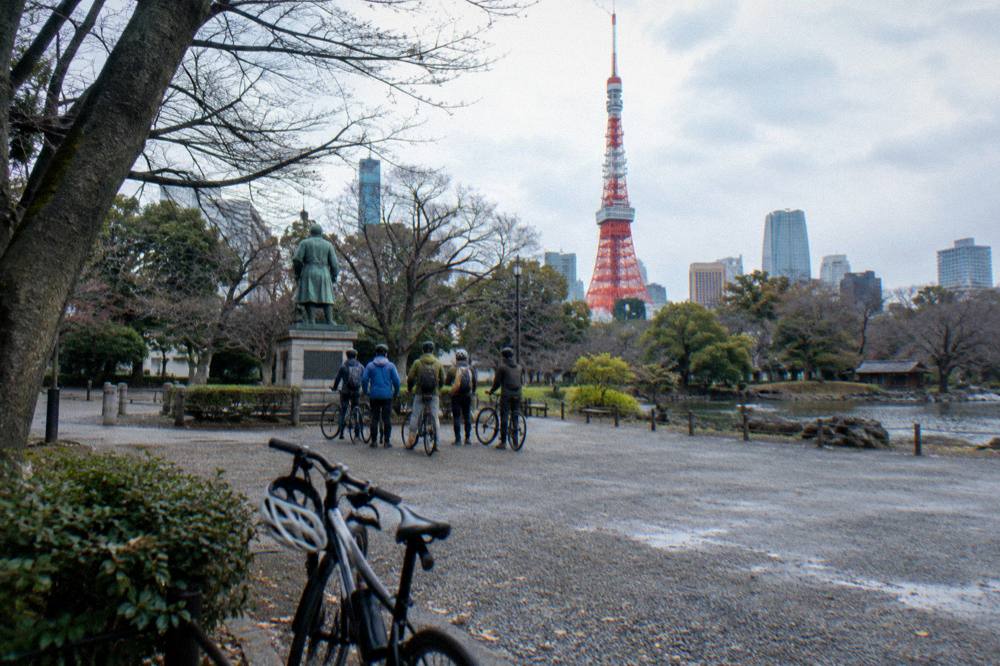
For many visitors the honest answer is both: one guided ride early in the stay to learn the city's shape and rules, then a self-guided day repeating the parts worth lingering in. The first ride is effectively a lesson with sightseeing attached; the second is where the independence pays off. If that first ride is on your list, Tokyo Bike Tours exists to make exactly this comparison legible, tour by tour, without the marketing fog.
Common Questions About Seeing Tokyo
What Is The Best Way To See Tokyo In One Day?
A guided bike ride of 3 to 6 hours in the morning, covering several central districts, followed by an afternoon on foot in one neighborhood. A 3-hour guided ride links 4 to 6 areas; the same time by train and foot links about 2.
Is A Bike Tour In Tokyo Worth It Compared To Trains?
For most first-time visitors, yes: from $51.82 per person you get a bike, a guide and a route through backstreets no train line serves, with several districts covered in 2 to 6.5 hours. Trains remain better for long point-to-point jumps.
How Much Of Tokyo Can A Bike Tour Cover?
A 3-hour ride covers the central belt, roughly the Imperial Palace area to Asakusa or Shibuya, linking 3 to 5 areas. A 6 to 6.5 hour ride crosses most of central Tokyo, about 20 km on the Full-Day Traditional Ride.
Can Tourists Ride Bikes In Tokyo Without A Guide?
Yes. Share systems offer an official 1,650 yen same-day pass, rental shops operate across the city, and riverside paths suit confident riders. You take on navigation, parking and the road rules yourself, including the blue-ticket fines in force since April 2026.
When Is The Best Time Of Year To See Tokyo By Bike?
Late March to May and October to November, per JMA 1991 to 2020 normals. Cherry blossoms peaked around late March in 2026; October is actually the wettest month at 234.8 mm, so hedge autumn plans.
Are Tokyo Bike Tours Suitable For Beginners?
The rides here use regular or electric bikes at an easy pace on mostly flat terrain, with group caps as low as 3 to 6 on several listings and helmets included on most. The beginner-focused guide covers fitness, pace and bike choice in detail.