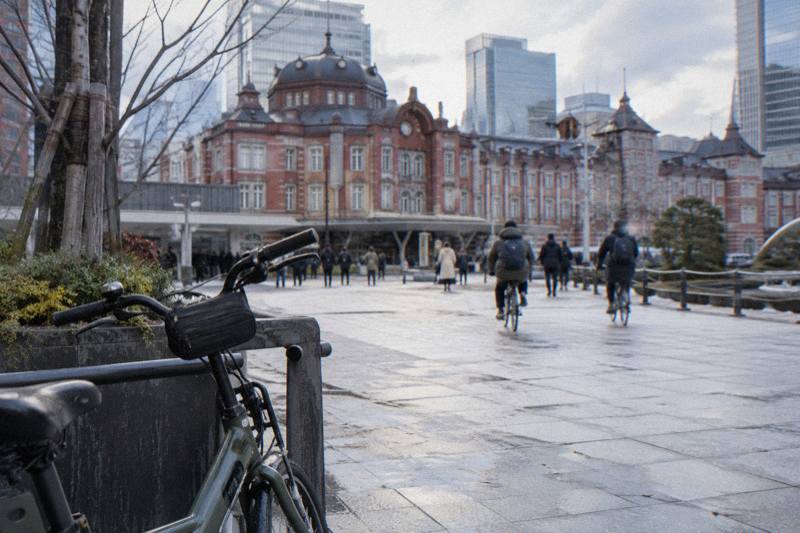
Tokyo Cherry Blossom Bike Tour: Where To Ride And When
Tokyo's cherry blossoms open in late March and close within about two weeks, which makes a bicycle the fastest honest way to see them: verified bloom dates, the riverside routes that carry the most trees, and what the season's tours cost.
Short answer
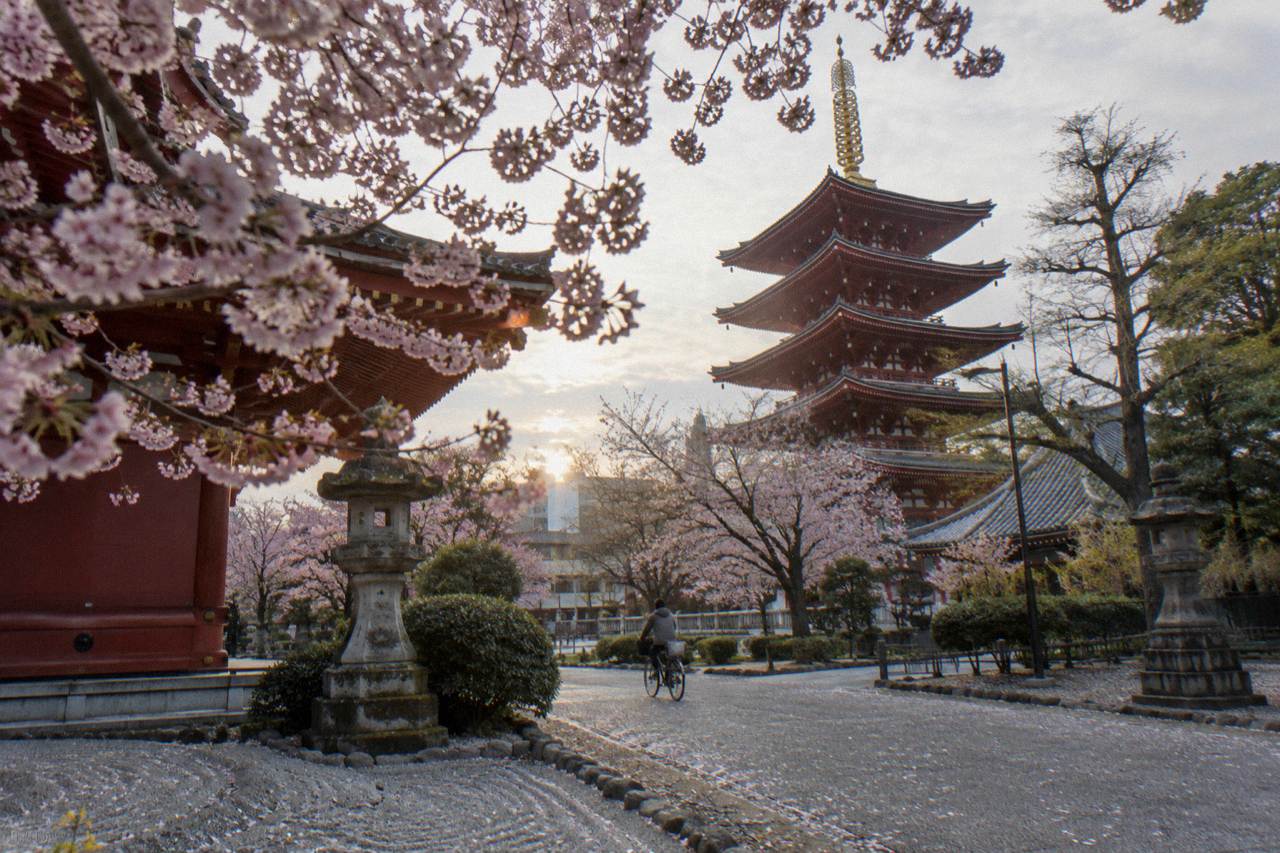
Tokyo's cherry blossoms typically reach first bloom around 24 March and full bloom around 31 March, based on JMA 1991 to 2020 normals; in 2026 they opened five days early, on 19 March. Guided rides for the season start from $51.82 per person, and booking early matters because the window is short.
Spring in Tokyo compresses the year's best scenery into roughly ten days of flowers. The city's cherry trees open in late March, peak at the end of the month, and scatter by early April, and the crowds that gather under them move slowly on foot. A bicycle covers the distance between blossom spots at the pace the season demands. The Small-Group Long City Ride from Bicycle Tours Tokyo, rated 5.0 across 1,308 reviews, is one of several rides that work well in this window, and this guide lays out the timing, the routes and the costs for planning a Tokyo Bike Tours style sakura trip.
When Do Cherry Blossoms Bloom In Tokyo?
Tokyo's cherry blossoms usually reach first bloom on 24 March and full bloom on 31 March, according to Japan Meteorological Agency 1991 to 2020 normals; in 2026 the trees opened on 19 March, five days ahead of normal, and hit full bloom on 28 March, and no 2027 forecast exists yet.
Those figures come straight from the JMA's own first-bloom and full-bloom records, which are the reference every Japanese forecaster builds on. The agency no longer issues official blossom forecasts itself, so the 1991 to 2020 normals are the anchor a planner should use: late March for the opening, the very end of March for peak. Private forecasters typically release their first outlook for the following spring in mid-December, with updates through January, so anyone planning for 2027 will have better information after the new year than before it.
Cherry Blossom Season Bike Tour Prices In Tokyo
Per-person from prices for guided rides listed in this guide
The 2026 season is the clearest recent illustration of why dates flex. First bloom on 19 March, full bloom on 28 March: a warm winter pulled everything forward. The practical consequence for a rider is that a trip planned for the first week of April can sometimes miss the show entirely, while a late-March arrival that felt like a gamble lands in peak colour. Build slack into the itinerary rather than precision around a single date.
Weather also shapes the season's quality. JMA climate normals for the Tokyo station put March at 116.0 mm of rain and a mean temperature of 9.4°C, while April warms to 14.3°C mean but stays wet at 133.7 mm. March nights average 5.0°C, cold enough that a jacket matters on a morning ride. Riders wanting a deeper look at conditions across the year can pair this with the best months for cycling guide.
| Tokyo blossom benchmark | JMA 1991-2020 normal | 2026 actual |
|---|---|---|
| First bloom (kaika) | 24 March | 19 March |
| Full bloom (mankai) | 31 March | 28 March |
| Typical full-bloom window | late March to early April | late March |
| Next-year forecast availability | none yet | first outlooks usually mid-December |
Which Tokyo Bike Routes Pass The Most Cherry Blossoms?
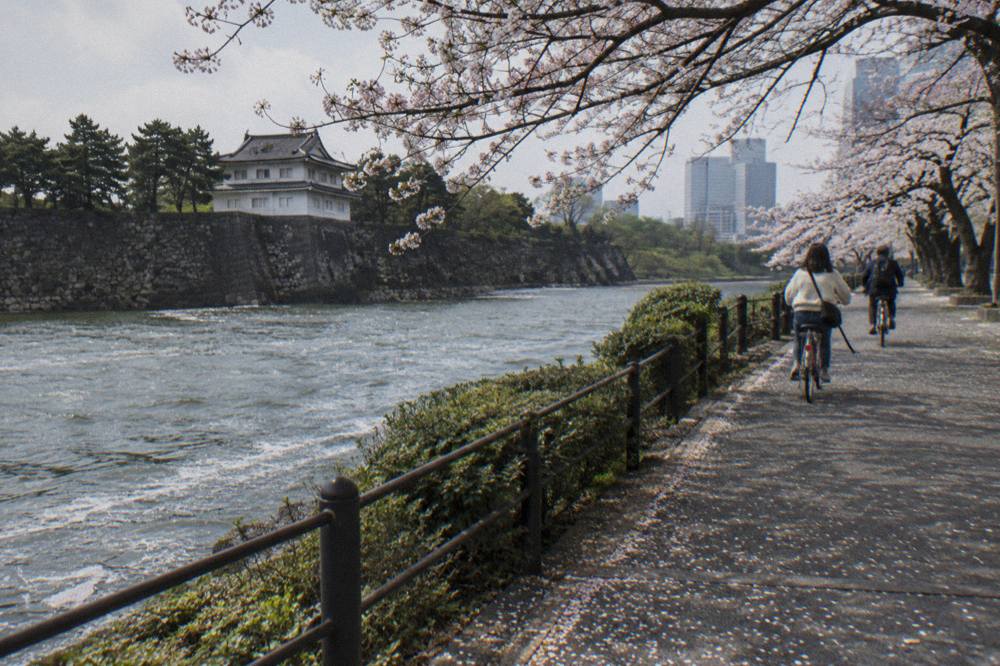
The strongest blossom cycling in Tokyo follows water: riverside paths along the Sumida and Arakawa carry long stretches of cherry trees, with route guides describing a roughly 30 km levee segment from Ukima Park downstream to Kasai Rinkai Park, and park moats and canal-side streets filling in the rest of the city.
Water and sakura go together because Tokyo's historic blossom spots were planted along rivers, moats and park edges, exactly where car-free paths now run. Route guides describe the Arakawa levees as one long, rideable corridor, and report that sections near the Kinegawa Bridge run free of traffic lights. The Sumida side links Asakusa toward Ryogoku with Skytree views, a segment commonly cited at around 4 km. These descriptions come from route reporting rather than official counts, so treat them as direction, not a schedule.
The Imperial Palace perimeter is the classic central loop. The full circuit runs about 5 km on standard roads, and on Sundays a roughly 3 km car-free segment opens along the moat from 10:00 to 16:00, weather permitting. Blossom season makes this loop one of the most photographed rides in the country. The details of that circuit are covered in the Imperial Palace riding guide, and the riverside options are mapped in the Tokyo cycling routes overview.
For structure, think of the city in three blossom bands: the eastern rivers (Sumida, Arakawa, Edogawa), the central palace moats and canals, and the western parklands such as the Yoyogi and Shinjuku Gyoen edges. A guided tour generally stitches two of those bands together. The 6-Hour Full City Ride, rated 4.9 across 842 reviews from $97.17 per person, covers the kind of cross-town distance that a blossom day rewards, while the shorter Hidden Gems E-Bike, 3-4 Hours from Japan Wonder Travel, rated 4.9 across 895 reviews from $62.19, suits riders who want the flowers without a full-day commitment.
A few honest cautions for the season. Blossom corridors get busy on weekends, and hanami parties spill onto path edges in the afternoons. Tokyo's official visitor cycling guidance is blunt about the rules that matter most when pedestrians dominate: ride slowly, and yield. Morning rides, before about 9:00, see the same trees with a fraction of the crowd.
| Blossom riding area | Character | Reported ride detail |
|---|---|---|
| Arakawa levees | Long riverside corridor, few crossings | About 30 km described from Ukima Park to Kasai Rinkai Park |
| Sumida river segment | Asakusa to Ryogoku, skyline views | Around 4 km commonly cited |
| Imperial Palace loop | Central moats, some trees | About 5 km perimeter; roughly 3 km car-free on Sundays |
| Yanesen old town | Yanaka, Nezu, quiet lanes | Around 20 km combined routes described in tour listings |
What Does A Sakura Season Bike Tour Cost?
Guided rides suitable for the spring window start from $51.82 per person for the 2.5-Hour Central Short Ride from Tokyo Backstreets Bike Tour, rated 5.0 across 25 reviews, and run to $106.89 for the 6.5-hour Small-Group Long City Ride from Bicycle Tours Tokyo, rated 5.0 across 1,308 reviews.
Those are from-prices on a per-person basis, exactly as the listings state them. The budget end of the season's options includes the Shibuya-Harajuku 3-Hour Ride at $57.01 from COG EXPLORER JAPAN, rated 4.8 across 57 reviews, and the 2.5-Hour Central Short Ride at $51.82 from Tokyo Backstreets Bike Tour, rated 5.0 across 25 reviews. At the other end, the West-Side Cycling With Food Stops tour from DIG Tokyo Tours, rated 5.0 across 223 reviews at $106.89 per person, pairs the riding with food stops around Koenji, a neighbourhood whose spring streets are worth the detour.
No tour on the booking pages is blossom-specific. Operators run the same city, e-bike and night routes year-round; what changes in late March is the scenery along them. That matters for expectations: a spring booking gets you the season, not a guaranteed peak-bloom date, because the trees answer the weather, not the calendar. Booking early for late March is still the right move, since the short window concentrates demand into a handful of departure days.
| Tour | Duration | Rating | From price (per person) |
|---|---|---|---|
| Small-Group Long City Ride | 6 hours 30 minutes | 5.0, 1,308 reviews | $106.89 |
| 6-Hour Full City Ride | 6 hours | 4.9, 842 reviews | $97.17 |
| West-Side Cycling With Food Stops | 3 hours 30 minutes | 5.0, 223 reviews | $106.89 |
| 3-Hour Highlights, Bike or E-Bike | 3 hours | 4.9, 980 reviews | $61.54 |
| Shibuya-Harajuku 3-Hour Ride | 3 hours | 4.8, 57 reviews | $57.01 |
Cancellation policy is the spring rider's friend. Most of these options, including the Small-Group Long City Ride and the West-Side Cycling tour, carry free cancellation per their listings, which means a late-March slot can be reserved months ahead and adjusted if the blossom calendar shifts. The Hidden Gems Ride, Bike or E-Bike from TRB BIKE TOUR at $63 offers free cancellation like every tour here: cancel up to 24 hours ahead for a full refund, useful while spring dates are still in flux. Read more on pricing in the Tokyo bike tour cost guide.
Which Tours Fit A Spring Riding Schedule?
A spring schedule pairs well with mid-length daytime rides plus one evening option: the Flexible 3-6 Hour Small-Group Ride at $64.78 per person, the Local Life E-Bike at $63.48, and the 2-Hour Night Lights Ride at $55.06 all fit a two-day blossom itinerary, and all carry free cancellation per their listings.
Late March days are short on heat and long enough on light. A sensible pattern is one longer daylight ride covering the rivers and parklands, then a compact evening ride under lit blossoms. The night side of the season is real: some hanami spots illuminate their trees after dark, and Tokyo's lit skyline gives an evening ride a different character entirely, a topic explored in the Tokyo night bike tour guide.
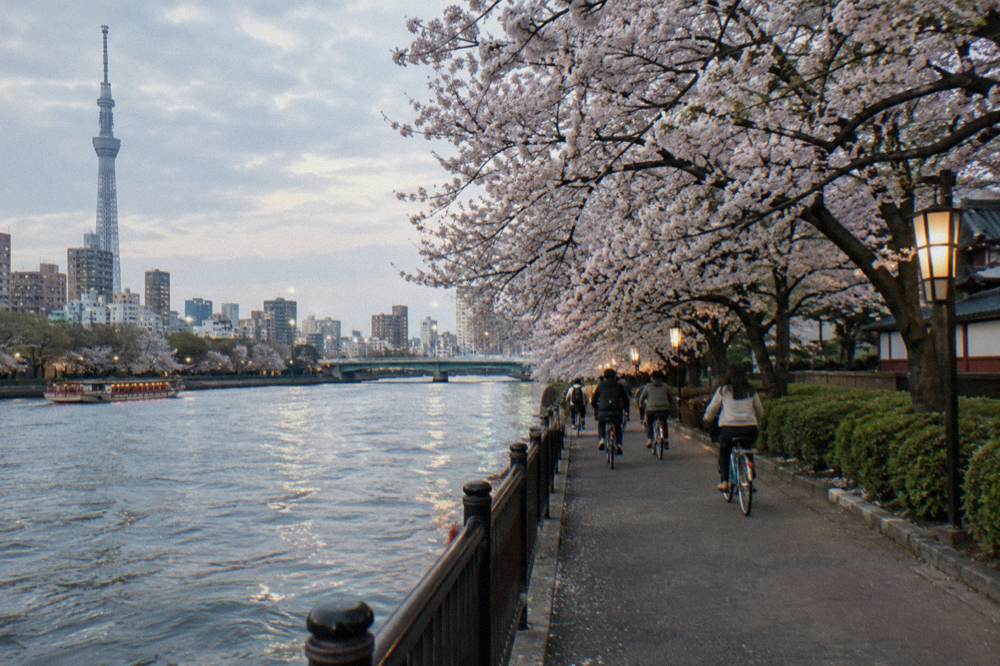
Group size shapes the experience in blossom season more than in any other, because popular segments clog. The Small-Group Long City Ride caps its group at 5, the smallest of the long daytime options. The Akihabara and Palace E-Bike Loop from TOKYO ACTIVE TOURS caps at 4 and is rated 5.0 across 65 reviews at $97.17 per person, a tight format for threading busy paths. Larger formats such as the 6-Hour Full City Ride, with a group max of 12, trade maneuverability for price.
E-bikes earn their keep in spring for one specific reason: hanami crowds force stops and slow rolls, and pedal assist makes repeated restarts painless. The 3-Hour Highlights, Bike or E-Bike tour lets each rider choose, and its listing flags that helmet rental costs ¥1,000 in cash on the day, one of the few tours where head protection is not simply included. The comparison between formats is laid out in the e-bike versus regular bike guide.
| Spring itinerary slot | Suitable option | Group max | Duration |
|---|---|---|---|
| Day 1 long daylight ride | Small-Group Long City Ride | 5 | 6 hours 30 minutes |
| Day 1 compact alternative | Flexible 3-6 Hour Small-Group Ride | 8 | 3 to 6 hours |
| Day 2 assist ride | Local Life E-Bike, Starts Near Station | 6 | 3 hours |
| Evening slot | 2-Hour Night Lights Ride | 6 | 2 hours |
Can You Reach Blossom Spots With Bike Share?
Yes, and in blossom season it is genuinely practical: Docomo Bike Share's Tokyo day pass costs 1,650 yen bought at a convenience store and is valid until 23:59 the same day, with rides returned to designated stations, and HELLO CYCLING runs a parallel station network with per-ride pricing set in its app.
The Docomo figures come from the operator's official Tokyo price page: 165 yen for the first 30 minutes of one-time use, 165 yen per further 30 minutes, and the 1,650 yen day pass covering unlimited rides until 23:59. The pass is bought at a convenience store and requires an SMS-capable phone, a detail that catches some visitors. HELLO CYCLING prices load dynamically in its app by prefecture and vehicle type, so the app is the source of truth, and its network allows return at any of its stations. The mechanics of both systems are compared in the Tokyo bike share guide.
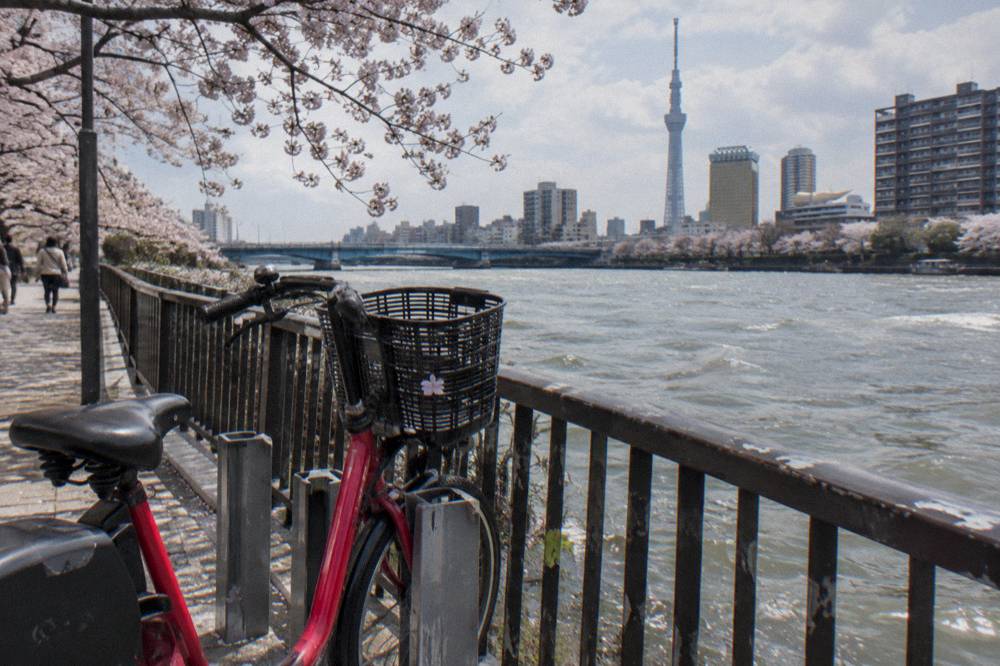
For blossom riding specifically, share bikes shine on the short hops: a palace loop in the morning, a ride from Asakusa down the Sumida in the afternoon. The catch is the return-to-station rule, which makes a point-to-point blossom crawl across the city awkward. A guided tour, by contrast, handles the bike, the route and the lock-ups. That trade-off between renting, sharing and touring is examined in the bike rental in Tokyo guide.
One blossom-specific note on parking: rows of share bikes and private mamachari already crowd the racks near popular hanami spots, and wards remove bicycles parked around stations. Minato City's published impound fee is 2,000 yen per bicycle, and Shinjuku also removes bikes near stations. The full picture, including where racks actually sit, is in the Tokyo bike parking guide.
What Should Spring Riders Pack And Know?
Pack for 5°C mornings and 15°C afternoons: JMA normals give March a mean daily maximum of 14.2°C and a minimum of 5.0°C, with 116.0 mm of rain across the month, so layers, a light rain shell and lights for early evenings cover the season, and March rain days are frequent enough that a wet-weather plan matters.
The layering logic is simple: blossom season starts cold and warms fast. A base layer plus a packable jacket handles the swing, and gloves matter more than most visitors expect on a riverside ride where the wind has no obstruction. Clothing detail, including what works on a guided tour, is covered in the what to wear cycling guide.
- City Bike Tours$32.39
- Private Tours$45.35
- Night Rides$55.06
- E-Bike Tours$61
- Day Trips By Bike$76
Rain deserves respect, not fear. March and April average 116.0 mm and 133.7 mm respectively, spread across many days rather than concentrated in storms. Most listings allow free cancellation, so a soaked forecast can be ridden around. Tactics for wet days are laid out in the cycling in rain guide.
| Month | Mean temp | Mean daily max | Mean daily min | Precipitation |
|---|---|---|---|---|
| March | 9.4°C | 14.2°C | 5.0°C | 116.0 mm |
| April | 14.3°C | 19.4°C | 9.8°C | 133.7 mm |
The Japan Meteorological Agency's climate normals for the Tokyo station are the underlying source for those figures. On helmets, most tours in this guide include one, and Tokyo Metropolitan Police report that 63.5% of cycling deaths in Tokyo between 2021 and 2025 involved fatal head injuries, with the fatality rate 2.3 times higher without a helmet. Helmet use is an effort obligation for every age rather than a fined requirement, but those numbers make the case on their own.
What Rules Change For Cyclists During Hanami Season?
No rule changes for the season itself, but the enforcement regime that took effect on 1 April 2026, overlapping peak blossom, applies to riders aged 16 and over, including overseas visitors, with fixed fines from 3,000 to 12,000 yen for violations such as phone use, ignoring signals and dangerous sidewalk riding.
The blue-ticket system is new enough that it landed squarely on top of the 2026 sakura window. Tokyo Metropolitan Police confirm in English that overseas visitors are covered. The fines are fixed: 12,000 yen for holding a phone while riding, 6,000 yen for running a red or riding against traffic, 5,000 yen for riding without lights at night or with an umbrella or both ears blocked by earphones, and 3,000 yen for riding two abreast or carrying a passenger. Officers normally give guidance and a warning first, with tickets reserved for malicious or dangerous violations. The full detail is on the Metropolitan Police bicycle violation page.
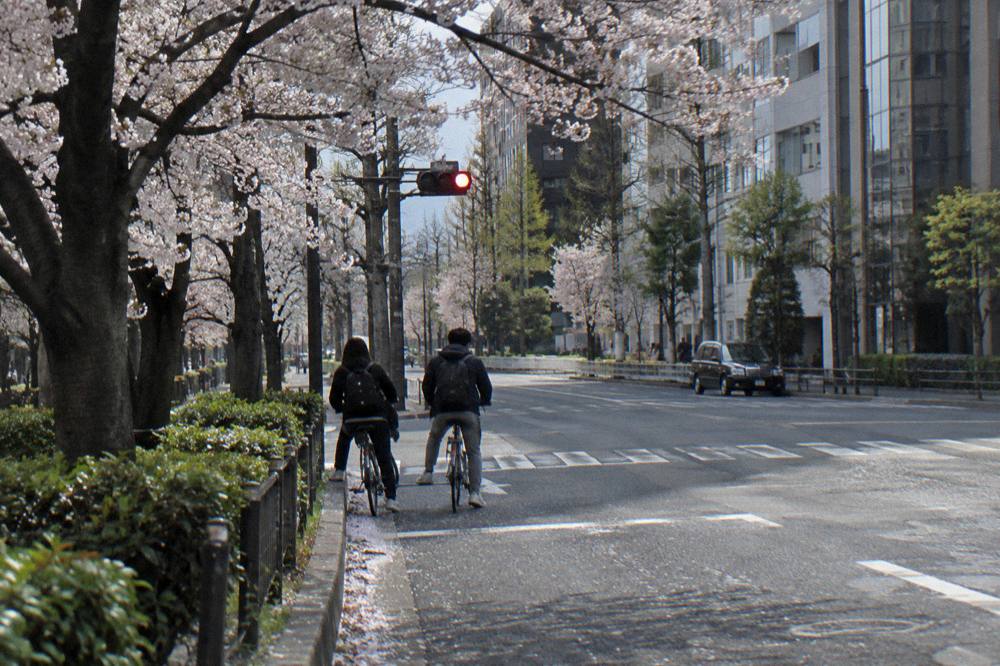
In blossom season the sidewalk rule is the one that bites, because hanami crowds push riders toward pedestrian space. The roadway is the default, and sidewalk riding is permitted only with the designated sign, for riders under 13 or over 70, or where road conditions make it unavoidable; even then the rider must slow near the roadway edge and stop for pedestrians. Pedestrians always have priority, and under the new fines dangerous sidewalk riding costs 6,000 yen. The MPD English traffic rules page covers this in plain language, and the Japan cycling rules guide translates it into practice.
One further requirement the season rarely flags: bicycle liability insurance has been mandatory for all cyclists in Tokyo since 1 April 2020, and the official visitor guidance states plainly that this also applies to tourists from overseas. Tokyo ordinance requires bicycle rental businesses to insure the bikes they hire out and explain the cover to renters, though not every listing states it, so a quick check helps. Solo riders using their own travel insurance should confirm it includes a personal liability rider, the detail the ordinance accepts.
Spring also rewards a small amount of route patience. The blossom corridors peak on different days depending on sun exposure, and riverside trees often open a little later than sheltered park plantings. Riders with two days available can hedge by taking a riverside route on day one and a park-and-moat route on day two, letting the city itself reveal which trees held on. Whichever structure fits, the season's defining constraint stays the same: about ten good days, late March into the first days of April, and a bicycle is the most efficient way to spend them.
Common Questions About Cherry Blossom Bike Rides In Tokyo
When Do Cherry Blossoms Bloom In Tokyo?
First bloom averages 24 March and full bloom 31 March on JMA 1991 to 2020 normals. In 2026 the trees opened on 19 March and reached full bloom on 28 March. No 2027 forecast exists yet; first private outlooks usually arrive in mid-December.
Is A Bike Tour Worth It During Sakura Season?
Yes, for distance if nothing else. The bloom window is roughly ten days, and a bike covers far more blossom ground than walking. Guided options such as the Small-Group Long City Ride at $106.89 per person handle route-finding in crowds that slow everyone else down.
Can A Booked Tour Guarantee I See Blossoms?
No. No tour on the booking pages is blossom-specific, and bloom timing depends entirely on the weather. Booking late March maximises the odds, and free cancellation on most options lets the plan flex with the forecast.
What Should I Wear For Spring Cycling In Tokyo?
Layers for a 5°C morning rising toward a 14°C afternoon in March, plus a light rain shell for the month's 116.0 mm of rain. Gloves help on exposed riverside paths, and lights matter for evening rides.
Do The New Bicycle Fines Apply To Tourists?
Yes. Since 1 April 2026 the blue-ticket system applies to riders aged 16 and over, and Tokyo Metropolitan Police confirm in English that overseas visitors are included. Fines run from 3,000 to 12,000 yen for violations such as phone use and signal violations.