Tokyo Food Bike Tour: Market Stops, Snacks And Pace
Tokyo rewards riders who combine pedalling with eating, and a small number of guided tours are built around exactly that. Here is what the food-focused rides include, what they cost, and how to pick between them.
Short answer
Two guided rides put food at the centre: West-Side Cycling With Food Stops, from $106.89 per person for 3 hours 30 minutes, and the Night Ride With Ramen, from $84.21 for 2 to 3 hours. Several general tours pass market streets without tasting stops, so check what each listing includes before booking.
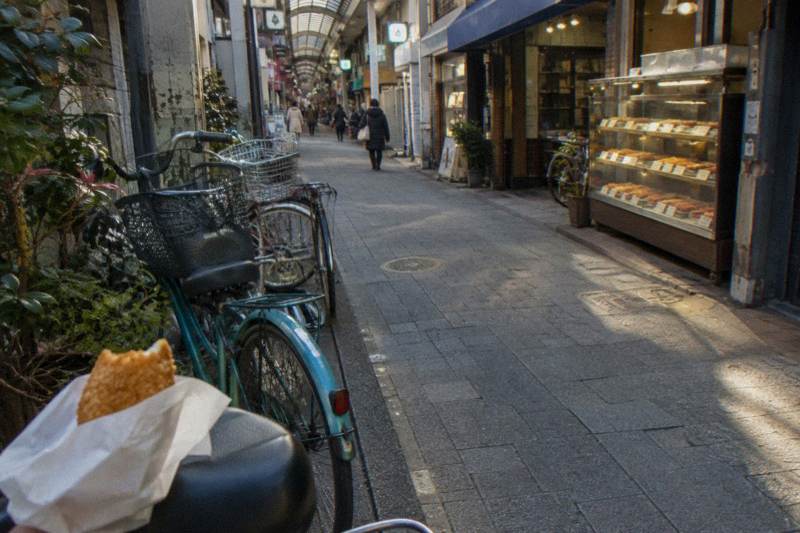
Tokyo is a city where the best eating is rarely on the main avenue. It sits in shotengai shopping arcades, in temple-side snack lanes, in the evening queues outside tiny counters west of the centre, and the fastest honest way to move between those places is a bicycle. A food bike tour takes that idea seriously: instead of racing between landmarks, the ride moves at the pace of the neighbourhood and stops where the neighbourhood eats.
The idea is not a gimmick. The west side of the city, around Koenji and its retro arcades, is one of the most interesting eating districts in Tokyo and one of the least visited by first-time tourists, and riding there with a local guide turns a long train ride into part of the day. This guide lays out the food-focused tour options, what they cost, what the routes look like, and the practical rules that shape any ride through Tokyo's streets. The official Tokyo Bike Tours collection covers the wider city too, but the focus here is the plate.
What Is A Tokyo Food Bike Tour?
A food bike tour is a guided cycle ride in which eating stops are part of the described route rather than an optional detour. In Tokyo this means a guided small-group ride, typically 2 to 3 hours 30 minutes, that links neighbourhoods known for street food, market streets and snack counters, with the guide choosing stops that fit the pace of the group and the day.
- City Bike Tours$32.39
- Private Tours$45.35
- Night Rides$55.06
- E-Bike Tours$61
- Day Trips By Bike$76
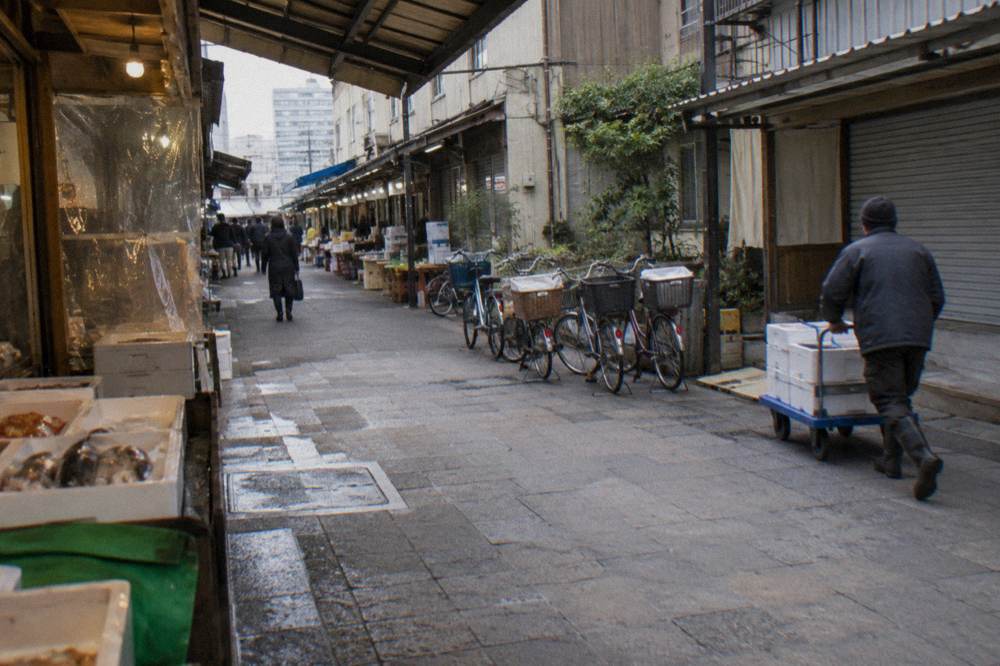
The distinction matters more than it sounds. Most Tokyo bike tours are sightseeing rides: they pass through fascinating eating streets, Tsukiji's outer lanes, Asakusa's snack rows, Yanaka's old shotengai, but food is scenery, not the itinerary. A food tour inverts that. The riding exists to connect the stops, the stops are chosen for what is being cooked, and the guide can talk about the neighbourhood through what people eat there.
Tokyo currently has a small number of rides built this way, and they are not interchangeable. One runs in daylight through the west side's arcades. Another runs at night and ends with ramen. The rest of the market is sightseeing tours with a food street on the route, which can suit riders who want a taste of everything but should not be booked on the expectation of a full tasting progression.
A note on honesty: what a listing includes changes, and the two food-focused rides describe their stops differently. The booking page for each tour states exactly what is covered, whether tastings, drinks or a seated meal are part of the price. Treat that page as the source of truth at the moment you book.
Which Tokyo Rides Include Food Stops?
Two rides put food in the tour description itself: West-Side Cycling With Food Stops, a 3 hours 30 minutes small-group ride from Koenji Station rated 5.0 across 223 reviews, and the Night Ride With Ramen, a 2 to 3-hour evening ride from $84.21 per person. The west-side ride is the established option; the night ride is a new listing with no reviews yet.
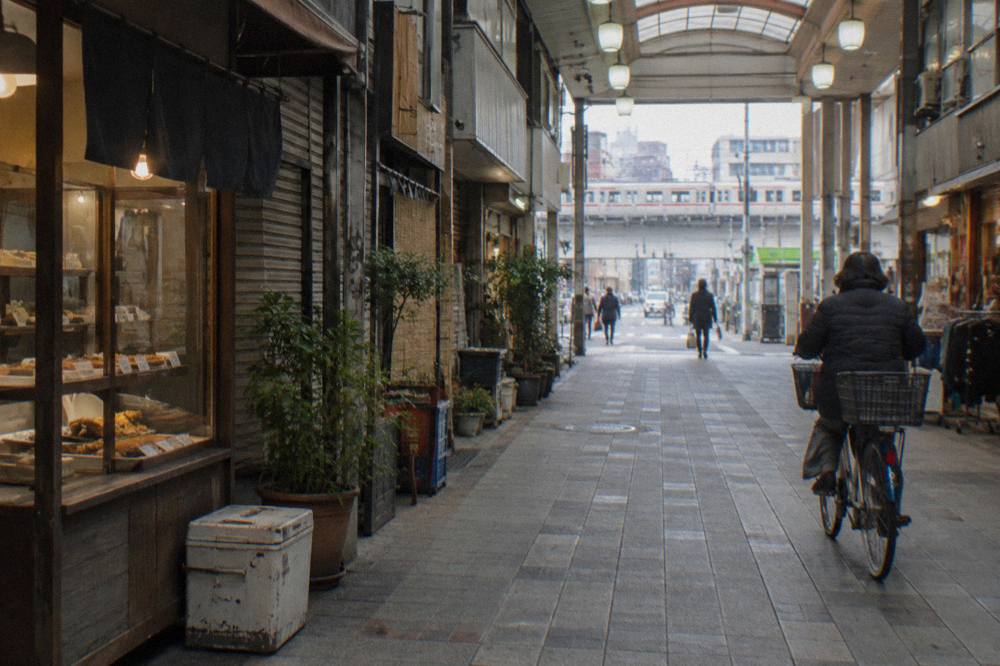
West-Side Cycling With Food Stops is run by DIG Tokyo Tours and is the closest thing Tokyo has to a purpose-built food ride. It starts at Koenji Station, caps groups at 8, includes bike and guide, and carries free cancellation per the listing, all from $106.89 per person, with the total depending on group size. Koenji is the point: the neighbourhood's arcades are dense with old kissaten coffee shops, yakitori counters and second-hand record shops, and a guide on a bicycle can link them in a way a walking tour of one street cannot.
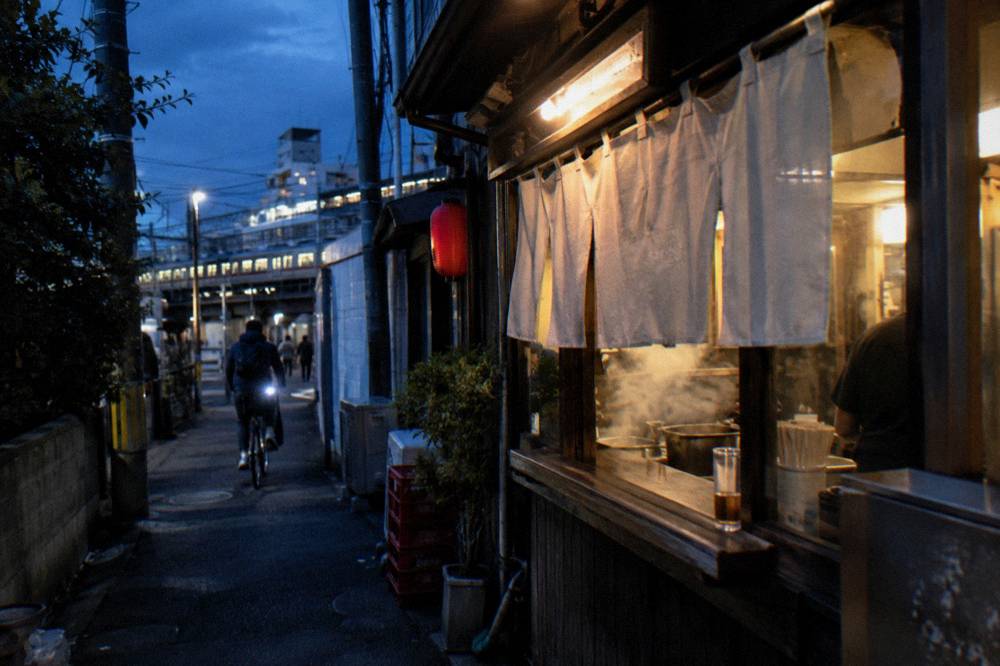
The Night Ride With Ramen, from the Tokyo Backstreets Bike Tour operator, is an evening version of the same instinct. It runs 2 to 3 hours with a group cap of 6, from $84.21, and pairs backstreet riding with a ramen stop. It is a new listing with no reviews yet, so there is no rating to report; riders who want a proven evening option can look at the wider night riding guide, which covers the established after-dark tours.
Around these two sits a cluster of general rides that touch food streets. The backstreets riding guide covers the downtown options in detail, but the short version is this: if tasting stops are the reason you are booking, choose a tour whose description says so.
The table below separates the two food-described rides from the most food-adjacent general options.
| Tour | Duration | Group max | Rating | From (per person) | Food angle |
|---|---|---|---|---|---|
| West-Side Cycling With Food Stops | 3 hours 30 minutes | 8 | 5.0 from 223 reviews | $106.89 | Food stops are part of the described route |
| Night Ride With Ramen | 2 to 3 hours | 6 | New listing, no reviews | $84.21 | Evening ride ending with ramen |
| Small-Group Long City Ride | 6 hours 30 minutes | 5 | 5.0 from 1,308 reviews | $106.89 | General sightseeing ride |
| 4-Hour Downtown Backstreets Ride | 4 hours | 6 | 4.9 from 124 reviews | $77.74 | Passes old downtown streets |
| Shibuya-Harajuku 3-Hour Ride | 3 hours | 6 | 4.8 from 57 reviews | $57.01 | Passes Harajuku snack streets |
The Small-Group Long City Ride deserves its place in that list even without tasting stops. At 5.0 across 1,308 reviews it is the most reviewed ride listed on this site, and its 6 hours 30 minutes format covers an enormous sweep of central Tokyo. Riders who care about both distance and dinner often pair it with an evening food stop arranged on their own.
How Much Does A Food Bike Tour In Tokyo Cost?
Food-focused guided rides in Tokyo sit between $84.21 and $106.89 per person for the tour itself, with the west-side ride at $106.89 for 3 hours 30 minutes and the night ramen ride from $84.21. The from-price covers the bike, the guide and free cancellation; food varies by tour, from included lunch on West-Side Cycling With Food Stops and the 6-Hour Full City Ride to a ramen stop on the Night Ride With Ramen, while most shorter rides include none.
Compared with the general market, that is mid-range. Short central rides start as low as $51.82 for 2 hours 30 minutes. Going private, the cheapest e-bike option in the city is a 2-hour ride at $45.35 per person, while a 3-hour highlights tour runs from $54. The premium end runs to $156.77 for a private e-bike tour from your hotel. Food tours charge for the route knowledge, not for the food itself unless the listing says so, and the two food-described rides price at the same level as comparable general tours of the same length.
Budget riders have real options. The 2.5-Hour Central Short Ride from Tokyo Backstreets Bike Tour starts at $51.82 and is rated 5.0 across 25 reviews, and the Certified Guide 5-Hour History Ride starts at $32.39, though it has only 4 reviews so far. Both include food: the West-Side ride covers lunch, snacks and bottled water; the night ride adds a bowl of ramen and a soft drink.
| Tour | Duration | From (per person) | Reviews | Notes on price basis |
|---|---|---|---|---|
| West-Side Cycling With Food Stops | 3 hours 30 minutes | $106.89 | 223 | Total depends on group size |
| Night Ride With Ramen | 2 to 3 hours | $84.21 | New listing | Flat from-price |
| Flexible 3 to 6 Hour Small-Group Ride | 3 to 6 hours | $64.78 | 212 | Lunch not included |
| 2.5-Hour Central Short Ride | 2 hours 30 minutes | $51.82 | 25 | Flat from-price |
| Private Highlights E-Bike, Budget | 3 hours | $54 | 47 | Private; total depends on group size |
One cost trap worth knowing: Tokyo's bicycle liability insurance rule has applied citywide since April 2020, and rental businesses must insure hirers and tell renters what is covered. Guided tours handle this as part of the rental. The Tokyo police insurance page explains the obligation in English for anyone riding independently.
For riders weighing a private guide against a group food tour, the Private Highlights E-Bike option is the interesting price outlier: from $54 per person, rated 4.4 across 47 reviews, and private, which means the route can be pointed at food streets on request. It does not include pickup.
What Do You Eat And Where Do The Routes Go?
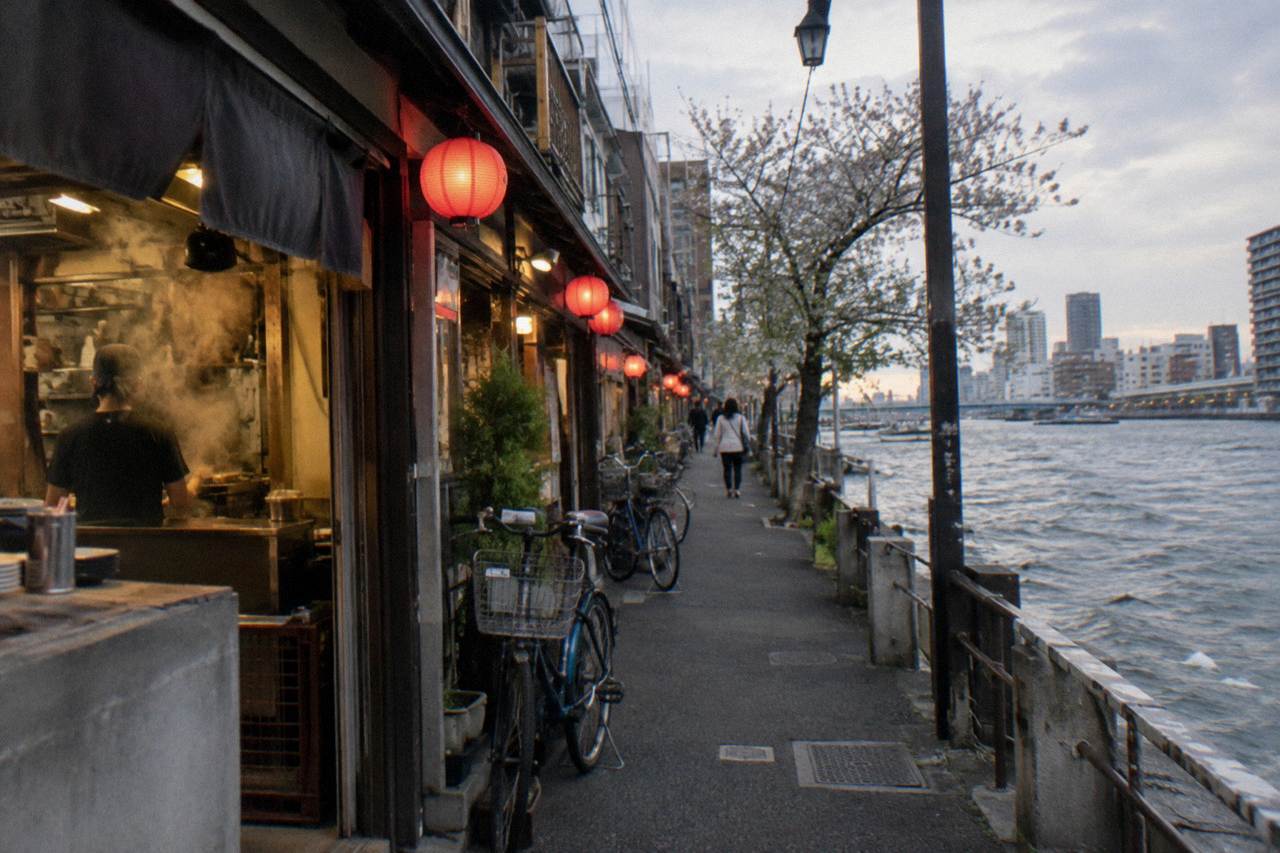
The west-side ride explores Koenji's arcade streets, and the night ride covers Asakusa's old east-side lanes from Hikifune Station before a ramen bowl and soft drink. Specific dishes, restaurants and stall names are chosen by the guide on the day: the ramen night ride commits only to one bowl and a soft drink, and neither listing promises a fixed menu, so the honest answer is a neighbourhood, not a dish list.
Koenji is the stronger food story. Route descriptions of the area, reported in cycling and travel coverage, place its appeal in dense shotengai arcades a short ride from the station, where independent bars, yakitori grills and old coffee shops sit shoulder to shoulder. A bicycle is the right tool there because the arcades fan out in several directions and the interesting ones are not adjacent. The tour meets at Koenji Station, which is on the Chuo line about ten minutes west of Shinjuku, and the meeting point matters: this is genuinely west-side riding, not a downtown loop.
The night ride works differently. It uses the Tokyo Backstreets Bike Tour operator's knowledge of central lanes, runs two to three hours after dark, and finishes with ramen. Tokyo at night from a bicycle is a distinct experience: quiet residential streets, lit temple gates, and the glow of small counters, and the cycling at night safety guide covers what changes after dark, from lights to route choice.
Riders who want food scenery without a food itinerary have the whole city. Route guides describe Sumida river paths linking Asakusa toward the bay with Skytree views, and the old Yanesen district north of Ueno as classic backstreet riding; both are hedged descriptions rather than fixed tour stops. The Sumida river cycling guide and the Yanaka riding guide cover those areas in depth for independent riders or tour comparison.
What no honest page can do is name the restaurants. The two food tours do not publish a fixed stop list, stops shift with opening hours and crowd, and inventing a dish-by-dish menu would be exactly the kind of guess this site refuses to make. The listing describes the style of stops; the guide picks the specific ones; the eating happens in the neighbourhood rather than in a brochure.
If a food-focused ride fits your plans, the west-side tour is the one with a track record.
Regular Bike Or E-Bike For A Food Ride?
Both food-described Tokyo tours use regular non-electric bikes, which suits their routes: food rides are short, flat and stop-start, so the electric assist that helps on a 20 km sightseeing day adds little. Riders who want an e-bike with food-adjacent routing can pick from the city's e-bike tours, from about $61 per person.
The case for a regular bike here is pace. A ride of 3 hours 30 minutes with multiple stops spends much of its time rolling slowly between arcades or paused at a counter, and Tokyo's central wards are famously flat. Assist matters on the long rides, the 6-hour and full-day loops, and on the e-bike tours that cover the palace, riverside and bay districts, but a food ride rarely generates the distance that justifies it.
The e-bike market is strong anyway, and the choice is wider than most visitors expect. The 3-Hour Highlights ride from TRB BIKE TOUR lets each rider choose bike or e-bike on the day, from $61.54, rated 4.9 across 980 reviews, with a helmet rental of 1000 yen in cash if you want one. The Hidden Gems E-Bike ride from Japan Wonder Travel runs 3 to 4 hours from $62.19, rated 4.9 across 895 reviews. Neither is a food tour, but both pass through streets where snacks are easy to find, and the e-bike versus regular bike guide works through the decision in full.
| Ride type | Best for | Food-relevant examples | Typical price signal |
|---|---|---|---|
| Regular bike, food tour | Tasting stops, arcades, short flat routes | West-Side Cycling With Food Stops; Night Ride With Ramen | $84.21 to $106.89 |
| Regular bike, general tour | Long sightseeing days, backstreets | Small-Group Long City Ride | $97.17 to $106.89 |
| Rider's choice, bike or e-bike | Mixed groups, undecided riders | 3-Hour Highlights, Bike or E-Bike | From $61.54 |
| E-bike tour | Distance, hills avoided, easier pace | Hidden Gems E-Bike, 3 to 4 Hours | From $62.19 |
Helmets are worth a sentence of honesty. Japanese law treats helmets as an effort obligation for every age since April 2023, with no fine attached, and the police helmet guidance notes that head injuries were a factor in 63.5 percent of cycling deaths in Tokyo between 2021 and 2025. Most of the tours listed here include a helmet; a couple make it a cheap cash rental. Wearing one is the sensible read of the rule.
When Is The Best Time For A Food Ride In Tokyo?
The sweet spots are late March to April for cherry blossom season and the dry, cool months from October to December, with September and October the wettest months on the 1991 to 2020 normals and July and August the hottest. Night food rides suit summer, when evening temperatures drop toward a tolerable range.
The numbers come from the Japan Meteorological Agency's 1991 to 2020 normals for the Tokyo station. October is the wettest month at 234.8 mm of rain and September follows at 224.9 mm, while December, February and January are the driest, all under 60 mm. August is the hottest month with a mean of 26.9 degrees and an average daily maximum of 31.3. January is the coldest at a mean of 5.4 degrees, which is cold for eating outdoors but excellent for riding between warm counters.
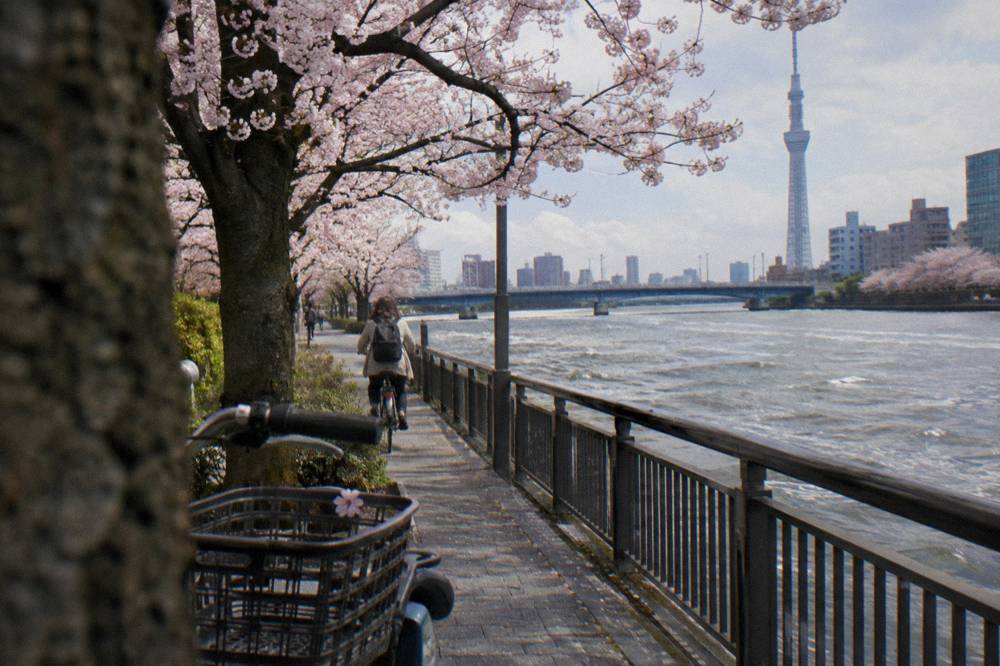
Spring has the famous draw. Tokyo's first bloom in 2026 came on 19 March against a normal of 24 March, with full bloom on 28 March, and a food ride through blossom season doubles its appeal: the cherry blossom riding guide covers which riverside routes benefit most. Autumn colour usually arrives late in the season, and dry air makes the lanes around Koenji comfortable for a ride of 3 hours 30 minutes with frequent stops.
For the night ramen ride, summer evenings are the natural fit: July and August average overnight lows above 22 degrees, which makes an after-dark ride far more comfortable than a midday one. Winter suits it too, since ramen is a cold-weather food and the ride is short. The best time to cycle guide handles the seasonal decision in full.
What Should You Know Before Booking A Food Ride?
Check four things on the booking page before you commit: what the food stops actually include, the meeting point and its travel time from your hotel, the group cap, and the cancellation terms. Every tour covered here lists free cancellation, but the two food rides differ on group size, 8 versus 6, and on start time, day versus evening.
The meeting point is the detail riders most often misjudge. The west-side ride starts at Koenji Station, which means a train ride from most central hotels; budget ten to twenty minutes from Shinjuku or more from the east side. The night ride with ramen meets near Hikifune Station, east of the centre. Neither is better, but booking the wrong one can add an hour of transit to a food afternoon.
Group size shapes the eating. A cap of 8, the west-side ride, still fits a small counter; a cap of 6, the night ride and most backstreets tours, moves more freely. Larger formats exist in the city, up to 12 or 15 on some general tours, but food stops and big groups do not mix well, and no food-described ride in Tokyo runs above 8.
Rules knowledge is part of the value. Since April 2026 a traffic violation notice system, the blue ticket, applies to cyclists aged 16 and over, with fixed fines from 3,000 to 12,000 yen for offences like phone use while riding, and the Tokyo police bicycle rules page sets out roadway riding, sidewalk exceptions and lights in English. The official GO TOKYO visitor guide confirms the rules, including the insurance requirement, apply to tourists from overseas. A guided tour is the easiest way to ride inside those rules on day one.
| Check before booking | West-Side Cycling With Food Stops | Night Ride With Ramen |
|---|---|---|
| Meeting point | Koenji Station | Central Tokyo |
| Duration | 3 hours 30 minutes | 2 to 3 hours |
| Group cap | 8 | 6 |
| Bike | Regular, included | Regular, included |
| Reviews | 5.0 across 223 | New listing, none yet |
| Cancellation | Free, per listing | Free, per listing |
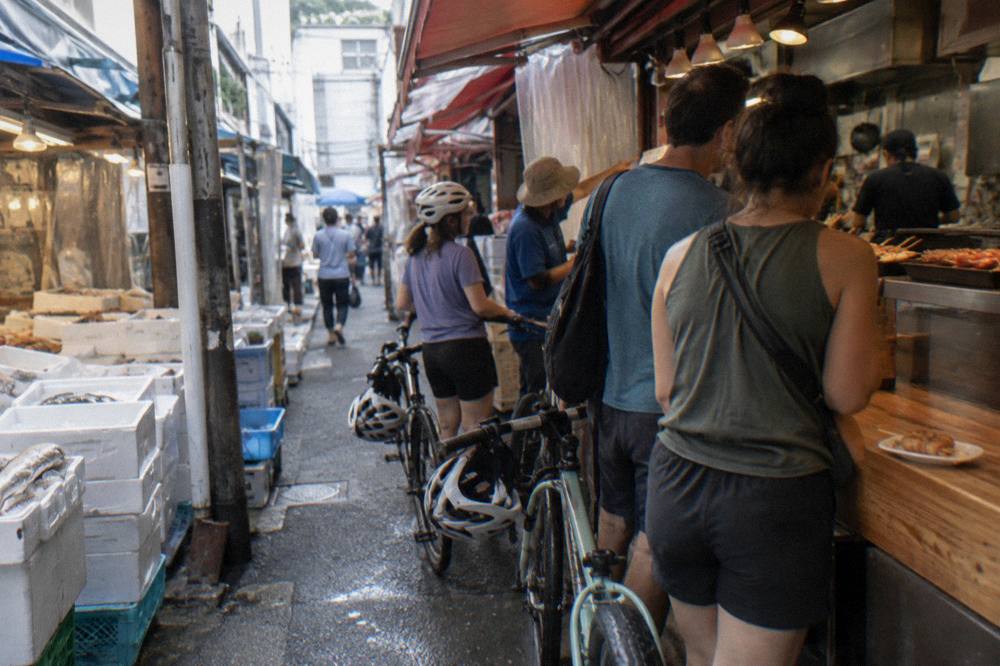
Finally, pair the tour with the rest of the day. A food ride of 3 hours 30 minutes ends mid-afternoon, which leaves an evening free; the night ramen ride ends late, which wants a lighter day before it. The West-Side Cycling & Food Tour includes lunch, snacks and bottled water, and the one day by bike itinerary shows how a guided ride slots into a self-guided plan.
Common Questions About Tokyo Food Bike Tours
What Is A Tokyo Food Bike Tour?
A guided cycle ride in which eating stops are part of the described route. In Tokyo the format is a small-group ride of 2 to 3 hours 30 minutes linking market streets, arcades and snack counters, with the guide choosing stops on the day. Two rides describe food in their route: the West-Side Cycling With Food Stops tour and the Night Ride With Ramen.
How Much Does A Food Bike Tour In Tokyo Cost?
The west-side food ride starts at $106.89 per person for 3 hours 30 minutes with a group cap of 8, and the Night Ride With Ramen starts at $84.21 for 2 to 3 hours. Both include the bike, helmet where listed, and free cancellation per the listing. What the food itself includes is stated on each booking page.
Do Tokyo Bike Tours Include Meals?
Most don't; a few include lunch or ramen. The West-Side Cycling & Food Tour includes lunch, snacks and bottled water, and the night ride with ramen covers one bowl plus a soft drink; other rides state their own meal arrangements on the booking page. If tasting stops are the reason for booking, choose a tour whose description says food stops are part of the route.
Where Does The West-Side Food Ride Start?
At Koenji Station, west of Shinjuku on the Chuo line. The neighbourhood is known for its dense retro shopping arcades, independent bars and small counters, which is why the ride is based there rather than in the downtown core. Budget travel time from central hotels when planning.
Is A Food Bike Tour In Tokyo Suitable For Beginners?
Yes, in the main. Both food rides use regular bikes, run short distances with frequent stops, and stay on flat terrain, which suits casual riders. Group caps of 8 and 6 keep the pace gentle, and a guide handles route choices and local road conventions, including sidewalk rules and lights.
Can You Do A Food Bike Tour In Tokyo At Night?
Yes. The Night Ride With Ramen runs 2 to 3 hours after dark from $84.21 per person with a group cap of 6, ending with a ramen stop. It is a new listing with no reviews yet, so riders wanting a proven evening format can compare the established night tours before booking.