What Is The Famous Bike Ride In Japan?
Japan's most talked-about cycling is riverside and coastline riding, and the rides you can actually book from Tokyo, from the Arakawa levee paths to a Kamakura day trip.
Japan does not crown one official national bike ride, so the honest answer has to be built from what riders and route guides actually talk about. Within the Tokyo area the rides that carry a reputation are the long riverside paths along the Arakawa and Sumida rivers, the Imperial Palace loop that closes to cars on Sundays, and the sea-side day trip to Kamakura, which is the ride most often booked by visitors who want classic Japanese scenery on two wheels. None of these needs a permit or a special bike. All of them sit within reach of a Tokyo hotel, which is why this page keeps its feet planted in what is verified for the capital rather than inventing a national ranking. Many of these routes pass parks and riverbanks that cost nothing to enjoy, so the guide to free things to do in Tokyo and where a bike takes you further makes a good companion read.
That last point matters. Plenty of long-distance routes in Japan get written up, but nothing in the verified material behind this page supports calling any one of them the single most famous ride in the country. What the material does support is a set of well-documented Tokyo-area routes plus a small group of guided rides, several of which can be booked the same day. For route-curious readers, those city-side options are often the practical answer: the reputation route for scenery is Kamakura, the reputation route for distance is the river levee system, and the reputation route for a first taste of Tokyo is a three-hour guided loop.
The honest answer is that no verified source names one single famous ride for the whole country, so this page covers the rides that are documented for the Tokyo area: the Arakawa and Sumida riverside paths, the Imperial Palace Sunday loop, and the Kamakura coastal day trip.
Riders who ask the question usually mean one of those three. Route guides describe the Arakawa levee path as one of Tokyo's longest riverside rides, with a scenic segment of roughly 30 km running from Ukima Park downstream to Kasai Rinkai Park on Tokyo Bay. That is city riding, flat, traffic-light-free in parts, and open to anyone with a bicycle.
“Great tour and fun way to experience Tokyo! The tour was a perfect mix of hot spots and green areas of the city, and our guide was fantastic. She was attentive, knowledgeable, and fun to be around throughout the day.”
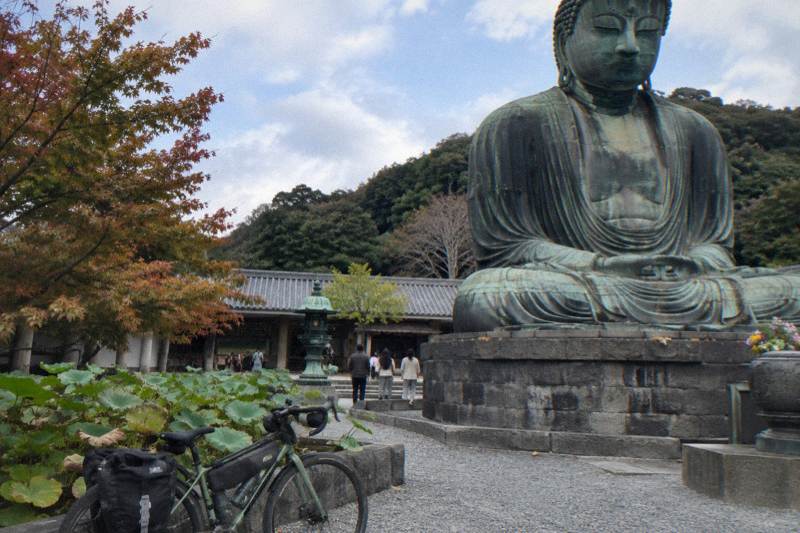
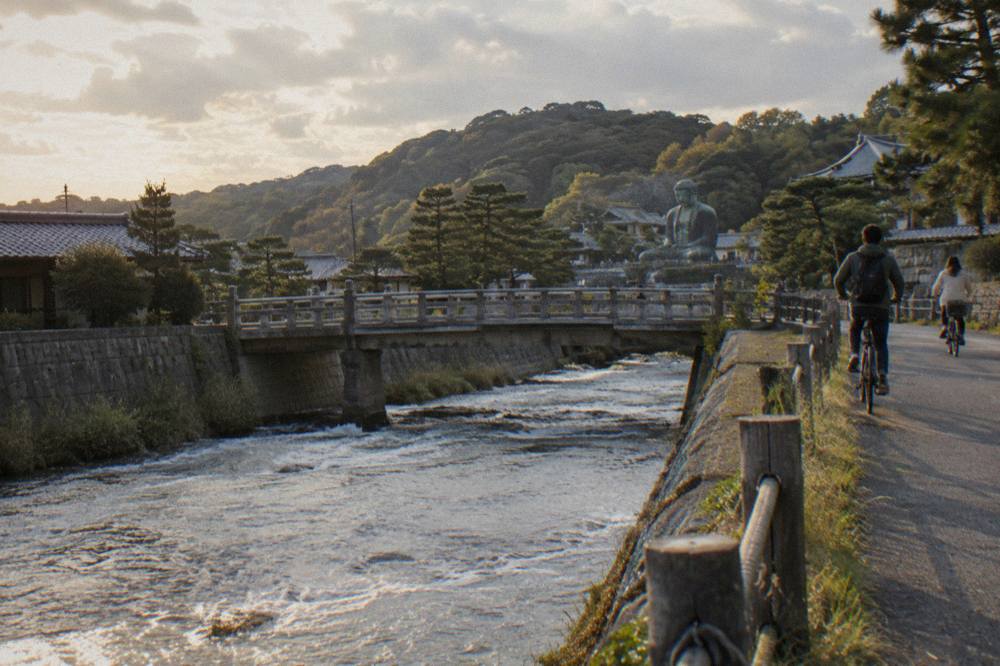
The Kamakura day trip is the other half of the answer. It is the ride people picture when they imagine cycling in Japan: temple towns, a shoreline, wooded hills, and small lanes that a car cannot easily enter. It starts outside central Tokyo, in Kamakura itself, and the Kamakura Scenic Day Ride covers it in 6 hours with a group capped at 4, from $148.99 per person, the total depending on group size. It is rated 4.9 across 15 reviews, and the meeting point is Kamakura Station, which keeps the logistics simple.
There is also a third category that deserves the word famous less for scenery than for participation: the Sunday Palace Cycling openings in central Tokyo. A roughly 3 km car-free segment along the Imperial Palace moat opens from 10:00 to 16:00 on Sundays, weather permitting, and free bicycle loans of around 70 bikes have been available since April 2026, with lending from 10:00 to 15:30 and return by 16:00. The broader perimeter loop of about 5 km is rideable on ordinary roads on other days. Riders who want the depth on that loop can read the Imperial Palace loop route guide, which covers access and timing in detail.
For visitors who want context on how riding fits into everyday Japanese life rather than one headline route, the Japanese bike culture overview explains the background. The short version: cycling in Japan is normal transport first and a tourist activity second, which is exactly why the famous rides feel so approachable.
Which Riverside Routes Do Tokyo Riders Know Best?
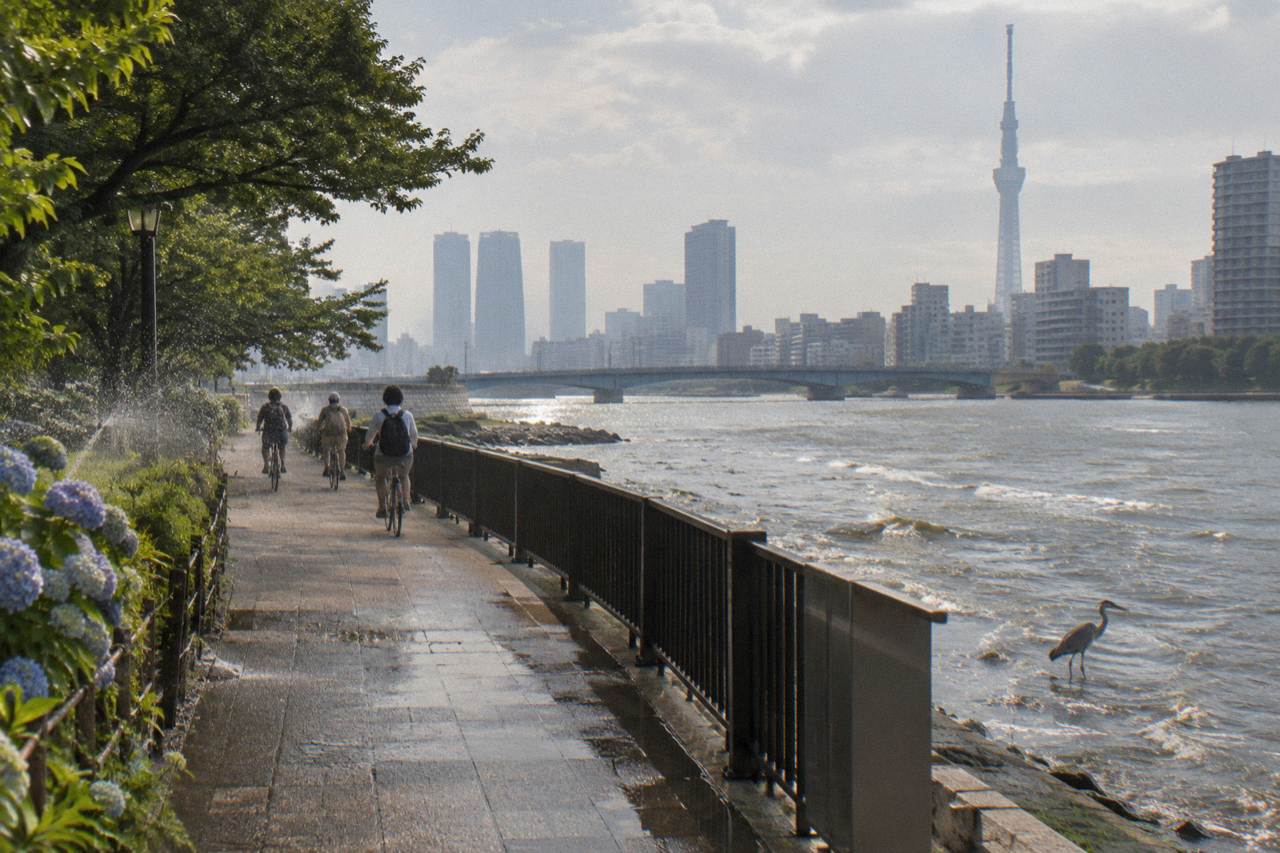
Tokyo riders best know the Arakawa and Sumida river paths, described by route guides as the city's signature riverside cycling, including a roughly 30 km segment from Ukima Park to Kasai Rinkai Park that passes the red Akamizumon and blue Aomizumon water gates.
These levee-top paths are where local cyclists go when they want distance without traffic. The Arakawa path connects toward Sumida River routes near Nakanoshima, and riders report Skytree views along the Sumida stretches, including a roughly 4 km example segment from Asakusa toward Ryogoku. Ride reports from October 2026 note the paths remain usable for long rides, with some detours on the Saitama side because of works expected to last until 2030 in specific spots.
| Route | What route guides describe | Character |
|---|---|---|
| Arakawa levee, Ukima Park to Kasai Rinkai Park | Roughly 30 km downstream segment, partly without traffic lights, passing the red and blue water gates | Long, flat, distance riding |
| Sumida riverside, Asakusa toward Ryogoku | Roughly 4 km example segment with Senso-ji and Skytree views | Short, sightseeing, easy |
| Imperial Palace perimeter | About 5 km loop on ordinary roads; roughly 3 km car-free on Sundays 10:00 to 16:00 | Central, compact, beginner-friendly |
| Tokyo Bay and Odaiba waterfront | Bayfront paths linking Sumida routes to the Odaiba area, highlighted in official visitor guides | Waterfront, family-friendly |
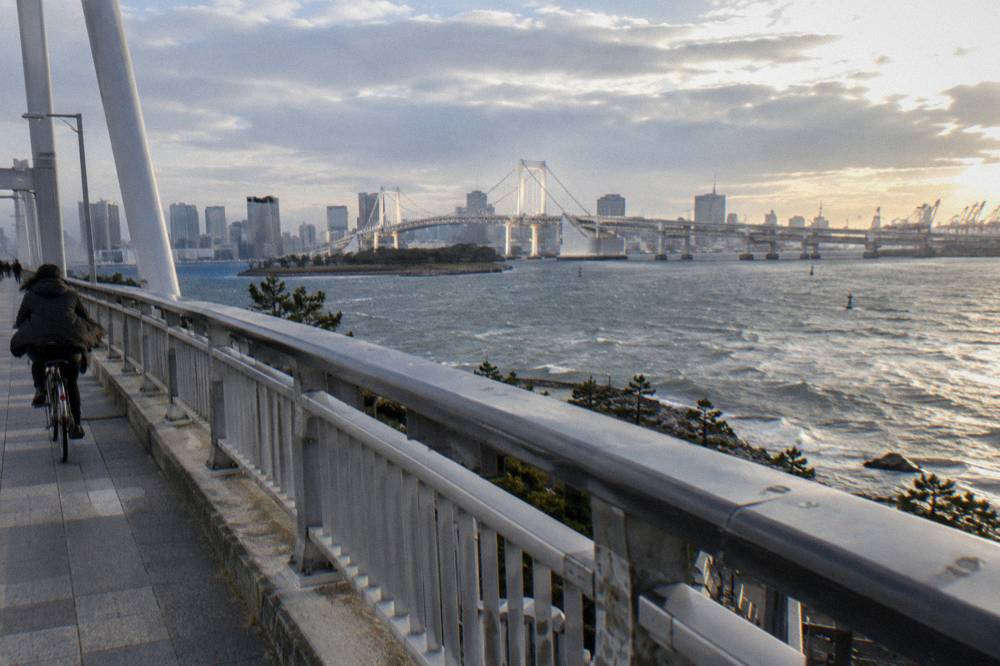
The bayfront deserves its own word. The official GO TOKYO visitor guide highlights riverside and bayfront cycling, including Sumida routes linking Asakusa and Skytree and the extensions toward the bay, and that coverage is why so many first-time riders end up on the water. Cyclists also get rare chances at bridges normally closed to bikes: a holiday ride event crossing the Rainbow Bridge and, on its long course, the Tokyo Gate Bridge is scheduled for 23 November 2026, with short, middle and long courses of roughly 8, 20 and 36 km. Event plans can shift, so check the organizer before building a trip around one.
For riders who prefer quiet old-town lanes over open levees, Yanaka and the surrounding Yanesen district are described as feasible for backstreet cycling, and guided tours combine the area with Ueno, Nezu and Asakusa on roughly 20 km routes using cycle lanes and quiet streets. The site's Tokyo cycling routes roundup and the dedicated Arakawa Cycling Road guide both go deeper on planning those rides than this page can.
What Does The Kamakura Day Ride Cover?
The Kamakura day ride covers a historic coastal town about an hour south of Tokyo, and the guided version covered here runs 6 hours from Kamakura Station with a group maximum of 4, from $148.99 per person, rated 4.9 across 15 reviews, with the total depending on group size.
Kamakura is where the picture of classic Japanese cycling comes from: lanes between temples, a shoreline, and hills that give the ride shape. Because the tour starts in Kamakura rather than central Tokyo, the standard plan is a train ride out, a full day of cycling, and a train back.
What the listing includes is worth stating plainly. The bike and a guide are included, free cancellation applies per the listing, and the group is capped at 4, which keeps the pace conversational. Not included are hotel pickup and drop-off, though the operator offers pickup for an extra fee, food and drinks, and public or private transportation. Anyone comparing this against a lakeside day trip should note that other options exist with hotel pickup included, such as a Lake Yamanaka loop with Fuji views from $126 per person, but those are different rides with different scenery, and their listings are new with no reviews yet.
A reasonable question is whether Kamakura is worth it without a guide, and the fair answer is that the town is compact and rideable independently. What the guided ride adds is route knowledge, since Kamakura's best lanes are not obvious from a map, and a cap of 4 riders means the guide can adapt. For travelers staying in Tokyo who want scenery without the logistics of a coastal train trip, an alternative worth weighing is the Crystal Clear River Cycling day in Akiruno, western Tokyo Prefecture, which runs 6 hours with a group max of 6 from $142.52 per person, meeting at a base in Akiruno. It has 7 reviews, too few for a star rating to mean much.
Where Can You Ride A Guided Tour From Tokyo?
Guided rides from Tokyo cluster into three families: long full-day city rides of about 6 hours, short 2 to 3 hour highlight loops, and private e-bike tours that start where you are staying, with per-person prices in the options covered here ranging from $32.39 to $156.77.
“We always try to join a bike tour when we travel cities. This was by far the best one yet! The route chosen was truly a backstreet, off the beaten path route. The tour guide was so friendly, and informative. He truly made the tour amazing and memorable.”
The long rides suit travelers with one full day and a desire to see the city whole. The Small-Group Long City Ride is the most reviewed ride of this kind covered here, rated 5.0 across 1,308 reviews, from $106.89 per person, meeting at Tokyo Opera City Sankun Garden with a group capped at 5. The 6-Hour Full City Ride offers a similar shape with a larger cap of 12, rated 4.9 across 842 reviews from $97.17 per person.
Short loops are where most first-time riders land. A 3-Hour Highlights ride with a choice of regular bike or e-bike, meeting at the Statue of Commodore Perry, is rated 4.9 across 980 reviews from $61.54 per person, with a note that helmet rental costs 1,000 yen in cash on the day. That price basis comes straight from the tour details, and it is a useful reminder to carry some cash even on a ride that looks fully prepaid. Riders who want a deeper cut of the same idea can look at the Hidden Gems E-Bike option, 3 to 4 hours, rated 4.9 across 895 reviews from $62.19 per person. Everything else covered here is indexed on Tokyo Bike Tours.
| Tour | Duration | Group max | Price basis | Reviews |
|---|---|---|---|---|
| Kamakura Scenic Day Ride | 6 hours | 4 | From $148.99 per person, total depends on group size | 4.9 from 15 reviews |
| Crystal Clear River Cycling, Akiruno | 6 hours | 6 | From $142.52 per person | 7 reviews, no star claim |
| Private E-Bike From Your Hotel | 3 hours | Private | From $156.77 per person, total depends on group size | 5.0 from 171 reviews |
| Small-Group Long City Ride | 6 hours 30 minutes | 5 | From $106.89 per person | 5.0 from 1,308 reviews |
| 3-Hour Highlights, bike or e-bike | 3 hours | Not stated | From $61.54 per person | 4.9 from 980 reviews |
Private tours are the third family, and the standout among them for flexibility is the Private E-Bike From Your Hotel option, 3 hours, rated 5.0 across 171 reviews, from $156.77 per person with the total depending on group size. As the name says, it starts where you are staying, which removes the single biggest friction in Tokyo cycling: finding a meeting point in an unfamiliar neighborhood. A budget private alternative exists from $54 per person, rated 4.4 across 47 reviews, though without hotel pickup.
When Is The Best Season For These Rides?
The best seasons for Tokyo-area riding are late March to April for cherry blossoms and October to November for cool, drier conditions, based on Japan Meteorological Agency data showing first bloom around 24 March and October as the wettest month at 234.8 mm of rain.
Tokyo's 2026 first bloom came on 19 March, five days earlier than the 1991 to 2020 normal, with full bloom on 28 March, so the blossom window is narrow and shifts year to year. The same JMA normals put January as the coldest month with a mean of 5.4 C and a mean daily minimum of 1.2 C, which is rideable but wants gloves and layers, while August is the hottest at a mean of 26.9 C and a mean daily maximum of 31.3 C, which most riders should treat as an early-morning proposition.
| Month | Mean temp C | Rainfall mm | Riding read |
|---|---|---|---|
| March | 9.4 | 116.0 | Blossom season, cool, busy on riverside paths |
| April | 14.3 | 133.7 | Peak season, mild |
| July | 25.7 | 156.2 | Hot and humid, ride early |
| September | 23.3 | 224.9 | Wet-tail month, wettest two months begin |
| October | 18.0 | 234.8 | Coolest of the warm months but the wettest month |
| November | 12.5 | 96.3 | Crisp, drier, autumn color late in the month |
The September and October rainfall figures surprise people who assume Japan's rainy season is all in June. The JMA 1991 to 2020 normals for the Tokyo station show September at 224.9 mm and October at 234.8 mm, both above June's 167.8 mm, because autumn fronts deliver heavy bursts. The practical takeaway for a booking decision is that a free-cancellation tour is worth more in September and October than in December, and the rides covered here list free cancellation. Riders deciding between bike types for the season can weigh the trade-offs in the e-bike or regular bike comparison.
Season also shapes the famous-ride question itself. The riverside paths are at their best in blossom season and in the cool weeks of late November, when the maple color peaks in central Tokyo, forecast for around 28 November in 2026. The Kamakura ride works across a wider window because the coastal town has shrubs and greenery year round, though summer heat on exposed shoreline lanes is real. Winter, with January at a mean of 5.4 C and only 59.7 mm of rain, is quietly one of the most reliable riding seasons, dry and often clear enough for Mount Fuji views on the lake day trips.
Do You Need To Know The Rules Before Riding?
Yes, because since 1 April 2026 a traffic violation notice system with fixed fines applies to bicycle riders aged 16 and over, including overseas visitors, with fines such as 12,000 yen for holding a phone while riding and 6,000 yen for ignoring a signal. The Tokyo Metropolitan Police states plainly that cyclists will be issued with tickets for traffic offences, and the official visitor guidance adds that this also applies to tourists from overseas. Officers normally give guidance and a warning first, and tickets target malicious or dangerous violations, but the rules themselves apply to everyone on two wheels, including riders on a guided tour.
- City Bike Tours$32.39
- Private Tours$45.35
- Night Rides$55.06
- E-Bike Tours$61
- Day Trips By Bike$76
The rules most likely to catch a visitor out are simple ones. Ride on the left side of the roadway by default, since a bicycle counts as a light vehicle, and use sidewalks only where a sign permits it, then slowly and yielding to pedestrians. Helmets are an effort obligation for every age since April 2023, strongly advised but carrying no fine. Tokyo also requires cyclists to hold liability insurance under a metropolitan ordinance in place since 1 April 2020, and rental businesses must insure their bikes' use and tell renters what is covered, which is one quiet advantage of a guided or rented ride over borrowing a friend's. Full detail sits in the cycling rules for visitors guide.
Common Questions About The Famous Bike Ride In Japan
What Is The Famous Bike Ride In Japan?
No verified source names a single official famous ride, so the practical answer for the Tokyo area is the Arakawa and Sumida riverside paths, the Sunday Imperial Palace loop, and the guided Kamakura day ride, which is the scenery option most often booked by visitors.
Can You Book The Kamakura Ride From Tokyo?
You book it from anywhere, but the ride itself starts at Kamakura Station, roughly an hour from central Tokyo by train. The 6-hour tour runs from $148.99 per person with the total depending on group size and a cap of 4 riders.
How Long Is The Arakawa Riverside Ride?
Route guides describe a scenic segment of roughly 30 km from Ukima Park downstream to Kasai Rinkai Park on Tokyo Bay, with the wider path network extending far beyond that. Parts of the levee ride are described as free of traffic lights.
Do Any Famous Rides Cross Tokyo's Bridges?
Normally no, but event days open them. A holiday ride crossing the Rainbow Bridge, and the Tokyo Gate Bridge on its long course, is scheduled for 23 November 2026 with courses of roughly 8, 20 and 36 km. Event details can change, so check the organizer.
What Does A Guided Tokyo Bike Ride Cost?
In the options covered here, per-person from-prices run from $32.39 for a 5-hour history ride with few reviews to $156.77 for a private 3-hour e-bike tour starting at your hotel, with the total depending on group size on private and group-size-dependent tours.
Is A Bike The Best Way To See Tokyo?
For many travelers it is the most efficient way to connect scattered neighborhoods, and a 3-hour guided highlight loop covers ground a walking tour cannot. The trade-offs against trains and walking are laid out in the site's comparison of ways to see the city.