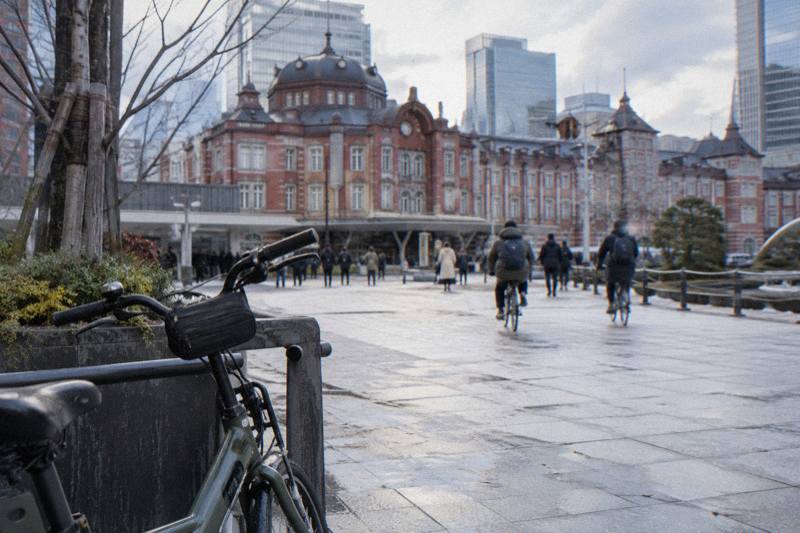
E-Bike Rental In Tokyo: Cost, Rules And Hills
Tokyo is flatter than most visitors expect, but an electric-assist bike turns a six-hour sightseeing day into something almost effortless. Here is what renting one costs, what the rules demand of renters, and when a guided e-bike tour beats a bare rental.
Short answer
Share-cycle fares in Tokyo start at 165 yen per 30 minutes on the Docomo system, with a 1,650 yen day pass, though bike-share e-bike prices specifically are not verified. Guided e-bike tours run from $61 per person with the bike, helmet and guide included, and Tokyo ordinance requires liability insurance for every rider, renters included.
Tokyo rewards riders who arrive with a little electric help. The city spreads across river terraces and landfill, so most distances between famous sights are gentle rather than brutal, but they are long: a loop taking in the Imperial Palace, Asakusa and the bay can easily pass 20 kilometres, and summer humidity doubles the effort of every pedal stroke. An electric-assist bike flattens that math, and the question for most visitors is not whether to get one but how, since dedicated e-bike rental shops are surprisingly thin on the ground while bike-share docks and guided tours are everywhere. If you're weighing those dock bikes against a guided tour, our breakdown of bike rental costs across Japan shows how the two options compare on price.
How Much Does An E-Bike Rental Cost In Tokyo?
The verified share-cycle fare is 165 yen for the first 30 minutes on the Docomo system, with a 1,650 yen day pass. Dedicated e-bike shop rates are not verified, so no figure can be printed for them. Guided e-bike tours, with the bike and usually a helmet included, run from $61.54 per person.
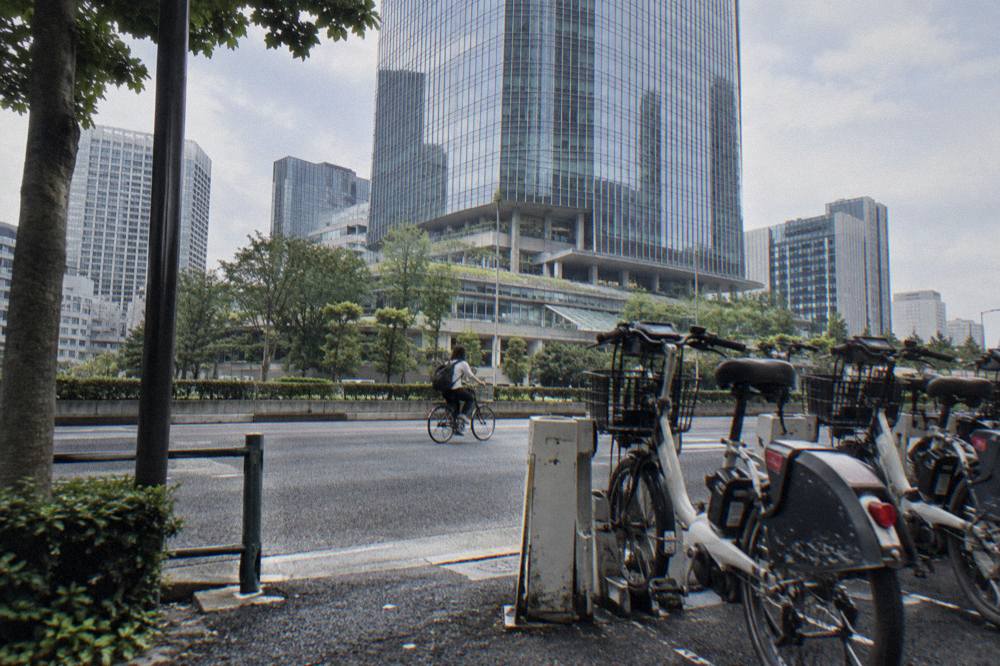
Start with the cheapest layer. The Docomo system's official Tokyo price page lists one-time use at 165 yen per 30 minutes with 165 yen extensions, a monthly plan at 3,300 yen, and a same-day pass at 1,650 yen from a convenience store or 2,200 yen with an IC card, valid until 23:59. Registration needs a smartphone and a credit card, and the pass requires an SMS-capable phone, which matters for foreign visitors carrying wifi-only devices. The fresh reporting describes the Docomo fleet as primarily electric-assist bikes, though operators describe their fleets and a given dock may hold anything, so check the app before assuming a motor is waiting for you.
The middle layer, ordinary rental shops renting e-bikes by the day, is where verified information runs out. Shop rates for electric models are not published in any source this page can stand behind, and the figures floating around forum threads mix cities and years. If a shop quotes you a price, the honest answer is that the shop's own counter is the authority. What is verifiable is the duty that comes with the bike: Tokyo has required every cyclist to hold bicycle liability insurance since 1 April 2020, and rental businesses must insure the hirer's use and tell renters what the insurance covers, a point the Metropolitan Police insurance page spells out for business obligations.
The top layer is the guided e-bike tour, where the rental question disappears into the ticket price. These are the verified e-bike products with published figures:
| Tour | Duration | Price Per Person | Reviews |
|---|---|---|---|
| 3-Hour Highlights, Bike or E-Bike | 3 hours | from $61.54 | 4.9 across 980 reviews |
| Hidden Gems E-Bike, 3-4 Hours | 3 to 4 hours | from $62.19 | 4.9 across 895 reviews |
| Local Life E-Bike, Starts Near Station | 3 hours | from $63.48 | 4.9 across 753 reviews |
| Akihabara and Palace E-Bike Loop | 3 hours | from $97.17 | 5.0 across 65 reviews |
| Riverside E-Bike Ride | 3 hours | from $85 | 10 reviews, too few for a star claim |
| Night Hidden Gems E-Bike, Premium | 2 hours | from $142 | 4.8 across 27 reviews |
Note the pattern: for roughly the cost of a few hours of share-cycle use plus a helmet you would have to source yourself, a tour hands you a maintained e-bike, a guide and a route. For riders weighing that trade-off in detail, the Tokyo e-bike tour guide breaks down the tour side, and the bike rental in Tokyo guide covers non-electric rental in depth.
Where Can You Rent An E-Bike In Tokyo?
The realistic options are share-cycle ports, a small number of rental shops, and guided tours that include the e-bike in the ticket. Share ports are the most widespread and cheapest per half hour but offer no helmet as standard and demand returns to designated stations. Tours are the only option that guarantees an e-bike, helmet and guide together, from $61.54 per person.
Share cycling is the default for short hops. The two big networks are described in the fresh reporting as the primary options: Docomo, with hundreds of ports across 16 central wards under mutual use, and HELLO CYCLING, a nationwide partner network where one account rents and returns at any member station. Both accept foreign credit cards through their apps, and both enforce station-to-station returns, with fees accruing if a bike is left outside a port. Helmets are not a standard provision of either, a detail worth weighing given Tokyo's helmet guidance. The Docomo and share-cycle comparison goes deeper on registration and passes.
Rental shops exist but are the thin middle layer. The fresh sweep found that traditional shops are less emphasized for visitors than the share systems, with daily rates varying by shop and bike type and nothing standardized the way share passes are. That is not a knock on the shops, several of which rent well-maintained electric models, it is simply a statement that no verified price range can be printed here. Call ahead, confirm the bike is electric-assist rather than a heavy city cycle, and ask what the insurance covers, since the duty to tell renters sits with the business.
The three layers side by side look like this:
| Option | Verified Price | Helmet | Insurance Duty | Best For |
|---|---|---|---|---|
| Share-cycle port | 165 yen per 30 min, 1,650 yen day pass | Not standard | Business must cover and explain | Short hops, flexible days |
| Rental shop e-bike | Not verified, ask at counter | Varies by shop | Business must cover and explain | Independent multi-hour rides |
| Guided e-bike tour | From $61.54 per person | Included on most options | Included via the operator | First days, long distances, rules and language |
The tour route into e-biking is the one most visitors underestimate. Every guided e-bike tour on this site includes the bike, most include a helmet, and several start from meeting points a short walk from major stations, such as the Hidden Gems E-Bike tour departing from a Compass Bike base or the highlights tour meeting at the Statue of Commodore Perry. For a first day in the city, that removes the app registration, the station hunt and the route planning in one booking.
Guided E-Bike Tour Prices In Tokyo
Lowest listed per-person price, with duration and review details in notes
Do You Need Insurance And A Helmet To Rent An E-Bike In Tokyo?
Yes to insurance: a Tokyo ordinance in force since 1 April 2020 requires every cyclist in the prefecture to hold bicycle liability insurance, and that includes visitors on rented bikes. Helmets are different: since April 2023 every rider of every age is under an effort obligation to wear one, with no fine attached, though most guided e-bike tours include a helmet in the price anyway.
If you're wondering what identification and apps the rental counter will actually ask for, our guide to renting a bike in Japan as a foreign visitor walks through the paperwork and explains when a tour that supplies the bike is the easier route.
The insurance rule surprises people because it is a local ordinance, not a national law, and it applies to anyone riding in Tokyo regardless of where they live. The official GO TOKYO visitor guide states plainly that the requirement also applies to tourists from overseas. In practice, renters are covered twice over: the ordinance obliges rental businesses to insure the hirer's use and to explain what that insurance covers, so the answer to "am I insured on this rental" should come from the desk or the booking page before you ride.
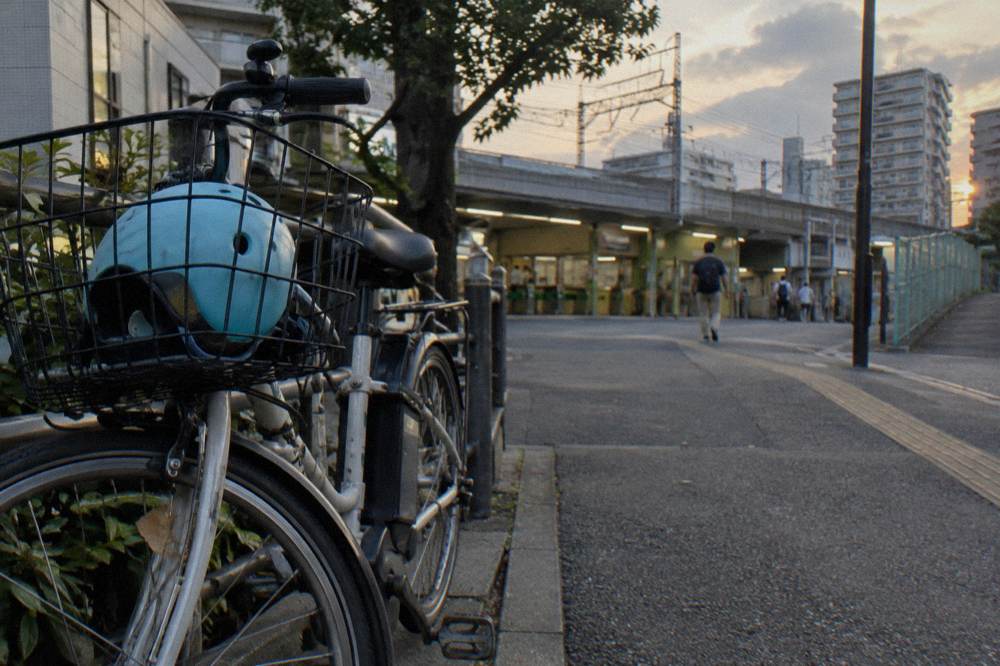
Helmets sit in a softer category. The Metropolitan Police describe helmet use as an effort obligation for all ages under the Road Traffic Act, with parents carrying the same duty for children, and no fine for skipping one. The police case for wearing one is stark rather than legalistic: 63.5 percent of cycling deaths in Tokyo between 2021 and 2025 involved fatal head injuries, and the fatality rate without a helmet is 2.3 times higher, figures published on the police helmet guidance page. Practically, share systems hand you a bike and nothing else, which is the strongest argument for tours, where helmet inclusion is listed on nearly every e-bike option here, or for carrying your own packable helmet.
One cost detail that catches tour riders: the 3-Hour Highlights, Bike or E-Bike tour lists helmet rental separately at 1,000 yen in cash on the activity date, while most rivals include one. Check the inclusions line before assuming.
Is An E-Bike Better Than A Regular Bike In Tokyo?
For most visitors covering more than a couple of neighbourhoods, yes, mainly because of distance and summer heat rather than hills. Tokyo's famous sights sit 5 to 10 kilometres apart, August averages a daily high of 31.3 degrees C, and an electric-assist motor removes the sweat cost of linking them. Hills exist, notably toward western suburbs and riverside levees, but the core tourist belt is gentle.
The climate numbers make the case better than any slogan. Japan Meteorological Agency 1991 to 2020 normals for the Tokyo station put August's mean daily maximum at 31.3 degrees C with overnight lows of 23.5, and even October, the wettest month at 234.8 mm of rain, averages a 22 degree daily high. Pedalling a steel city bike through that for six hours is a workout; an assist motor turns it into transport. The trade-offs, battery range, heavier handling, and dock availability on share systems, are covered in the e-bike or regular bike comparison.
The Local Life E-Bike tour illustrates the distance logic: three hours, group capped at six, bike, helmet and guide included, from $63.48 per person, rated 4.9 across 753 reviews. It is built around exactly the kind of multi-neighbourhood loop that justifies the motor. Other pages covering the same trip are gathered on Tokyo Bike Tours.
For riders who want to choose on the day, the highlights tour lets each participant pick regular bike or e-bike at the meeting point, which suits couples or families split on fitness. The best time to cycle in Tokyo guide pairs this decision with the seasonal calendar if you are still picking dates.
What Are The Rules For Riding A Rented E-Bike In Tokyo?
E-bikes in Japan are pedal-assist light vehicles, and the same road rules apply as to any bicycle: ride on the left of the roadway, use sidewalks only where signed or permitted, keep lights on at night, and never hold a phone. Since 1 April 2026 a blue-ticket fine system applies to riders aged 16 and over, with fixed fines from 3,000 to 12,000 yen, and it covers overseas visitors.
The blue-ticket regime is the big recent change. Officers normally begin with guidance and a warning, and tickets target malicious or dangerous violations, but the fines are real and published. The Metropolitan Police confirm on their English traffic rules page that cyclists, visitors included, can be issued tickets for traffic offences. The headline figures from the police rule book:
| Violation | Fixed Fine (Yen) |
|---|---|
| Holding a phone to talk or watch its screen | 12,000 |
| Ignoring a traffic signal, riding against traffic | 6,000 |
| Riding two abreast or carrying a passenger | 3,000 |
| No light at night | 5,000 |
| Umbrella or earphones blocking surrounding sound | 5,000 |
| Failing to stop at a stop sign | 5,000 |
Two categories sit outside the blue-ticket system entirely. Drunk cycling is a criminal matter carrying up to five years imprisonment or a fine of up to 1,000,000 yen, and hand-held phone use that creates danger can reach one year or 300,000 yen, figures published on the police violation-notice page. On the mundane side, sidewalk riding is legal only where a sign permits it, for riders under 13 or over 70, or when the roadway is genuinely unsafe, and even then the rider must slow near the kerb and yield to pedestrians.
A guided tour quietly solves most of this. Guides brief the group on local conventions, lead the group down legal routes, and handle the judgement calls, such as where to dismount and walk, that catch solo renters. The full rule set for visitors is laid out in the Japan cycling rules for tourists guide, and the safety picture overall is assessed in is cycling in Tokyo safe.
- City Bike Tours$32.39
- Private Tours$45.35
- Night Rides$55.06
- E-Bike Tours$61
- Day Trips By Bike$76
Which Tokyo E-Bike Tours Include The Bike And A Guide?
Every e-bike tour on this site includes the bike, and almost all include a helmet and guide in the ticket, from $61.54 per person for the 3-Hour Highlights, Bike or E-Bike tour up to $156.77 per person for a private e-bike experience from your hotel. Group sizes run small, most cap at six or eight riders, and nearly every option offers free cancellation per its booking page.
The value question runs the other way: three hours on a share cycle costs far less than the cheapest guided e-bike tour, but the money buys only the bike itself. No guide, no planned route, no helmet, and every trip ends back at a designated port. The 3-Hour Highlights, Bike or E-Bike tour, 4.9 across 980 reviews, from $61.54, lets riders choose their machine at the Statue of Commodore Perry meeting point. The Hidden Gems E-Bike tour from Japan Wonder Travel, 4.9 across 895 reviews, from $62.19, runs three to four hours with group caps at six. And on the regular-bike side as a contrast, the West-Side Cycling With Food Stops tour from DIG Tokyo Tours, 5.0 across 223 reviews from $106.89, pairs a three hours 30 minutes ride out of Koenji Station with eating stops, showing what a food-led format costs against a pure highlights ride.
For private groups, the calculus changes. The Private E-Bike From Your Hotel option, 5.0 across 171 reviews, starts from $156.77 per person with the total depending on group size, while a budget private alternative from Trip Port starts from $54 per person, rated 4.4 across 47 reviews. Both send you to the booking page for the group-size math, and both include the bike. The private or group bike tour guide works through the decision in full.
When Is A Rental Better Than A Guided E-Bike Tour?
A bare rental wins when you want total freedom, short hops or an unscheduled day: a 165 yen half-hour share ride or a day pass suits aimless wandering, photo stops on your own clock and early-morning river paths before tour start times. A tour wins on first days, long distances, language and rules, because the guide, route, helmet and insurance explanation all arrive in one $61.54 booking.
Riders with a specific plan, a sunrise lap of the Imperial Palace perimeter, an evening along the Sumida, a slow loop of Yanaka's lanes, get more from a rental than from a package, and the Tokyo cycling routes guide and the one day by bike itinerary exist precisely for that reader. The same goes for anyone staying in one neighbourhood, where a share bike for an hour outperforms a three-hour commitment.
Riders new to Japan, or covering more than about 10 kilometres, or travelling in the June to September heat, should lean tour. The rules briefing alone has value now that the blue-ticket system is live, and the meeting points are chosen for station access. Booking is low risk across the e-bike options here, since nearly every one lists free cancellation, and the button on each card leads straight to the operator's page.
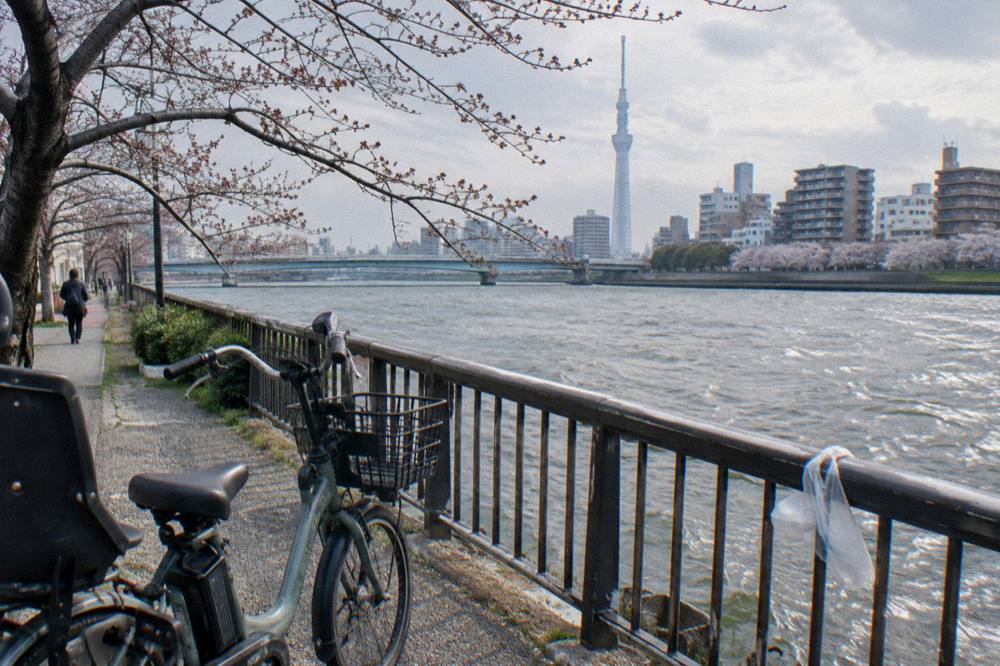
Whichever way you go, plan around the calendar rather than against it. March and April bring the blossom crowds, with Tokyo's first bloom averaging 24 March on the 1991 to 2020 normals and arriving 19 March in 2026, while October is the wettest month at 234.8 mm. The driest riding windows on the same 30-year data are January and February, cold at a 5.4 degree mean but drenched in sunshine and empty of crowds, a combination that suits a motor very well indeed.
Common Questions About Renting An E-Bike In Tokyo
How Much Does An E-Bike Rental Cost In Tokyo?
Verified share-cycle fares are 165 yen per 30 minutes on the Docomo system, with a 1,650 yen day pass. Private shop rates for e-bikes are not published in a verifiable form, and guided e-bike tours with the bike, and usually a helmet and guide, start from $61.54 per person.
Do Tourists Need Insurance To Ride A Rented E-Bike In Tokyo?
Yes. A Tokyo ordinance in force since 1 April 2020 requires all cyclists in the prefecture, overseas visitors included, to hold bicycle liability insurance. Rental businesses must insure the hirer's use and explain what is covered, so confirm the details at the desk or on the booking page.
Are Helmets Mandatory For E-Bike Riders In Tokyo?
Helmets are an effort obligation for every age since April 2023, meaning riders should wear one but face no fine. Police data showing 63.5 percent of Tokyo cycling deaths from 2021 to 2025 involved head injuries is the practical argument, and most guided e-bike tours include a helmet.
Can Foreign Visitors Use Tokyo Bike Share For E-Bikes?
Yes. Both major networks accept foreign credit cards via their apps and support English interfaces, though the Docomo convenience-store day pass requires an SMS-capable phone. The fleets are described as primarily electric-assist, but a given dock may hold non-electric bikes, so check the app.
Is A Guided E-Bike Tour Cheaper Than Renting?
Often yes for a half-day or longer. At 165 yen per 30 minutes, three hours of share use approaches the $61.54 starting price of the highlights tour, without a helmet, guide, route or rules briefing, and nearly every tour lists free cancellation.