Can Foreigners Rent Bikes In Japan?
Yes, foreigners can rent bikes in Japan. Here is what ID, apps and insurance rules actually require in Tokyo, and when a guided tour that supplies the bike is the easier route.
Yes, foreigners can rent bikes in Japan, and thousands of visitors do it in Tokyo every month. There is no citizenship test. The practical barriers are logistical: share-bike services want a smartphone and a credit card, rental shops set their own ID conditions, and one Tokyo rule requires liability insurance, which rental businesses must arrange for the bikes they hand out. A guided tour that includes the bike sidesteps all three.
If you're leaning toward pedal assist for Tokyo's slopes, our guide to renting an e-bike in Tokyo walks through the real costs, the helmet and insurance rules renters face, and when a guided ride is the smarter deal.
Three routes exist for a visitor who wants pedals under them in Tokyo. The first is bike share, dominated by Docomo Bike Share and HELLO CYCLING, both of which run electric-assist fleets docked at ports across the central wards. The second is the traditional rental shop, of which Tokyo has a modest number, mostly around tourist districts, where a passport is usually the document that matters. The third is the guided tour, where the bicycle, and often a helmet, arrives as part of the package: the 3-Hour Highlights, Bike or E-Bike tour from TRB BIKE TOUR is the clearest example, rated 4.9 across 980 reviews and priced from $61.54 per person, with the rider choosing between a regular bike and an e-bike at the start. Whichever of those three routes appeals most, the price comparison for renting a bike in Japan shows how the options stack up against each other.
“You get to see the whole city with some small walking breaks. Ken was an awesome guide and the pace was perfect for an active morning of sightseeing!”
Which route fits depends on how much setup you want. Share bikes reward the traveller who arrives with a working phone, a credit card and a plan. Rental shops reward the traveller who prefers a human at a counter. Tours reward the traveller who wants the bicycle handled entirely by someone else, with a route attached, which is why the same decision keeps surfacing in the is a Tokyo bike tour worth it discussion.
The share-bike option deserves a quick framing before the detail. The official visitor guide to bicycles from GO TOKYO tells overseas tourists plainly that the local rules, including the insurance requirement, apply to them too, so it is worth knowing what those rules say before the first ride. The rest of this article works through the questions visitors actually ask, in the order they usually ask them. Once the rules are clear, the practical question becomes where to actually ride, and the guide to Tokyo bike route apps explains what the local cycling apps can and cannot do for planning a ride.
- City Bike Tours$32.39
- Private Tours$45.35
- Night Rides$55.06
- E-Bike Tours$61
- Day Trips By Bike$76
What Do You Need To Show To Rent A Bike In Tokyo?
For share bikes, no passport is needed, but registration demands a smartphone and a credit card, and the Docomo one-day pass adds an SMS-capable phone or an IC card plus photo ID. For rental shops, there is no single verified rule: each shop sets its own conditions, and a passport is the document most will want to see. Tours ask for nothing beyond a booking, since the operator supplies the bicycle.
The share systems are app-first. Docomo Bike Share registration runs through a smartphone app and a credit card, and its one-day pass, sold at convenience stores, only works with a phone that can receive an SMS in Japan, or with an IC-card version that requires photo identification at purchase. HELLO CYCLING similarly builds everything around its app, which supports English, and accepts foreign credit cards. Neither system asks whether you hold a Japanese residence card, which is precisely why visitors use them.
Rental shops are the opposite: analog, personal and undocumented in any central policy. A shop that rents city bicycles for a day will typically want a passport left at the counter or photocopied, sometimes a deposit, and that is about the whole transaction. Because conditions differ shop to shop, the honest advice is to check with the specific shop before arriving, rather than assuming a rule that may not hold at the next counter.
The tour route removes the question. Operators like TRB BIKE TOUR include the bicycle in the price, state the meeting point in advance (the Statue of Commodore Perry for the 3-Hour Highlights, Bike or E-Bike tour), and describe helmet rental in the listing details, so there is no ID negotiation at all. For anyone whose main worry about renting in Japan is paperwork, a tour is the fastest way to be rolling within minutes of arriving.
“This is a great way to see some of Tokyo city. The bikes are in great condition and Tokyo is very cycle friendly so you feel safe. Takashe was a wonderful guide and made our day a fun and memorable one. Highly recommend this tour.”
There is one rule behind all three routes that visitors should know about, because it follows the rider rather than the rental desk. Since 1 April 2020, a Tokyo ordinance requires every cyclist in the prefecture to carry bicycle liability insurance, and it places a specific duty on rental businesses: they must insure the hirer's use of the bike and tell the renter what the insurance covers. The Metropolitan Police insurance page sets this out, and it matters because a visitor's existing travel, credit-card or home policy with a personal liability rider may already count, a point worth confirming before the trip.
Can Tourists Use Tokyo Bike Share Without A Japanese Phone?
Mostly yes, with one catch. HELLO CYCLING and Docomo Bike Share both accept foreign credit cards through their apps, and HELLO CYCLING lists English support. The catch is the Docomo day pass bought at a convenience store: it requires an SMS-capable phone, and the IC-card version requires photo ID, so a phone that cannot receive texts in Japan limits you to the IC-card route or per-ride pricing.
The distinction matters because the day pass is the tourist-friendly product. It costs 1,650 yen at a convenience store and is valid until 23:59 on the day of purchase, with unlimited rides inside that window, and the IC-card version costs 2,200 yen. A traveller whose phone cannot receive the required SMS in Japan can still use the IC-card version, provided they carry photo identification, or can simply pay per ride instead.
| Option | Price (yen) | What it requires |
|---|---|---|
| Docomo one-time use | 165 per 30 minutes, 165 per further 30 minutes | Smartphone and credit card at registration |
| Docomo monthly plan | 3,300 per month, first 30 minutes of each ride free | Full registration |
| Docomo 1-day pass (convenience store) | 1,650, valid until 23:59 | SMS-capable phone |
| Docomo 1-day pass (IC card) | 2,200, valid until 23:59 | IC card plus photo ID |
| HELLO CYCLING | Set per prefecture and vehicle in the app | App registration, credit card |
These figures come from the official Docomo Bike Share price page, which lays out the full structure in English. HELLO CYCLING sets prices per prefecture and per vehicle type inside its app, so the honest instruction is to check the app for the current Tokyo rate rather than rely on a number quoted secondhand.
Two practical notes finish the picture. Both fleets are electric-assist, which flattens Tokyo's occasional hills and bridge approaches. And both require return to a designated port: a share bike left away from a station keeps accruing fees, so the ride plan should always end near a dock, not near the hotel door.
For riders who find that constraint annoying, the Tokyo bike share guide goes deeper on ports, apps and how the systems compare. The alternative, once again, is the tour: the Akihabara and Palace E-Bike Loop run by TOKYO ACTIVE TOURS keeps its group to four riders on e-bikes for three hours from $97.17 per person, rated 5.0 across 65 reviews, and nobody in that group ever thinks about docking.
How Much Does Renting A Bike In Tokyo Cost?
Share bikes run 165 yen per 30 minutes on Docomo, or a 1,650 yen day pass, which is the cheapest way to ride all day. Guided tours occupy a different bracket, from about $51.82 to $106.89 per person depending on length and format, but they include the bike, a guide and, in most cases, a helmet. Rental shops sit between the two, with each shop pricing its own fleet.
The comparison only makes sense when you compare like with like. A share bike buys you wheels and nothing else: no route, no guide, no helmet, no help if the chain slips. A tour buys you a planned route through backstreets a first-time visitor would not find, a guide who can explain what you are looking at, and equipment that arrives adjusted and ready. Whether that difference is worth the price gap is the reader's call, but it explains why the two products coexist. Other pages covering the same trip are gathered on Tokyo Bike Tours.
| Tour | Duration | Price from | Bike included | Reviews |
|---|---|---|---|---|
| Certified Guide, 5-Hour History Ride | 5 hours | $32.39 per person | Yes | 4 reviews, new and unproven |
| Shibuya-Harajuku 3-Hour Ride | 3 hours | $57.01 per person | Yes | 4.8 across 57 reviews |
| 3-Hour Highlights, Bike or E-Bike | 3 hours | $61.54 per person | Yes, rider picks bike or e-bike | 4.9 across 980 reviews |
| 4-Hour Downtown Backstreets Ride | 4 hours | $77.74 per person | Yes | 4.9 across 124 reviews |
| 6-Hour Full City Ride | 6 hours | $97.17 per person | Yes | 4.9 across 842 reviews |
| Small-Group Long City Ride | 6 hours 30 minutes | $106.89 per person | Yes, helmet included | 5.0 across 1,308 reviews |
Read that table with the review counts attached, because a high score over a small pool means less than a slightly lower score across hundreds of rides. The Small-Group Long City Ride from Bicycle Tours Tokyo caps its group at five and carries 1,308 reviews at 5.0, the deepest pool on the site's city options. At the short end, the 2.5-Hour Central Short Ride from Tokyo Backstreets Bike Tour costs from $51.82 per person and holds a 5.0 across 25 reviews, a solid choice for a first taste.
The pattern to notice is that duration, not nationality or bike type, drives most of the price spread. Three-hour rides cluster in the $55 to $65 band whether the bike is electric or not, and six-hour rides cluster near $100. Free cancellation appears on nearly all of these listings, so the booking decision is reversible in a way a rental-shop deposit often is not.
Do Guided Tours In Tokyo Include The Bike?
Yes, every guided cycling tour covered here includes the bicycle in the listed price, and most also include a helmet and a guide. The trade for that convenience is commitment to a set start time and route. For a visitor whose real question was whether renting independently is even necessary, a tour answers it: you can ride Tokyo for a day without ever visiting a rental counter or installing an app.
The inclusion list is worth reading closely on each booking page, because the differences sit at the edges rather than the core. The 3-Hour Highlights, Bike or E-Bike tour includes the bike and guide, with helmet rental available for 1,000 yen in cash on the day, a detail the listing states plainly. The Akihabara and Palace E-Bike Loop includes bike, helmet and guide but not bottled water. The Full-Day Traditional Ride from BREZZA, about 20 kilometers at 4.8 across 139 reviews from $97 per person, includes bike, helmet and guide, and states clearly that hotel pickup is not part of the deal.
Meeting points are published in advance, which solves the navigation problem before it starts. The West-Side Cycling With Food Stops tour from DIG Tokyo Tours starts at Koenji Station and runs 3 hours 30 minutes from $106.89 per person, rated 5.0 across 223 reviews, weaving food stops into a west-side route that independent renters rarely attempt on day one. The Shibuya-Harajuku 3-Hour Ride meets at Umayamichi Park and keeps its group to six.
For a fuller treatment of that choice, the private or group bike tour comparison breaks down when a private guide earns its premium. The short version: private tours, like Private E-Bike From Your Hotel at from $156.77 per person with the total depending on group size, buy flexibility, while group tours buy a lower per-person price and a social ride.
Is Cycling In Tokyo Safe For Foreign Visitors?
Tokyo cycling is generally safe and orderly, and the risks that exist are rule-based rather than road-based: the new blue-ticket system from 1 April 2026 fines riders 16 and over for violations, helmets are an effort obligation for every age rather than a mandate, and the road, not the sidewalk, is the default place to ride. Visitors are explicitly included in enforcement, according to the Metropolitan Police's English pages.
“Loved our bike tour! We learned so much about Japanese culture and the area in general. We ate some yummy food and saw areas we would never find on our own. I highly recommend this trip.”
The blue-ticket regime is the biggest recent change, and the facts file's verified rows carry the numbers. From 1 April 2026, a traffic violation notice system applies to bicycle riders aged 16 and over, with fixed fines that reach 12,000 yen for holding a phone while riding, 6,000 yen for running a red light or riding against traffic, 5,000 yen for riding without a light at night, and 3,000 yen for riding two abreast or carrying a passenger. Officers normally give guidance and a warning first, and tickets target dangerous or repeated violations. The Metropolitan Police notice page explains the system, and its English traffic rules page confirms tickets apply to overseas visitors.
Helmets sit outside the fine system. Since April 2023, every cyclist of any age must endeavour to wear one, an effort obligation with no penalty attached, though the police note that 63.5 percent of cycling deaths in Tokyo between 2021 and 2025 involved fatal head injuries, and the fatality rate without a helmet is 2.3 times higher. Most tours include a helmet, which makes the decision easy.
Sidewalk riding is the rule foreign visitors break most often without knowing it. Bicycles are light vehicles with the roadway as the default, ridden on the left, and sidewalks are an exception only where signs permit, for riders under 13 or over 70, or when the road is genuinely unsafe. Where sidewalk riding is allowed, the rider slows near the roadway side and stops for pedestrians. The cycling rules guide for tourists covers this in full.
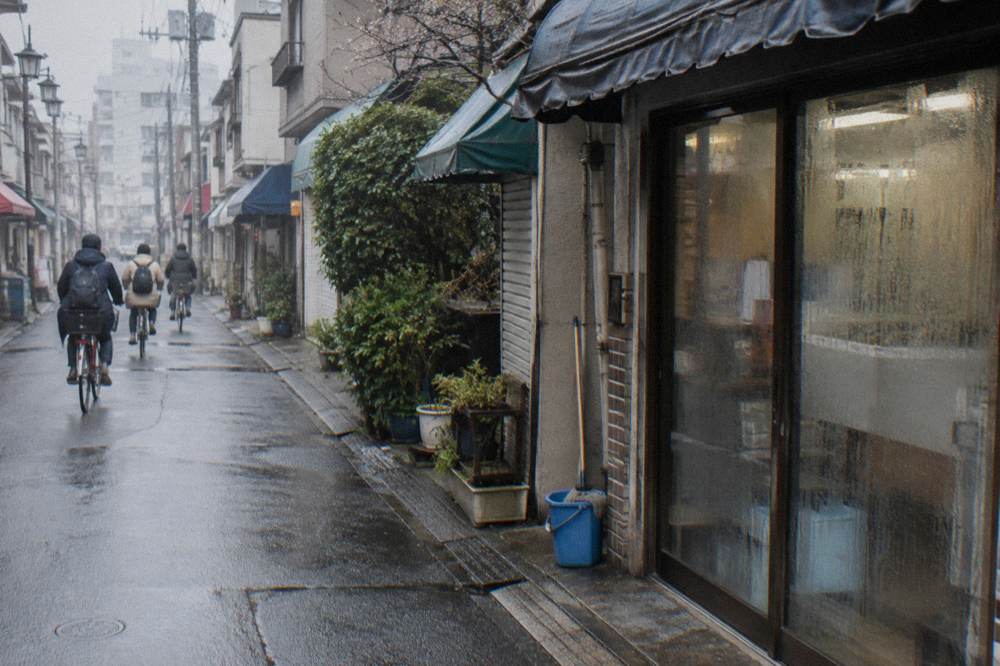
Weather deserves a sentence, because it shapes the rental decision season by season. JMA 1991 to 2020 normals for the Tokyo station put October as the wettest month at 234.8 mm of rain and January among the driest at 59.7 mm, with August the hottest at a mean daily maximum of 31.3 degrees. A dry winter weekend is the friendliest window for a first ride; a September afternoon is the least forgiving.
Should You Rent Independently Or Book A Tour That Brings The Bike?
Rent independently if you want to wander at your own pace, already carry a smartphone with a credit card, and are comfortable reading Tokyo's road rules. Book a tour that brings the bike if your visit is short, your phone setup is uncertain, or you want a route through backstreets you would not find alone. The tour also absorbs the insurance duty, since the operator covers the rental obligation.
The honest summary is that the rental question dissolves once you notice how much of it a tour answers. The insurance rule, the ID conditions, the app registration, the docking constraints, even the helmet decision, all become the operator's problem the moment the bicycle arrives with a guide attached. Tokyo Bike Tours, this site, exists largely because that trade is genuinely good for first-time visitors.
For independent riders the bike rental in Tokyo guide walks through shops, prices and districts in detail. For everyone else, the tour card below is the shortest path from question to pedals, and the trio that follows covers the three most common formats: a three-hour highlights ride with a bike-or-e-bike choice, a small-group e-bike loop, and a six-hour full-city ride.
“It’s a great day covering a lot of Tokyo, such a fun way to explore. Experiencing places that aren’t on the normal tourist maps.”
The 3-Hour Highlights, Bike or E-Bike tour remains the reference point: 4.9 across 980 reviews, from $61.54 per person, meeting at the Statue of Commodore Perry, with free cancellation per the listing and the bike included. Riders can check availability alongside the full tour page.
Common Questions About Renting Bikes In Japan
Can Foreigners Rent Bikes In Japan?
Yes. Foreign visitors rent bicycles in Tokyo through share-bike apps, rental shops and guided tours. Share systems want a smartphone and credit card, shops set their own ID conditions, usually satisfied with a passport, and tours include the bike in the price.
Do You Need A Japanese Phone Number To Use Bike Share?
Not for standard per-ride use. Docomo registration needs a smartphone and credit card, and HELLO CYCLING works through its app with a foreign card. The exception is Docomo's convenience-store day pass, which requires an SMS-capable phone; the IC-card version requires photo ID instead.
Is A Helmet Required When Renting A Bike In Tokyo?
No. Helmet use is an effort obligation for every age, in place since April 2023, with no fine attached. Most guided tours include a helmet in the price, and the police report much lower fatality rates for riders who wear one.
Do Rental Bikes In Tokyo Come With Insurance?
Rental businesses are required by the Tokyo ordinance, in force since 1 April 2020, to insure the hirer's use of the bicycle and to explain what the coverage includes. Independent riders must also carry liability insurance themselves, which an existing travel or credit-card policy with a personal liability rider may satisfy.
Can You Rent An E-Bike As A Foreigner In Tokyo?
Yes. Both major share fleets are electric-assist, and guided e-bike tours, such as the Akihabara and Palace E-Bike Loop from $97.17 per person, include the e-bike, helmet and guide with the booking.