Is There An App That Shows Bike Routes In Tokyo?
Yes, but not the way Google Maps works back home. Here is what the Docomo Bike Share and HELLO CYCLING apps actually do in Tokyo, what official route resources exist, and when a guided bike tour beats any app.
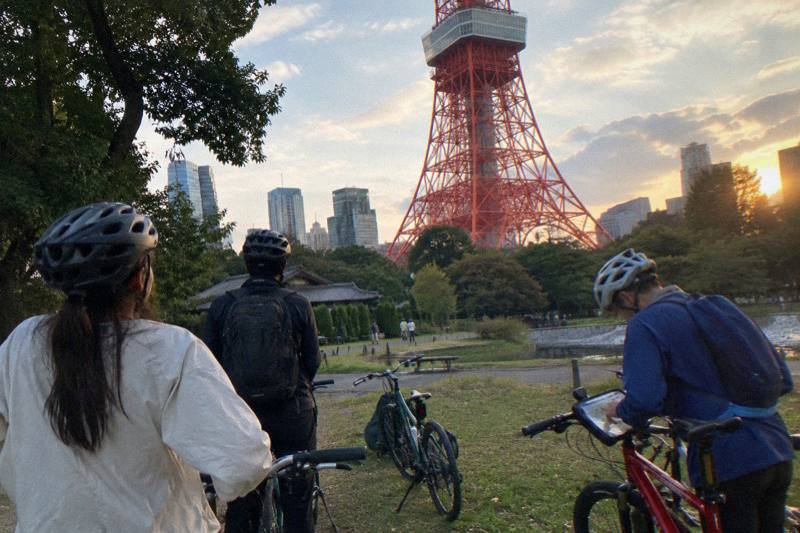
Short answer: not one dedicated, verified route-planning app for Tokyo cycling exists in the way runners or road cyclists might expect. What Tokyo does have is two official bike-share apps, Docomo Bike Share and HELLO CYCLING, which show ports, live bike availability and pricing, and a set of official route resources from the Tokyo tourism board and the Metropolitan Police. For turn-by-turn touring routes, a guided ride such as the Small-Group Long City Ride replaces the app question altogether: a guide picks the streets, and the rider just pedals.
That distinction matters because the question usually hides a second one. A visitor asking about an app for bike routes in Tokyo is normally trying to solve one of three problems: where to get a bike, where it is legal and pleasant to ride, and how not to get lost in a city where street names are rare and addresses famously nonlinear. The apps available in Tokyo answer the first problem well, the second partly, and the third not at all. This article walks through what each tool actually does, what the verified costs are, and where a guided tour fits.
Yes, in a limited sense: the official Docomo Bike Share app and the HELLO CYCLING app both map Tokyo in the way a cyclist needs most, showing where bikes and ports are rather than turn-by-turn sightseeing routes. Neither is a route planner in the touring sense. For planned routes, official resources from the Tokyo tourism board and the Metropolitan Police cover riverside paths and road rules, and guided tours remove the navigation task from the rider entirely.
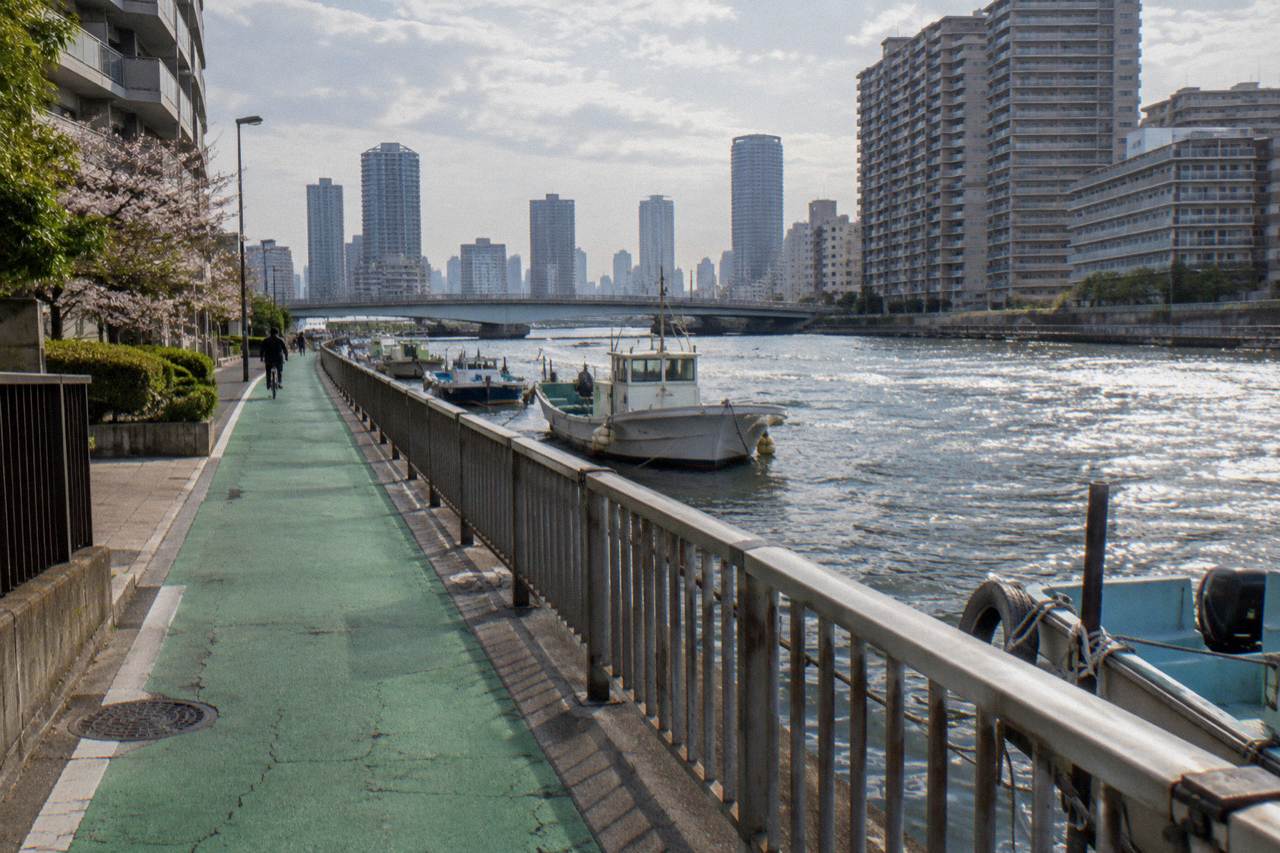
The confusion starts with what people mean by "bike routes." In cycling-mad cities elsewhere, route apps plot quiet roads, elevation profiles and lane quality. Tokyo's cycling infrastructure works differently. Riding happens on ordinary roads, on riverside paths along the Arakawa and Sumida, and on marked lanes whose network the metropolitan government has committed to expanding. Route guides describe a scenic stretch of roughly 30 km along the Arakawa levees from Ukima Park downstream toward Kasai Rinkai Park at Tokyo Bay, and that kind of corridor is planned on paper or followed behind a guide far more easily than plotted in an app.
“A charming ride through a part of Tokyo that isn’t on the itinerary for many visitors, getting an understanding of how ordinary residents live. Andy is a knowledgeable and helpful guide to the area (where he lives) and a welcoming host. He kept our group of six out-of-towners safe, informed, cheerful, and well-fed. An outstanding tour, highly recommended!”
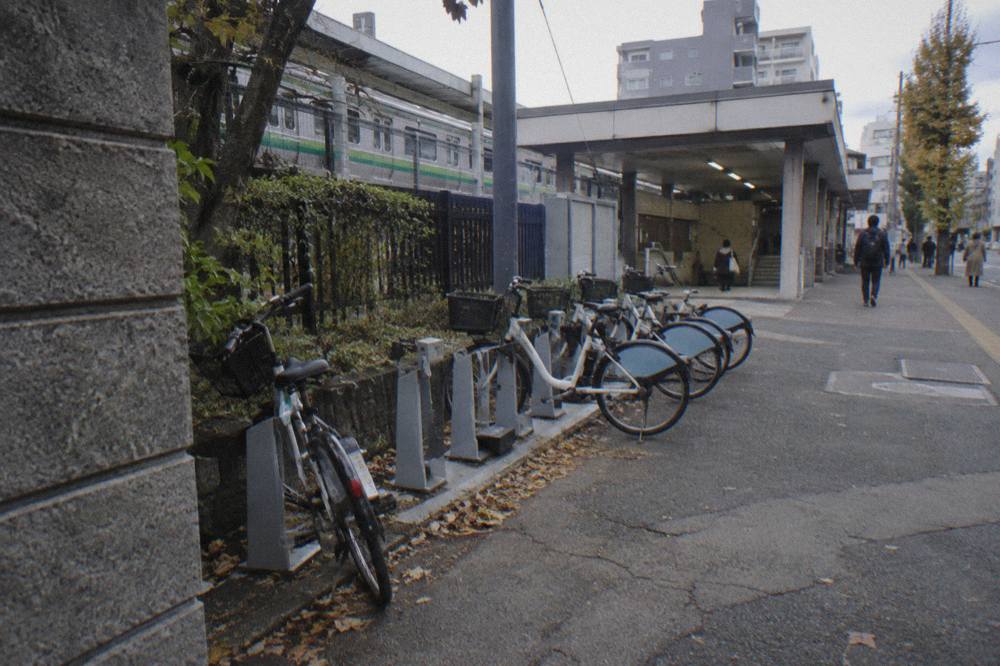
The two apps a visitor can genuinely rely on are the operator apps for the bike-share systems. Docomo Bike Share's official price page describes a system covering the central wards, with bikes borrowed and returned at designated Bike Stations, live availability shown in the app, and registration needing a smartphone and a credit card. HELLO CYCLING works on the same station-to-station principle across a nationwide partner network, with one account and return at any HELLO CYCLING station. Both apps support English, which matters for visitors.
What neither app does is score streets for cycling comfort or build a tourist sightseeing loop. A rider who wants "a route through Yanaka, past the palace and down to the bay" will not get it from either one. That is the gap official tourism resources and guided tours fill, and later sections of this article cover both.
Which Apps Help Cyclists Get Around Tokyo?
Two verified apps matter: the Docomo Bike Share app, for finding and unlocking port-based share bikes across the central 16-ward area, and the HELLO CYCLING app, for the same job across a partner station network with mixed bike types. Both show live port locations and availability. Neither plots touring routes, and the Docomo day pass must be bought separately at a convenience store or service window.
Docomo Bike Share is the closest thing Tokyo has to a default cycling app. Its fleet is primarily electric-assist bikes, its ports cluster near stations and attractions across the central wards, and returns are strict: the bike goes back to a designated port, or extension fees keep running. A visitor registers in the app with a credit card, then either pays per ride or buys a day pass. The verified pricing is straightforward and is shown in the table in the next section but one.
HELLO CYCLING is the main alternative. Its official price page loads fares dynamically per prefecture and vehicle type in the app, because the network mixes city cycles, sports bikes and e-bikes with different rates. Registration supports English, takes minutes, and one account works at partner stations nationwide, which is useful if a Tokyo visit continues to another region.
A third category, independent route-planning apps, is deliberately not named here. There is no verified, official Tokyo route app in that category to recommend, and app quality changes fast enough that an unverified recommendation ages badly. The honest answer for route planning is official resources plus, for many visitors, a guide.
For riders who conclude that self-guided plotting sounds like work, the alternatives are strong. The Flexible 3-6 Hour Small-Group Ride from $64.78 per person, rated 4.9 across 212 reviews, lets the group shape the distance, and the guide handles every junction decision. Check availability for the Small-Group Long City Ride to see the same idea at full-day length.
Can You Plan A Cycling Route In Tokyo Without An App?
Yes, and many riders do. The official GO TOKYO visitor guide publishes cycling routes along the Sumida River and the bayfront waterfront, the riverside paths along the Arakawa and its neighbours are linear and signposted enough to follow, and guided tours exist precisely because route planning in Tokyo rewards local knowledge. Paper resources and official pages cover more of the city than most visitors expect.
The GO TOKYO guide to bicycles for visitors is the best single official starting point. It confirms the basics a visiting rider needs: bicycles are treated as light vehicles that belong on the roadway on the left, liability insurance is required under the Tokyo ordinance, and the same traffic rules apply to tourists from overseas. It also points to the waterfront and riverside corridors that make pleasant car-light riding.
The rivers themselves are the city's free route planner. Route guides describe the Arakawa Cycling Road running along the levees, with a well-known segment of about 30 km from Ukima Park in the north down toward Kasai Rinkai Park at Tokyo Bay, passing the red and blue water gates that regulate flow between the Arakawa and Sumida rivers. Sections are described in ride reports as free of traffic lights, which in central Tokyo is a small miracle. The Sumida side links Asakusa and Skytree views toward the bay.
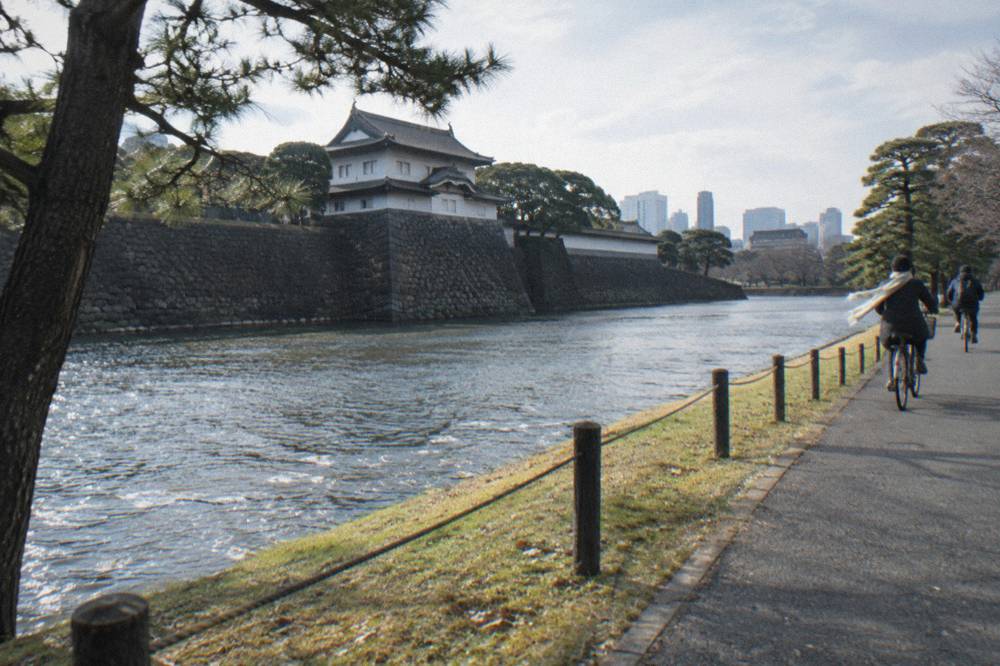
Neighbourhood riding is equally plannable without an app. Yanaka's old-town lanes, the Imperial Palace perimeter loop of roughly 5 km, and the Sunday Palace Cycling openings, which close a car-free segment along the moat on Sundays, are all documented publicly. The palace loop in particular is the single most popular recreational circuit in the city, and it needs nothing more than a bike and a rough sense of direction.
The catch is the last mile between corridors. Getting from a hotel in Shinjuku to the Arakawa levee, or from Asakusa to the palace, means crossing ordinary Tokyo traffic, and that is where a guide earns their fee. It is also why cycling routes across Tokyo are worth reading before deciding between an app, a map and a tour.
What Do Tokyo Bike Share Apps Actually Cost?
Docomo Bike Share charges 165 yen for the first 30 minutes and 165 yen per further 30 minutes, with a day pass at 1,650 yen from a convenience store or 2,200 yen with an IC card, both valid until 23:59 the same day. HELLO CYCLING sets prices per prefecture and vehicle in the app, with city cycles typically cheaper than its e-bikes. Neither system is a tour, only transport.
The verified Docomo figures come from the operator's own Tokyo rate page. Registration needs a smartphone and a credit card. The convenience-store day pass requires an SMS-capable phone, and the IC-card version needs photo ID, so visitors should carry a passport. Rides must end at a Bike Station.
“Our tour guide Gaku curated a really nice tour of Tokyo, including popular tourist sites as well as hidden gems that only a local would know. I highly recommend spending the afternoon cycling with Gaku on this small group tour.”
HELLO CYCLING's verified position is that fares are set per prefecture and per vehicle type and displayed in the app; figures floating around the web for its Tokyo rates are not confirmed here, so the app itself is the source of truth at the moment of rental. The practical planning range for share cycling in Tokyo is a few hundred yen per short hop, against tens of dollars for a guided tour, and the two serve different purposes entirely.
| Item | Docomo Bike Share (Tokyo) | HELLO CYCLING |
|---|---|---|
| Pay per ride | 165 yen first 30 min, 165 yen per extra 30 min | Set per prefecture and vehicle, shown in app |
| Day pass | 1,650 yen (convenience store), 2,200 yen (IC card), valid until 23:59 | No day pass highlighted; per-ride with caps set in app |
| Registration | Smartphone plus credit card | App registration, English supported |
| Returns | Designated Bike Station only | Any partner station in the network |
| Fleet | Primarily electric-assist | City cycles, sports bikes and e-bikes |
When Does A Guided Tour Beat A Route App?
A guided tour wins whenever the goal is seeing Tokyo rather than moving through it. The Guide handles route choice, traffic judgment, bike provision and the rules, which removes the exact problems an app cannot solve. On this site's options, guided rides run from $46 to $156.77 per person, with the most reviewed carrying 1,308 reviews at a 5.0 rating, and nearly all include the bike and free cancellation.
Consider what a rider gives up when riding alone without a guide. Tokyo's backstreets reward local knowledge: which laneway dodges a crowded arcade, which river gate leads where, which shrine has a quiet approach. A guide compresses years of that knowledge into three hours. The Small-Group Long City Ride, rated 5.0 across 1,308 reviews and priced from $106.89 per person, caps its group at five riders, includes bike and helmet, and starts from Tokyo Opera City Sankun Garden. No app offers any of that.
Shorter and cheaper options make the same point. The 3-Hour Highlights, Bike or E-Bike ride from $61.54 per person, rated 4.9 across 980 reviews, lets each rider choose an electric or regular bike and meets at the Statue of Commodore Perry. The Hidden Gems E-Bike tour, 3 to 4 hours from $62.19 per person and rated 4.9 across 895 reviews, is built entirely around backstreets a first-time visitor would never find with any app.
At the premium end, the Private E-Bike From Your Hotel tour, rated 5.0 across 171 reviews from $156.77 per person, starts where the guest is staying, with the total depending on group size as the booking page shows. The budget end is anchored by tours like the 2.5-Hour Central Short Ride at from $51.82 per person, rated 5.0 across 25 reviews. The pattern across the range is consistent: the price buys the route, the judgment and the bike at once.
| Tour | Duration | Price from | Rating and reviews |
|---|---|---|---|
| Small-Group Long City Ride | 6 hours 30 minutes | $106.89 per person | 5.0, 1,308 reviews |
| 3-Hour Highlights, Bike or E-Bike | 3 hours | $61.54 per person | 4.9, 980 reviews |
| Hidden Gems E-Bike | 3 to 4 hours | $62.19 per person | 4.9, 895 reviews |
| Flexible 3-6 Hour Small-Group Ride | 3 to 6 hours | $64.78 per person | 4.9, 212 reviews |
| 2.5-Hour Central Short Ride | 2 hours 30 minutes | $51.82 per person | 5.0, 25 reviews |
| Private E-Bike From Your Hotel | 3 hours | $156.77 per person, total depends on group size | 5.0, 171 reviews |
What Should You Know About Tokyo Cycling Rules Before Using Any App?
Tokyo's rules matter more than any app choice. Since 1 April 2026 a blue-ticket system of fixed fines applies to riders aged 16 and over, with 12,000 yen for holding a phone while riding, the single most relevant fine for anyone tempted to navigate by screen. Helmets are an effort obligation for every age with no fine, and liability insurance is required by Tokyo ordinance.
The phone fine deserves emphasis in an article about apps. Holding a phone to talk or watch its screen while riding carries a 12,000 yen fixed fine, the highest of all the bicycle fines, and phone use that creates danger can be treated criminally with penalties up to one year of imprisonment or a 300,000 yen fine. A rider steering one-handed with a phone in hand is committing the exact violation the system targets hardest. The Metropolitan Police notice on the system spells this out, and its English traffic-rules page confirms the rules apply to overseas visitors.
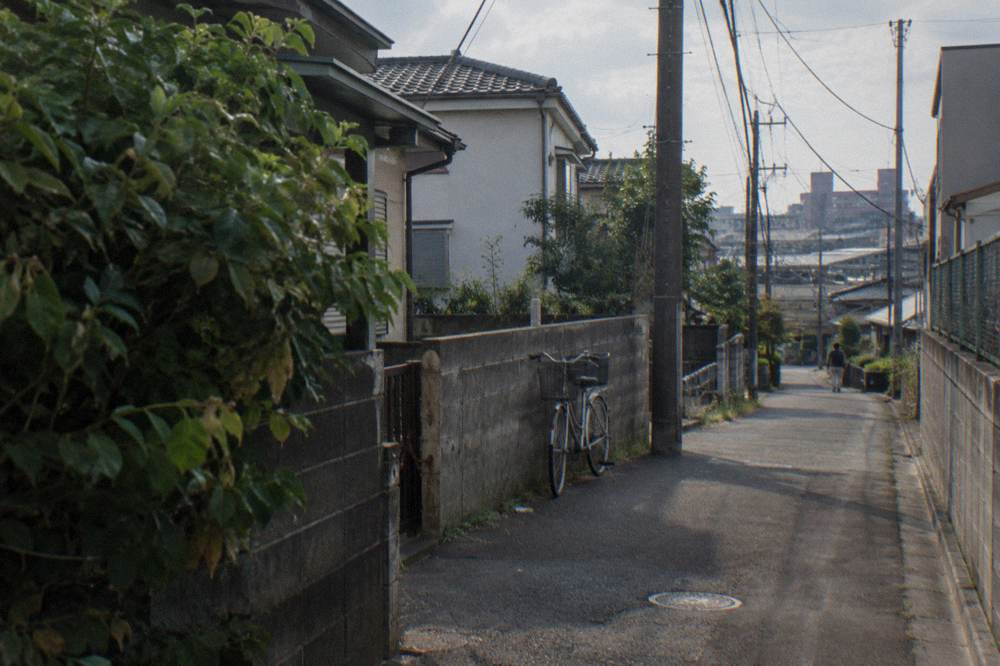
The other basics are quick to state. Bicycles ride on the left of the roadway by default, sidewalks only where signed or permitted. Ignoring a signal, riding against traffic or dangerous sidewalk riding carries a 6,000 yen fine; riding two abreast or carrying a passenger, 3,000 yen; riding without a light at night, 5,000 yen. Officers normally give guidance and a warning first, with tickets reserved for malicious or dangerous violations. Helmets, required only as an effort obligation since April 2023, still matter statistically: police data attributes 63.5% of cycling deaths in Tokyo between 2021 and 2025 to fatal head injuries, with a fatality rate 2.3 times higher without a helmet. Riders wanting the full picture can read the cycling rules visitors need in Japan and the official police traffic rules page in English.
This is another quiet argument for guided rides. Every tour in this article's options includes a guide who handles local riding conventions, most include a helmet, and the rental businesses are required under the same ordinance to insure the hirer's use and explain what that insurance covers. The solo app-renter carries all of that alone.
- City Bike Tours$32.39
- Private Tours$45.35
- Night Rides$55.06
- E-Bike Tours$61
- Day Trips By Bike$76
Practical habits keep an app user on the right side of the phone fine. Set the full route before pushing off, memorize the next few turns, and stop and step off the bike whenever the screen needs a look. The violation is defined by holding a phone while riding, so a device pocketed with both hands on the bars invites no penalty, while a few seconds of one-handed steering is exactly the behavior the highest bicycle fine targets.
Solo renters, then, inherit two duties a tour would otherwise handle. The insurance requirement falls on the rider as well, so check before setting off what your own travel policy covers and what the rental operator arranges, rather than learning the terms after a collision. And although no fine attaches to the helmet rule, the head-injury figures above argue for wearing one anyway, since asking at the pickup counter costs nothing.
Which Season Works Best For App-Free Riding In Tokyo?
The driest and most comfortable months for cycling are November through February, when monthly rainfall normals run between 56.5 and 96.3 mm, and January's mean temperature is 5.4 degrees C. The wettest months are October at 234.8 mm and September at 224.9 mm, and August is the hottest with a mean daily maximum of 31.3 degrees C, per JMA 1991 to 2020 normals for the Tokyo station.
These figures come from the Japan Meteorological Agency's 30-year normals, and they shape route planning more than any app does. Spring rides pair with the blossom season: Tokyo's first bloom came on 19 March in 2026, five days earlier than the 24 March normal, with full bloom on 28 March. A riverside path under blossom is the city's best cycling scenery, and the corridor choice matters more than the navigation tool.
Summer changes the calculus. June through August combines the rainy season's tail with heat and humidity, and autumn's early weeks bring the year's heaviest rainfall. Riders booked into that window should favour short morning rides or the e-bike options that take the sweat out of longer distances, and the same logic favours guided tours with a set, sensible route over ambitious self-planned loops. Whatever the month, Tokyo Bike Tours lists rides across city, e-bike, night, private and day-trip categories, so the format can be matched to the season rather than the reverse.
Common Questions About Tokyo Bike Route Apps
Is There An App That Shows Bike Routes In Tokyo?
Not a dedicated sightseeing route planner. The Docomo Bike Share app and the HELLO CYCLING app show ports, live bike availability and pricing, and official GO TOKYO resources document riverside and waterfront routes. For planned touring routes, a guided bike tour handles the navigation entirely.
Can Tourists Use Tokyo Bike Share Apps?
Yes. Both Docomo Bike Share and HELLO CYCLING support app registration in English and accept foreign credit cards. The Docomo day pass is bought at a convenience store or service window, with the convenience-store version requiring an SMS-capable phone and the IC-card version requiring photo ID.
Is It Legal To Navigate By Phone While Cycling In Tokyo?
No, not in hand. Holding a phone to talk or watch its screen while riding carries a 12,000 yen fixed fine, the highest bicycle fine, and dangerous phone use can be treated criminally. Checking a route means stopping first, or letting a guide handle navigation.
Do I Need Insurance To Ride A Share Bike In Tokyo?
Yes. Tokyo ordinance has required bicycle liability insurance since 1 April 2020, and rental businesses must insure the hirer's use and tell renters what is covered. Share-bike users are covered through the operator, while private bike riders must arrange their own cover.
What Is The Cheapest Way To Ride Tokyo With Help Instead Of An App?
The cheapest guided option covered here is the 2.5-Hour Central Short Ride from $51.82 per person, rated 5.0 across 25 reviews, with bike and helmet included. The 3-Hour Highlights, Bike or E-Bike tour from $61.54 per person adds a choice of electric or regular bike, rated 4.9 across 980 reviews.