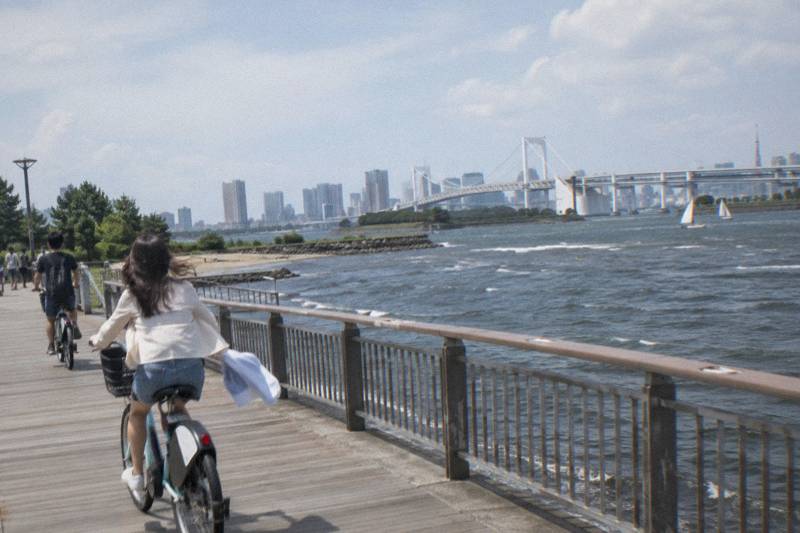
Odaiba And Tokyo Bay Cycling: Waterfront Route Notes
Odaiba is the one Tokyo district built around wide, open bayfront paths instead of narrow backstreets, and that changes what a bike ride there feels like.
Short answer
Odaiba sits on an island in Tokyo Bay with broad waterfront promenades that route guides describe as among the widest cycling surfaces in the city. A guided option from $48.59 per person, the Olympic Sites Bay Ride, covers the bay area in about 3 hours, while the longer bay sunset e-bike rides run from $62.19 per person.
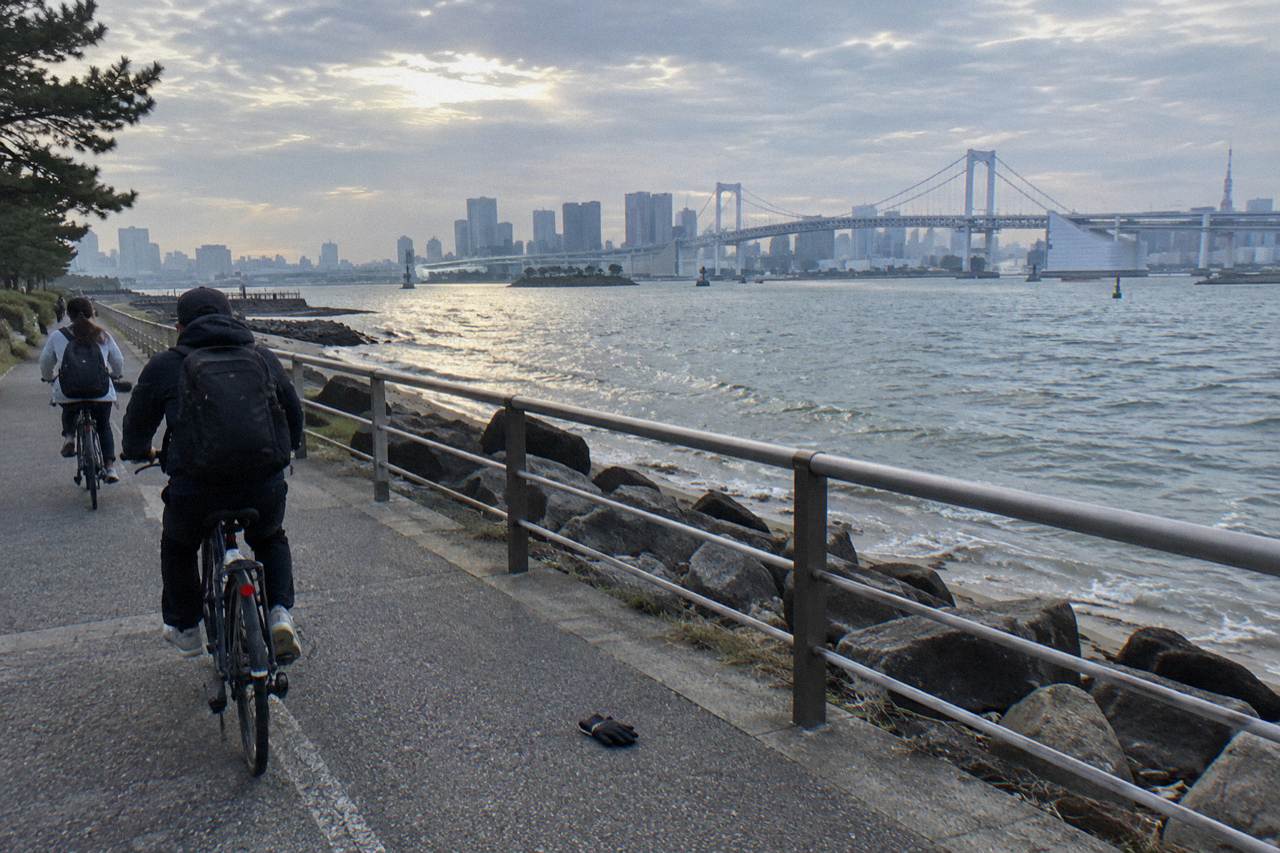
Odaiba is the part of Tokyo where the riding opens up. The district occupies an island in Tokyo Bay, and its waterfront promenades, park edges and bridge approaches give cyclists a width of path that central neighbourhoods like Yanaka or the Imperial Palace loop simply do not have. The trade-off is distance: everything on the bay side is spread out, which is exactly why so many visitors decide a guided ride beats finding the way alone.
The bay area also carries the Olympic legacy. Route guides describe the Ariake and Odaiba waterfront around the 2020 Games venues as a network of bayside paths and seaside walkways, and the Olympic Sites Bay Ride, a 3-hour guided tour from $48.59 per person with a bike, helmet and guide included and a group capped at 15, exists specifically to connect those sites. It is a new listing with no reviews yet, so there is no rating to report, only the listing's own description.
This page covers the practical questions a bayside rider asks: which tours cover the area, what a ride costs, what the bridge access rules actually are, and when the weather cooperates. It also sets out the traffic rules that now apply to every cyclist in Tokyo, visitors included.
Is Odaiba Good For Cycling?
Yes, Odaiba is one of the most rideable districts in Tokyo, because it was built wide rather than dense. Route guides describe bayfront promenades along the Odaiba and Ariake shoreline with generous path width, sea views toward the city skyline, and long uninterrupted stretches between road crossings, conditions central Tokyo backstreets rarely offer. The compromise is exposure: there is little shade, and the district is large, so distances add up quickly.
- City Bike Tours$32.39
- Private Tours$45.35
- Night Rides$55.06
- E-Bike Tours$61
- Day Trips By Bike$76
The official visitor guide for Tokyo points cyclists toward the waterfront and riverside paths as a distinct category of ride, separate from the street-level riding that defines most of the city. On the bay side, that means paths that hug the water for long stretches, with the Rainbow Bridge and the city skyline in view for much of the way. Riders used to European or North American waterfront greenways will find the surface and spacing familiar, though shared use with pedestrians means the pace stays unhurried in the busy sections.
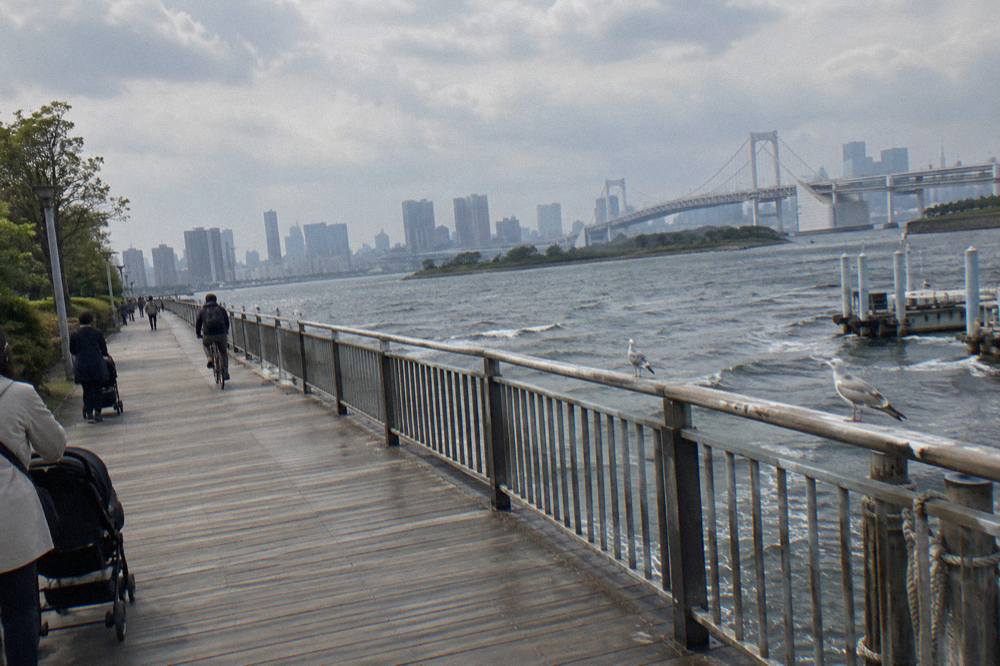
What the district does not offer is much in the way of old-town texture. Odaiba is malls, museums, a beach, parkland and event venues, which makes it a contrast ride: many guided itineraries pair a stretch of central Tokyo with a bay finale so riders get both the temple backstreets and the open water. The bay also suits e-bikes well, not because of hills, the ground is flat, but because the distances between sights are long and the summer heat on unshaded paths is real. An overview of e-bike options sits in the Tokyo e-bike tour guide for riders weighing that choice.
For independent riders, the practical pattern is a loop: out along one shoreline, around a park or beach section, and back along the other. Route guides describe the bayside paths around Odaiba Kaihin Park and the adjoining waterfront as connected and continuous, and event organisers use these same paths for public rides, which says something about their width and quality.
Which Guided Tours Cover Odaiba And Tokyo Bay?
The most direct option is the Olympic Sites Bay Ride, a 3-hour guided tour from $48.59 per person that includes the bike, helmet and guide, with free cancellation per the listing. Beyond it, the Bay Sunset to Night E-Bike covers the bay in 3 hours from $62.19 per person, and longer city rides such as the 6-Hour Full City Ride from $97.17 per person reach the waterfront as part of a full circuit.
The bay is well served by guided product because it photographs well and rides easily. The Olympic Sites Bay Ride is the specialist pick: about 3 hours, group maximum 15, bike, helmet and guide all included, food and hotel transport not included. As a new listing it carries no reviews, so judge it on its route description and price rather than a star rating.
The Bay Sunset to Night E-Bike Ride from Japan Wonder Travel targets the bay at its best hour. It runs about 3 hours, group capped at 6, e-bike, helmet and guide included, from $62.19 per person, with free cancellation per the listing. It carries only 4 reviews so far, too few for a star claim, but the concept, finishing on the waterfront as the city lights come on, matches what the bay does best. Riders who want a non-electric version of the same idea can look at the Tokyo night bike tour guide for the wider evening range, including the 2-Hour Night Lights Ride from COG EXPLORER JAPAN at from $55.06 per person.
Longer rides fold the bay into a full circuit. The 6-Hour Full City Ride, rated 4.9 across 842 reviews, runs from $97.17 per person with a group maximum of 12 and the bike included, and its full-city scope touches the waterfront alongside the older districts. Riders who prefer not to share a group at all can take the private route: the Private E-Bike From Your Hotel option from Tokyo Bike Bliss, rated 5.0 across 171 reviews, starts from $156.77 per person with the total depending on group size, and a private guide can bias the route heavily toward the bay. The private or group tour comparison works through that trade-off in detail.
What Does A Tokyo Bay Ride Cost?
Bay-area guided rides span from about $46 to $156.77 per person depending on format. The Private 2-Hour E-Bike Ride is the cheapest at from $45.35 per person, the Olympic Sites Bay Ride covers the bay itself from $48.59, mid-length e-bike rides cluster between $61 and $63, and private tours run from $45.35 upward, with the $156.77 and $146 options priced so the total depends on group size. Every price here is a per-person from-price from the tour listing.
The bay is not the most expensive corner of Tokyo cycling. Because the terrain is flat and the paths direct, the bay rides sit in the middle of the price band rather than at the top of it. What moves the price is format and exclusivity, not the route.
| Tour | Duration | Bike type | Group max | Price per person |
|---|---|---|---|---|
| Olympic Sites Bay Ride | 3 hours | Not stated | 15 | From $48.59 |
| Bay Sunset to Night E-Bike | 3 hours | E-bike | 6 | From $62.19 |
| Summer Night Bay E-Bike Ride | 3 hours | E-bike | 4 | From $63.48 |
| 6-Hour Full City Ride | 6 hours | Regular | 12 | From $97.17 |
| Private E-Bike From Your Hotel | 3 hours | E-bike | Private | From $156.77, total depends on group size |
| Riverside E-Bike Ride | 3 hours | E-bike | 8 | From $85 |
Two cost notes matter for bay riders. First, group-size-dependent pricing: private tours quote a per-person from-price, and the total changes with the size of the party, so the booking page is the only place to see the real figure for your group. Second, inclusions: most bay rides include the bike and guide but exclude food, drinks and hotel transport, and one operator, TRB BIKE TOUR, rents helmets for 1000 yen in cash on the day if you want one on its highlights rides. The general price picture, including what self-guided rental adds up to, is covered in the Tokyo bike tour cost guide.
For riders weighing a private bay outing, the budget end is real. The Private 2-Hour E-Bike Ride from Trip Port Cycling is priced from $45.35 per person, with a choice of city or Imperial Palace routes, though only 7 reviews are published so far. At the other end, the premium private options pair a dedicated guide with hotel-area starts. Check availability on the operator's page before locking plans, since private guides book out around weekends.
Can You Ride A Bike Across The Bridges Near Odaiba?
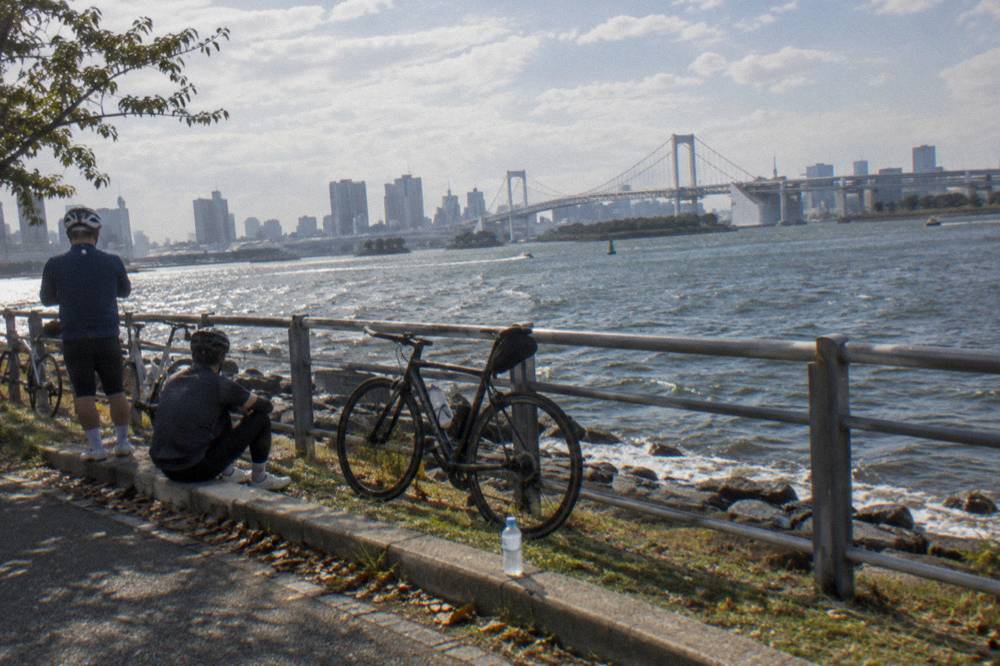
No, not in normal conditions. The Rainbow Bridge carries a pedestrian walkway that does not permit bicycles, and the Tokyo Gate Bridge walkway is restricted to pedestrians only; cyclists must walk their bikes or use other routes. The only regular exceptions are special event courses, where organisers open bridge crossings to registered riders on closed roads, which is how public cycling events cross the bay each year.
This is the single most common misconception about bay cycling. Visitors see the bridges, assume a ride across is possible, and arrive to find a walk-your-bike rule. The fresh route reporting is consistent on this point: bridge walkways around the bay are restricted to bicycles, and access for cyclists happens only on designated event courses run by organisers under special arrangements. No published hours or access windows should be assumed, since none are verified here. The wider set of guides lives on Tokyo Bike Tours.
The practical routing consequence is that Odaiba is usually ridden as an island loop, not as a bridge crossing. Riders who want the bridge-and-waterfront panorama without the event logistics get the better deal from the waterfront paths themselves, which face the bridges rather than crossing them. The view back toward the city from the Odaiba shoreline, with the bridge in frame, is the shot most bay tours are built around.
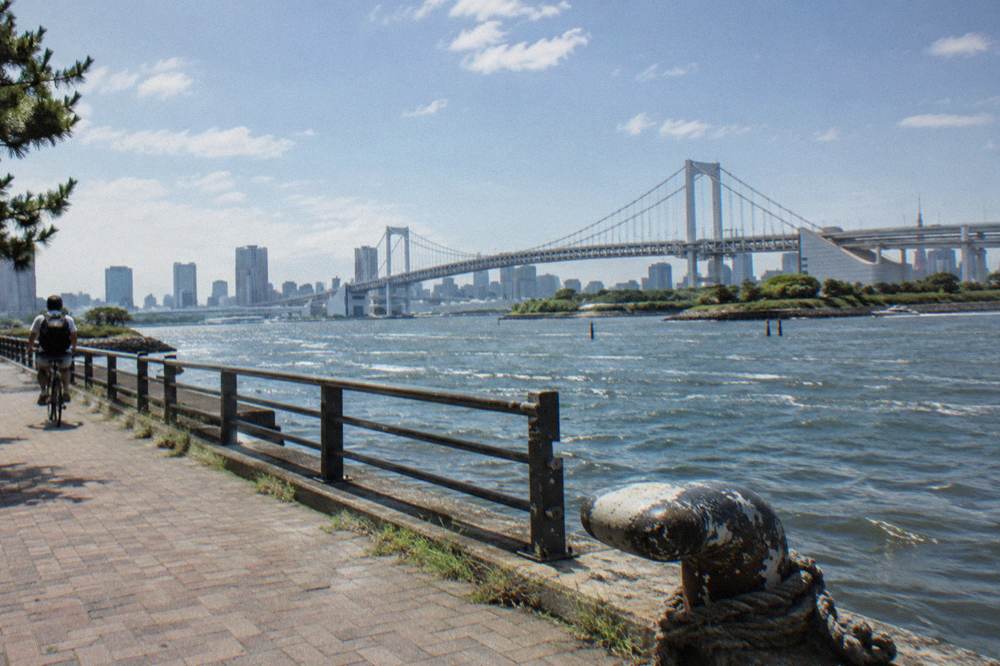
For the full picture on where bikes are permitted in and around the city, including sidewalk rules that matter on shared waterfront paths, see the Japan cycling rules guide.
When Is The Best Season For A Tokyo Bay Ride?
The most comfortable months for bay riding are October to November and March to April, when Tokyo's mean temperatures sit between 9.4 and 18.0 degrees C and rainfall is moderate. The JMA 1991 to 2020 normals show September and October as the wettest months, at 224.9 mm and 234.8 mm, and August as the hottest, averaging 26.9 C with daily highs of 31.3 C on shadeless bay paths.
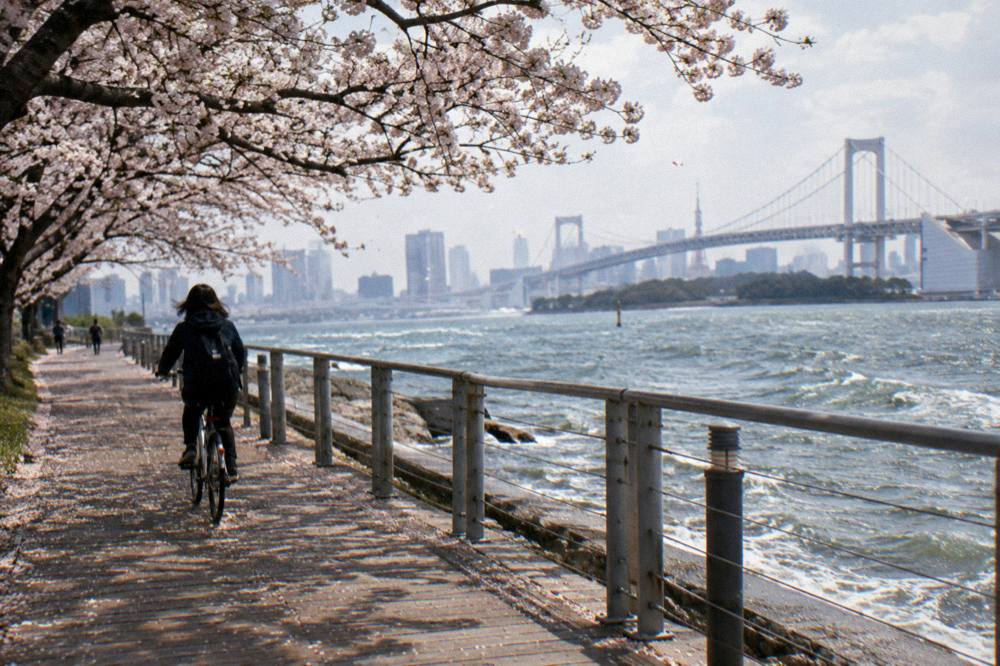
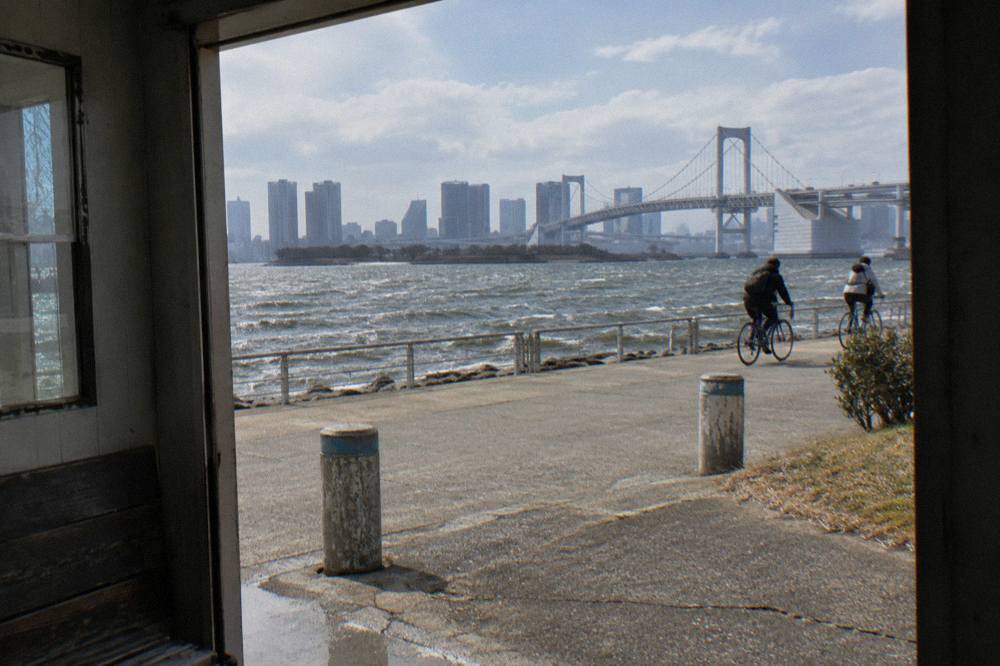
The bay's openness cuts both ways seasonally. In summer there is no canopy, no alley shade and a lot of reflected heat off the water and pavement, so the JMA normals matter more here than in leafy districts. Winter, by contrast, treats the bay kindly: the December to February normals show means of 5.4 to 7.7 C with modest rainfall, and cold-season riders get the clearest skyline views of the year.
| Month | Mean temp C | Mean daily max C | Precipitation mm |
|---|---|---|---|
| Jan | 5.4 | 9.8 | 59.7 |
| Feb | 6.1 | 10.9 | 56.5 |
| Mar | 9.4 | 14.2 | 116.0 |
| Apr | 14.3 | 19.4 | 133.7 |
| May | 18.8 | 23.6 | 139.7 |
| Jun | 21.9 | 26.1 | 167.8 |
| Jul | 25.7 | 29.9 | 156.2 |
| Aug | 26.9 | 31.3 | 154.7 |
| Sep | 23.3 | 27.5 | 224.9 |
| Oct | 18.0 | 22.0 | 234.8 |
| Nov | 12.5 | 16.7 | 96.3 |
| Dec | 7.7 | 12.0 | 57.9 |
Spring adds a timing hook. The JMA record puts Tokyo's 2026 cherry first bloom on 19 March and full bloom on 28 March, against normals of 24 and 31 March, and while the bayfront is not the city's densest blossom corridor, the riverside approaches that feed bay routes are. Riders planning around blossoms or around the rainiest weeks will find more timing detail in when to cycle in Tokyo.
What Cycling Rules Apply On The Waterfront Paths?
Tokyo's bicycle rules apply on the bayfront exactly as on any road, and since 1 April 2026 riders aged 16 and over, overseas visitors included, can be issued traffic violation notices with fixed fines from 3,000 to 12,000 yen. Helmets are a legal effort obligation for every age, with no fine, and liability insurance is required by Tokyo ordinance, with rental businesses obliged to tell renters what their cover includes.
The blue-ticket system is new enough that visitors reasonably ask whether it touches tourists. The Tokyo Metropolitan Police's English traffic rules page states plainly that cyclists will be issued tickets for traffic offences, and the official GO TOKYO guide for visitors on bicycles repeats that the rules apply to tourists from overseas, so this is not a residents-only regime. In practice officers normally give guidance and a warning first, and the notice system targets dangerous riding rather than minor unfamiliarity, per the Metropolitan Police bicycle violation page.
| Violation | Fixed fine |
|---|---|
| Holding a phone to talk or watch while riding | 12,000 yen |
| Ignoring a traffic signal | 6,000 yen |
| Riding against traffic | 6,000 yen |
| No light at night | 5,000 yen |
| Umbrella or earphones in both ears while riding | 5,000 yen |
| Riding two abreast | 3,000 yen |
| Carrying a passenger | 3,000 yen |
On shared waterfront paths, the pedestrian-priority rules matter most: where cycling is permitted among walkers, riders keep near the roadway side, slow down, and stop for pedestrians when needed, and the fine for ignoring the slow-and-stop duty is 3,000 yen. The default for bicycles is the roadway, ridden on the left, with sidewalk use reserved for signed sections and specific rider categories, per the police bicycle rules page. Helmets, since April 2023, are something every rider of every age must endeavour to wear, and most guided bay tours include one in the price, which is one quiet argument for taking a tour rather than a bare rental.
Insurance is the quiet obligation. Since 1 April 2020 the Tokyo ordinance requires cyclists to hold liability cover, and rental businesses must insure the hirer's use and explain what is covered; if your home, travel or credit-card policy carries a personal liability rider, that generally counts. The official visitor summary of these obligations is on the GO TOKYO bicycle guide.
How Does Odaiba Compare With Tokyo's Riverside Routes?
Odaiba offers width, water and skyline views on flat, spread-out paths, while the river routes, the Sumida and the Arakawa, offer continuity and length, with route guides describing an Arakawa levee path running for tens of kilometres between the north of the city and the bay itself. The bay suits photography and short rides, the rivers suit distance riders and those chasing temple districts along the water.
The two experiences are complements, not competitors. A rider who wants the classic postcard, bridge, water, skyline, rides Odaiba. A rider who wants to cover ground on traffic-light-poor levee paths heads for the rivers, where route guides describe long riverside stretches feeding down toward the bay near Kasai Rinkai Park. The rivers also thread the older neighbourhoods: the Sumida side links toward Asakusa and the temple quarter, which is why riverside e-bike rides, such as TRB BIKE TOUR's Riverside E-Bike Ride, from $85 per person with an 8-rider cap and 10 reviews so far, make a natural follow-on from a bay loop.
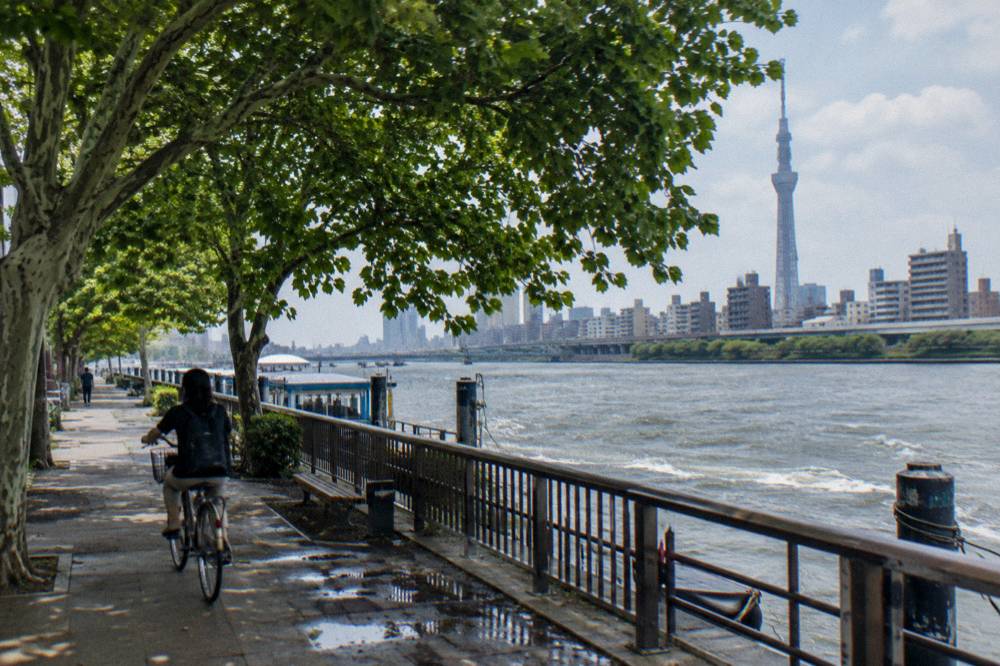
The dedicated deep dives, the Sumida River cycling guide and the Arakawa cycling road guide, cover those corridors in full, and the wider Tokyo cycling routes overview maps how the bay, the rivers and the central backstreets connect into one network. What the bay uniquely contributes is the endpoint: several river routes finish at the water's edge near the bay, which makes Odaiba a natural turn-around or finale for a long ride rather than an isolated destination.
For a first visit with limited time, the honest ranking is this: if you have one ride, take a guided tour that includes the bay at sunset or dusk; if you have two, add a riverside or backstreet ride for the contrast. Riders planning a full day around both can piece it together with the one day by bike itinerary.
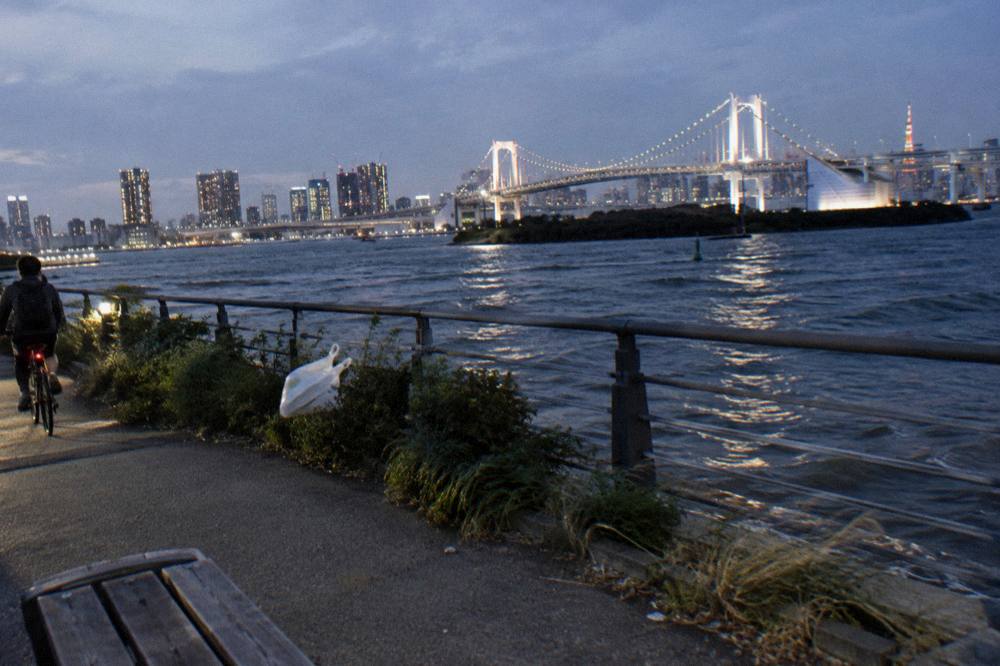
The bay rewards the guide-and-bike-included format more than most of Tokyo, because the district's size punishes poor route planning and its exposure punishes bad timing.
Common Questions About Odaiba And Tokyo Bay Cycling
Is Odaiba Good For Cycling?
Yes. Odaiba offers some of the widest cycling paths in Tokyo along the bayfront, flat terrain and continuous waterfront stretches. The trade-offs are limited shade, long distances between sights, and shared use with pedestrians in busy sections.
Can You Cycle Across The Rainbow Bridge?
No. The bridge walkway is restricted to bicycles, and the same applies to the Tokyo Gate Bridge walkway, which is pedestrians only. Cyclists can cross only on special event courses organised under closed-road arrangements.
How Much Does A Tokyo Bay Bike Tour Cost?
Bay-area guided rides run from about $46 to $156.77 per person. The Olympic Sites Bay Ride covers the area from $48.59 per person, sunset e-bike rides start at $62.19, and private tours quote per-person from-prices with the total depending on group size.
Do The New Tokyo Bicycle Fines Apply To Tourists?
Yes. Since 1 April 2026 the traffic violation notice system applies to riders aged 16 and over, including overseas visitors, with fixed fines from 3,000 to 12,000 yen. Officers normally give guidance and a warning first, and notices target dangerous riding.
When Is The Best Time Of Year To Cycle Odaiba?
October to November and March to April offer the most comfortable conditions. September and October are the wettest months on the JMA 1991 to 2020 normals, and August averages daily highs of 31.3 C, which is demanding on unshaded bay paths.
Are Helmets Required On Tokyo Bike Tours?
Helmets are a legal effort obligation for every rider of every age in Japan, with no fine attached. Most guided bay tours include a helmet in the price, though a few operators rent them separately for 1000 yen in cash on the day.